 © Bernard PictonCC BY 4.0 · iNaturalist
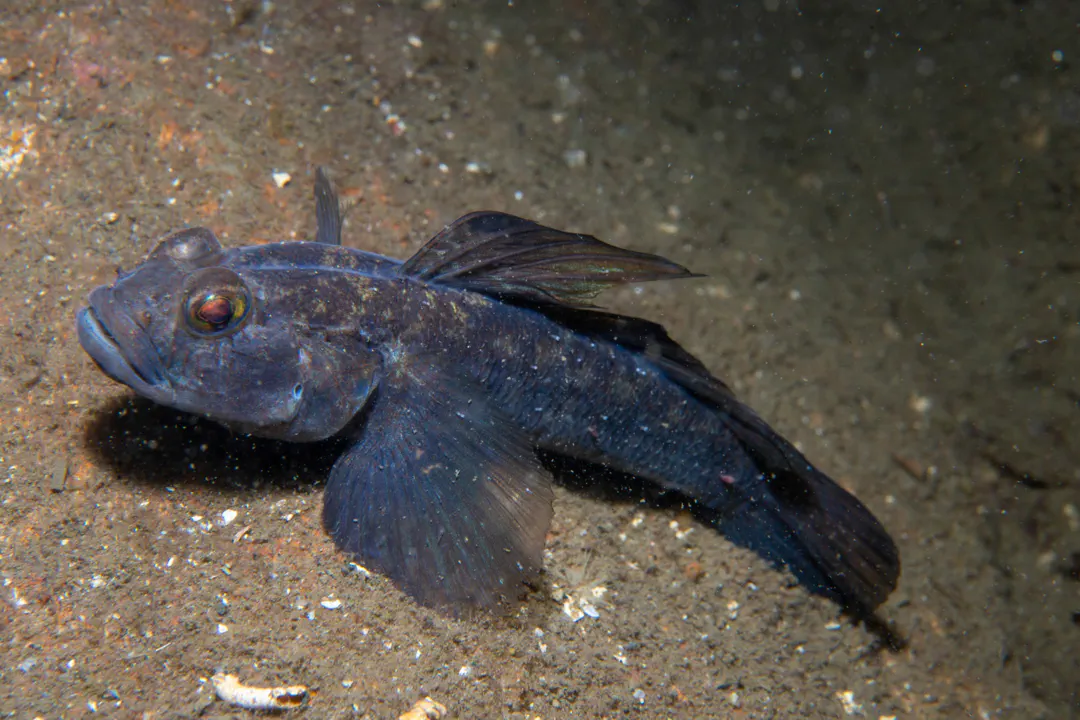
Black Goby
Gobius niger
 © 呂一起(Lyu yi-chi)CC BY 4.0 · iNaturalist
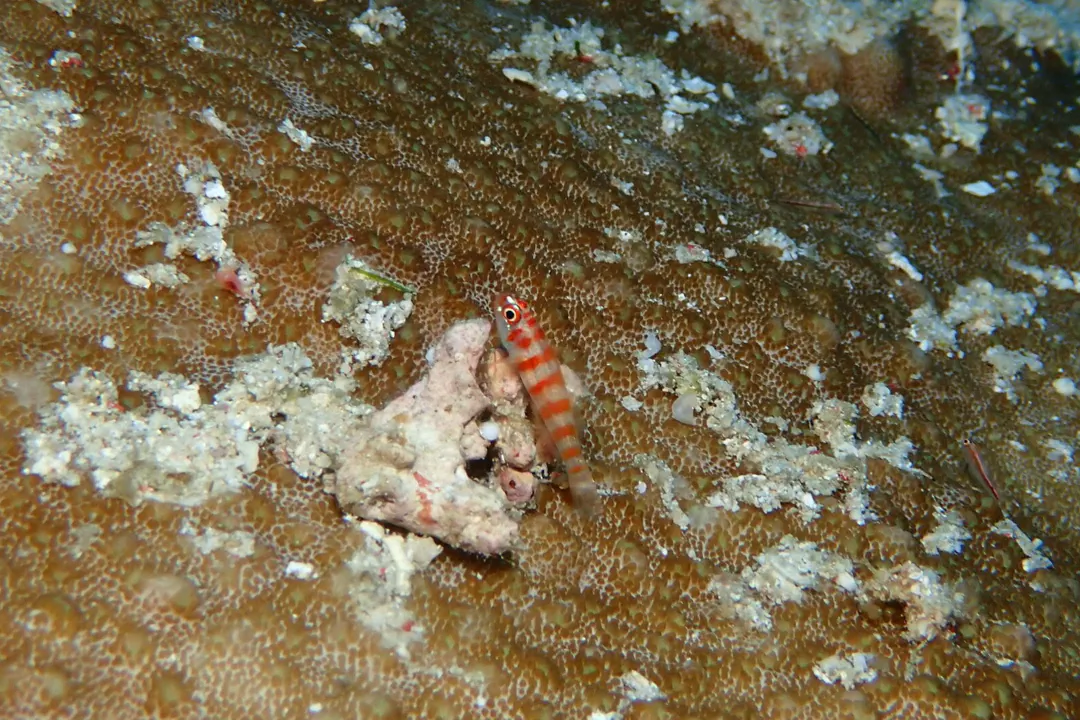
Trimma cana
Trimma cana is a species of goby native to the western Pacific Ocean where it can be found from the Philippines to Palau. It inhabits steep slopes on the outer side of reefs, preferring a hard coral substrate, at depths of from 12 to 35 metres (39 to 115 ft). This species can reach a length of 2.5 centimetres (0.98 in) SL.
It has white background with 8 distinct vertical bars on head and body. It has yellow spots on the medial fins. A well-defined dark red bar is across the postorbital region of the skull (may be partially obscured by the overlying anterior extension of the epaxialis body musculature in larger specimens). No scales on head, opercle, cheek or nape. A second dorsal spine varying from slightly to very elongate (as far as the mid-peduncle). A well-developed interorbital trench. A variably-developed postorbital trench (usually developed). A fifth pelvic fin ray which is unbranched and 50-85% of the fourth. Dorsal spines (total): 7; Dorsal soft rays (total): 9-10; Anal spines: 1; Anal soft rays: 8 - 10.
Western Pacific: Philippines, Caroline Is., Fiji, Marshall Islands and Palau.
It is solitary or in small groups on surface of hard corals. Inhabits steep outer reef slopes in 12-35 m.
© Bernard PictonCC BY 4.0 · iNaturalist  © Pierre PericardCC BY 4.0 · iNaturalist
  © IzuzukiCC BY 4.0
 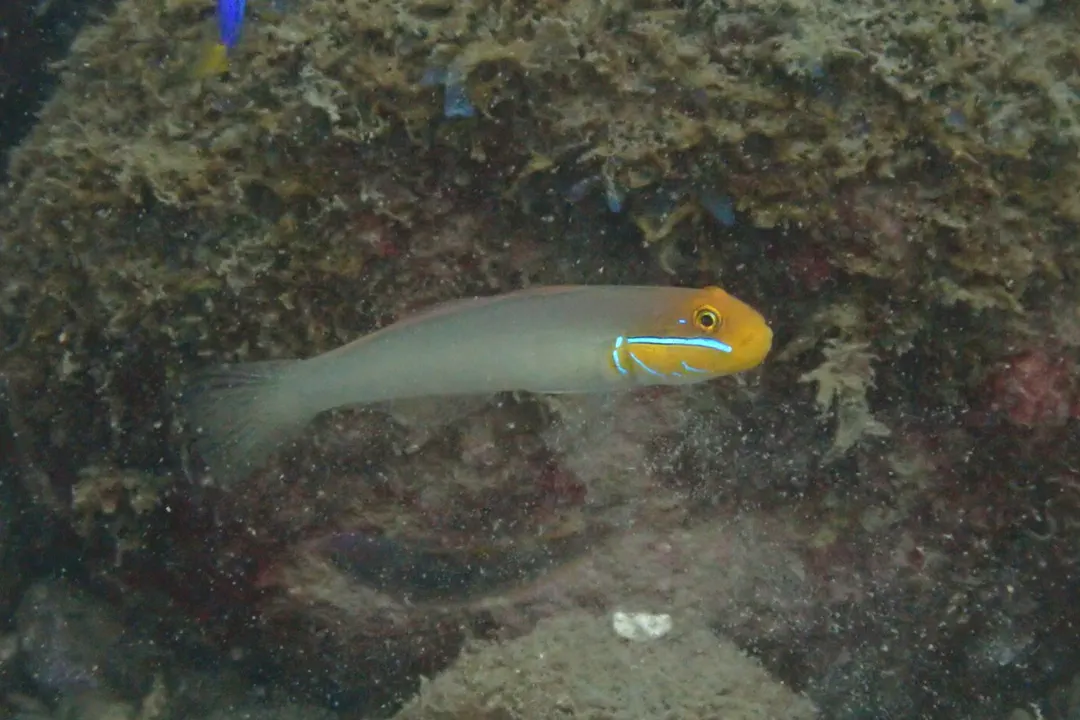 © 呂一起(Lyu yi-chi)CC BY 4.0 · iNaturalist
 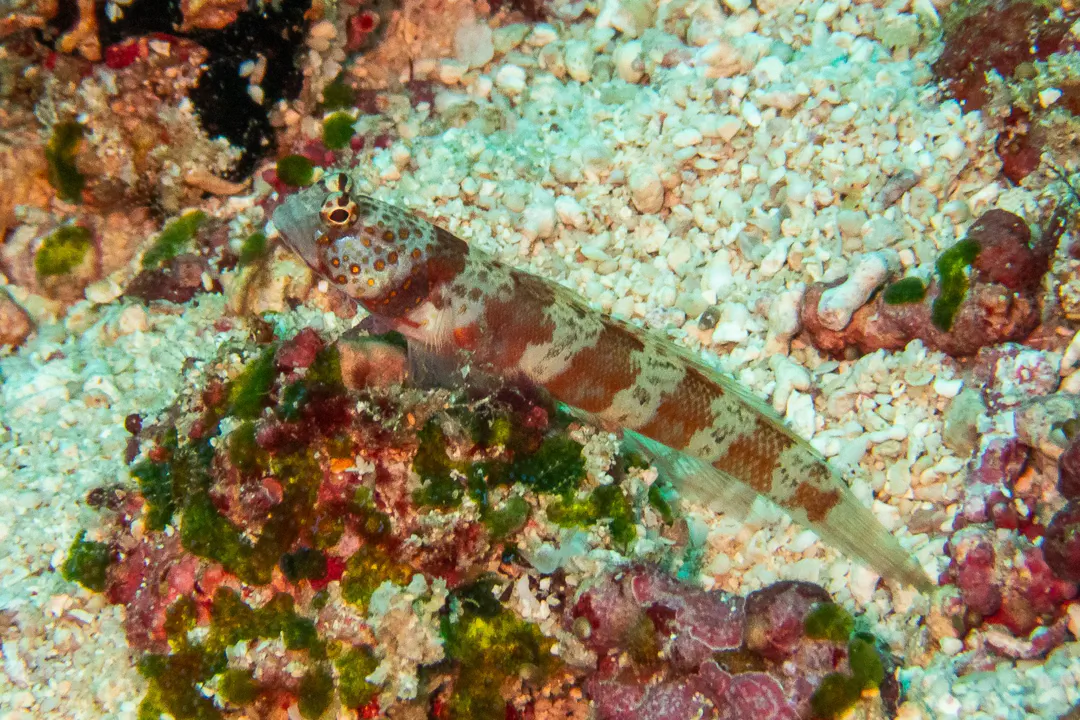 © Piotr LukasikCC BY 4.0 · iNaturalist
 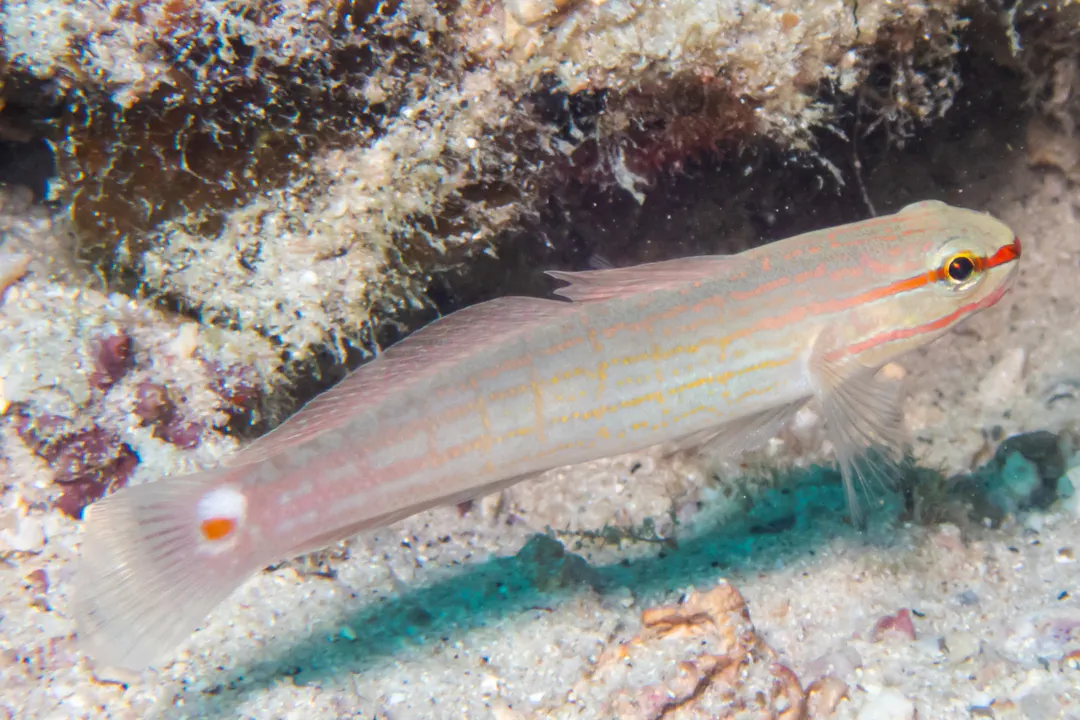 © portioidCC BY 4.0 · iNaturalist
 Candycane Dwarfgoby has no known danger to humans. However, always observe marine life responsibly.
Candycane Dwarfgoby can be found at depths of up to 35 meters.
Download Seabook free for iOS and Android.