 © Bernard PictonCC BY 4.0 · iNaturalist
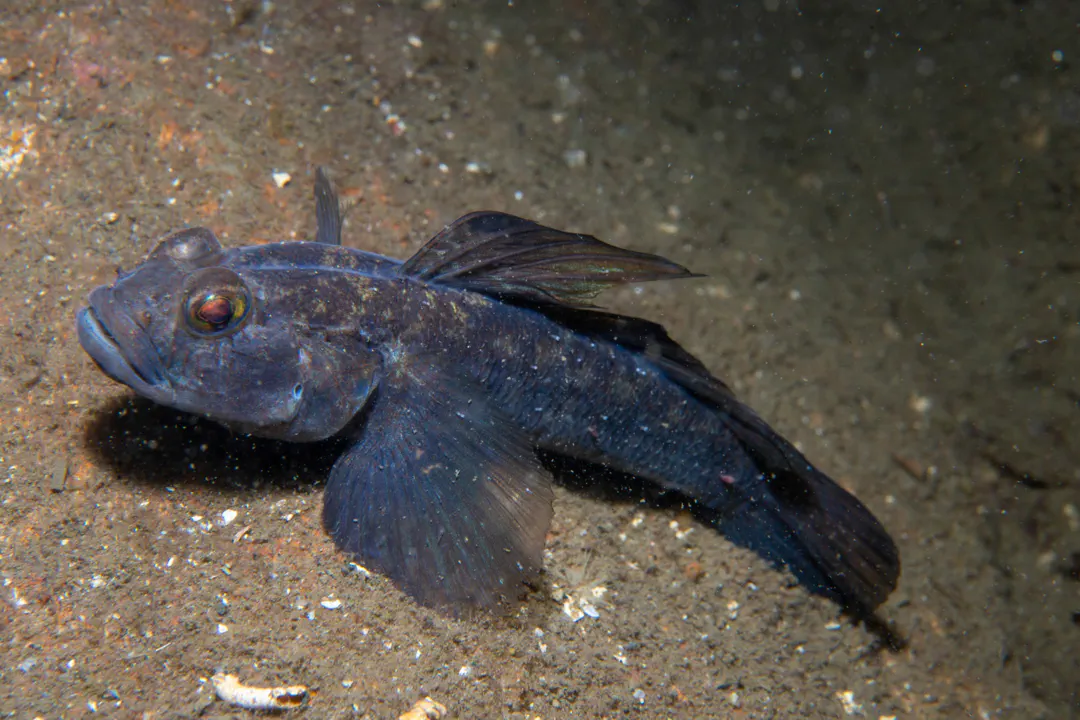
Black Goby
Gobius niger
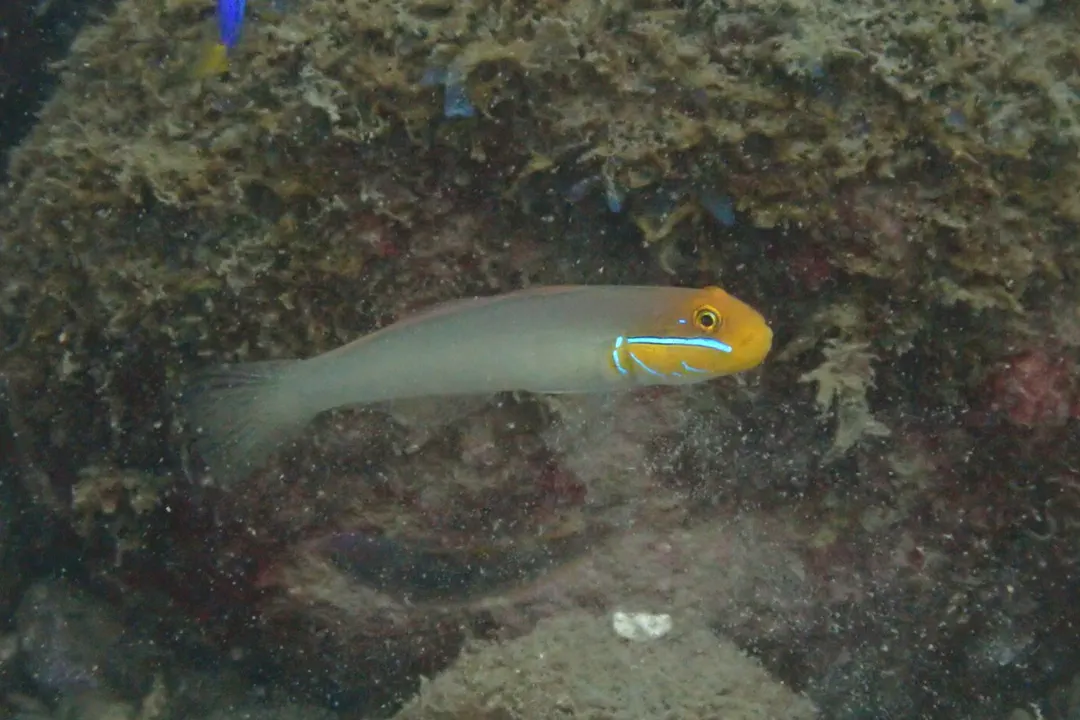
Valenciennea strigata
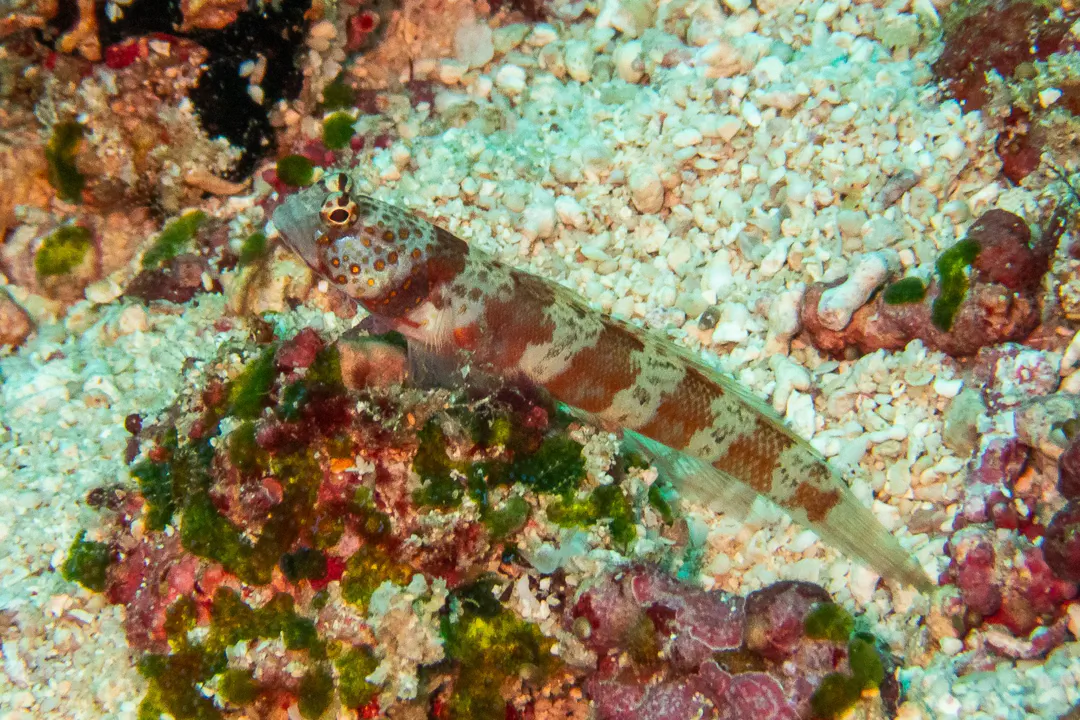
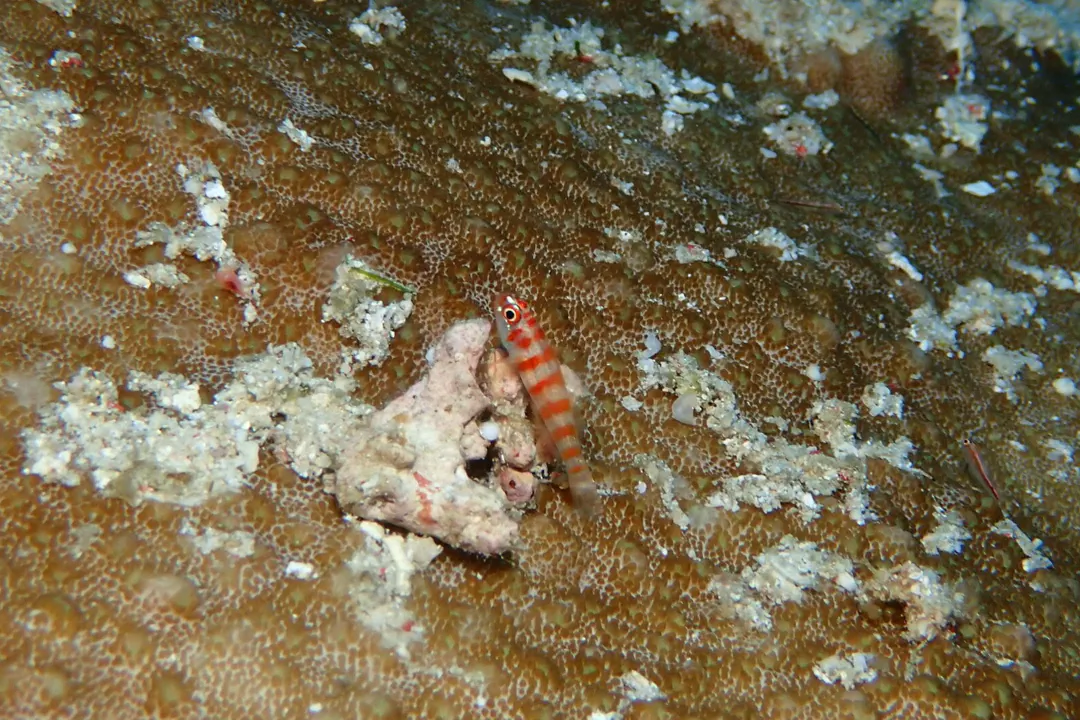
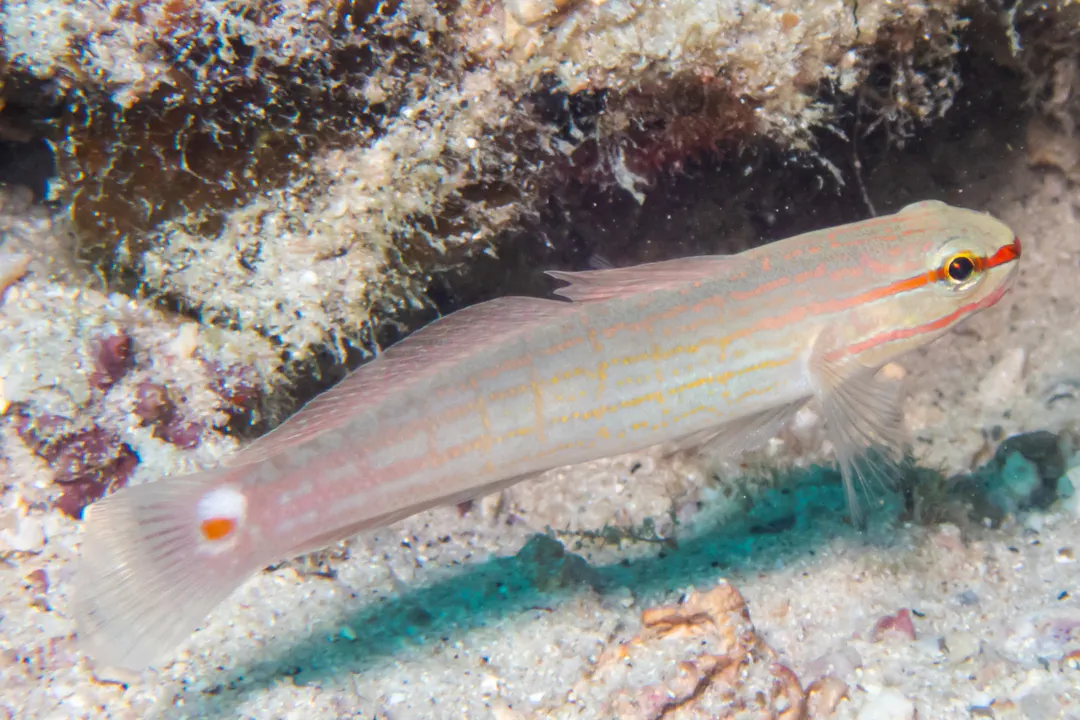
Valenciennea strigata is a species of goby native to the Indian Ocean and the western Pacific Ocean where it can be found in outer lagoons and the seaward side of reefs It inhabits a variety of substrates, sand, rubble, hard, at depths of from 1 to 25 metres (usually at less than 6 metres). This species can reach a length of 18 centimetres. It can also be found in the aquarium trade.
Characterized by pale grey body color, light grey above and white below. It has yellowish head. There is a black-edged blue stripe from the mouth to the rear of the operculum. Behind the eye is a short blue dash, and there are several curved markings on the lower sides of the head.
Indo-Pacific: East Africa to Tuamoto Islands, north to the Ryukyu Islands, south to Sydney, Australia, including Lord Howe Island.
It can be found in outer lagoons and the seaward side of reefs. It occurs in a variety of substrates, sand, rubble, hard, at depths of from 1 to 25 metres (usually at less than 6 metres). It primarily inhabits burrows dug under rubble, using them as both a nesting site and a refuge from predators. Such burrows typically have two entrances; however, only one of them is open, as the other is covered by rubble, sand, and algae. It feeds on small crustaceans and other small marine organisms.
It can also be found in the aquarium trade. It is also sought after as a substrate stirrer and cleaner. These fish use their mouths to constantly scoop up substrate and filter it out through their gills, consuming detritus and microfauna in the process. Like other members of the Valenciennea species, they feed by taking up mouthfuls of sand and pass it through their gill covers to extract small crustaceans, worms and algae. It is important that they have a sufficient amount of "live" sand for them to sift through. Live brine and a high protein krill are ideal for the aquarium. This fish thrives on nearly all marine frozen foods, live and flake foods once feeding.
They live in pairs and like to burrow in the sand, especially juveniles.They are peaceful with other fish especially their own kind and may be considered safe to keep in pairs or small groups where space and filtration capacity allows.
© Bernard PictonCC BY 4.0 · iNaturalist  © Pierre PericardCC BY 4.0 · iNaturalist
  © IzuzukiCC BY 4.0
  © Piotr LukasikCC BY 4.0 · iNaturalist
  © 呂一起(Lyu yi-chi)CC BY 4.0 · iNaturalist
  © portioidCC BY 4.0 · iNaturalist
 Bluestreak Goby has no known danger to humans. However, always observe marine life responsibly.
Bluestreak Goby can be found at depths of up to 25 meters.
Download Seabook free for iOS and Android.