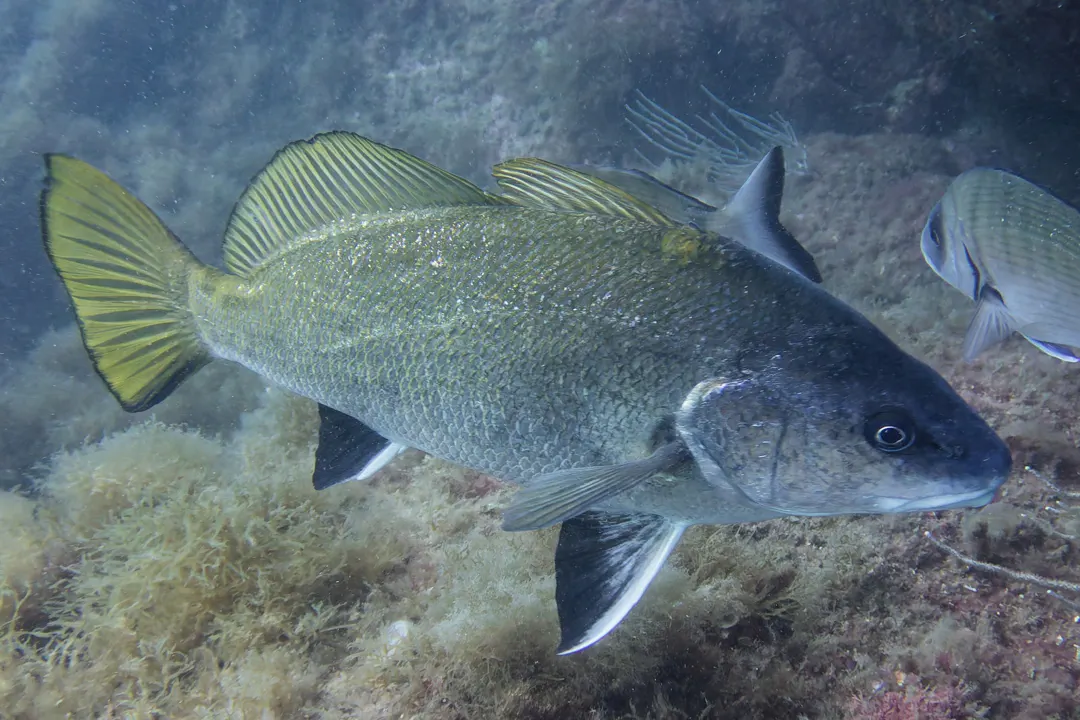
 © Donald DavesneCC BY 4.0 · iNaturalist
Brown Meagre
Sciaena umbra
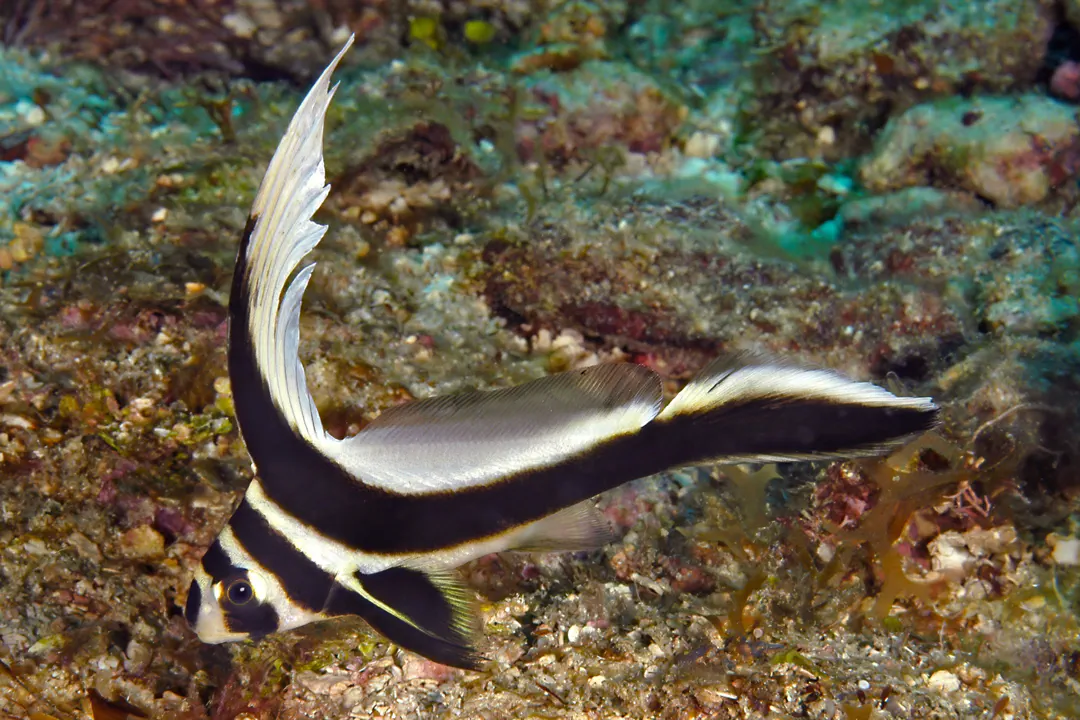
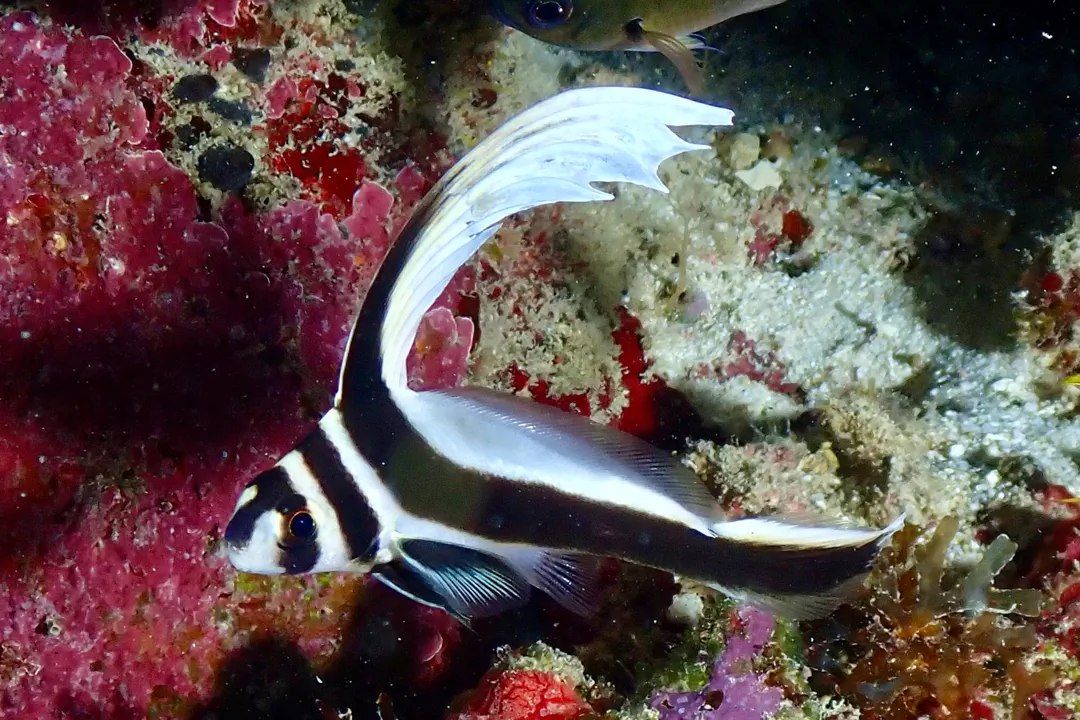
Eques lanceolatus
Equetus lanceolatus is a species of fish in the family Sciaenidae, the drums and croakers.
This fish reaches about 25 centimeters in maximum length. The first dorsal fin is very tall. The body is gray in color with three brown or black bands. The first two bands are small and vertical, and the third extends from the tip of the tall dorsal fin down the body to the tip of the tail fin.
It occasionally be found on coral reefs in the middle western Atlantic Ocean, in the Caribbean, the Gulf of Mexico, Florida and the Bahamas.
When jackknifefish are young and small, they generally lives in rocks and coral hidden from predators. Generally they inhabit reef areas.
Jackknifefish are carnivorous fish that feed on crabs, shrimp and other small invertebrates.
This species of fish can live with other types of small fish, as it is not aggressive. Like other fishes of its family, it can produce "croaking" or "drumming" sounds.
Jackknifefish are typically black and white or dark brown and white.
© Donald DavesneCC BY 4.0 · iNaturalist 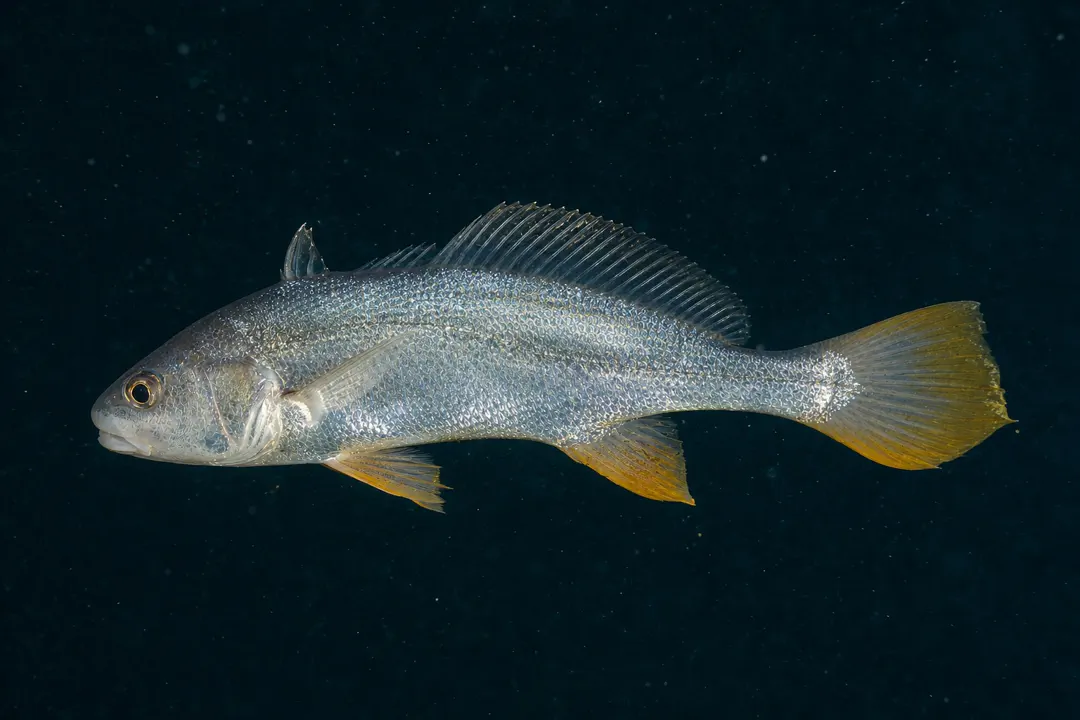
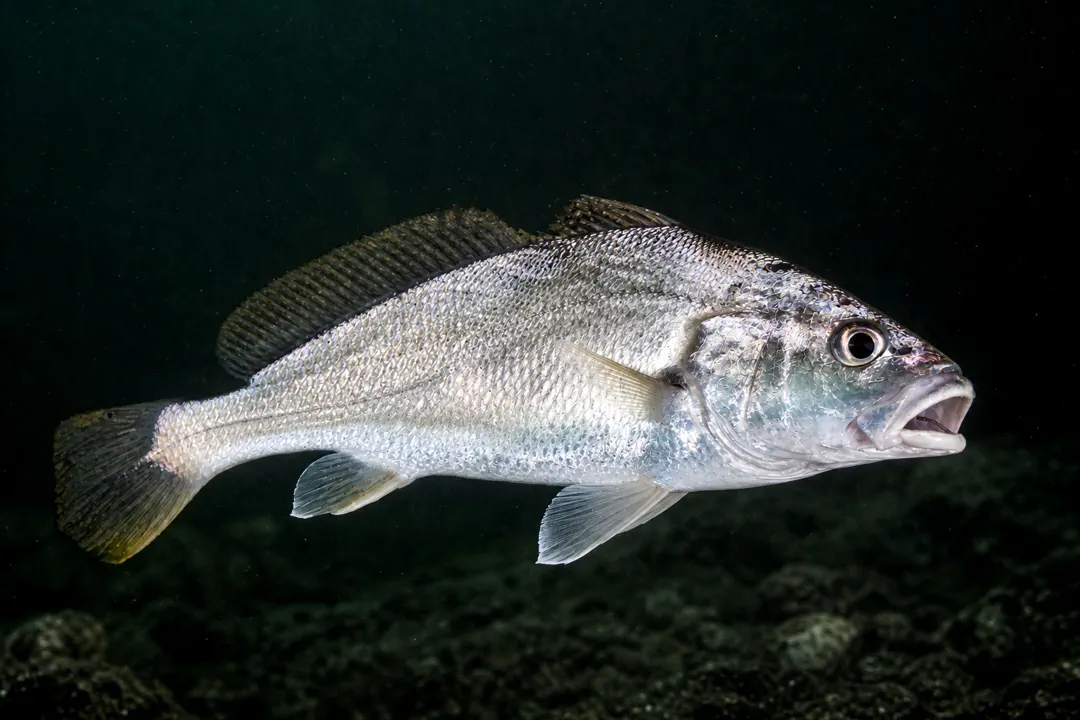
 Chris SpainCC0 · iNaturalist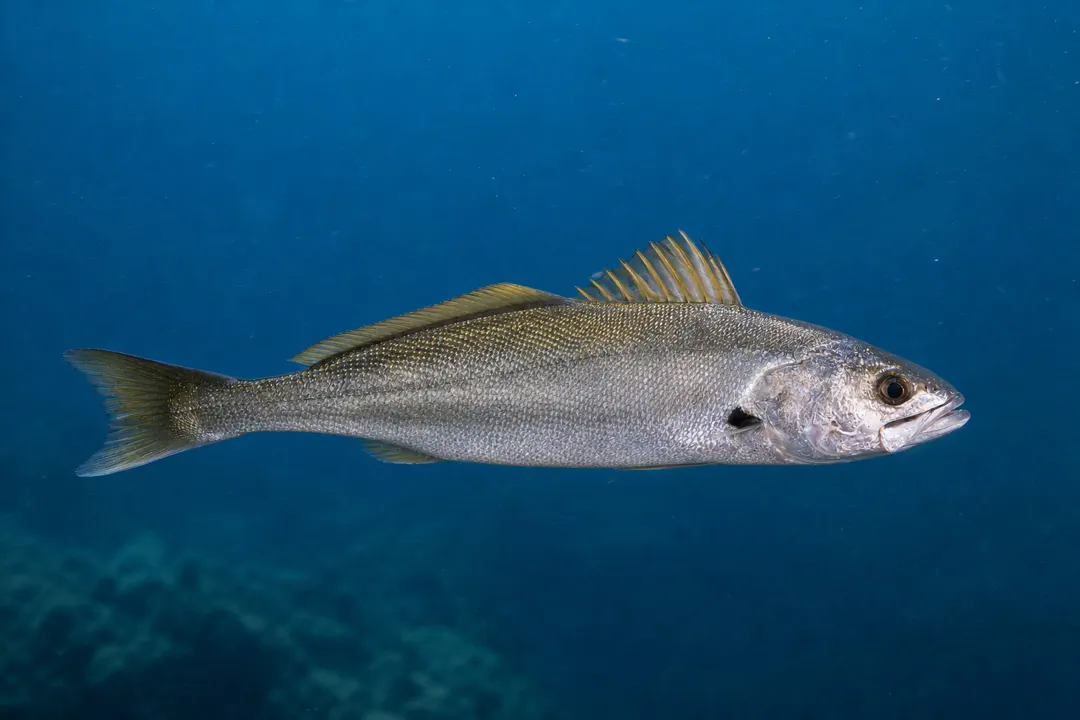
Jack-Knifefish (juvenile) is classified as poisonous. Always exercise caution and keep a safe distance.
Jack-Knifefish (juvenile) can be found at depths of up to 60 meters.
Download Seabook free for iOS and Android.