 © Donald DavesneCC BY 4.0 · iNaturalist
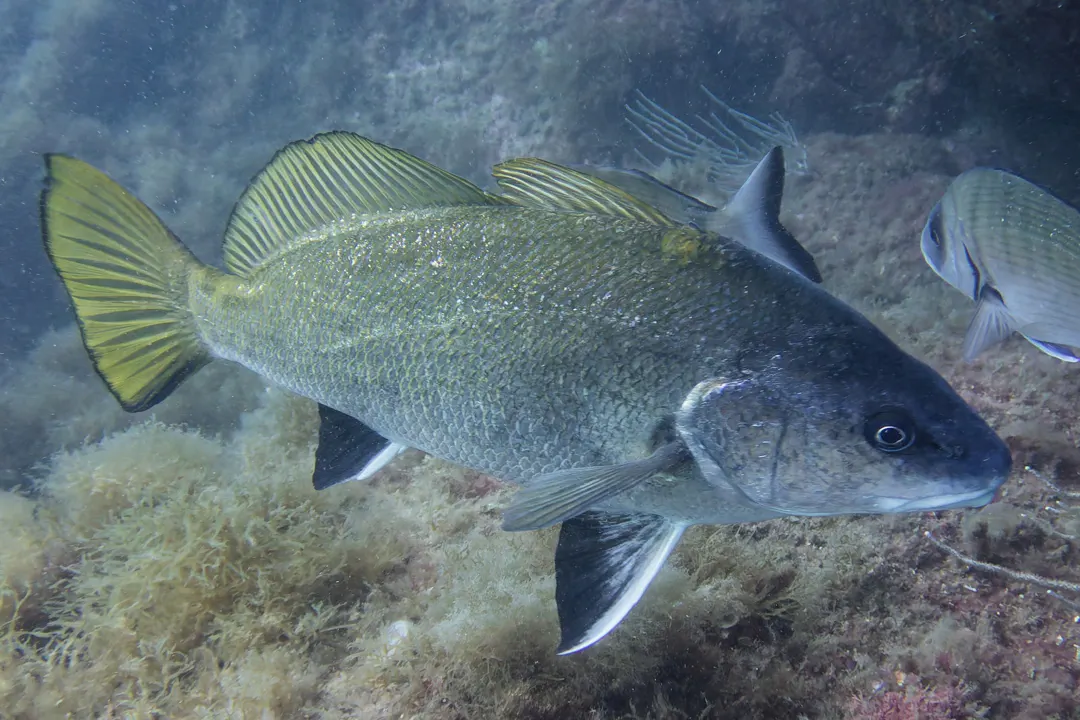
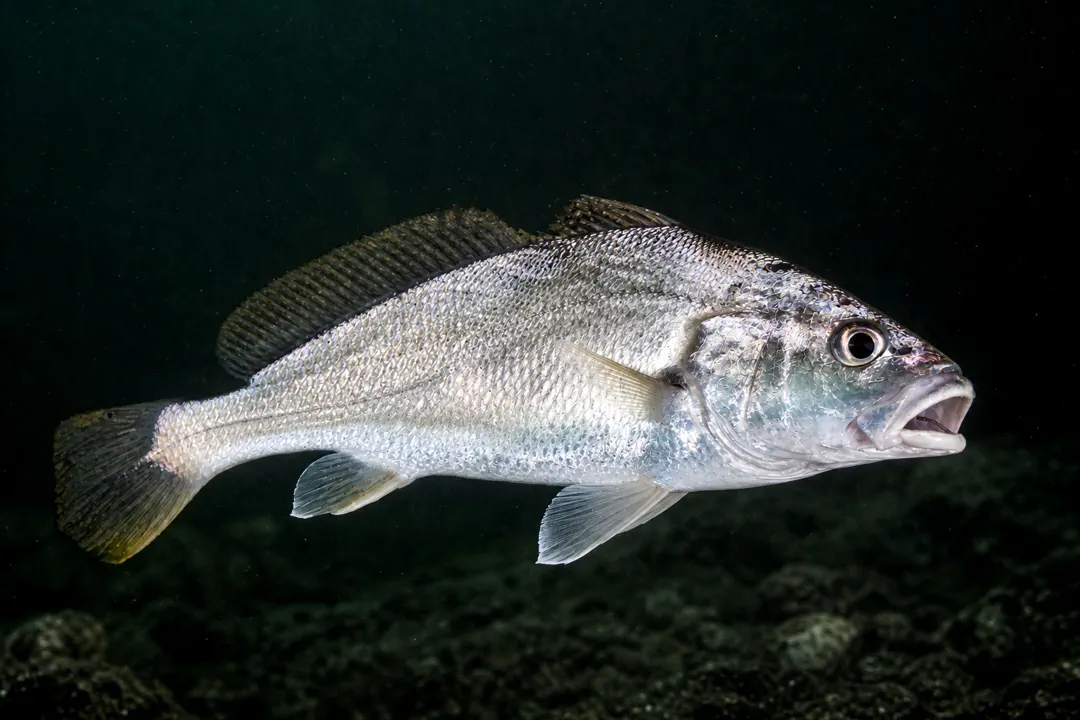
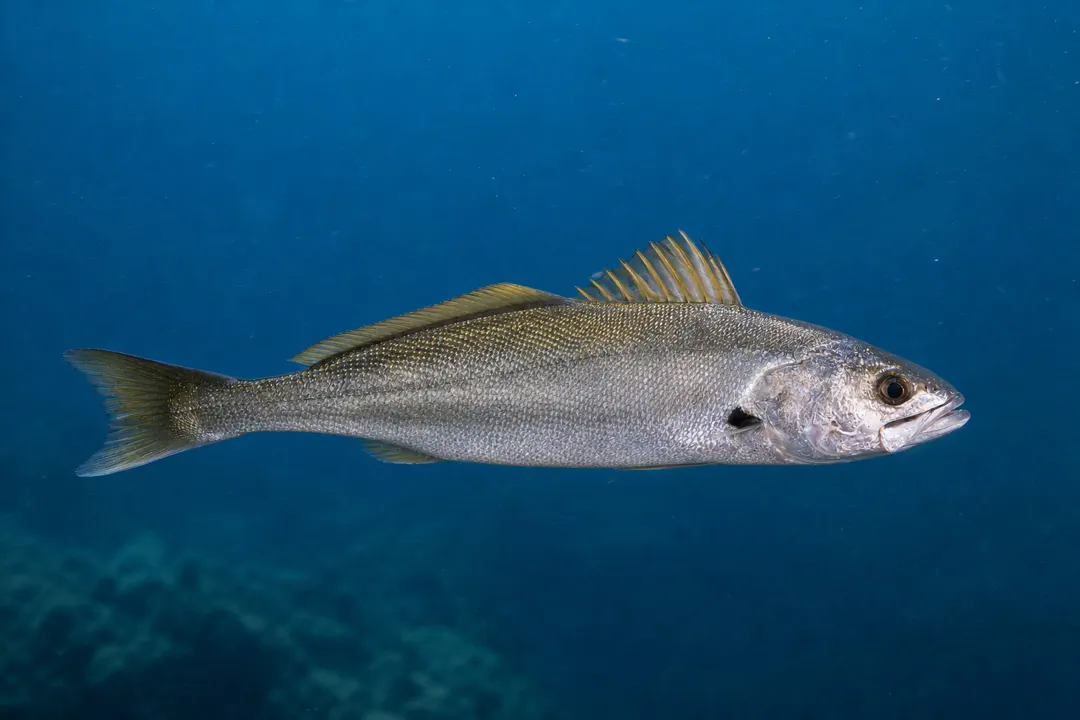
Brown Meagre
Sciaena umbra
Equetus punctatus
Equetus punctatus is a species of marine fish of the Drum family (Sciaenidae), found in the tropical waters of the Atlantic Ocean, including the Caribbean Sea.
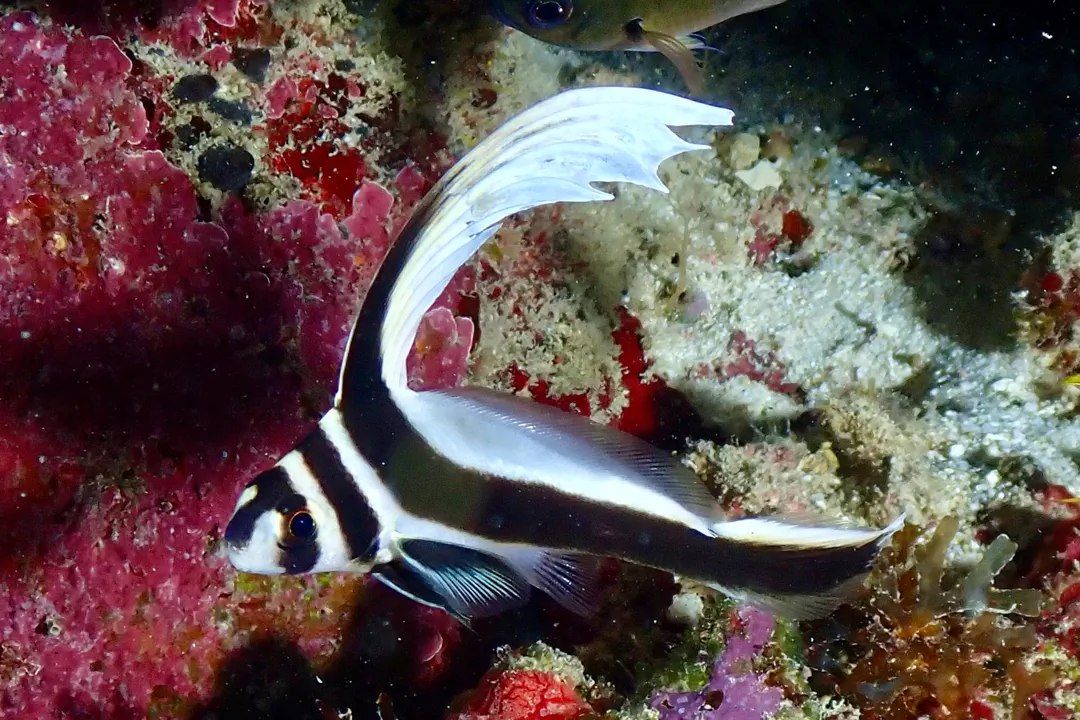
It has a graceful body and distinctive fins. Adult individuals typically reach a length of 15–25 cm, rarely exceeding 30 cm. The body is silvery-white or light gray, adorned with bright black spots arranged in arcs or stripes along its sides. These spots give the fish its characteristic appearance and its name.
The dorsal and tail fins are elongated with black edges, adding to their visual appeal. The dorsal fin is particularly long, giving the fish a graceful silhouette. Head is white with two dark brown bars, one through eye, the other more posterior and more diagonal, extending across chest to pelvic fins. Body is white with a broad dark brown band beginning on front of first dorsal fin, curving across nape, above pectoral fin, and running to mid-base of caudal fin. Two narrower dark stripes are above and below this band. Mouth small, inferior, nearly horizontal.
Juveniles have an extremely long dorsal fin. Head with a black spot on the nose and two black bars. Body with one long black stripe from the first dorsal fin to the tail.
The spotted drum is widespread throughout the tropical waters of the occidental Atlantic Ocean from south Florida to Brazil including by the way the Bermuda, the Bahamas, the Gulf of Mexico and the Caribbean Sea.
inhabits the tropical and subtropical waters of the Western Atlantic, including coral reefs, lagoons and rocky coastal areas. Depths ranging from 5 to 30 meters. It prefers shelter among coral or rocks, where it can hide from predators.
It is a nocturnal predator and feeds on small invertebrates (crabs, shrimp), polychaetes (bristle worms), small mollusks. During the day, it hides in shelters, becoming more active at night to hunt along the seabed.
It is often found in pairs or small groups, which sets it apart from many other reef fish. Juveniles frequently use large sponges or coral crevices as protection.
© Donald DavesneCC BY 4.0 · iNaturalist 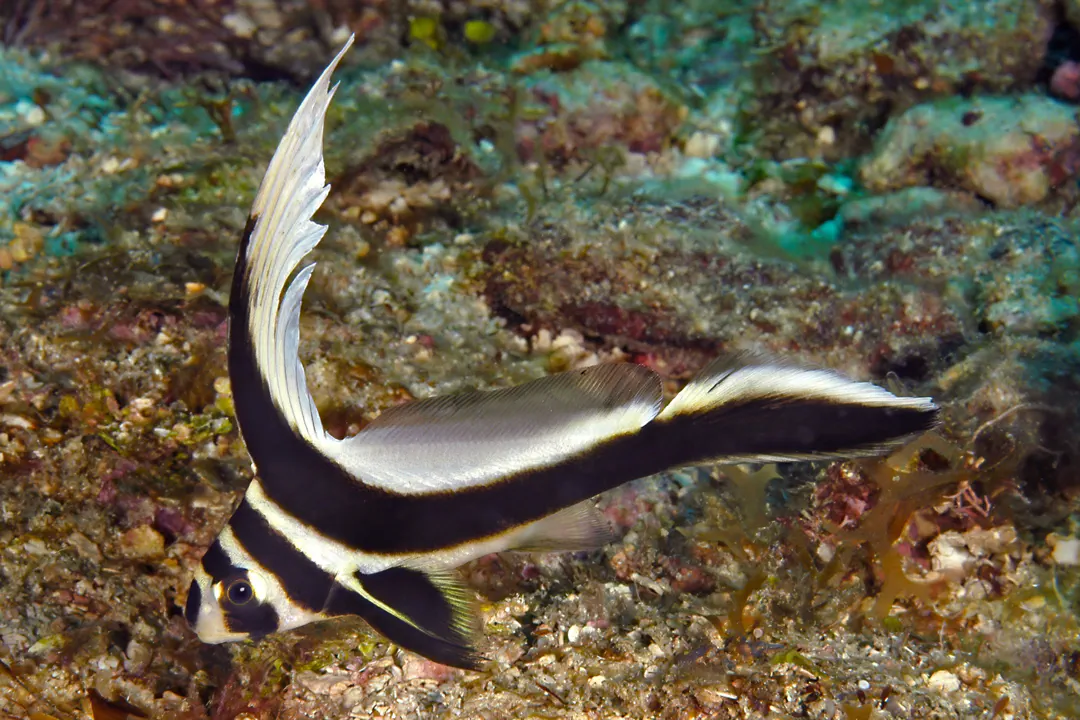 © seabook.appAll rights reserved
  © seabook.appAll rights reserved
  © seabook.appAll rights reserved
  © seabook.appAll rights reserved
 Spotted Drum (juvenile) is classified as poisonous. Always exercise caution and keep a safe distance.
Spotted Drum (juvenile) can be found at depths of up to 30 meters.
Download Seabook free for iOS and Android.