 © Vsevolod RudyiCC BY 4.0
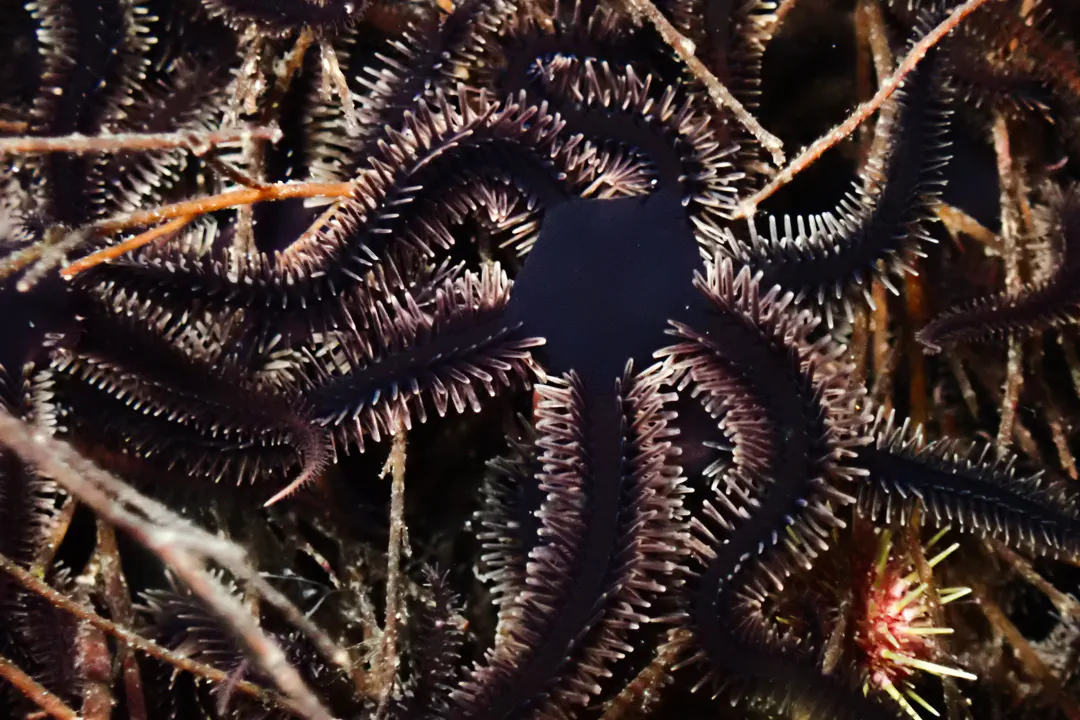
Black Brittle-star
Ophiocomina nigra
Ophionereis fasciata
Ophionereis fasciata, commonly known as the Mottled brittle star, belongs to the family Ophionereididae and is endemic to New Zealand.
Frederick Wollaston Hutton described the species in 1872. The current combination is Ophionereis fasciata Hutton, 1872, but the original description is not documented. A type locality is not documented in the WoRMS record, although the species is recorded from New Zealand. The genus Ophionereis is derived from Greek ophis meaning 'snake' and Nereis, referring to the snake-like appearance of brittle stars. The specific epithet fasciata is Latin for 'banded' or 'striped', likely describing the species' coloration. Ophionereis novaezelandiae Mortensen, 1936 was previously listed as a synonym, but a 2013 taxonomic revision reinstated it as a distinct species. The genus Ophionereis Lütken, 1859 is accepted in the family Ophionereididae, with the species listed as Ophionereis fasciata Hutton, 1872 in a New Zealand shelf-fauna revision.
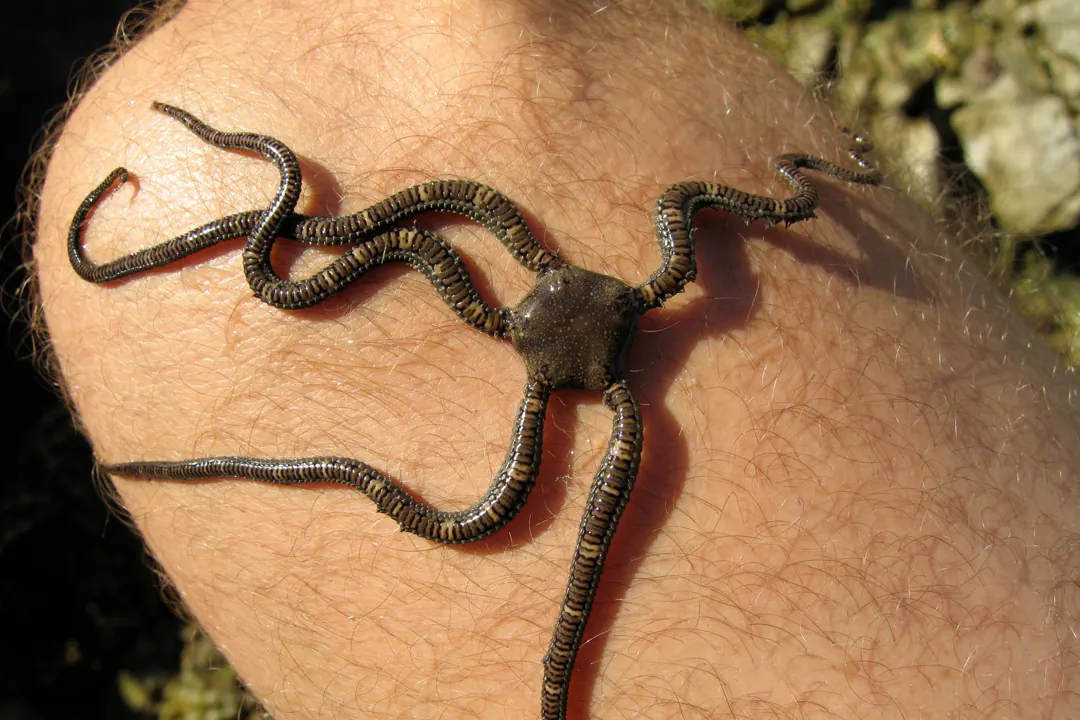
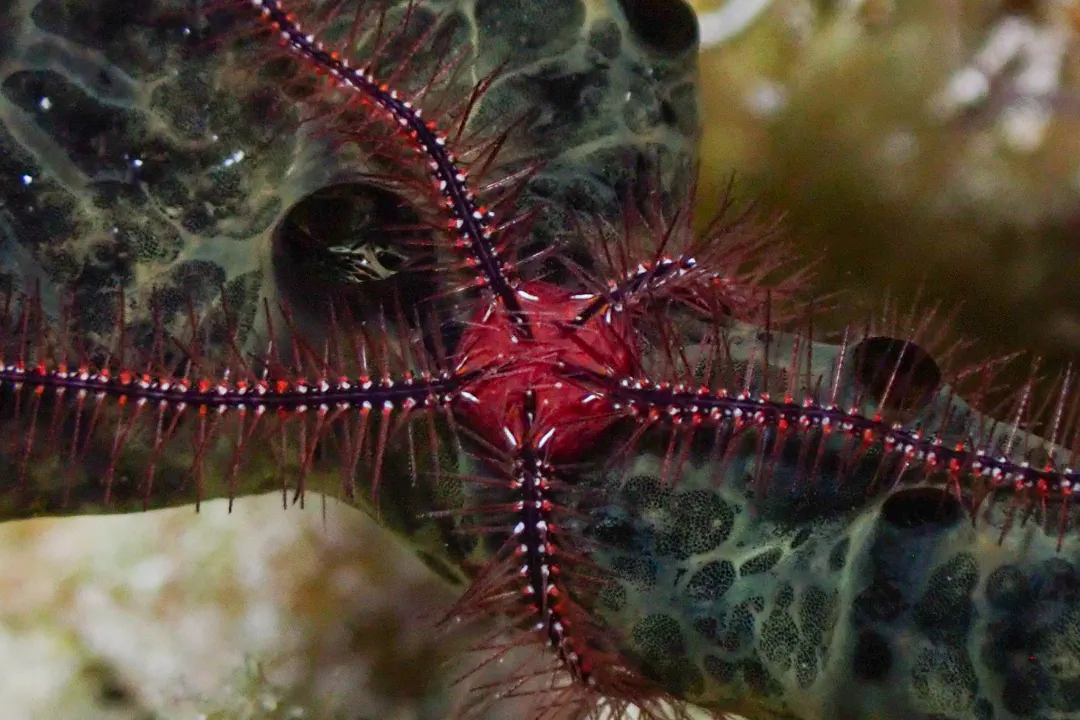
The disc of the mottled brittle star can reach up to about 16 mm across and is relatively hard-bodied rather than soft or gelatinous. Its disc is light grey to brown with irregular black blotches, while the radial shields and nearby scales are often black. The slender, brittle arms are light brown or cream with frequent dark bands and occasional white bands, and a faint pale line may run along the arm’s centre. Typically, there are four spines near the disc, reducing to three farther along the arm; these spines are short, blunt, flattened, and cream-coloured with one or two dark bands. Five long, flexible, tapering arms arise sharply from a distinct central disc, and the species commonly coils its arms beneath rocks or in crevices. To distinguish the mottled brittle star from similar species, it is important to confirm the combination of a randomly blotched disc, black-and-light-banded arms, and short blunt banded spines. Species with uniformly coloured discs, strongly contrasting black-and-white striping across both disc and arms, or conspicuous tubercles are not a good match for the mottled brittle star. Close identification may require magnification, as the mottled brittle star has a single large oval tentacle scale, hexagonal dorsal arm plates, and four proximal arm spines, which are more reliable than colour in poor underwater lighting.
The Mottled brittle star primarily inhabits low intertidal to shallow subtidal habitats, including rocky shores and reef areas. It is usually concealed beneath rocks, boulders, or in crevices. The species occurs in mudstone channels and patches of sand, small stones, and shell beneath boulders, and it is seldom exposed in the open. The Mottled brittle star commonly occurs from the low-tide zone through shallow water, with records extending to approximately 300 m, although such deep records are rare. This species is endemic to New Zealand, occurring around most of the country and extending north to the Bay of Islands, with greater abundance in southern regions.
The Mottled brittle star normally shelters beneath boulders and in rock crevices, especially during daylight. It is capable of active movement and filter-feeds from the water column, but species-specific measurements of its day–night activity pattern are not well documented. No authoritative evidence indicates that it forms stable social groups or colonies, although individuals commonly occur beneath the same rocks, which should be described as shared shelter rather than confirmed social behaviour. The species is described as dioecious, with mature gametes reported from December to March and spawning recorded from approximately January to April in New Zealand. Spawning can be induced by temperature and light changes, and development includes a non-feeding, lecithotrophic planktonic larva. When disturbed, the Mottled brittle star can produce brief blue bioluminescent flashes, which appear to be associated with predator deterrence. Physical handling of the Mottled brittle star may provoke defensive autotomy, so divers should observe without touching or lifting individuals.
The Mottled brittle star is primarily a suspension feeder that filters small suspended particles from the water using mucus screens formed between its arm spines. It collects food particles using mucus traps formed between its arm spines, which are then gathered by tube feet and passed toward the central mouth. Oral tube feet manipulate the collected food bolus and scrape it against the brittle star’s teeth and oral papillae before ingestion. Jaw teeth and oral papillae help process and grind the food before it is ingested.
Available evidence indicates little direct human use of the Mottled brittle star. No documented targeted fishery or established commercial harvest for the species was found. The reported fishing-vulnerability score for the Mottled brittle star is 0/100, but this does not prove that incidental capture never occurs. No reliable records exist of routine collection or successful captive keeping of the Mottled brittle star, and it is not documented as an established aquarium-trade species. No authoritative source documents the Mottled brittle star as a food species or establishes its safety for human consumption, and it should not be considered edible without species-specific food-safety evidence. The Mottled brittle star is listed as harmless by SeaLifeBase, although a hobbyist database reports its toxicity as unknown, suggesting that handling should be gentle and ordinary marine-animal hygiene should be followed. The conservation status of the Mottled brittle star is not evaluated by the IUCN Red List or CITES, indicating that formal global assessments or trade controls were not identified, but this does not imply that the species is necessarily secure.
© Vsevolod RudyiCC BY 4.0 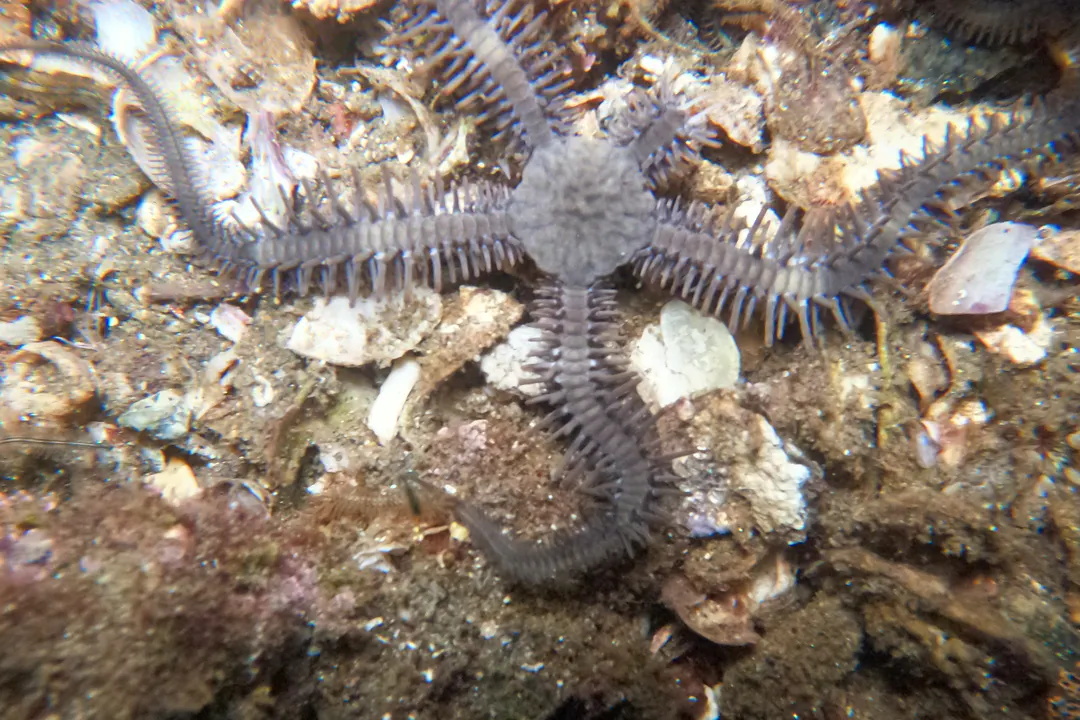 © Alberto AlcaláCC BY 4.0
  © Dan SchofieldCC BY 4.0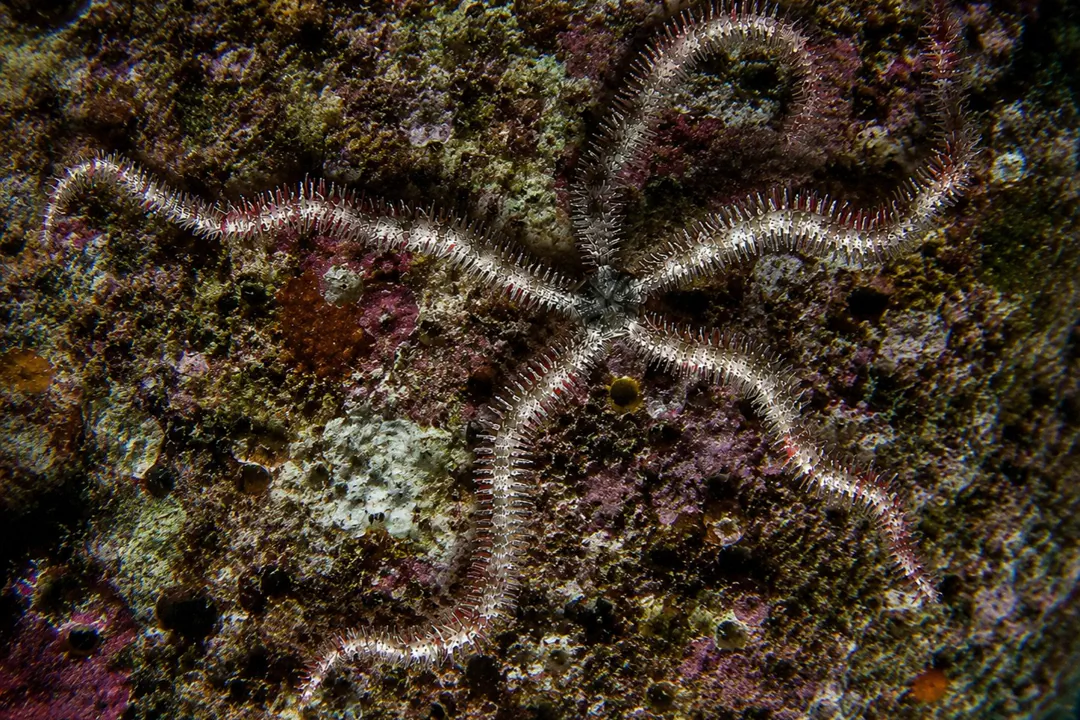
Mottled Brittle Star has no known danger to humans. However, always observe marine life responsibly.
Download Seabook free for iOS and Android.