 © Roger RittmasterCC BY 4.0 · iNaturalist
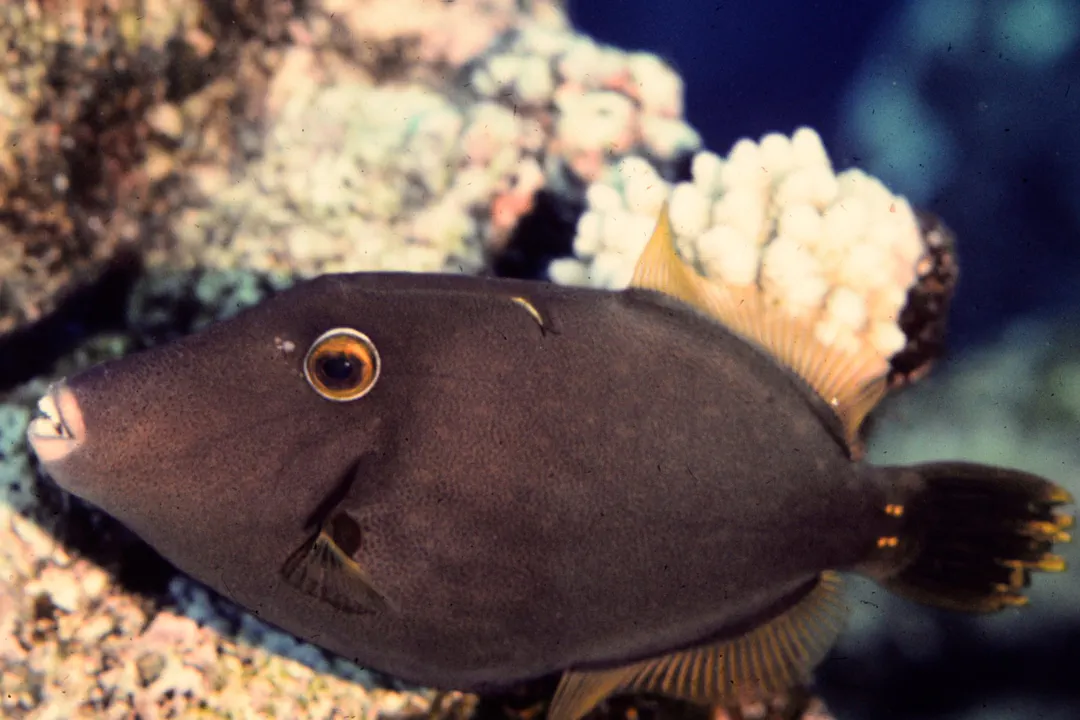
Barred Filefish
Cantherhines dumerilii
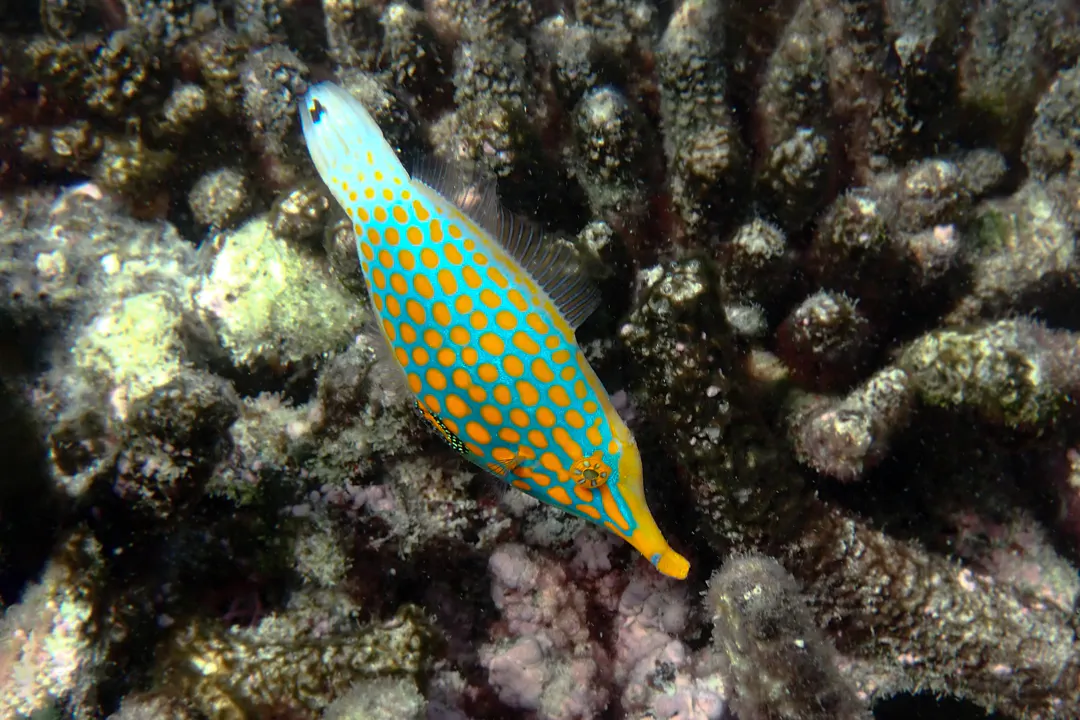
Oxymonacanthus longirostris
Oxymonacanthus longirostris, is a filefish in the family Monacanthidae found on coral reefs in the Indo-Pacific Oceans.
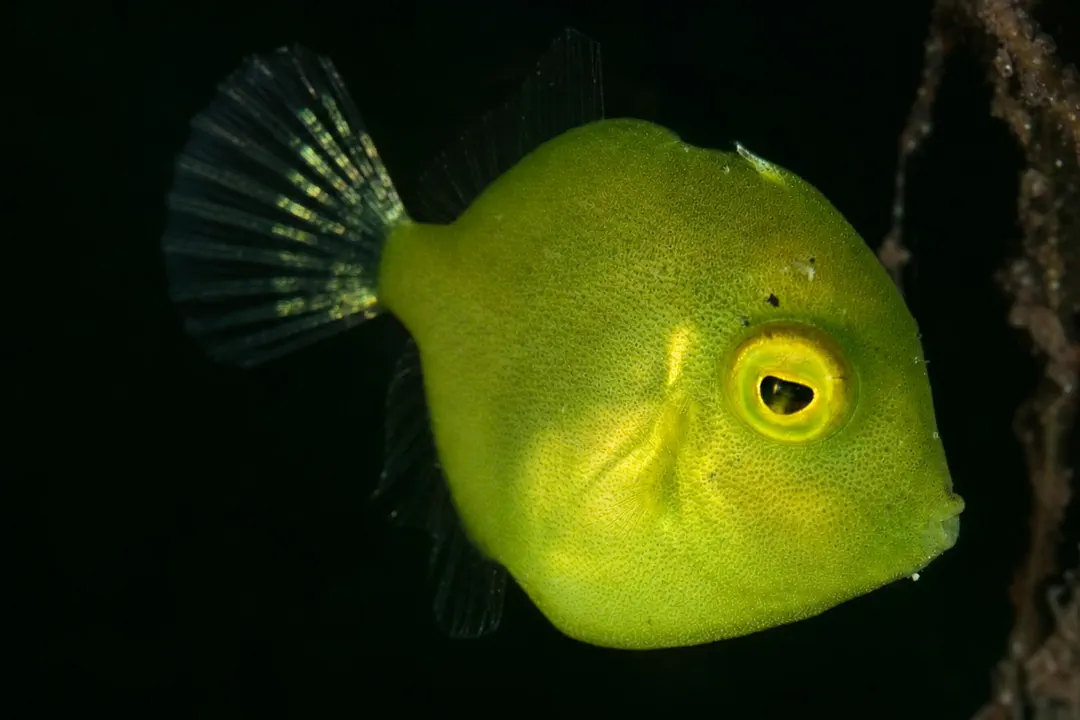
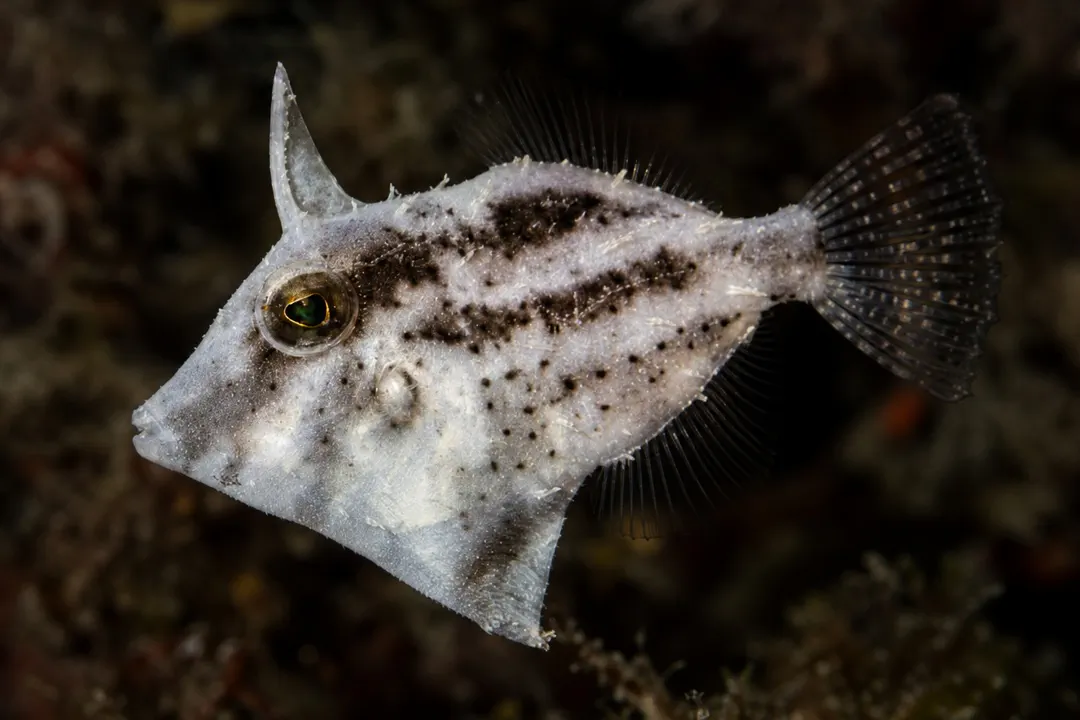
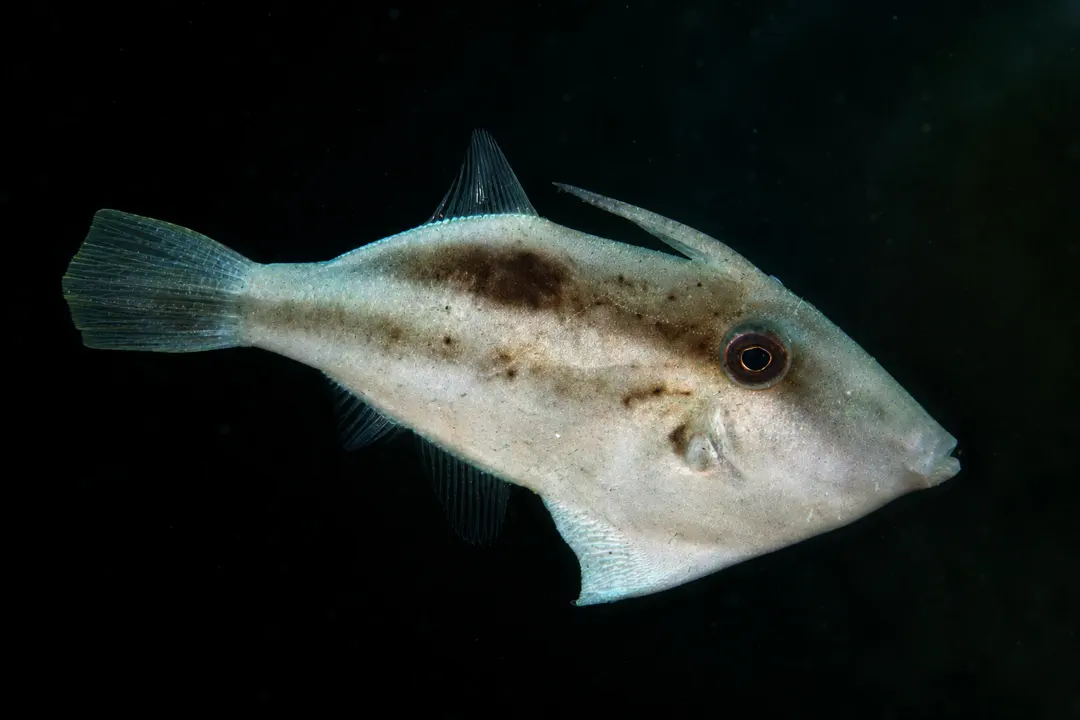
It has a long snout with a small upturned mouth. The body profile above and below the snout is concave. The body is pale bluish green with about eight longitudinal rows of small dark-edged yellow to orange spots. There is a dark spot on the caudal fin.
Indo-Pacific: East Africa south to Maputo, Mozambique and east to Samoa, north to Ryukyu Islands, south to the southern Great Barrier Reef, New Caledonia, and Tonga. Replaced by Oxymonacanthus halli in the Red Sea.
Occurs in clear lagoon and seaward reefs from 0.5 to at least 30 m. Found in pairs or small groups and nests near bases of dead corals, often on clumps of algae. Monogamous. Feeds exclusively on Acropora polyps. Feeding takes place throughout the day becoming less towards the evening.
Aggression is used commonly in courtship. Spawning commences when after swimming together in different tufts, the female concentrates on just one and begins to thrust repeatedly and pause. The male follows suit nuzzling the female. The female then drops into the algae and spawns, while the male releases the sperm beside her. The pair then swims back to their territory. They absorb and use chemicals in the Acropora coral they eat to take on its smell, which cloaks them from natural predators like cod. In addition to this trait, not observed among other vertebrates, they also use visual camouflage.
© Roger RittmasterCC BY 4.0 · iNaturalist  © Stas KuryanAll rights reserved
  © seabook.appAll rights reserved
  © seabook.appAll rights reserved
  © seabook.appAll rights reserved
  © seabook.appAll rights reserved
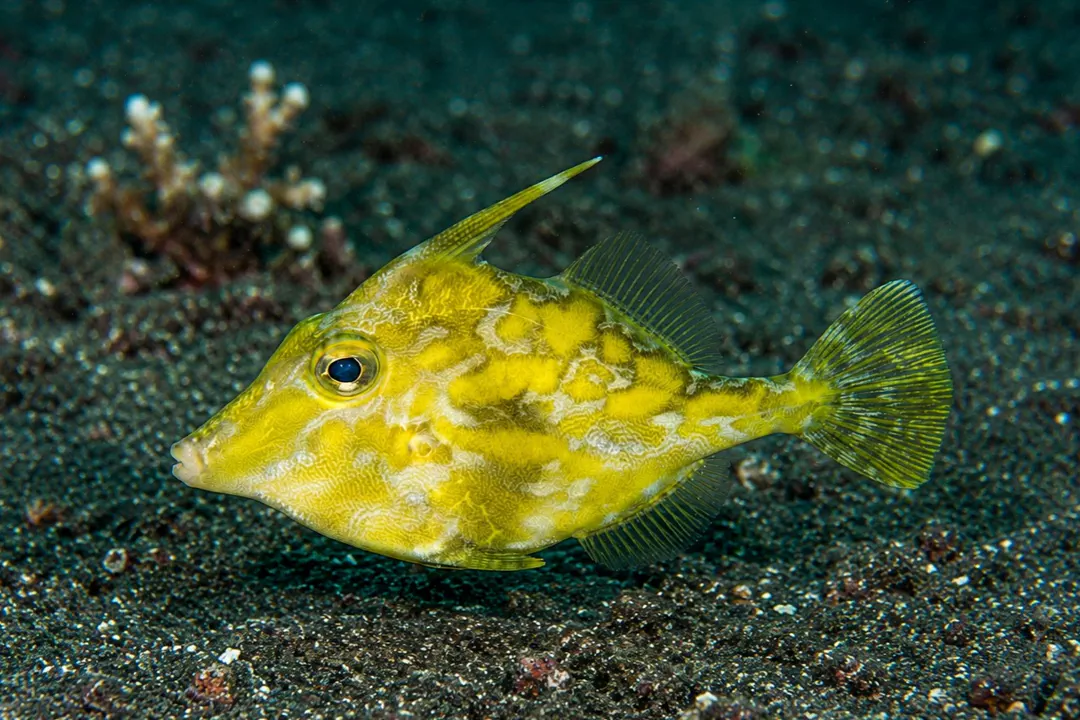
 Longnose Filefish has no known danger to humans. However, always observe marine life responsibly.
Longnose Filefish can be found at depths of up to 35 meters.
Download Seabook free for iOS and Android.