 © Kent LeongAll rights reserved
Barred Javelinfish
Pomadasys kaakan
Haemulon album
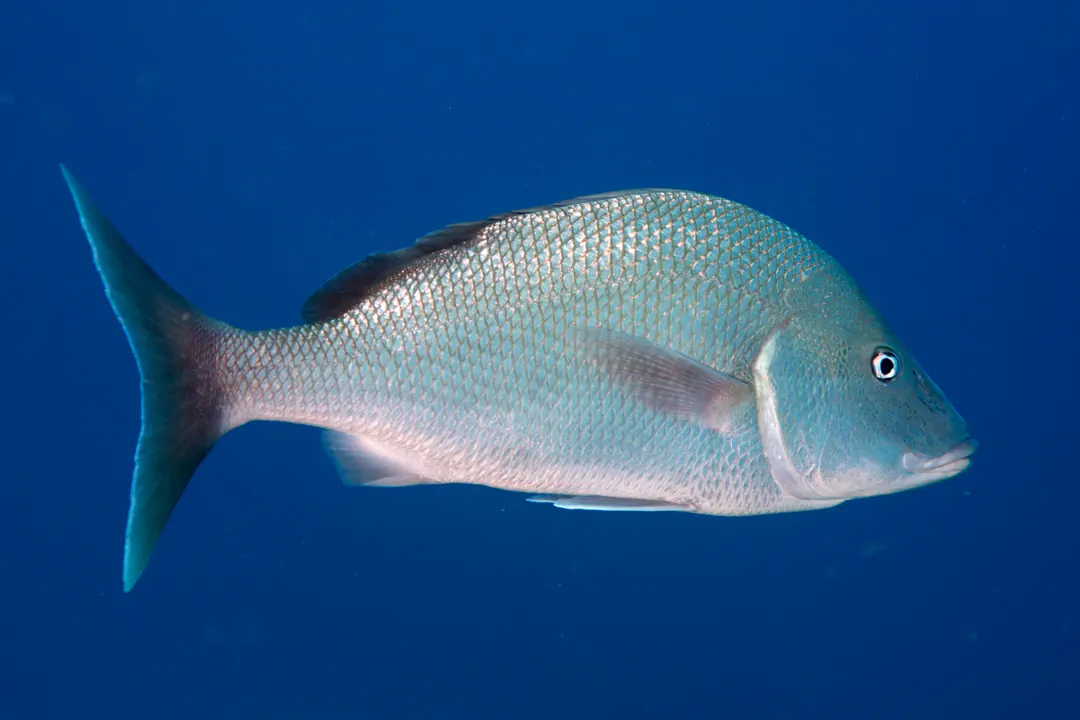
Haemulon album is a species of ray-finned fish in the family Haemulidae native to the western Atlantic Ocean.
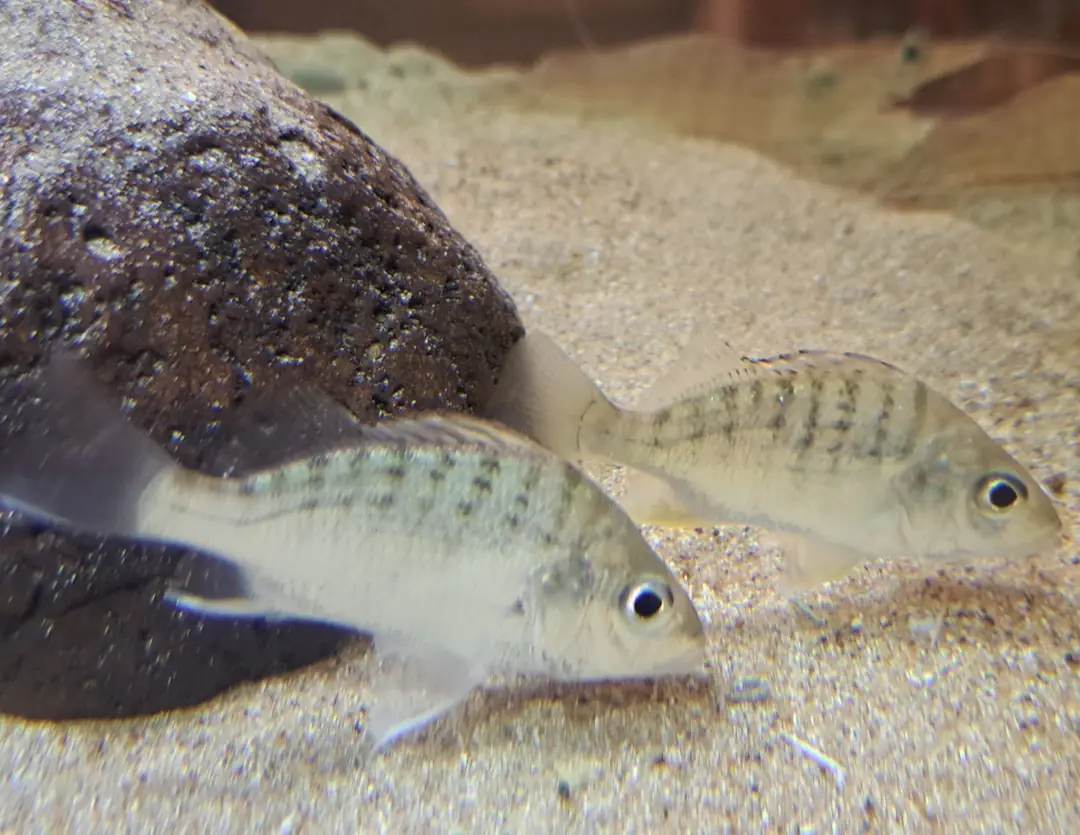
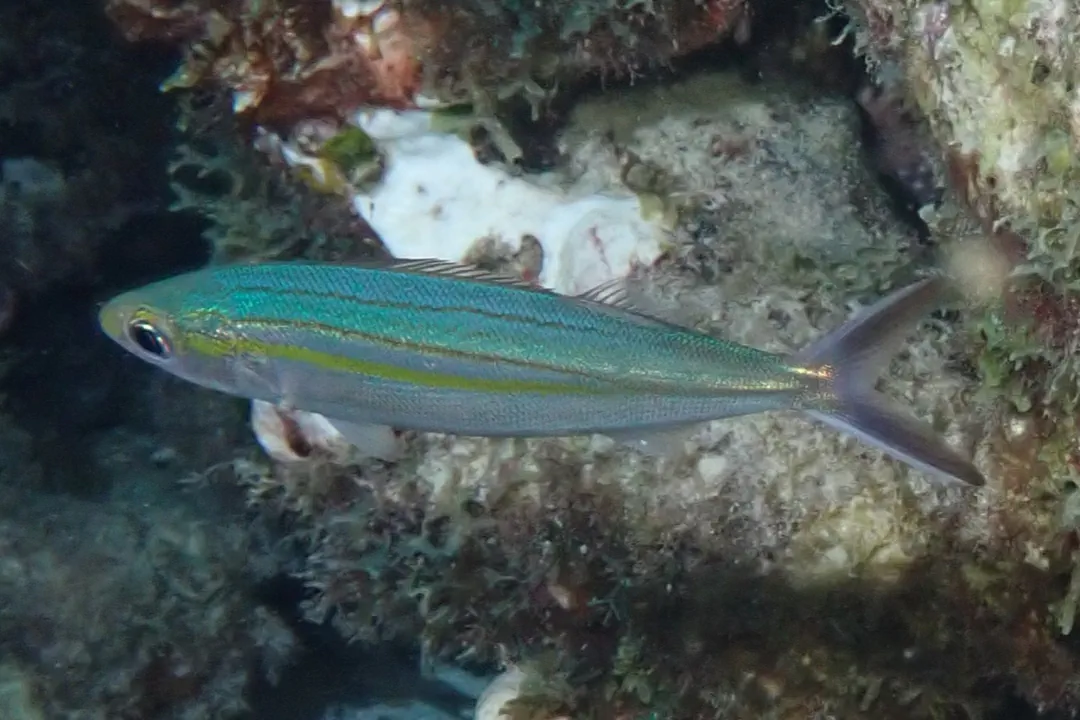
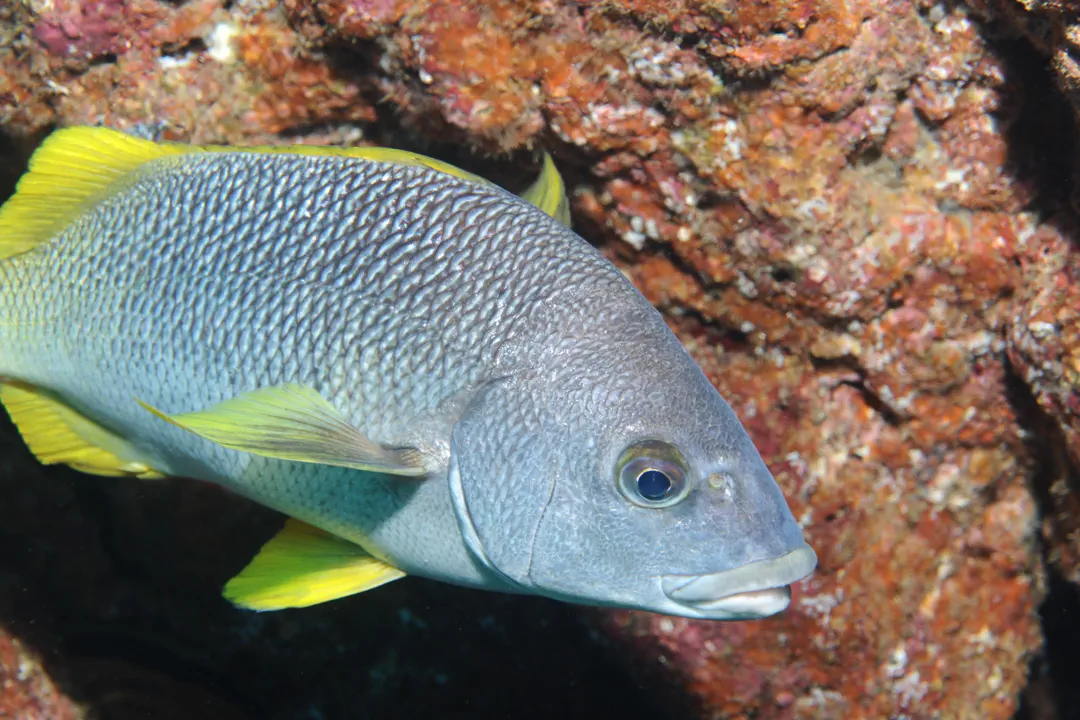
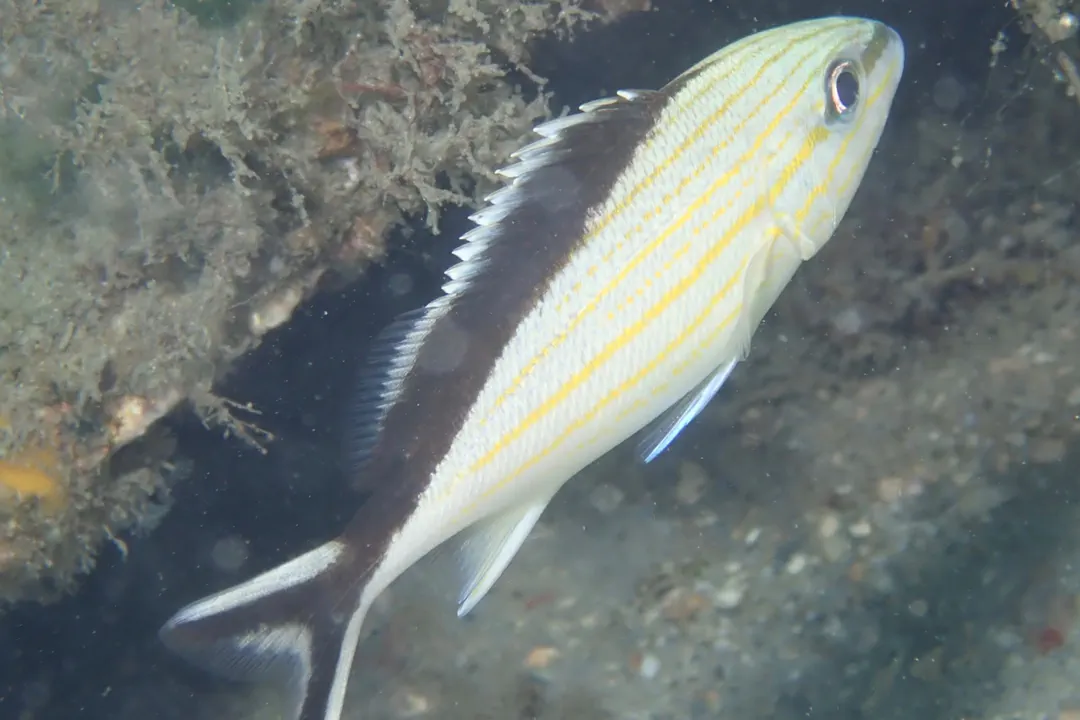
The White Margate is the largest Grunts, growing to 79 cm in length. Max published weight is 7.1 kg. Common length is 50 cm. It has a deep compressed tapering body that is 36% to 40% of standard length. It has a silvery gray coloration and an olive tinge dorsally. Its scales have dark spots on the upper body. Juveniles are bluish in color with dark parallel stripes ventrally. All their fins are a dusky pale green and they have an indistinct band along their sides. Their lips and snout have a yellow tinge and the inside of their mouth is orange. They have sloping heads with a relatively large mouth, thick lips, strong pharyngeal teeth, a blunt snout, and serrated gill covers. They have a high back. Their anal fin has 3 anal spines, the second being thick, and 7 or 8 rays; and, their dorsal fin has 12 spines and 15 to 17 rays. The scale rows immediately below the lateral line are oblique.
It is found in Mexican waters of the Atlantic Ocean including the Gulf of Mexico and the Caribbean.
It is an inshore species that is found within seagrass beds, sand flats, coral reefs, and wrecks at depths between 18 m and 60 m but it will enter shallower waters to seek invertebrates. They are found as pairs and in large schools. They feed at night and primarily on benthic invertebrates including peanut worms and heart urchins.
© Kent LeongAll rights reserved 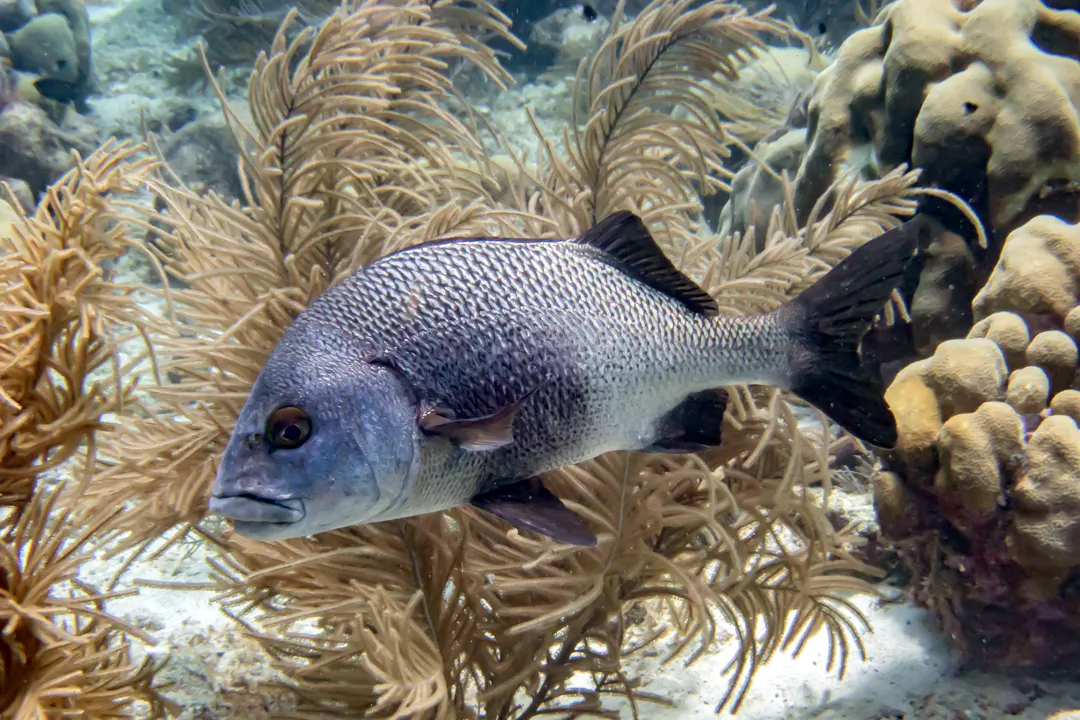 © Jay BrasherCC BY 4.0 · iNaturalist
  © Brian GratwickeCC BY 4.0 · iNaturalist
  © Roger RittmasterCC BY 4.0 · iNaturalist
  © fede2crCC BY 4.0 · iNaturalist
  © jeyreCC BY 4.0 · iNaturalist
 White Margate is classified as poisonous. Always exercise caution and keep a safe distance.
White Margate can be found at depths of up to 60 meters.
Download Seabook free for iOS and Android.