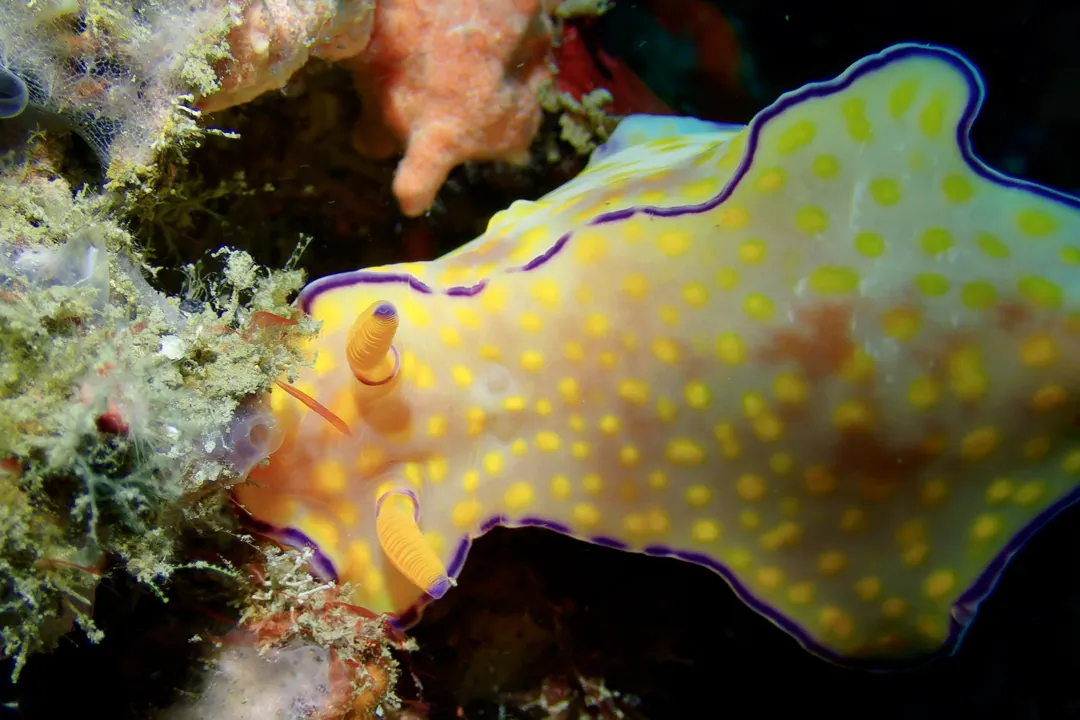
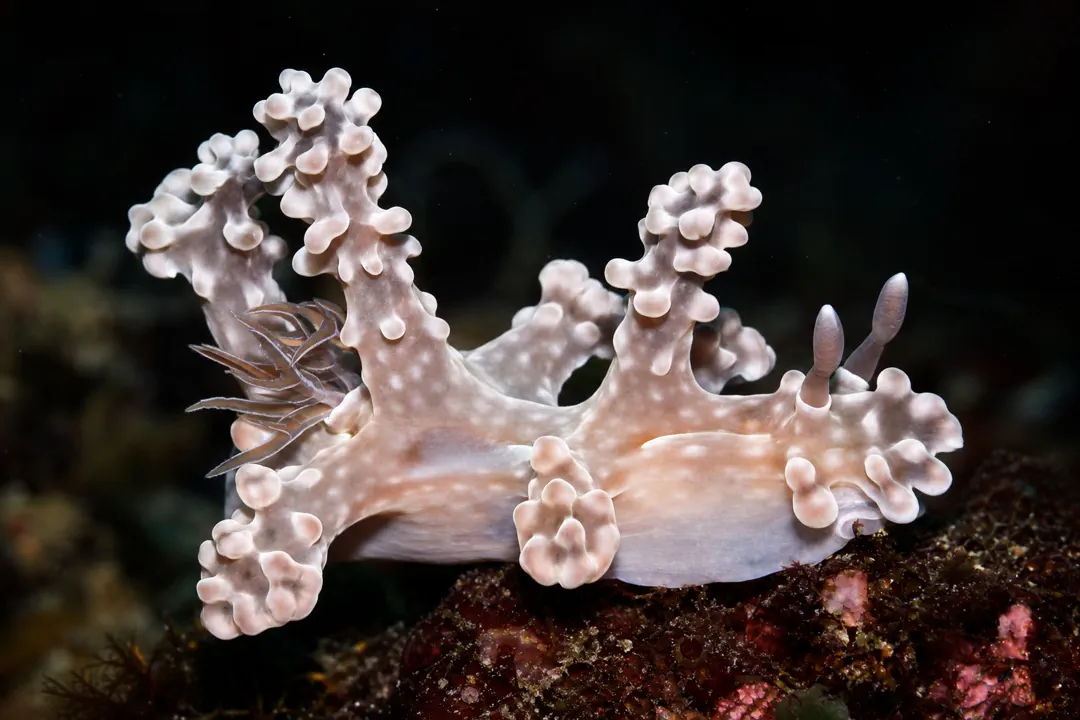
Allen’s Ceratosoma
Miamira alleni
Ceratosoma trilobatum
Ceratosoma trilobatum is a species of colorful dorid nudibranch, a sea slug, a shell-less marine gastropod mollusk in the family Chromodorididae.
It has a hard, almost rigid body with a long tapering foot and highly branched gills set between the three rounded triangular lobes of the mantle, one to each side and one arching over the gill, posteriorly. Ceratosoma tenue can grow to a maximal size of 15 cm length. The body colouration is extremely variable but is always composed of bright colors. The mantle is usually blotchy red with bright yellow spots. The purple border to the mantle and foot is usually an unbroken line. However, the body colouration is not a valuable criterion of determination for this species because it can easily be confused with Ceratosoma tribolatum. The physical distinctive criteria are three mantle lobes on the first half of the body on each side and the purple margin of the mantle and foot is a dotted line. Another specificity of many species of Ceratosoma is the kind of "horn" covering the gills, which is like a lure and acts as a defensive chemical weapon that will scare any potential predator who dares to bite this part. The gills and the rhinophores are retractile in internal sheaths.
This sea slug is widespread throughout the tropical waters of the Indo-Pacific area, from the oriental African coast to Japan, Red Sea included.
Ceratosoma trilobatum is active all time and has a diurnal activity. Ceratosoma trilobatum feeds on sponge of genus Dysidea and Euryspongia.
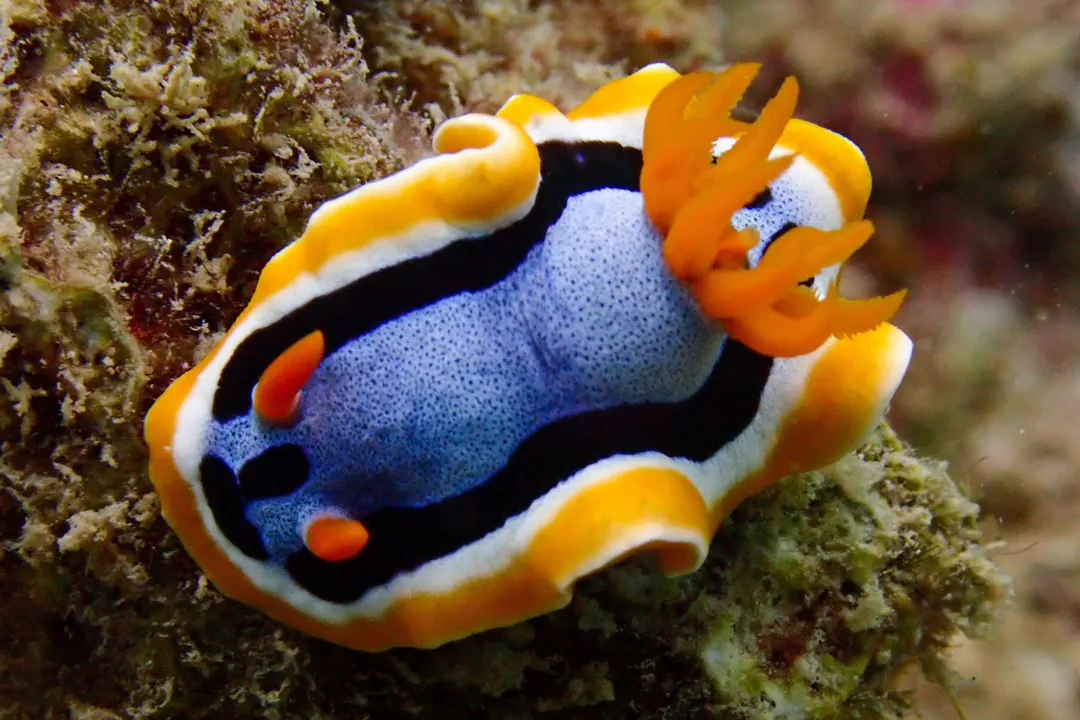 © Dan SchofieldCC BY 4.0 · iNaturalist
 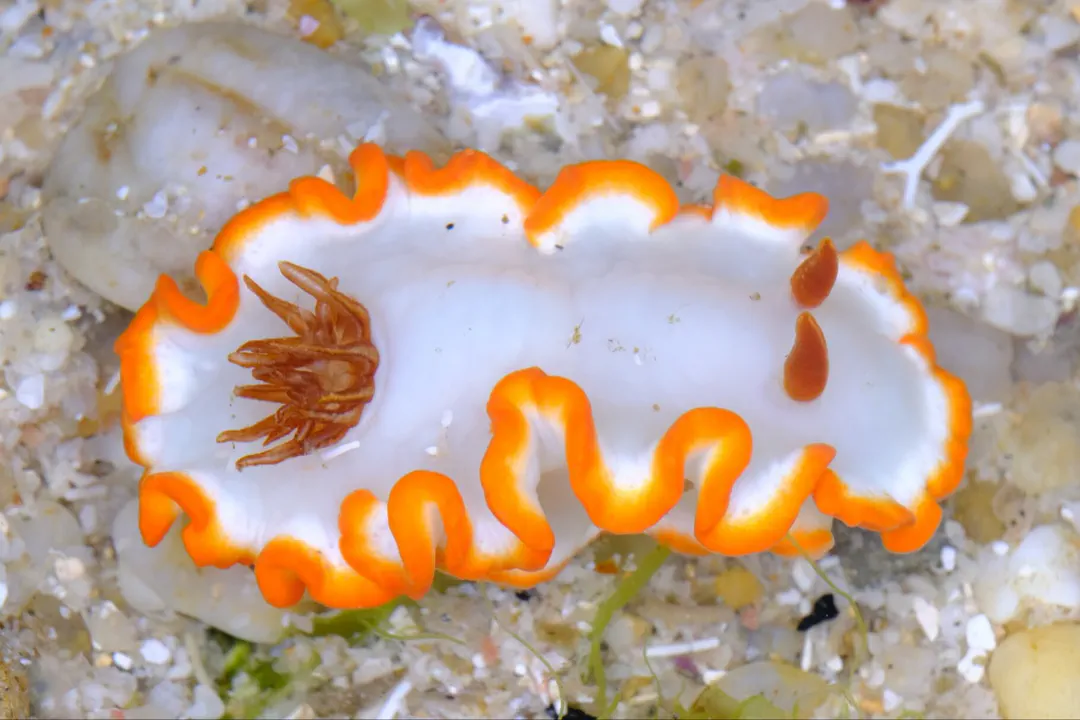 © Peter CrowcroftCC BY 4.0 · iNaturalist
 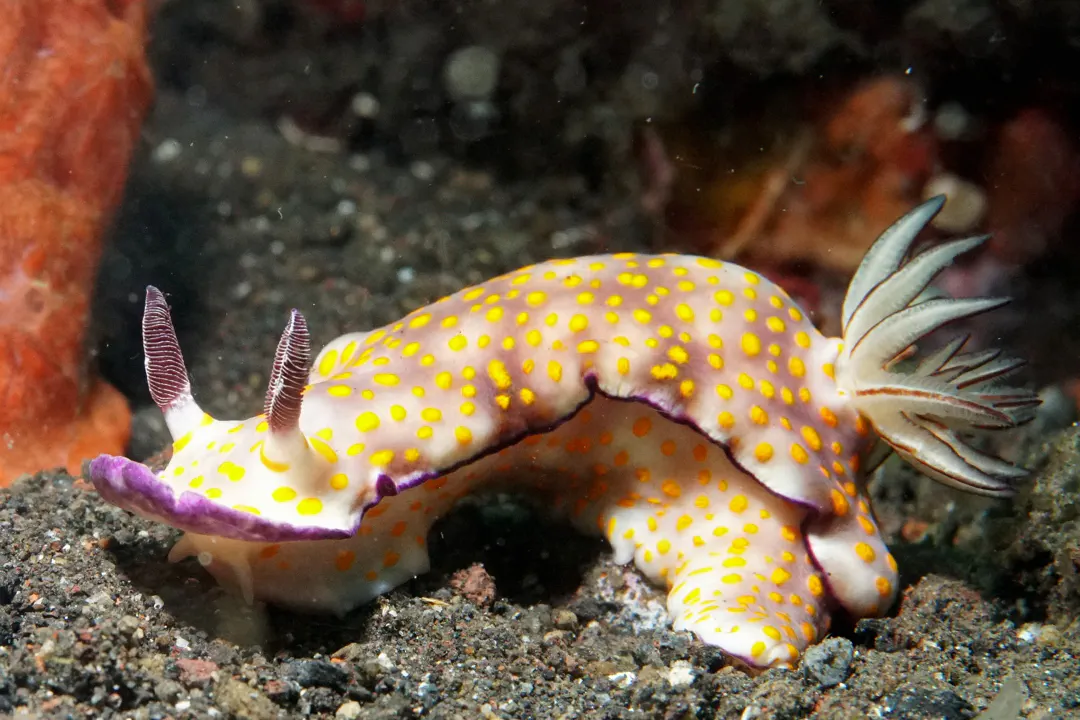 © Stas KuryanAll rights reserved
 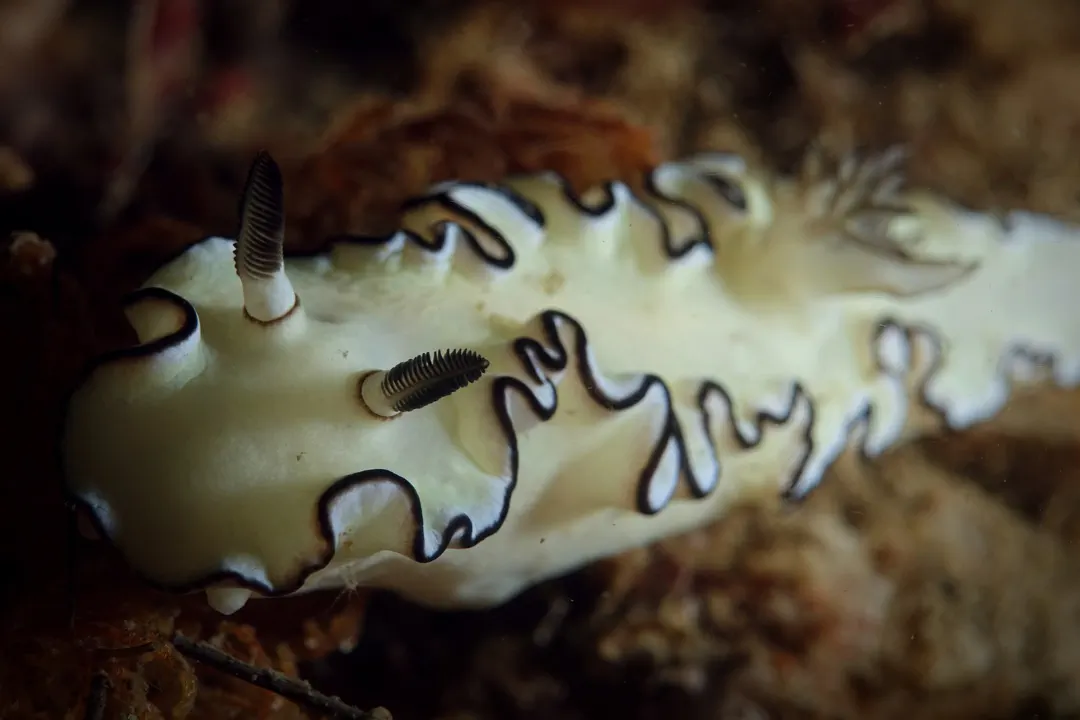 © Joanna ChenCC BY-SA 4.0 · iNaturalist
 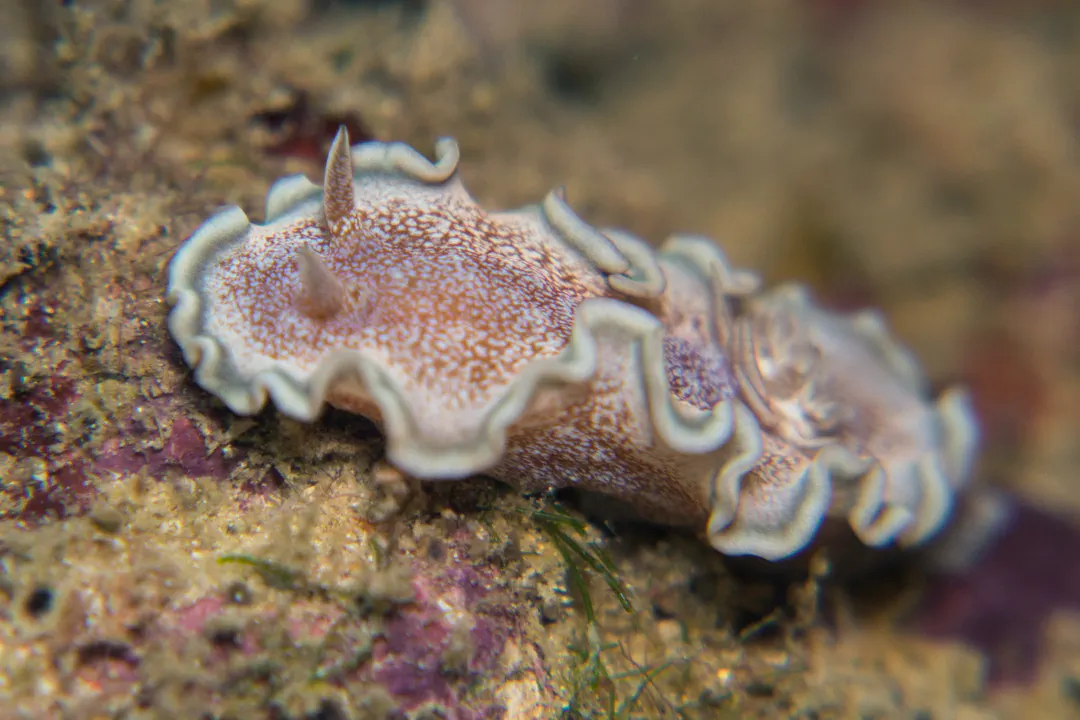 © Ewout KnoesterCC BY-SA 4.0 · iNaturalist
 Three-lobed T-bar Nudibranch (orange) has no known danger to humans. However, always observe marine life responsibly.
Download Seabook free for iOS and Android.