 © Jay ParolineCC BY 4.0 · iNaturalist
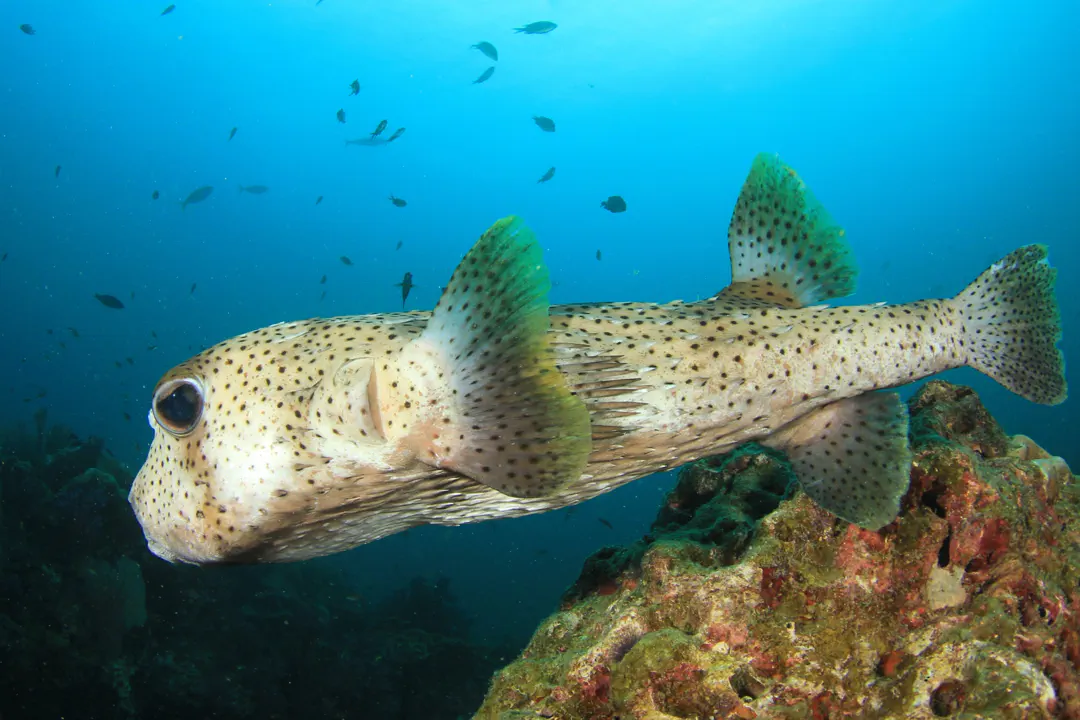
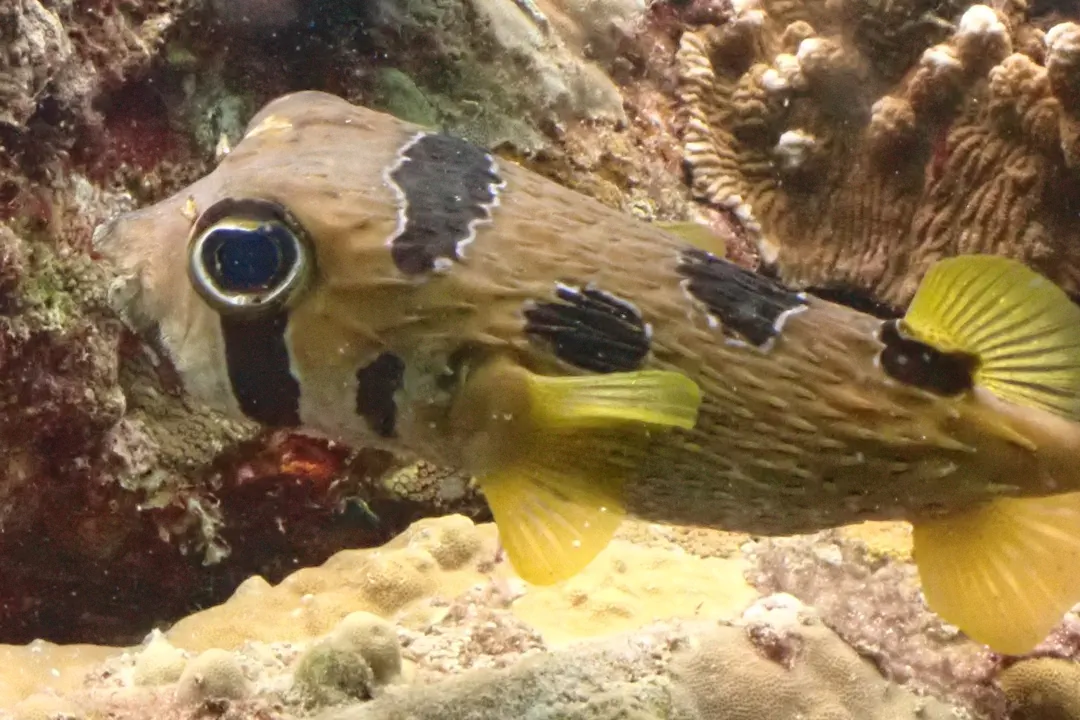
Blackblotched Porcupinefish
Diodon liturosus
Diodon hystrix
Diodon hystrix is a species of marine fish in the family Diodontidae.
The spot-fin porcupinefish is a medium-sized fish which grows up to 91 cm, but the average size mostly observed is 40 cm. Its body is elongated with a spherical head with big round protruding eyes, a large mouth rarely closed. The pectoral fins are large, the pelvic fins are absent, the anal and dorsal fins are close to the caudal peduncle. The latter move simultaneously during swimming. The skin is smooth and firm, the scales are modified into spines. The body coloration is beige to sandy-yellow marbled with dark blotches and dotted with numerous small black spots.
In case of danger, the porcupinefish can inflate itself by swallowing water to deter the potential predator with its larger volume and it can raise its spines.
The porcupinefish concentrates a poison, called tetrodotoxin, in certain parts of its body such as the liver, skin, gonads and the viscera. Tetrodotoxin is a powerful neurotoxin. This defensive system constitutes an additional device to dissuade the potential predators.
The porcupinefish is found in all the tropical and subtropical waters of the world, including the Mediterranean Sea.
Juveniles are pelagic up to the time that they are about 20 cm in length. Adults favour lagoons, top reefs and seaward coral or rocky reefs from one to 50 m depth, sheltering under ledges or in caves during the day.
The porcupinefish's diet is based on Sea urchins, gastropods and crustaceans.
This fish is solitary, except during mating periods, it has a nocturnal activity with a maximal activity at sunset and sunrise.
As most fish, the porcupinefish is infected by a variety of parasites. Spectacular parasites are the cysts of the larvae of the trypanorhynch cestode Molicola horridus, often found in great numbers in the liver. These parasites are not appetizing, but represent no danger to humans.
© Jay ParolineCC BY 4.0 · iNaturalist 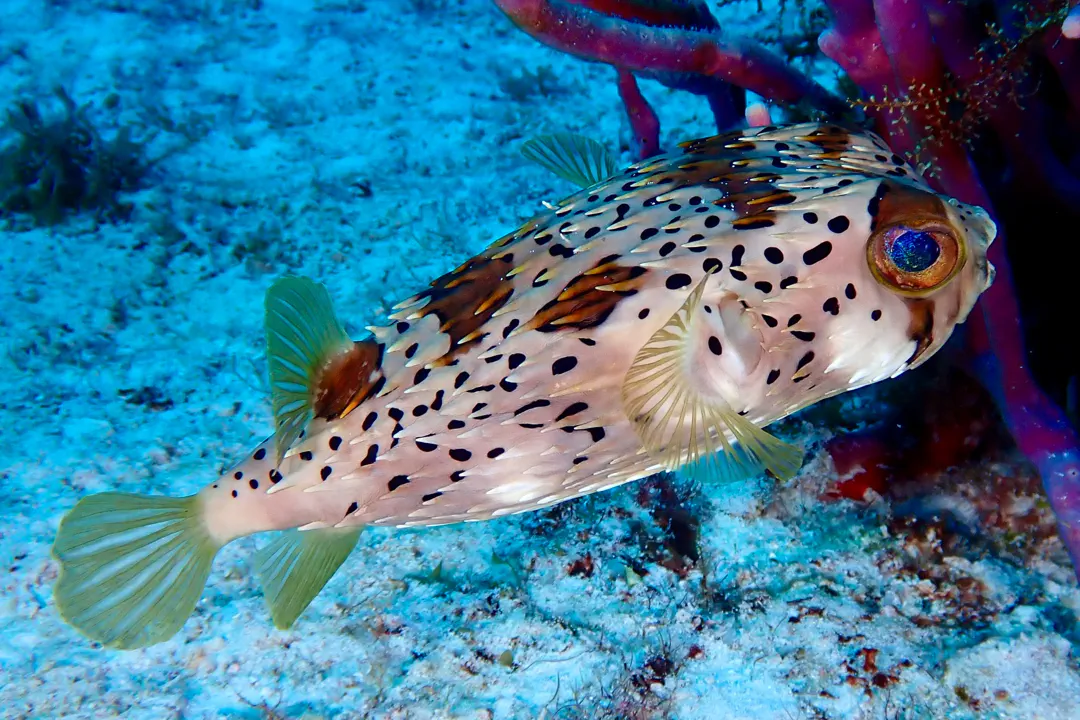 Chris SpainCC0 · iNaturalist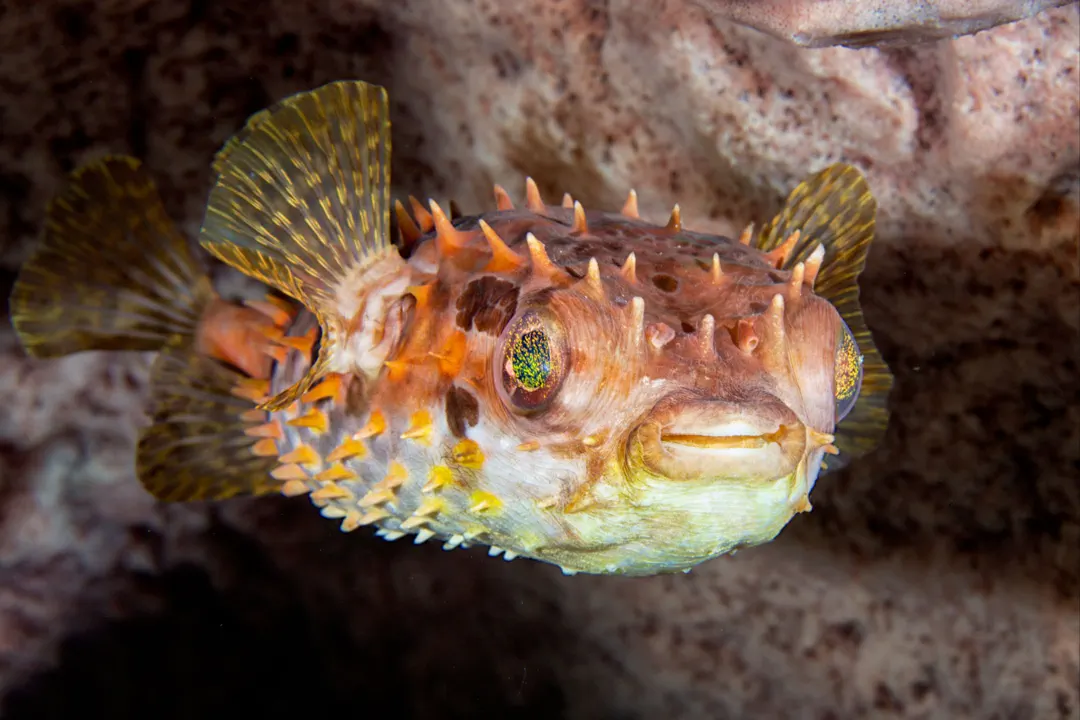
Spotted Porcupinefish is classified as poisonous. Always exercise caution and keep a safe distance.
Spotted Porcupinefish can be found at depths of up to 50 meters.
Download Seabook free for iOS and Android.