 © Jay ParolineCC BY 4.0
Desirable Flabellina
Coryphellina exoptata
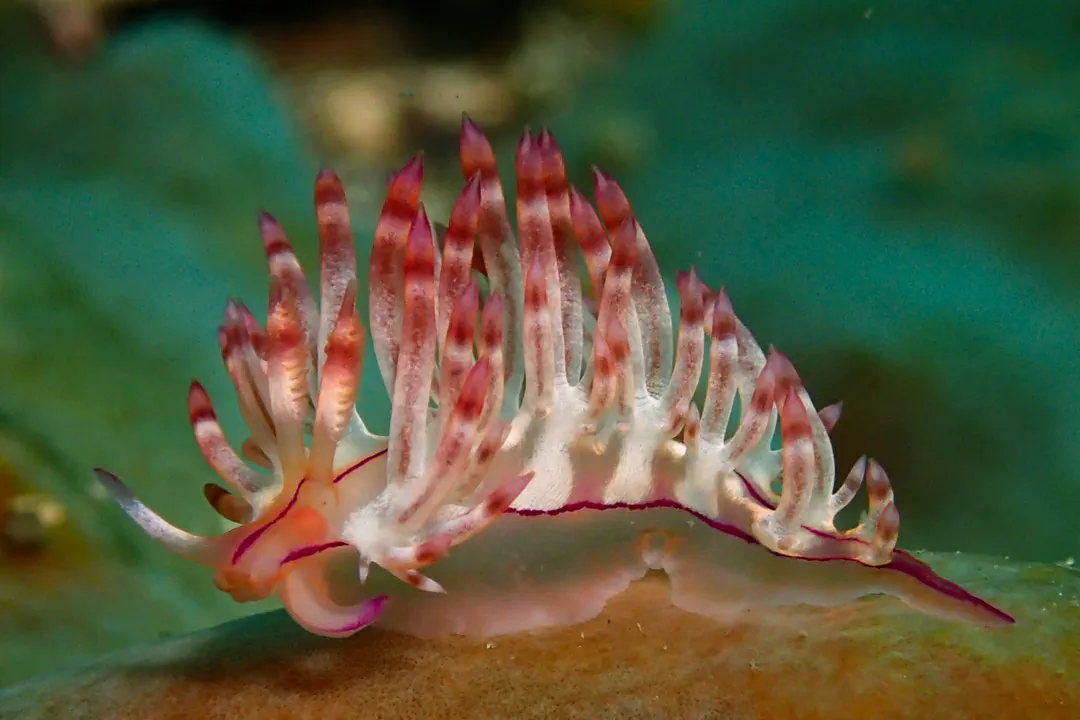
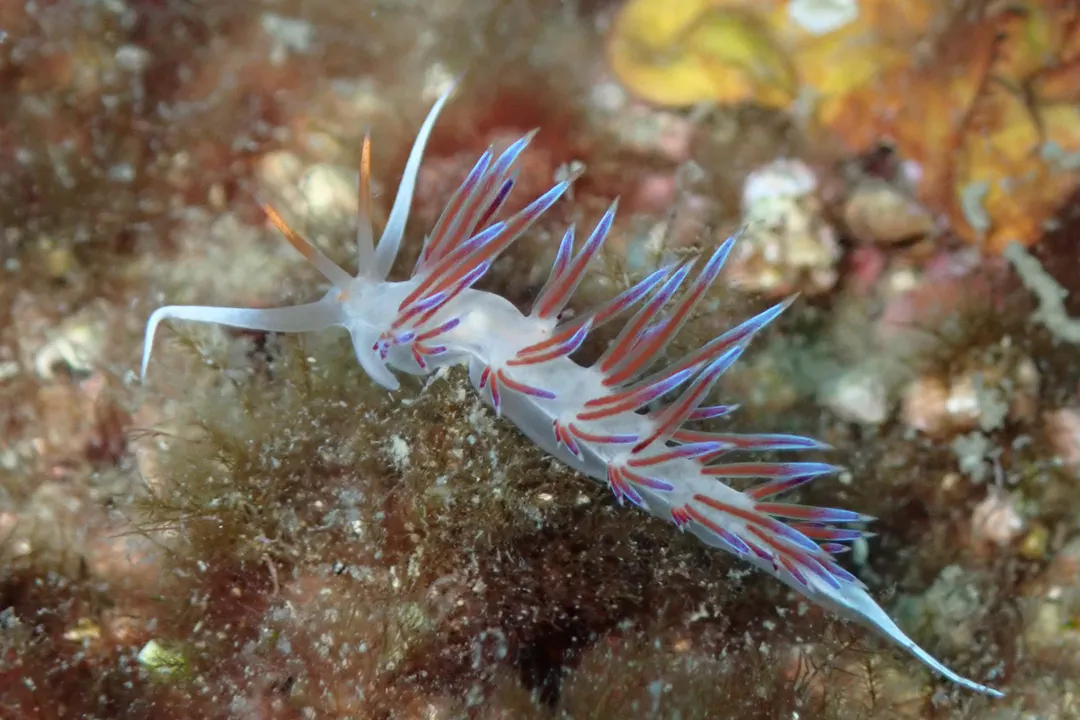
Coryphellina flamma, known informally as the flame-colored nudibranch, is a sea slug in the family Flabellinidae found in the Indo-West Pacific region.
Coryphellina flamma was formally described by Ekaterina Ekimova, Angel Deart, Anna Antokhina, Alexandra Mikhlina, and Tatiana Schepetov in 2022. The specific epithet flamma is Latin for 'flame' or 'fire,' referring to the species’ reddish-orange coloration. The genus name Coryphellina was originally established by Charles H. O’Donoghue in 1929 and was later treated as a synonym of Coryphella and subsequently Flabellina before being re-established as a distinct genus in 2017. Flabellina flamma has been used as a combination for the species, but it is treated as a synonym of the currently accepted name Coryphellina flamma. The species was previously included in the broader Coryphellina rubrolineata species complex before being recognized as a distinct species in 2022.
The body shape is slender with an anterior foot that forms small tentacular projections, and the tail tapers rapidly behind the last ceratal group. The overall colour of the species is translucent white to reddish-orange, often with opaque white patches at the ceratal bases and reddish-orange patches between groups. Cerata are borne on raised stalks and can be cylindrical, elongated, and pointed, with up to seven groups on each side, the first group usually being the largest. Cerata typically show two subapical bands: a darker red-to-burnt-orange distal band and a paler proximal band, with white or pale-pink tips. A prominent continuous pink-to-magenta line runs along the midline, strongest on the head and sometimes stopping short of the tail. Prominent pink-to-magenta lines run along both sides of the body and continue posteriorly to merge at the tail tip. Rhinophores are papillate and range in colour from orange to pale orange, featuring a magenta subapical band and translucent tips. Oral tentacles are approximately 1.5 times the length of the rhinophores, with translucent bases, opaque-white sections, magenta distal portions, and pale speckled tips. The species can be distinguished from Coryphellina rubrolineata by its reddish-orange overall impression and the presence of two contrasting subapical bands on the cerata. Reliable separation from uniformly coloured Coryphellina forms may require close photographs of the rhinophores, ceratal arrangement, and body lines, as colour alone is not a definitive identifier. A practical field check for identification includes looking for the combination of a slender body, raised groups of pointed cerata, orange-red ceratal banding, and continuous magenta midline and lateral lines that meet at the tail.
The available records do not establish whether Coryphellina flamma prefers reef crest, fore-reef, slope, lagoon, or another reef zone. The substrate for Coryphellina flamma is not reliably specified, although congeners have been observed on rocks, stones, soft bottoms, hydroids, and vertical walls. A verified depth range for Coryphellina flamma is not given in the available sources. The species was described from Vietnam and is considered endemic to Vietnamese waters, with confirmed localities including Phú Quốc Island and sites in Nha Trang Bay.
Coryphellina flamma is documented as a specialist carnivore that eats athecate hydroids, specifically their polyps. It feeds by using its radula—a rasping, tooth-bearing feeding organ—to remove and ingest hydroid tissue. The species can retain the hydroids’ nematocysts in specialized sacs called cnidosacs at the tips of its cerata, which are used for defense rather than digestion.
No documented fishery or commercial harvest was found for Coryphellina flamma, as it is a small, specialized predator associated with hydroid colonies and not a fishery target. There is no reliable evidence indicating that Coryphellina flamma is collected or regularly sold in the aquarium trade due to its specialized diet, which would likely complicate routine maintenance. No authoritative source documents Coryphellina flamma as edible, and it should not be eaten. No species-specific human-health hazard is documented for Coryphellina flamma, but it should not be handled unnecessarily or consumed due to potential variability in nudibranch chemical defenses. Coryphellina flamma has no established IUCN Red List assessment or other published species-specific conservation status, and its population size and trends are unknown. As an apparent Vietnam-water endemic, localized habitat damage could be relevant to the conservation of Coryphellina flamma.
© Jay ParolineCC BY 4.0 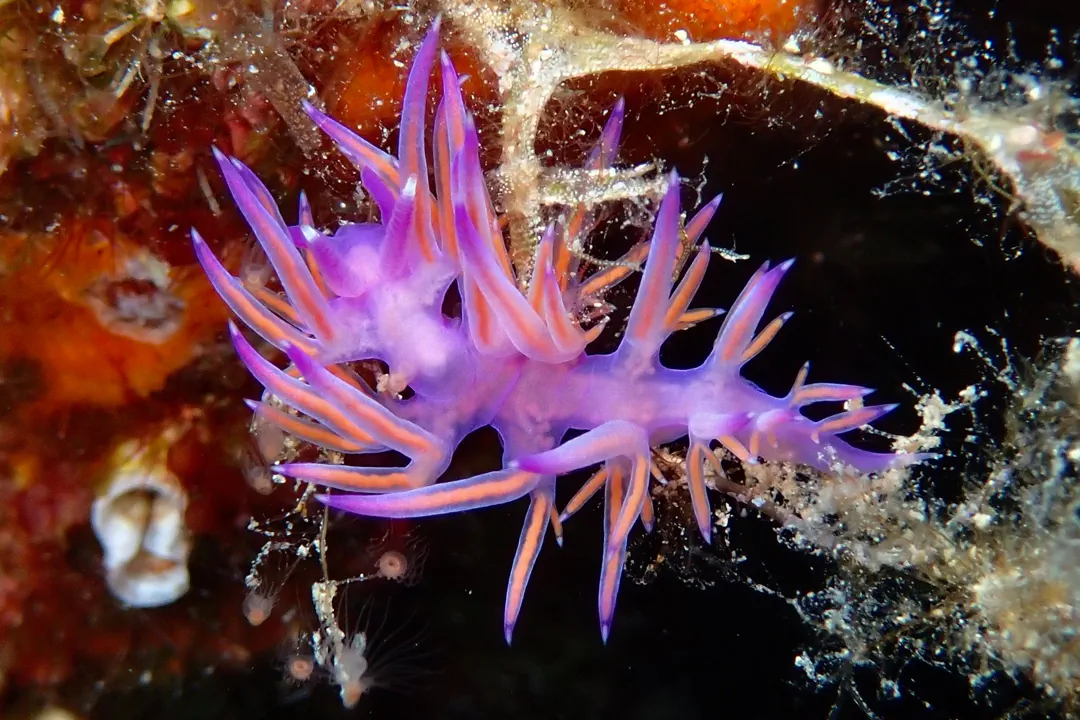 © Vsevolod RudyiCC BY 4.0 · iNaturalist
 © Juraj AhelCC BY 4.0 · iNaturalist
 © Alicia ChristmanCC BY 4.0 · iNaturalist
 © Robin WhiteCC BY 4.0 · iNaturalist
 © Cricket RaspetCC BY 4.0 · iNaturalist
Coryphellina flamma has no known danger to humans. However, always observe marine life responsibly.
Download Seabook free for iOS and Android.