 © Dan SchofieldCC BY 4.0 · iNaturalist
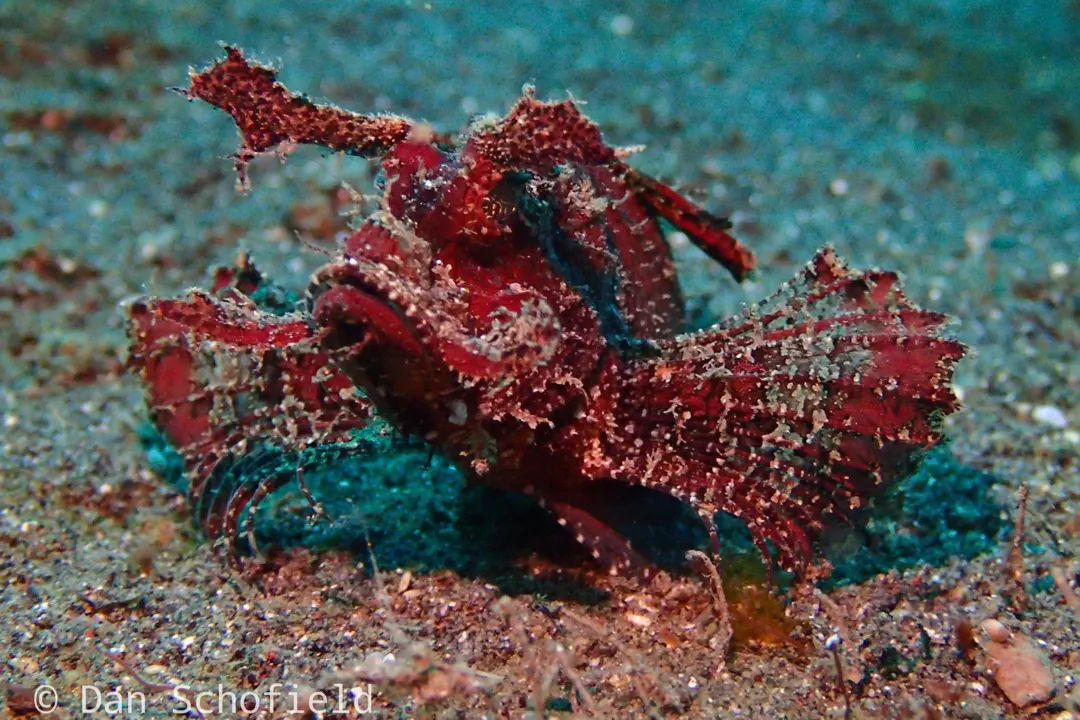
Ambon Scorpionfish
Pteroidichthys amboinensis
Scorpaenopsis macrochir
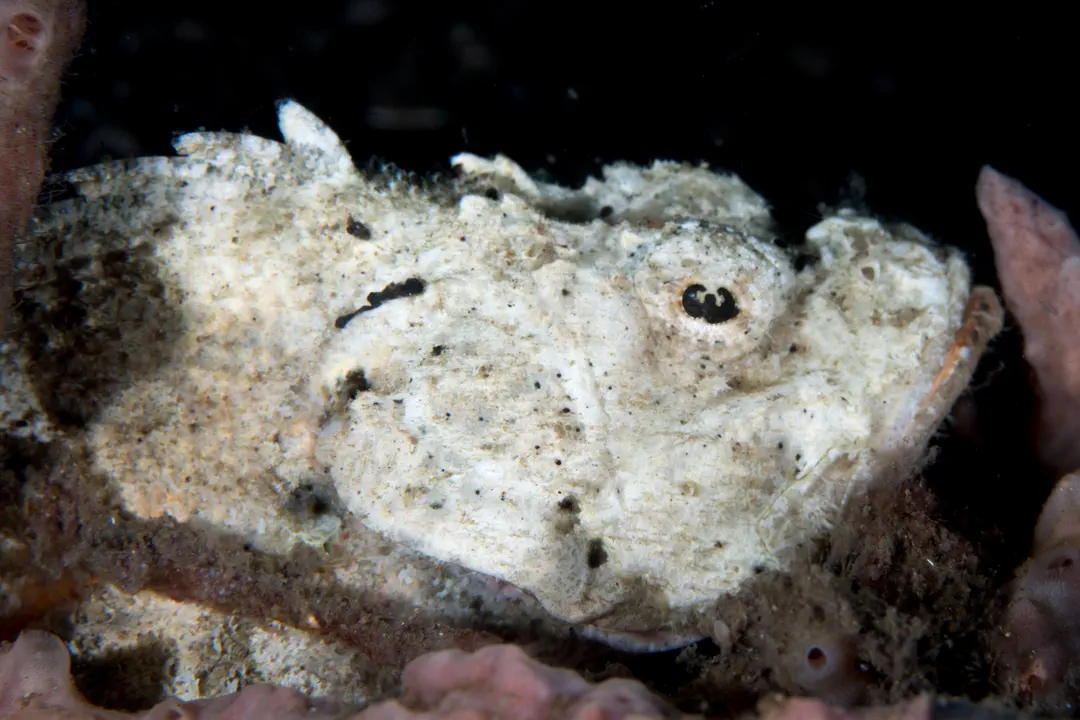
Scorpaenopsis macrochir is a scorpionfish from the Pacific. It occasionally is found in the aquarium trade.
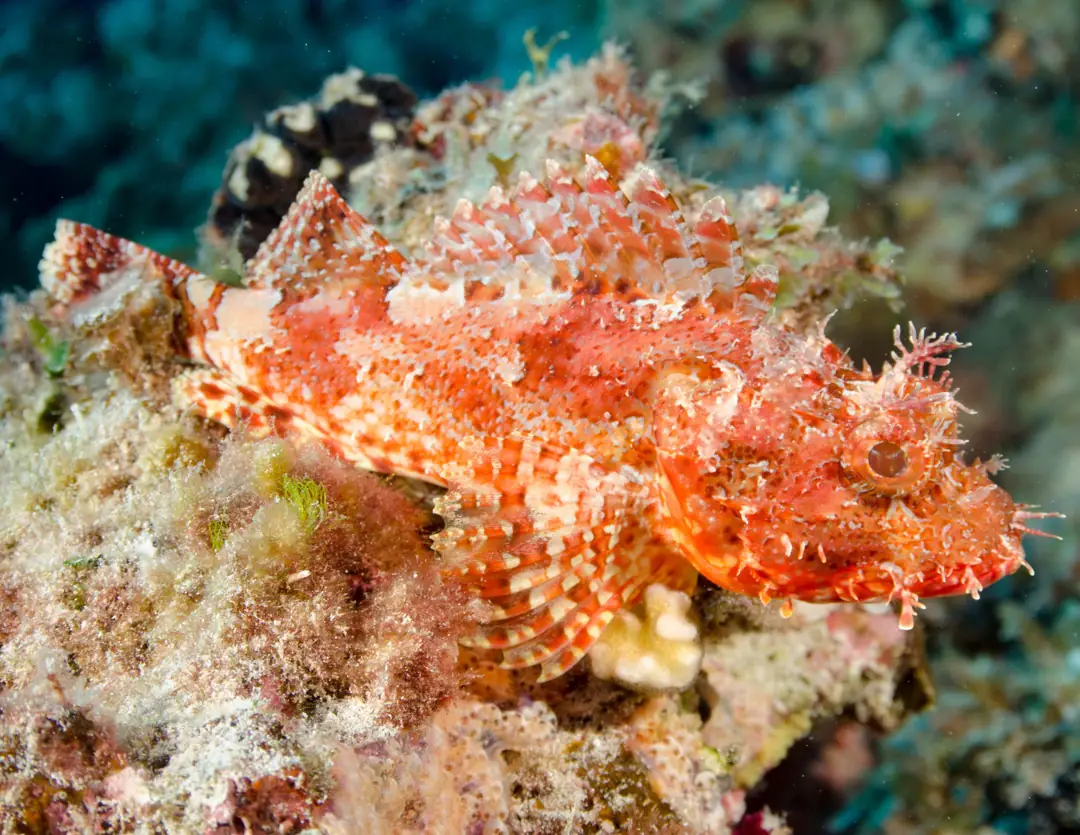
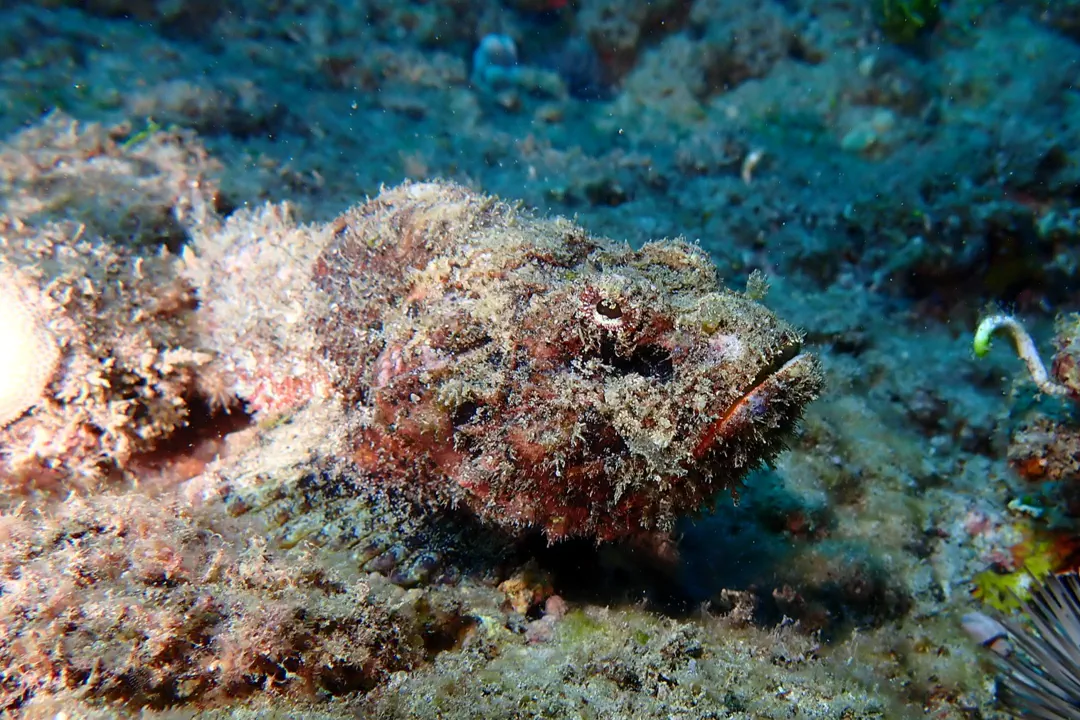
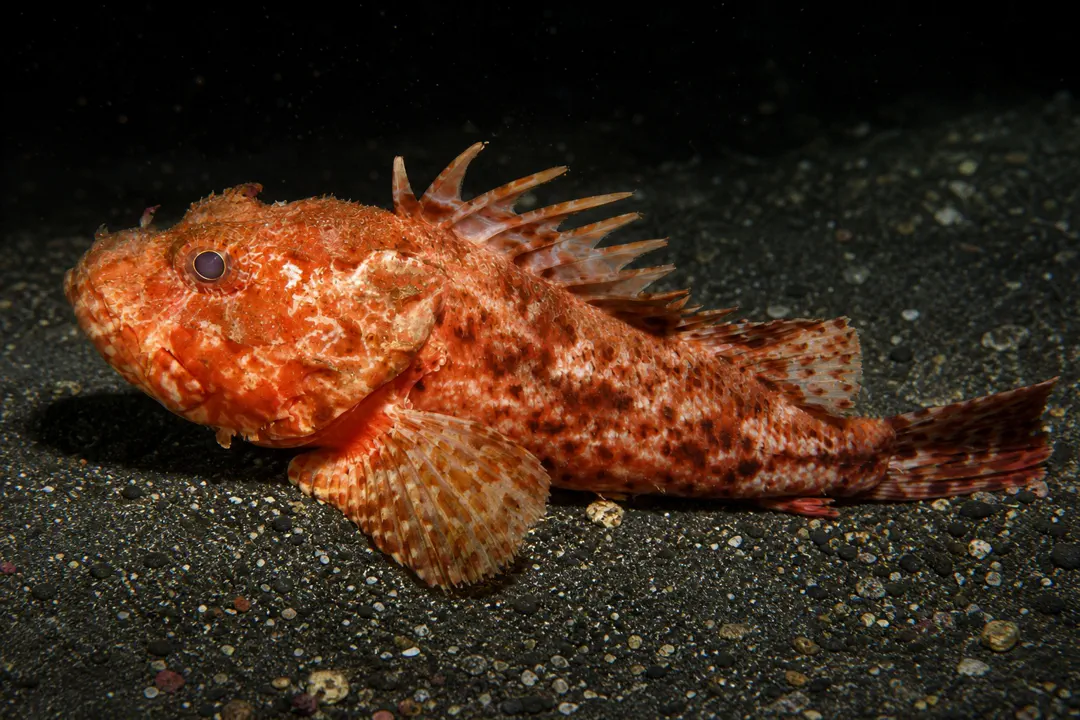
The flasher scorpionfish has a broad, spiny head with a wide space between the eyes, a highly arched back, and a divided upper opercular spine. It has 12 spines in its dorsal fin and nine soft rays and the anal fin has three spines and five soft rays. The general color of this fish is brown mottled with white, and it can grow to a length of 13 cm (5 in). The large pectoral fin is flushed with yellow and orange on its inside and has a complete, broad black band near its margin and no large back spots. This fish is one of five very similar species of humpback scorpionfish and can be distinguished from S. diabolus, S. gibbosa*, and* S. obtusa by the markings on the inside of the pectoral fin. From S. neglecta it can also be differentiated by the presence of two to six points on the nasal spine.
It is indigenous to the tropical and subtropical waters of western and northwest Australia, the Moluccas, and the Philippines to the Marquesan and Society Islands, north to Ryukyu Islands, south to Rowley Shoals, Tonga, and the Mariana and Caroline Islands in Micronesia. S. macrochir is typically found on soft substrates, where it sometimes buries itself, camouflaged among rubble where it lies in wait for passing prey.
This fish occasionally is found in the aquarium trade, and is often confused with its larger relative Scorpaena diabolus (the devil scorpionfish). Like other Scorpaenifomes, it possesses venomous dorsal spines which deliver its venom. Although it is venomous, these spines are never used to attack other organisms, but are solely for defensive purposes. As its common name suggests, this fish possesses bright orange and yellow "flash colors" on the inner surfaces of its pectoral fins to ward off and confuse would-be attackers. These bright colors also serve as a warning that this fish is venomous.
© Dan SchofieldCC BY 4.0 · iNaturalist 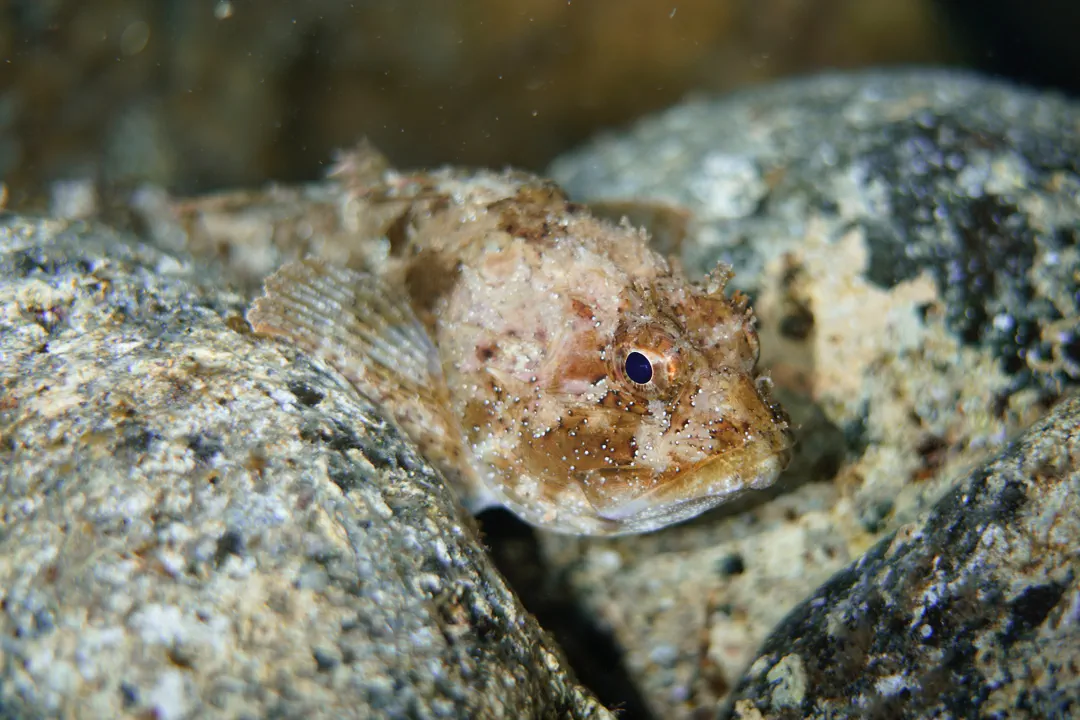 © Michael BommererCC BY 4.0 · iNaturalist
  © Ian ShawAll rights reserved
  © Robin WhiteCC BY 4.0 · iNaturalist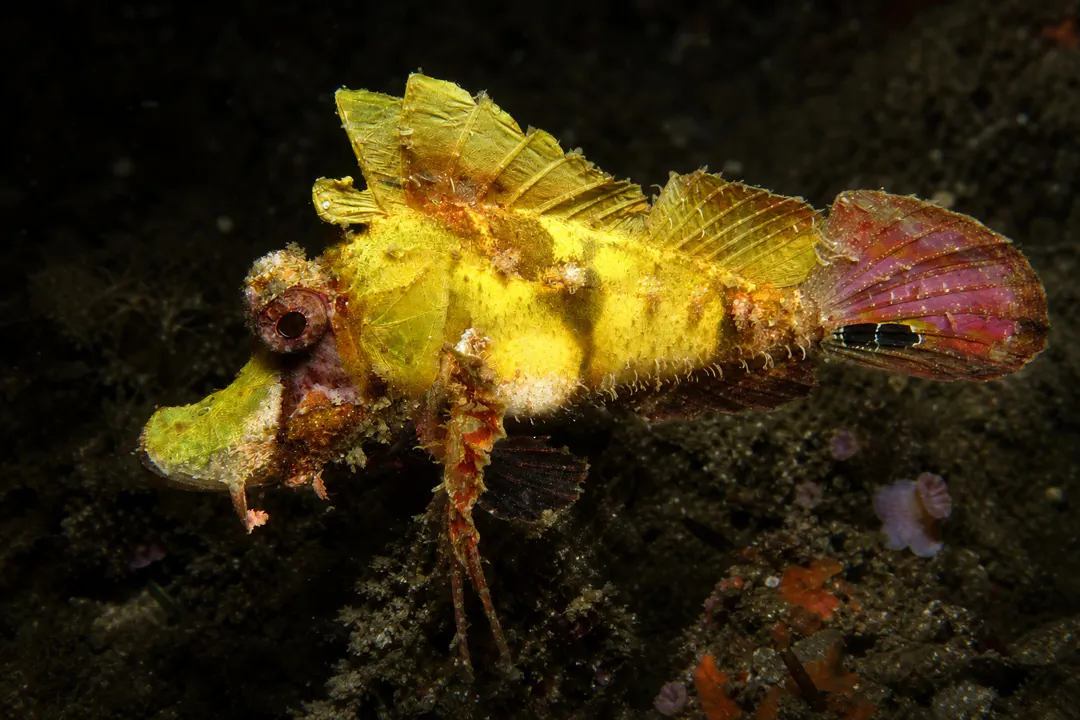
Humpback Scorpionfish is classified as venomous, dangerous to humans. Always exercise caution and keep a safe distance.
Humpback Scorpionfish can be found at depths of up to 80 meters.
Download Seabook free for iOS and Android.