 © chiachiwuCC BY 4.0 · iNaturalist
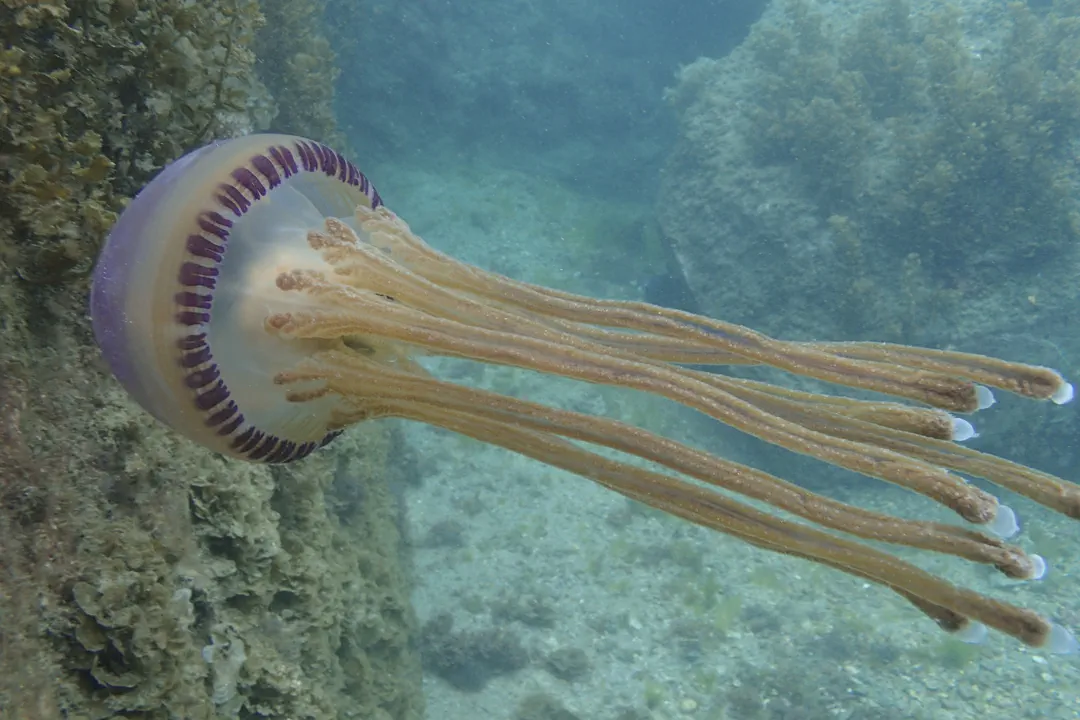
Pelagic Purple Jelly
Thysanostoma loriferum
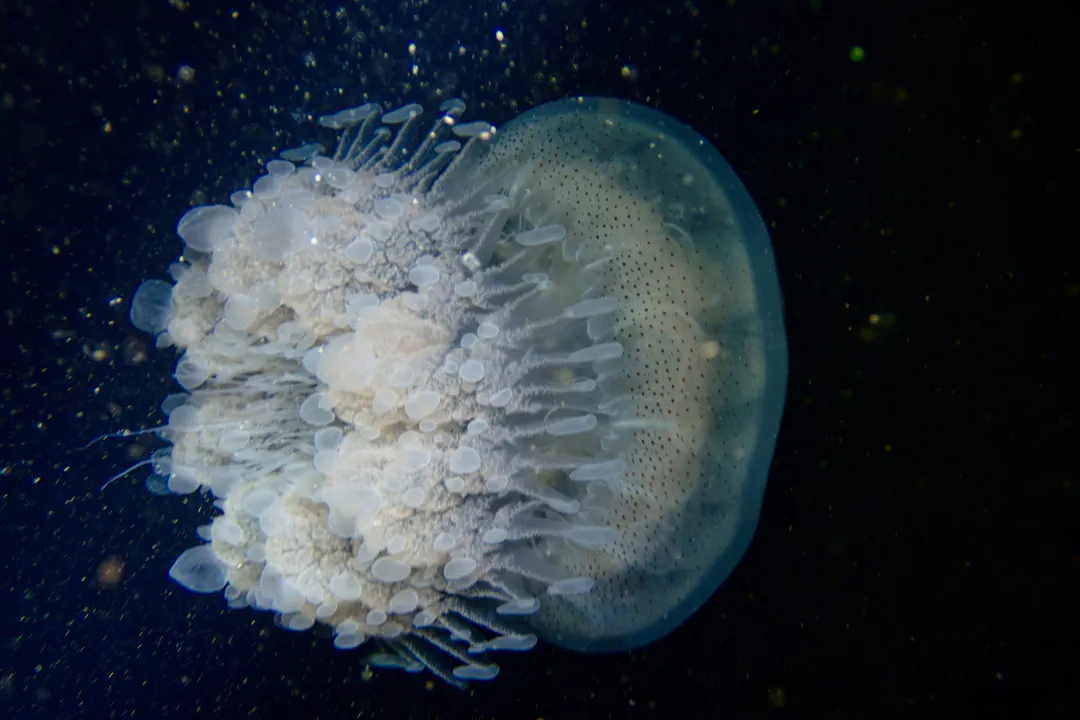
Rhizostoma pulmo
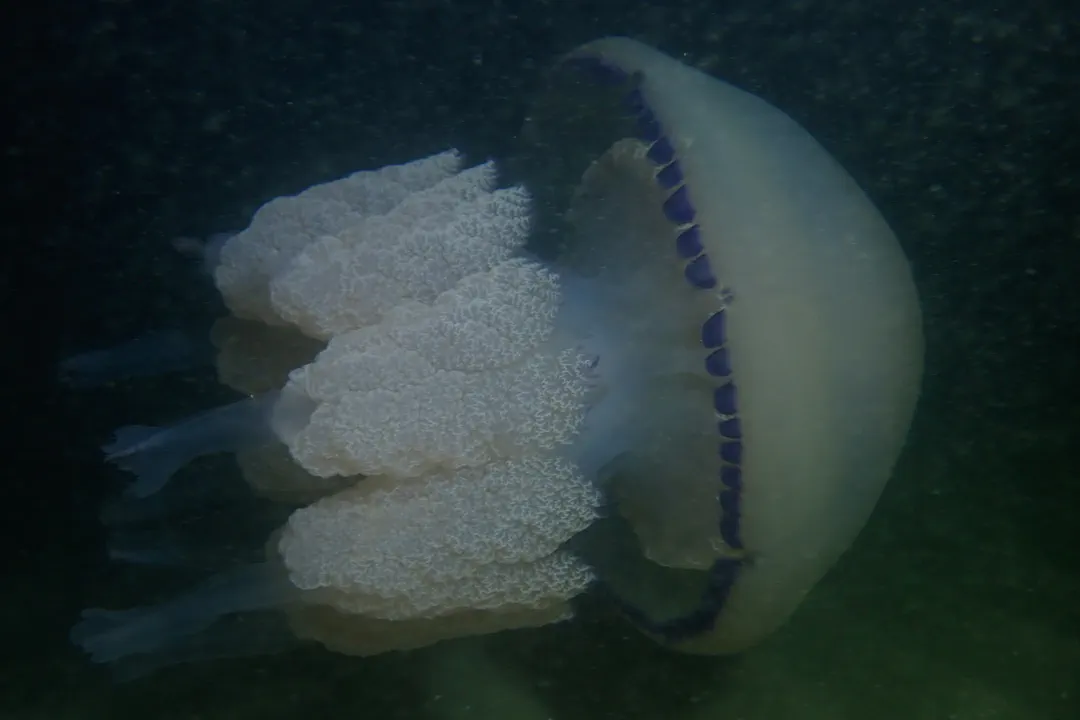
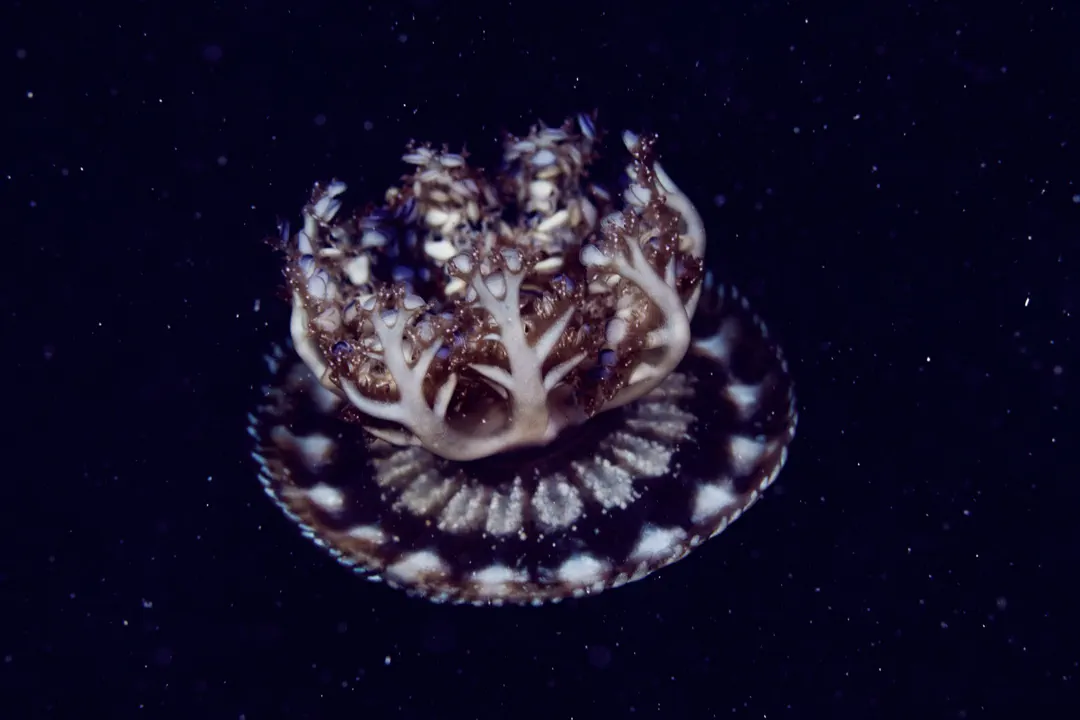
Rhizostoma pulmo is a scyphomedusa in the family Rhizostomatidae.
The sunshade is very bent, sometimes even higher than broad; the periphery is deprived of tentacles, replaced by approximately 80-90 lobes distributed on the entire circumference. One counts 8 very long oral; only braided arms towards their base; and comprising with milonguor of the appendices dermic in the cauliflower shape, while the ends smooth and are not ramified. Color is transparent white to yellowish or pinkish milky; blue lobes ombrellaires with purple darker. It typically is up to 40 cm in diameter, but can exceptionally reach 1 m, making it the largest jellyfish in British waters (Cyanea capillata reaches an even larger size, but is generally smaller in Britain).
It is found in the northeast Atlantic, and in an Adriatic, Mediterranean Sea, Black Sea and Sea of Azov. It is also known from the southern Atlantic off the western South African coast and into False Bay. It is common in the Irish Sea.
Largest in the Mediterranean, is rather not very irritant: the cnidocytes are slightly poisonous and do not transpierce the human skin; there is thus no risk of lesion. Habitat: Swim in the vicinity of surface in pelagic zone, but also in littoral zone. Biology: It is frequently observed that specimens are wrapped of alevins swarm of various species. This association is described in the works specialized like relation of protection, whose only alevins would benefit, but one knows few things on this subject. According to other observers, the fish would nourish themselves inter alia sexual organs of the jellyfish-host, which would thus constitute a form of parasitism. But of other authors make state of a cleaning of the jellyfish by alevins, which directs the relation towards a symbiosis. One supposes consequently that associations of jellyfishes and fish cover several aspects; spreading out parasitism with true symbiosis. Members of the class Scyphozoa are gonochoric. Life cycle: Egg is laid by the adult medusa which later develops into a free-living planula, then to a scyphistoma to a strobila, and lastly to a free-living young medusa.
It is a favourite food of the leatherback turtle.
In European populations, barrel jellyfish evoke unpleasant or disgusting feelings, but in Asia, they are a source of bioactive compounds used in traditional food and medicine. One study indicates that washing in aqueous solutions and the separation of high molecular weight proteins from the extract, e.g., by membrane filtration, could be a way to remove possible toxic compounds from jellyfish extracts and to concentrate potentially bioactive soluble compounds. The potentially active soluble components may have uses as nutraceutical and cosmeceutical ingredients.
© chiachiwuCC BY 4.0 · iNaturalist 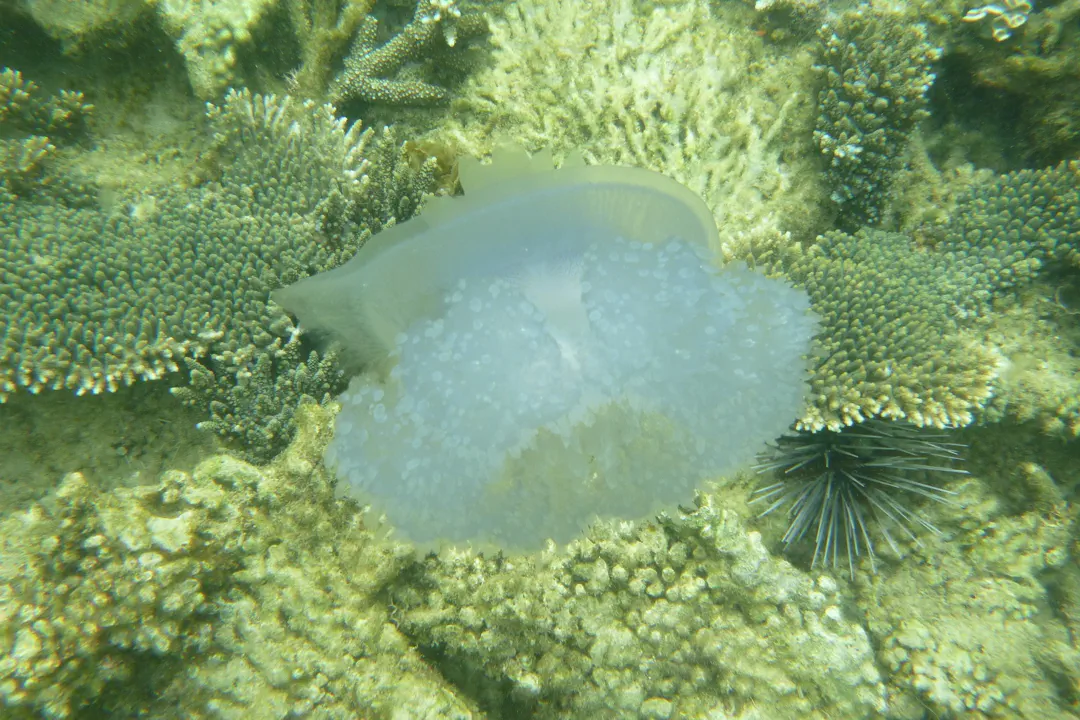 Светлана ЦараховаCC0 · iNaturalist
  © prilfishCC BY 4.0 · iNaturalist
  © Jay ParolineCC BY 4.0 · iNaturalist
  © seabook.appAll rights reserved
 Barrel Jelly has no known danger to humans. However, always observe marine life responsibly.
Download Seabook free for iOS and Android.