 © Ioannis MagourasCC BY 4.0 · iNaturalist
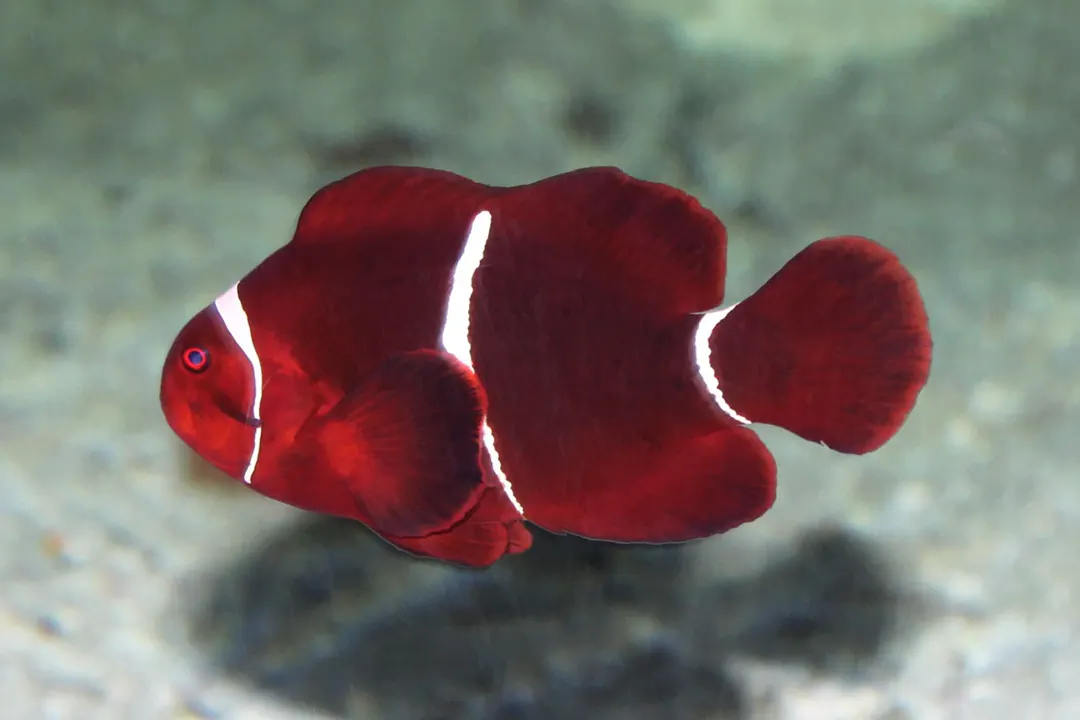
Bridled Clownfish (female)
Amphiprion frenatus
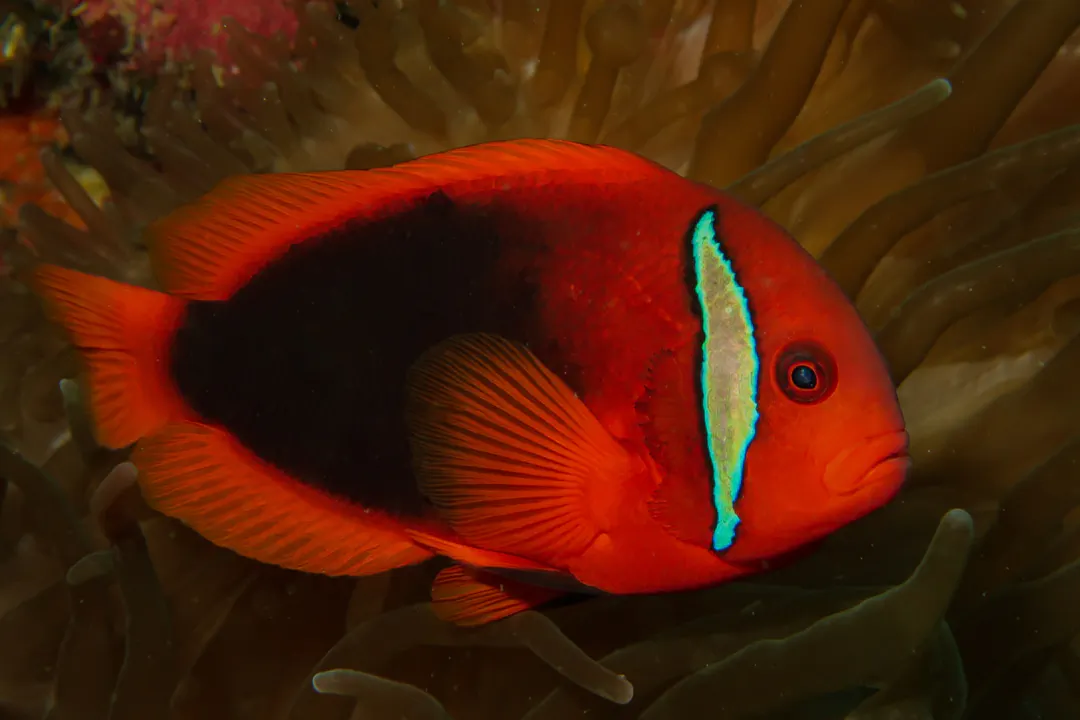
Amphiprion biaculeatus
Premnas biaculeatus is a species of anemonefish that is found in the Indo-Pacific from western Indonesia to Taiwan and the Great Barrier Reef. They can grow up to be about 17 centimetres (6.7 in). Like all anemonefishes it forms a symbiotic mutualism with sea anemones and is unaffected by the stinging tentacles of the host anemone. It is a sequential hermaphrodite with a strict sized based dominance hierarchy: the female is largest, the breeding male is second largest, and the male non-breeders get progressively smaller as the hierarchy descends. They exhibit protandry, meaning the breeding male will change to female if the sole breeding female dies, with the largest non-breeder becomes the breeding male. The fish's natural diet includes algae and zooplankton.
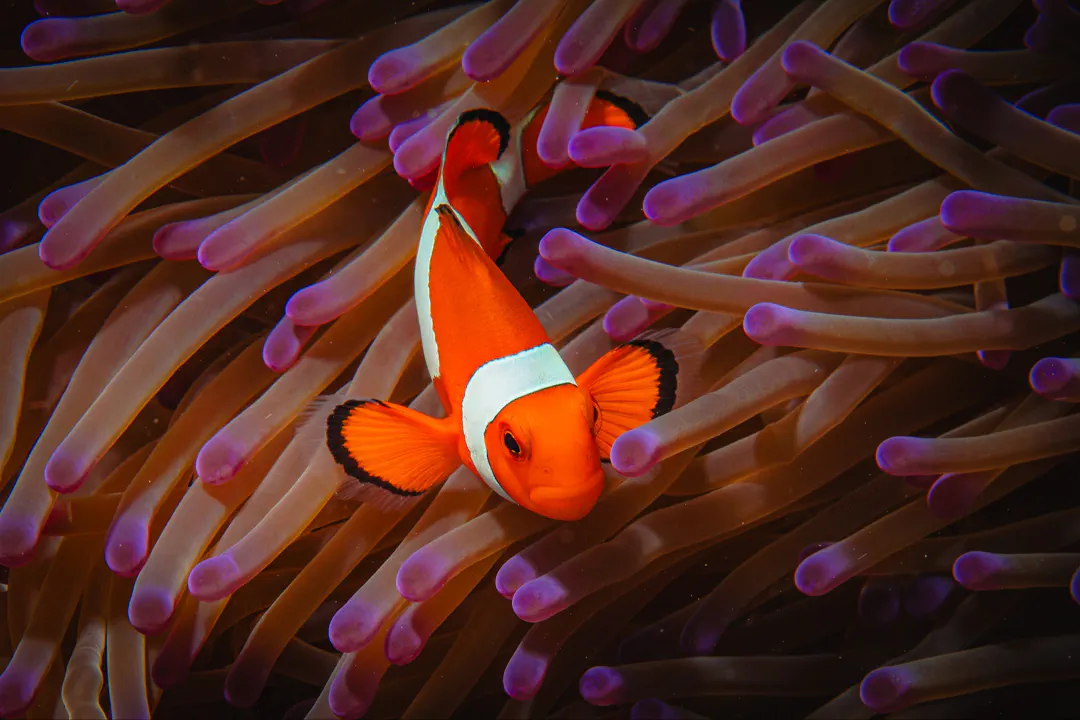
The characteristic that defines this genus is the spine on the cheek. The color of the body and bars varies according to sex and geographic location. Despite the common name of Maroon clownfish, only some females have a maroon body color, with a range of color to dark brown. Juveniles and males are bright red-orange. The fish has three body bars which may be white, grey or yellow. Where the female bars are grey, they can be "switched" rapidly to white if fish is provoked. The sized based dominance hierarchy means in any group of anemonefish the female is always larger than the male. There is a significant difference in size for this species with females being one of the largest anemonefish, growing up to 17 centimetres (6.7 in) while males are much smaller, usually being 6–7 centimetres (2.4–2.8 in).
There are significant color variations for fish in this species, related to sex and geographic location. Male and juvenile fish are bright red-orange which darkens on the fish changing to female, ranging from maroon to dark brown. The body bars of the female are narrower and there are reports of the body bars all but disappearing in older females. There are at least three geographic variations in the color of females, with fish from East Timor to Australia retaining white body bars. In the central Malay Archipelago the head bar tends towards a dull yellow, with the other 2 body bars being grey. In Sumatra and Andaman Islands all 3 body bars are yellow for both male and female and the female body color can range from a dull maroon through to a dark brown. While there are other species that have a blue tinge to their body bars, Amphiprion chrysopterus and A. latezonatus, this geographic variety is the only anemonefish to have yellow or gold body bars.
The female in the Central Malay Archipelago, from North Sulawesi and the Philippines in the north to Komodo Island in the south, has a dull yellow head bar and grey body bars. Male and juvenile fish are bright red-orange with white bars
In the area from East Timor through New Guinea and Australia the female has white or grey head and body bars. Male and juvenile fish are bright red-orange with white bars.
Fish from Sumatra, the Andaman Islands and Nicobar Islands have yellow body bars on both males and females. This distinctive feature meant they were previously considered a separate species
There are no similar species because the cheek spine is distinctive of the genus and presently all geographic variations of the fish are considered to be the one species. Genetic analysis has shown that it is closely related to A. percula and A. latezonatus.
P. biaculeatus is found in the Malay Archipelago and Western Pacific Ocean north of the Great Barrier Reef.
The relationship between anemonefish and their host sea anemones is not random and instead is highly nested in structure.P. biaculeatus is highly specialised with only 1 species anemone host, Entacmaea quadricolor Bubble-tip anemone, predominantly with the solitary form. The fish chooses the host and it is thought that one of the primary drivers for host selection is competition.E. quadricolor is highly generalist, hosting at least 14 species, around half of all species of anemonefish. With such competition, it is perhaps unsurprising that P. biaculeatus is considered to be the most territorial of all anemonefish. Competition alone however does notexplain the preference of P. biaculeatus for the solitary form of E. quadricolor.
P. biaculeatus is currently the only member of the genus Premnas. Historically anemonefish have been identified by morphological features, color pattern in the field, while in a laboratory other features such as scalation of the head, tooth shape and body proportions. The spine on the cheek of the fish is the characteristic that distinguishes the genus Premnas from the closely related Amphiprion. P. biaculeatus has been thought to have a monospecific lineage, however genetic analysis has shown that it is closely related to A. percula and A. latezonatus.
It has been suggested that the taxon epigrammata from Sumatra should be recognized as a distinct species, Premnas epigrammata (Fowler, 1904). The recent precedents of the recognition of A. barberi as a distinct species from A. melanopus and A. pacificus being distinguished from A. akallopisos demonstrate the need to show not only geographic and morpholgical differences, but also genetic data to confirms the separation of the proposed species.
The fish has successfully bred in a home aquarium. Being one of the larger anemonefish and the most aggressive are characteristics that need to be accommodated in any aquarium setup.
© Ioannis MagourasCC BY 4.0 · iNaturalist 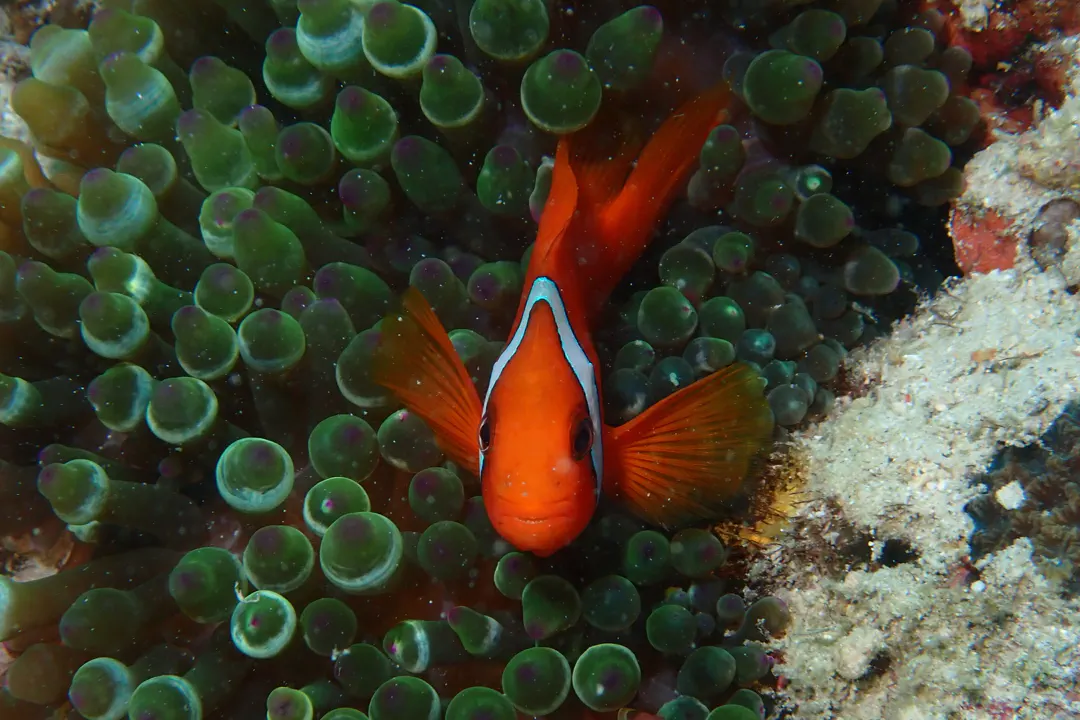 © Gregor BailarCC BY 4.0 · iNaturalist
  © Olka KuryanAll rights reserved
 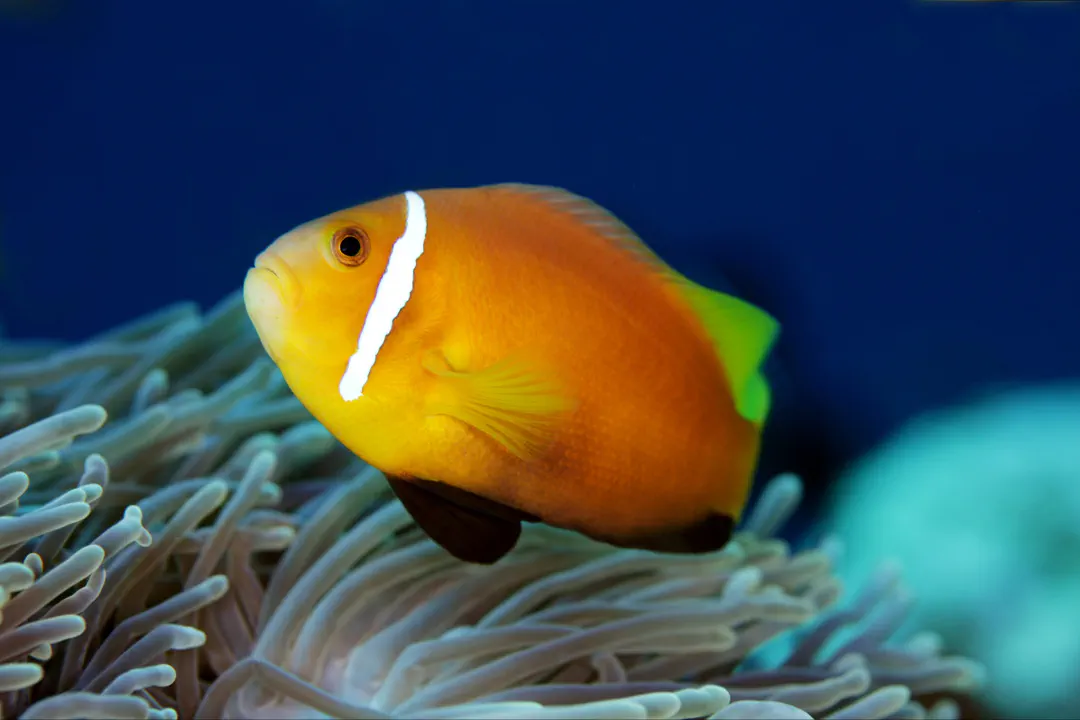 © Thomas Badstuebner for MDC SeaMarc MaldivesCC BY-SA 4.0 · iNaturalist
 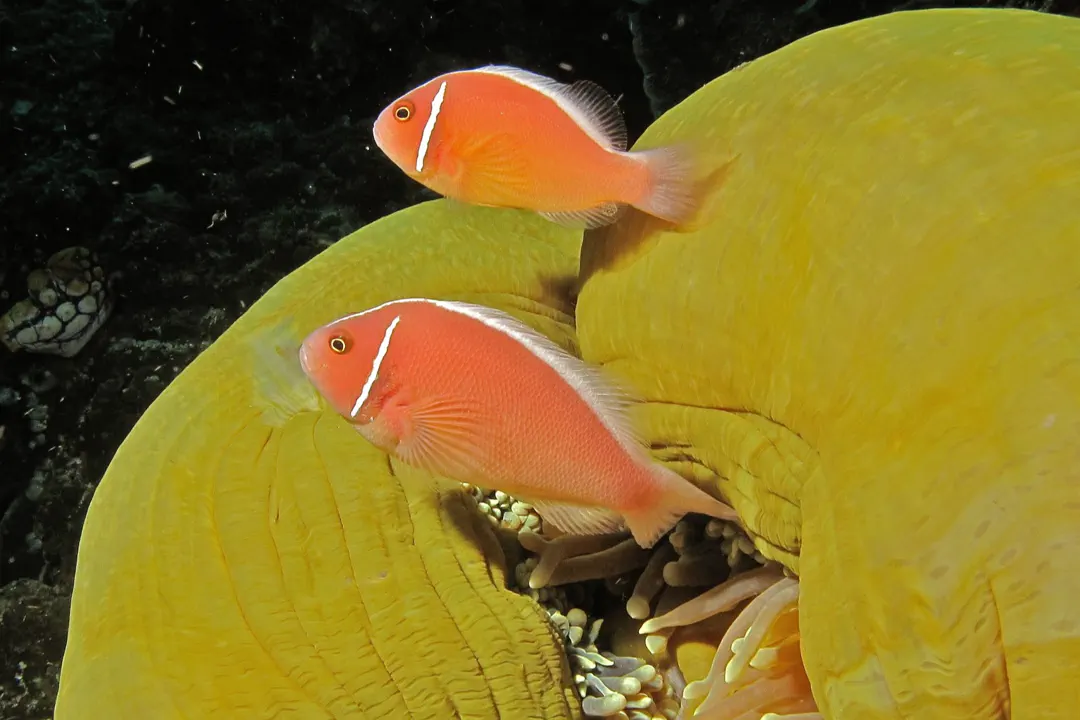 © Bernard DUPONTCC BY 4.0 · iNaturalist
 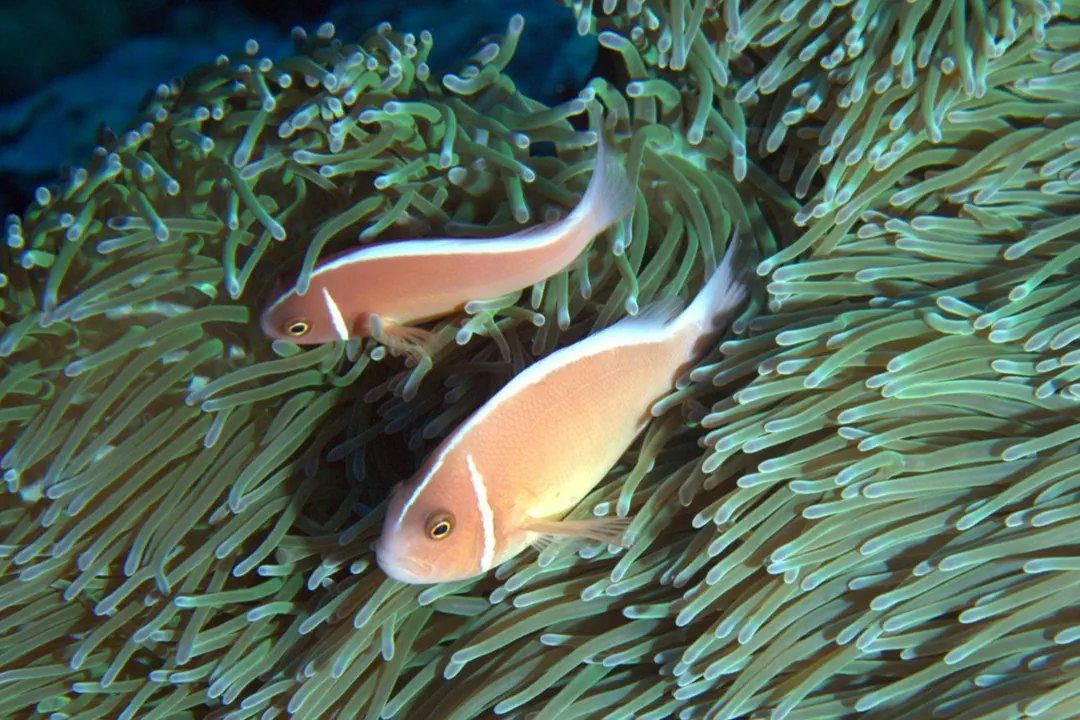 © craigjhoweCC BY 4.0 · iNaturalist
 Spine-cheek anemonefish has no known danger to humans. However, always observe marine life responsibly.
Spine-cheek anemonefish can be found at depths of up to 16 meters.
Download Seabook free for iOS and Android.