 © portioidCC BY 4.0
Alexander's Damsel
Pomacentrus alexanderae
Pomacentrus amboinensis
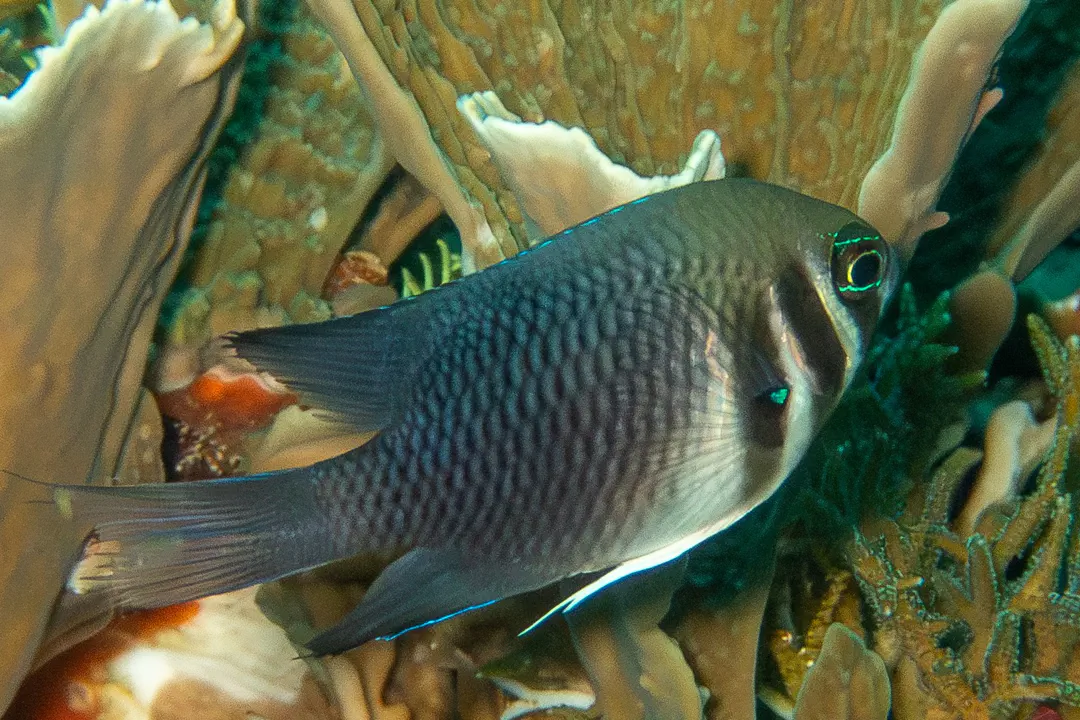
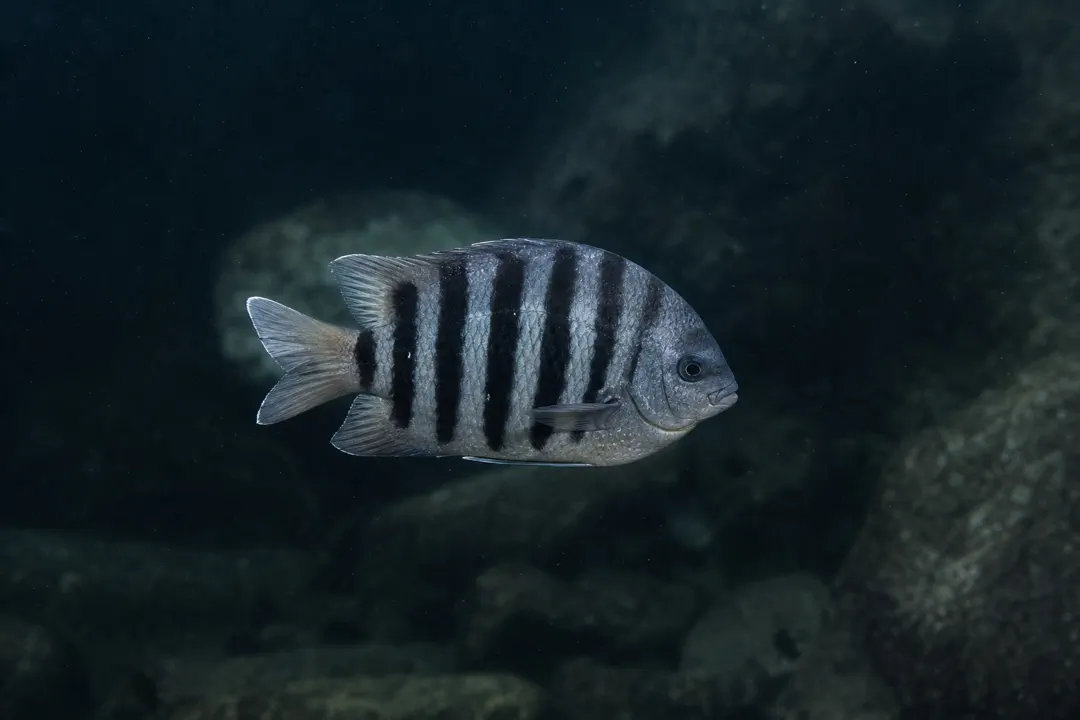
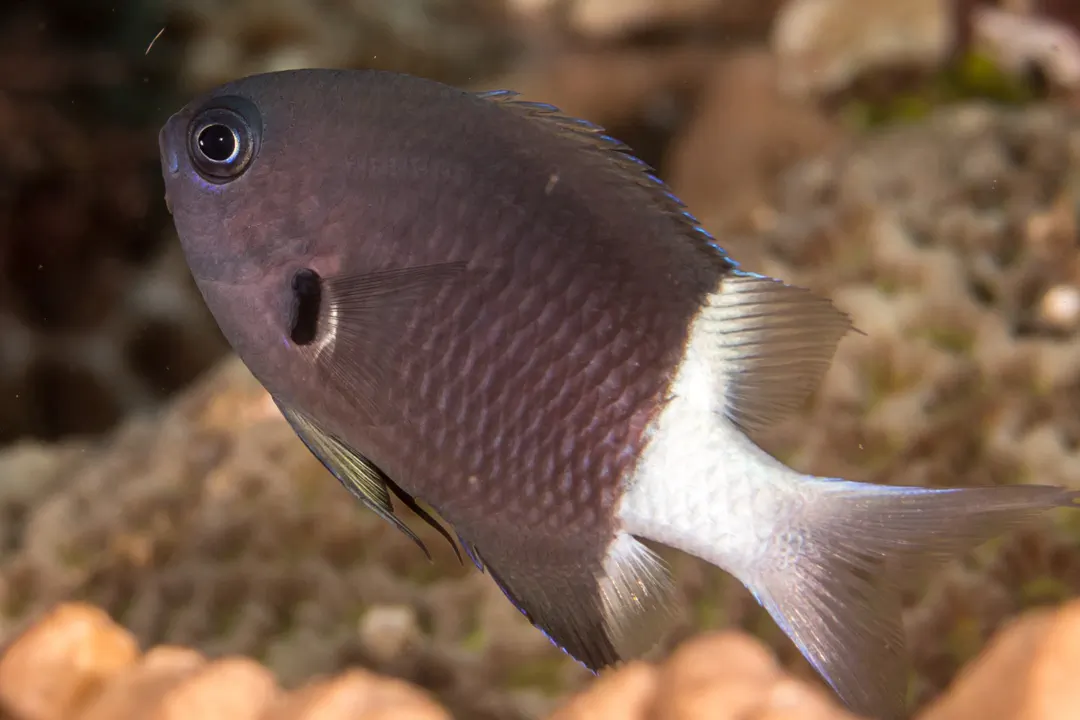
Pomacentrus amboinensis is a Damselfish from the Western Pacific. It occasionally makes its way into the aquarium trade.
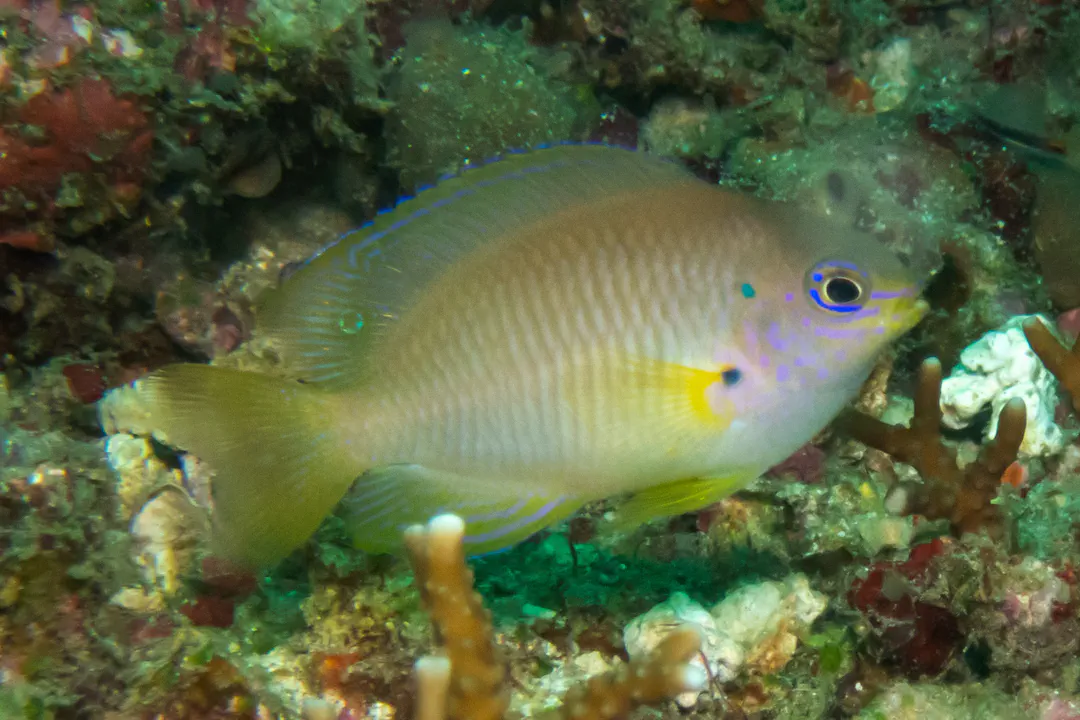
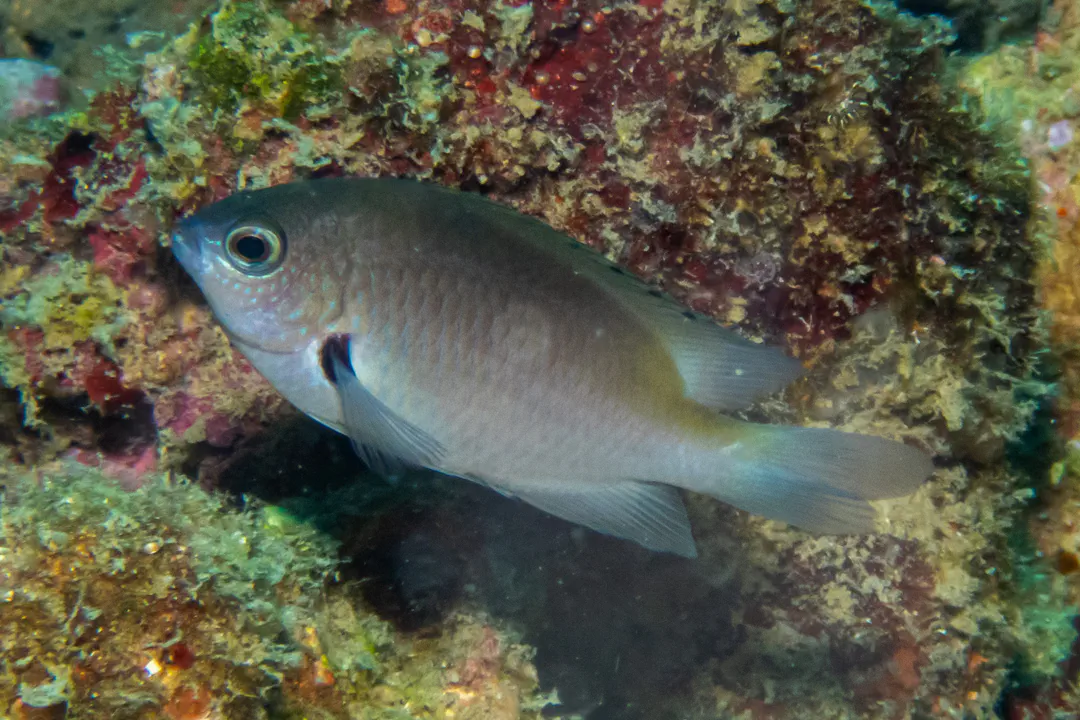
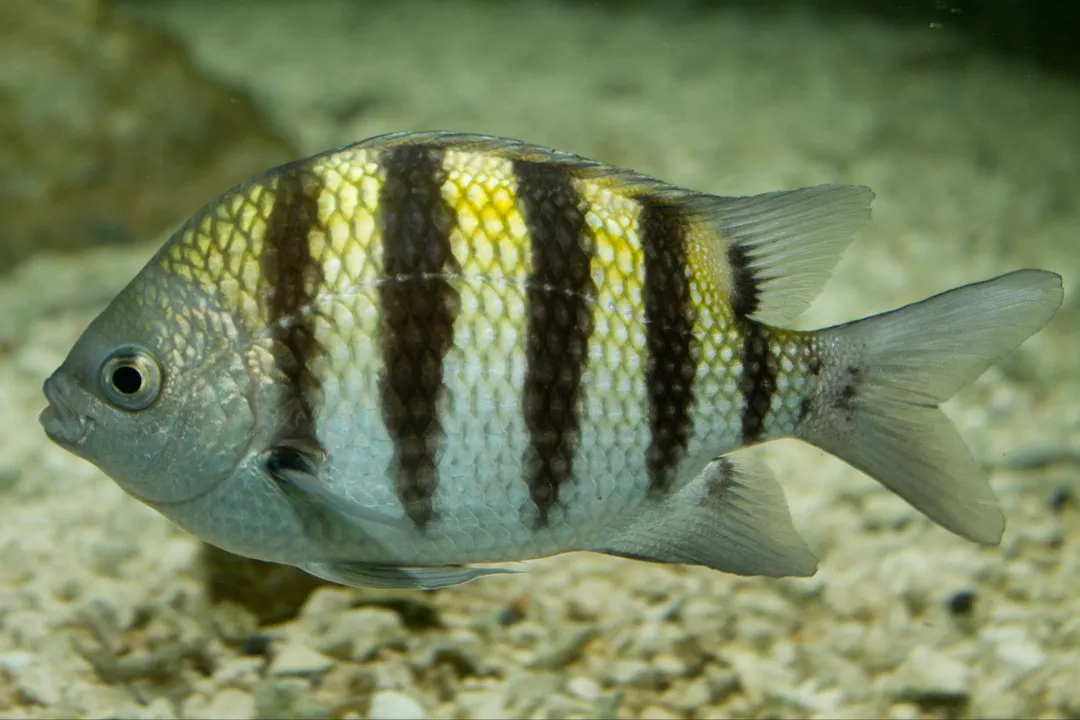
It has a yellow to pale mauve bidy with darker scale margins, a spot at the top of gill cover and another spot on the upper pectoral fin base. Juveniles have an ocellus or false 'eye spot' on the rear of the dorsal fin. It grows to a size of 9cm in length.
Recent research has shown that if constantly threatened by predators, these small damselfishes can grow a larger false ‘eye spot’ – and even more astounding, can also reduce the size of their real eyes. They are also able to recognise the UV facial patterns of individual Ambon Damselfish.
Western Pacific: Indonesia to Vanuatu, north to the Ryukyu Islands, south to Scott Reef (eastern Indian Ocean) and New Caledonia.
They live in small groups of one mature male that guards a nest site on the seafloor and several females. Once settled, females rarely migrate. New juveniles can usually join groups easily. As they reach sexual maturity, they usually lose their "eyespot" on their dorsal fin. P. amboinensis is a protogynous species - all individuals start out as females and later can turn into males. However some males retain the appearance of juveniles, probably to sneak into the harems of dominant males.
This species has been shown to have colour vision using behavioural experiments that control for brightness, apparently being the first known example of colour discrimination in reef fish.
© portioidCC BY 4.0 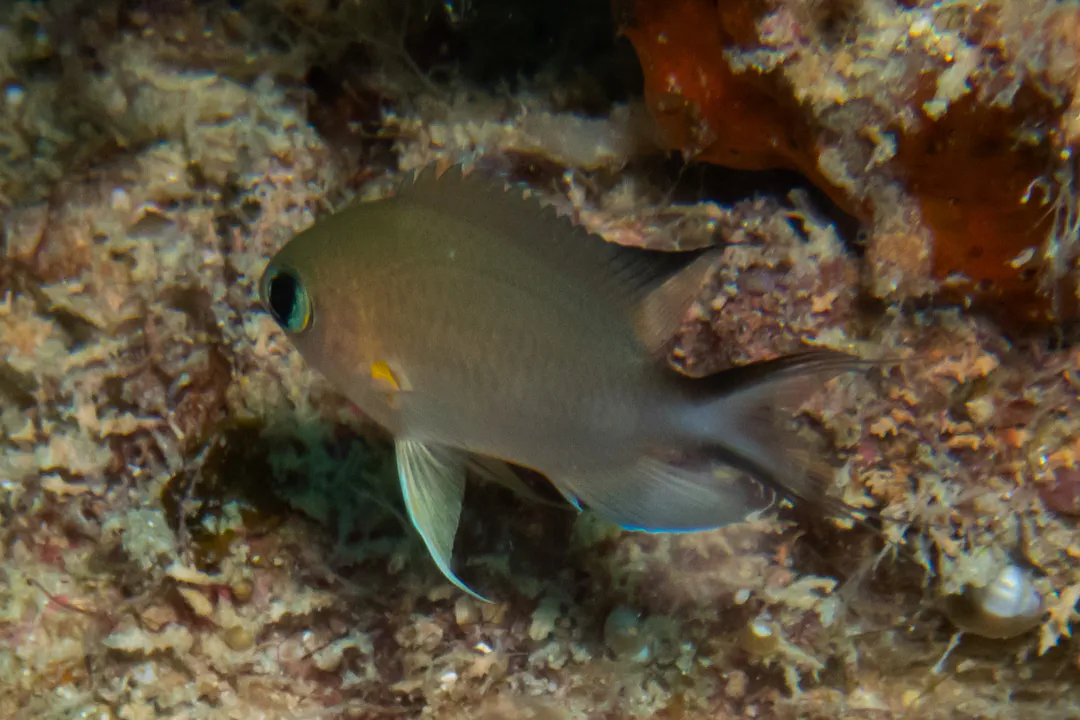 © portioidCC BY 4.0
  © Brian GratwickeCC BY 4.0 · iNaturalist
  © Piotr LukasikCC BY 4.0 · iNaturalist
  © seabook.appAll rights reserved
  © Rickard ZerpeCC BY 4.0 · iNaturalist
 Ambon Damsel has no known danger to humans. However, always observe marine life responsibly.
Ambon Damsel can be found at depths of up to 40 meters.
Download Seabook free for iOS and Android.