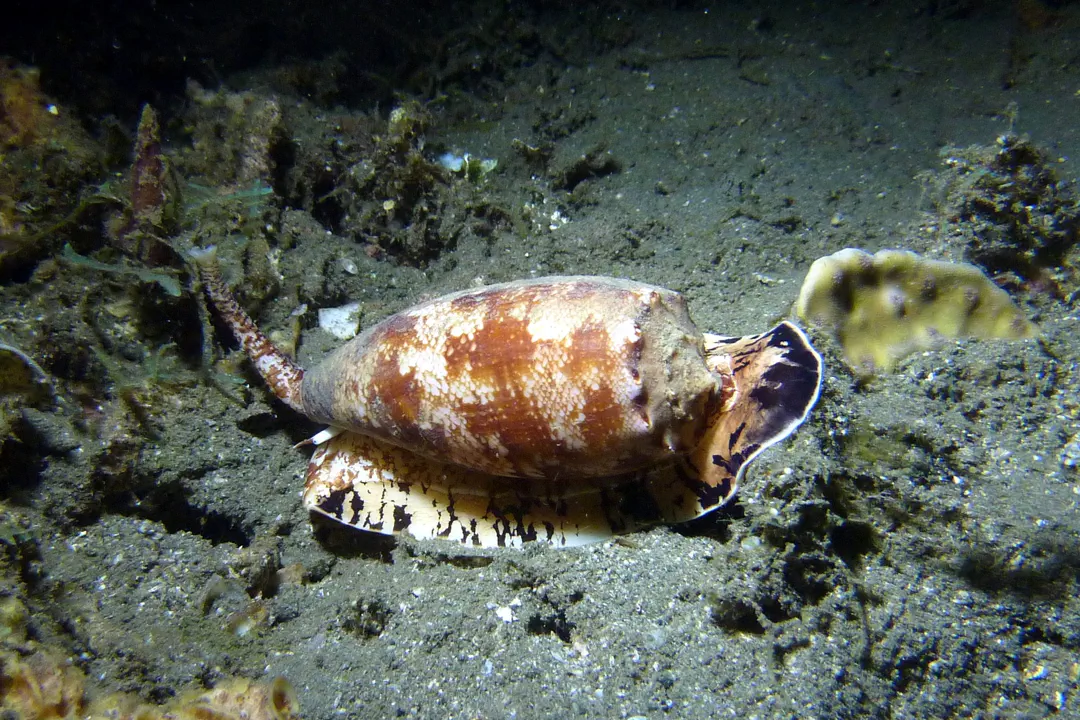
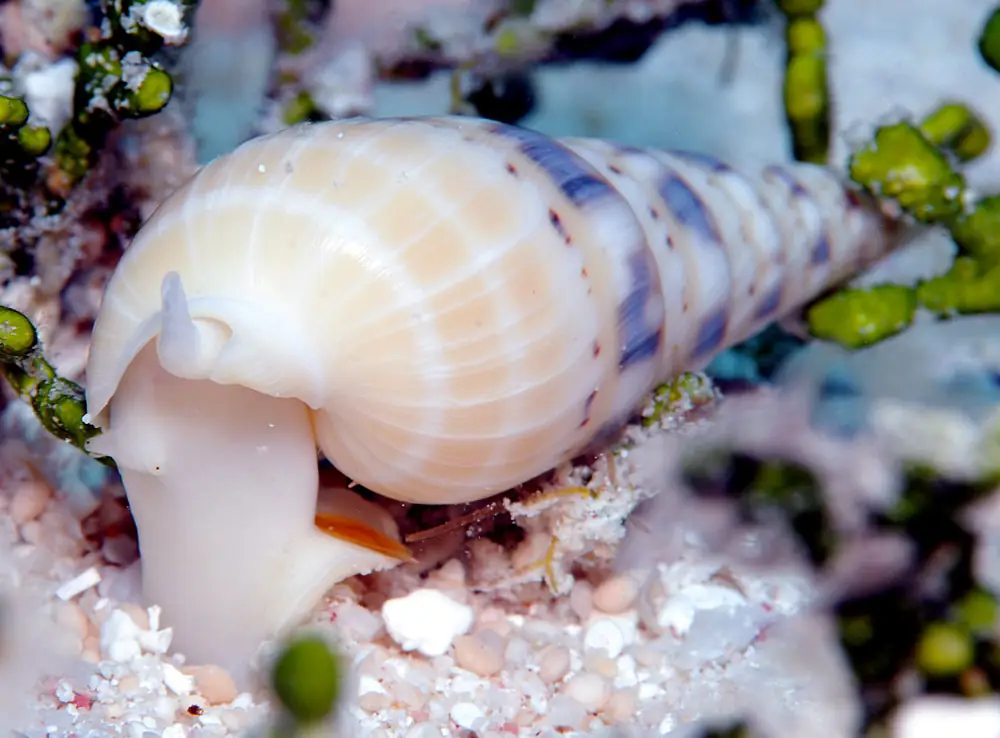
 © Scott & Jeanette JohnsonAll rights reserved
Big Auger
Oxymeris maculata
Conus geographus
Conus geographus is a species of predatory cone snail. It lives in reefs of the tropical Indo-Pacific, and hunts small fish. Although all cone snails hunt and kill prey using venom, the venom of this species is potent enough to kill humans. Specimens should be handled with extreme caution.
The variety Conus geographus var. rosea G. B. Sowerby I, 1833 is a synonym of Conus eldredi Morrison, 1955.
C. geographus has a broad, thin shell, cylindrically inflated. Geography cones grow to about 4 inches (10 cm) to 6 inches (15 cm) in length. The size of an adult shell varies between 43 mm and 166 mm. The ground color of the shell is pink or violaceous white, occasionally reddish. It has a mottled appearance, clouded and coarsely reticulated with chestnut or chocolate, usually forming two very irregular bands. This intricately brown-and-white pattern is highly prized by shell collectors.
The geography cone has a wide, violaceous white or pink aperture and numerous shoulder ridges or spines. The shell is covered with thread-like revolving striae, usually nearly obsolete except at the base. The flattened spire is striated and coronated.
In comparison with other species, the shell has a noticeably wider and convex mid-body, with a flattened spire. Its walls are also noticeably thinner and lighter compared to other cone shells of similar length and size.
Geography cones are common. They occur in the Red Sea, in the Indian Ocean off Chagos, Madagascar, Mauritius, Mozambique and Tanzania. They are indigenous to the reefs of the Indo-Pacific region, except for Hawaii.; off Australia (the Northern Territory, Queensland, Western Australia)
C. geographus is a piscivore that dwells in sediment of shallow reefs, preying on small fish. It releases a venomous cocktail into the water in order to stun its prey. Like the other cone snails, it fires a harpoon-like, venom-tipped modified tooth into its prey; the harpoon is attached to the body by a proboscis, and the prey is pulled inside for ingestion.
The geography cone is highly dangerous - live specimens should be handled with extreme caution.C geographus has the most toxic sting known among Conus species and is responsible for more than thirty human fatalities. Yoshiba estimateed an LD50 of 0.001-0.003 mg/kg. In two cases of envenomation, only 0.0002-0.0005 mg resulted in severe paralysis. Other figures estimate LD50 values of 0.012-0.03 mg/kg. These estimates make the geographic cone snail the most venomous animal in the world. The venom is a complex of hundreds of different toxins that is delivered through a harpoon-like tooth propelled from an extendable proboscis. There is no antivenom for a cone snail sting, and treatment consists of keeping victims alive until the toxins wear off.
Among the compounds found in cone snail venom are proteins which, when isolated, have great potential as pain-killing drugs. Research shows that certain of these proteins target specific human pain receptors and can be up to 10,000 times more potent than morphine without morphine's addictive properties and side-effects.
Conantokin-G is a toxin derived from the venom of C. geographus. Only 15-20 of the venom's 100-200 toxic peptides are used for feeding. It is believed that the other compounds are defensive, and that the venom is mainly used for defense.
Recent research has revealed that C. geographus uses a form of insulin as a means of stunning its prey. This insulin is distinct from its own (with shorter chains) and appears to be a stripped down version of those found in fish. Once passing through their gills, fish experience hypoglycaemic shock, essentially stunning them and allowing for ingestion by the snail. This poison mixture has been referred to as nirvana cabal. Along with the tulip cone snail C. tulipa, no other species (with the exception of humans) is known to have used insulin as a weapon.
© Scott & Jeanette JohnsonAll rights reserved 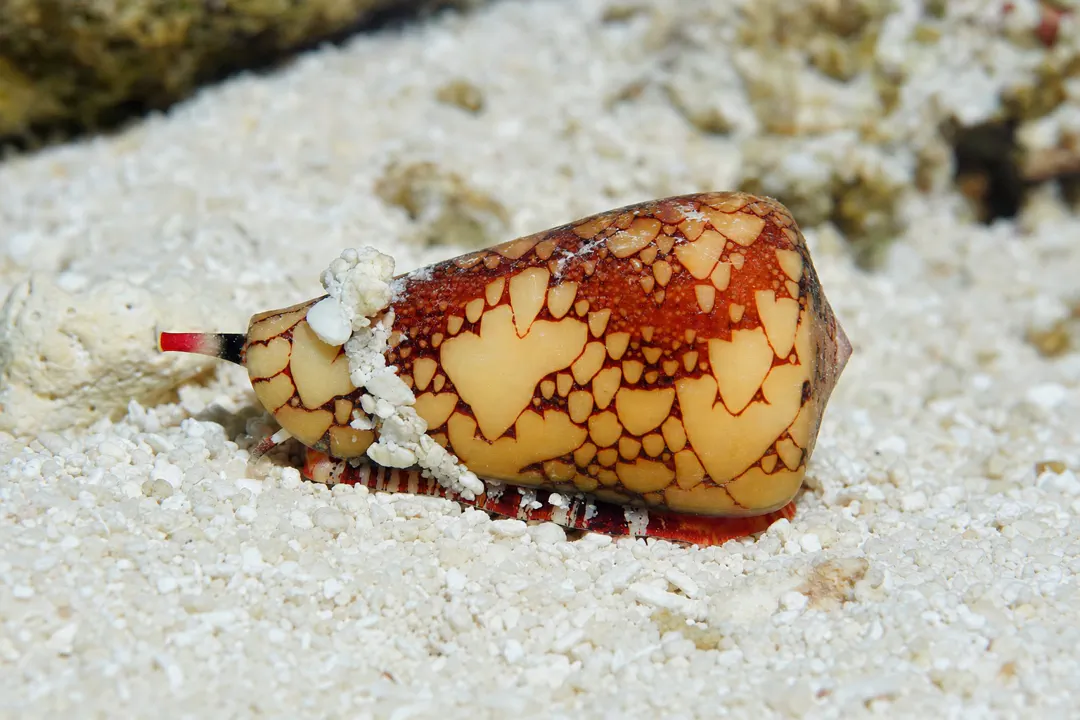 © seabook.appAll rights reserved
 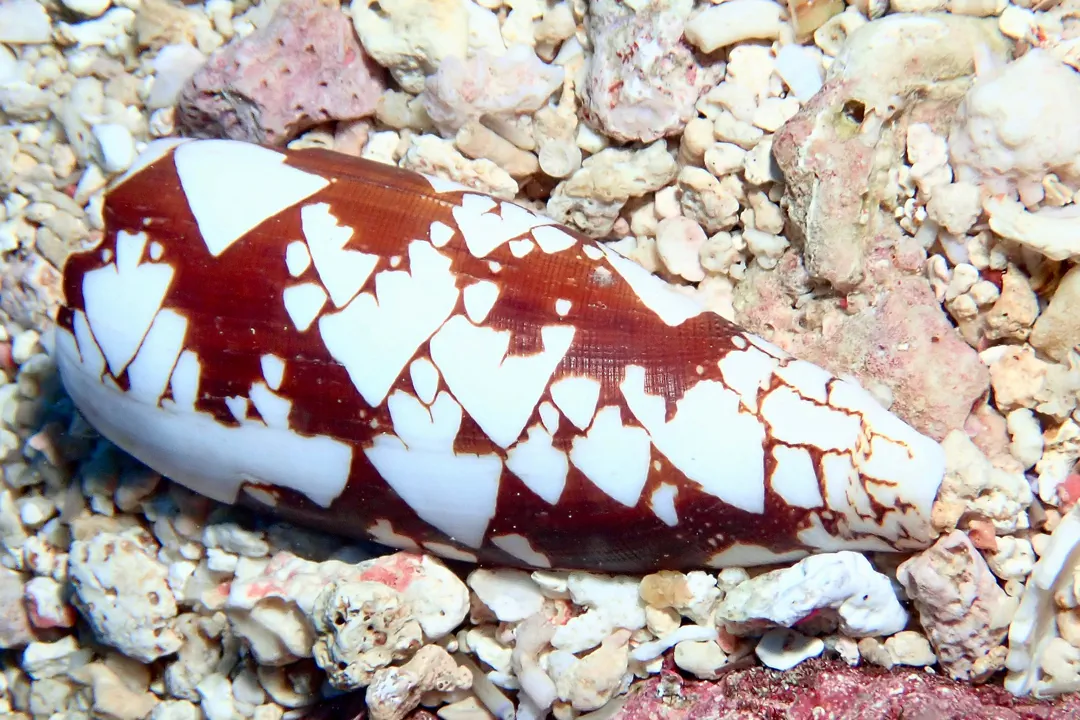 © desertnaturalistCC BY 4.0 · iNaturalist
 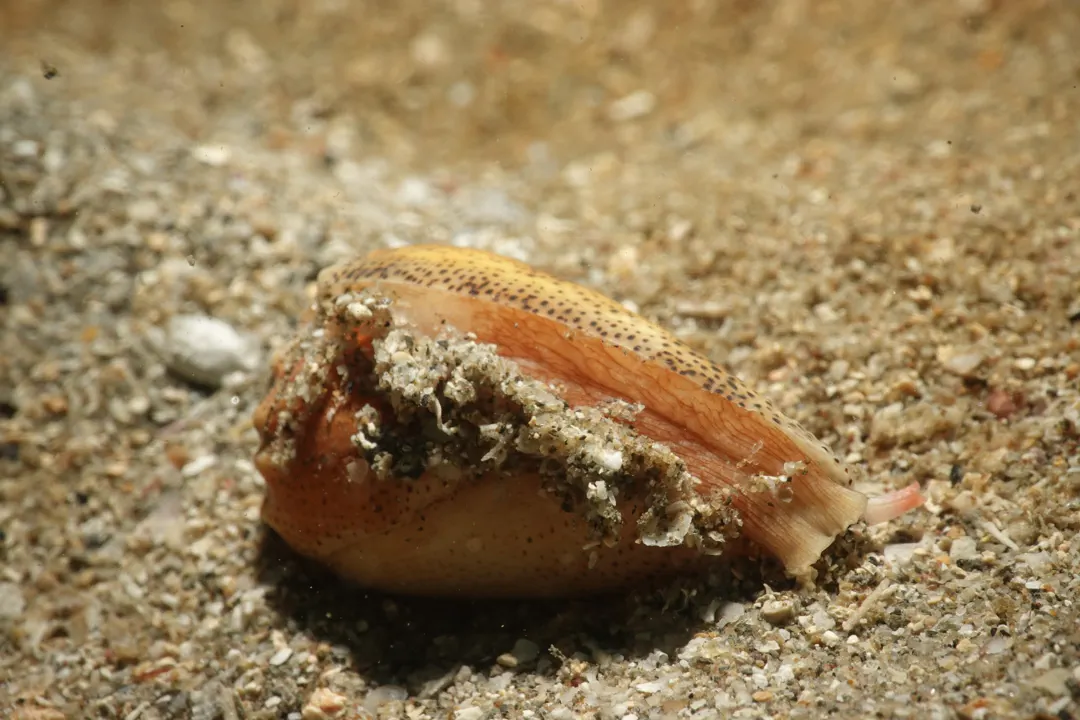 © 許慶棠RayCC BY 4.0 · iNaturalist
 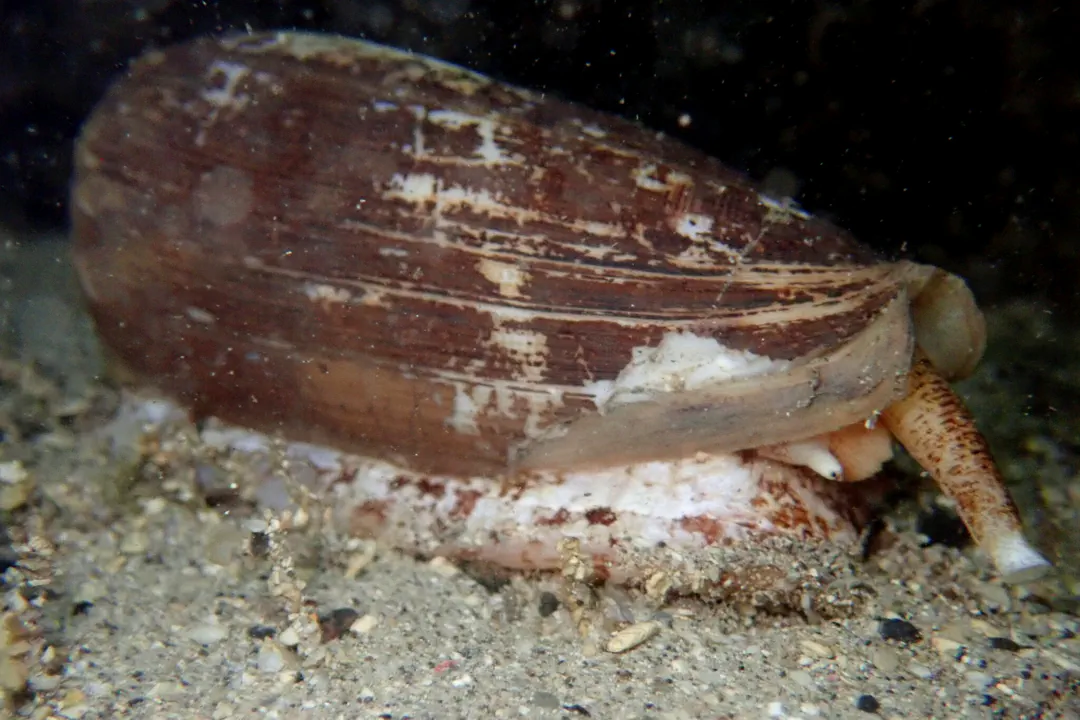 © Cricket RaspetCC BY 4.0 · iNaturalist
 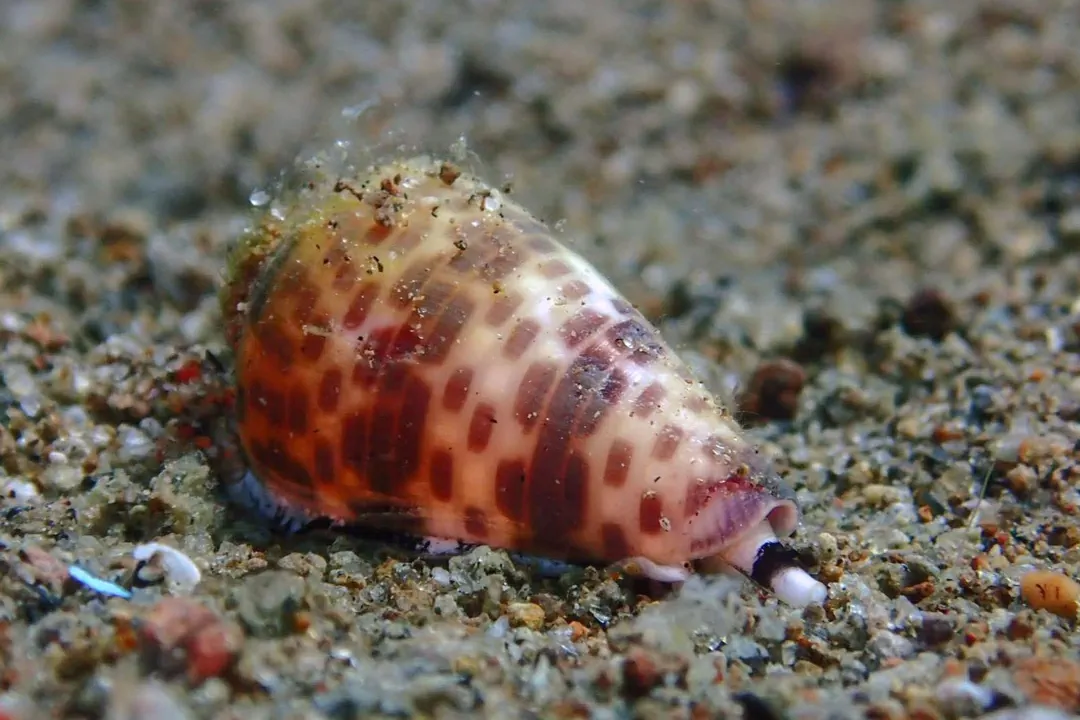 © Dan SchofieldCC BY 4.0 · iNaturalist
 Geography Cone is classified as venomous, dangerous to humans. Always exercise caution and keep a safe distance.
Download Seabook free for iOS and Android.