 © Dan SchofieldCC BY 4.0 · iNaturalist
Caribbean Reef Octopus
Octopus briareus
Octopus cyanea
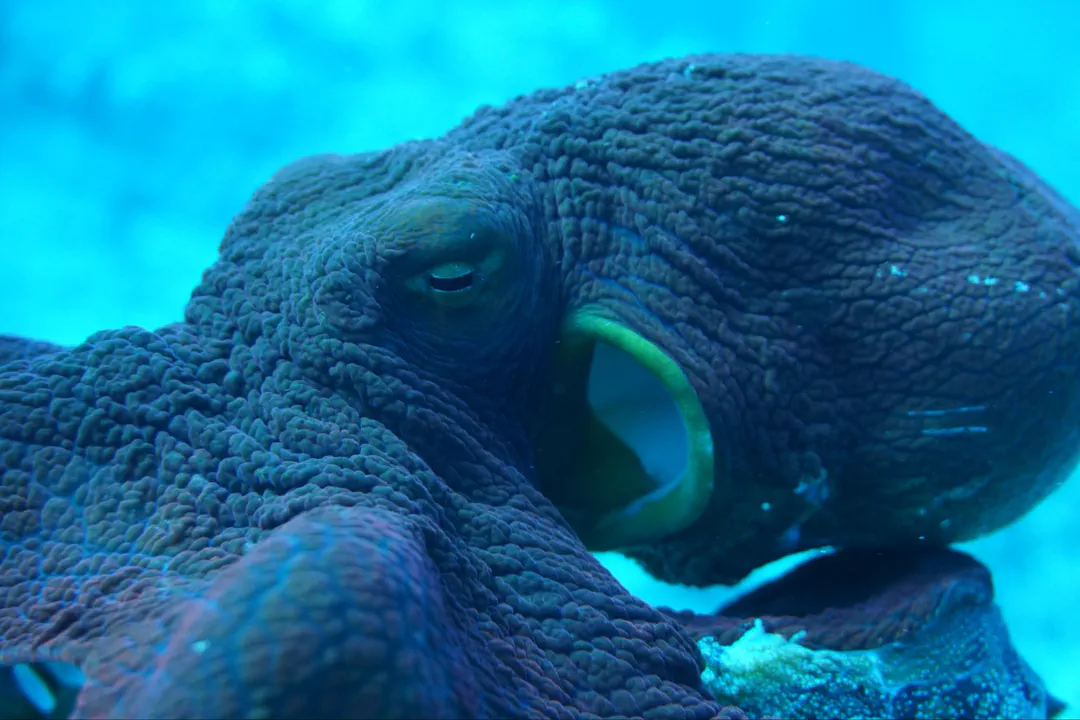
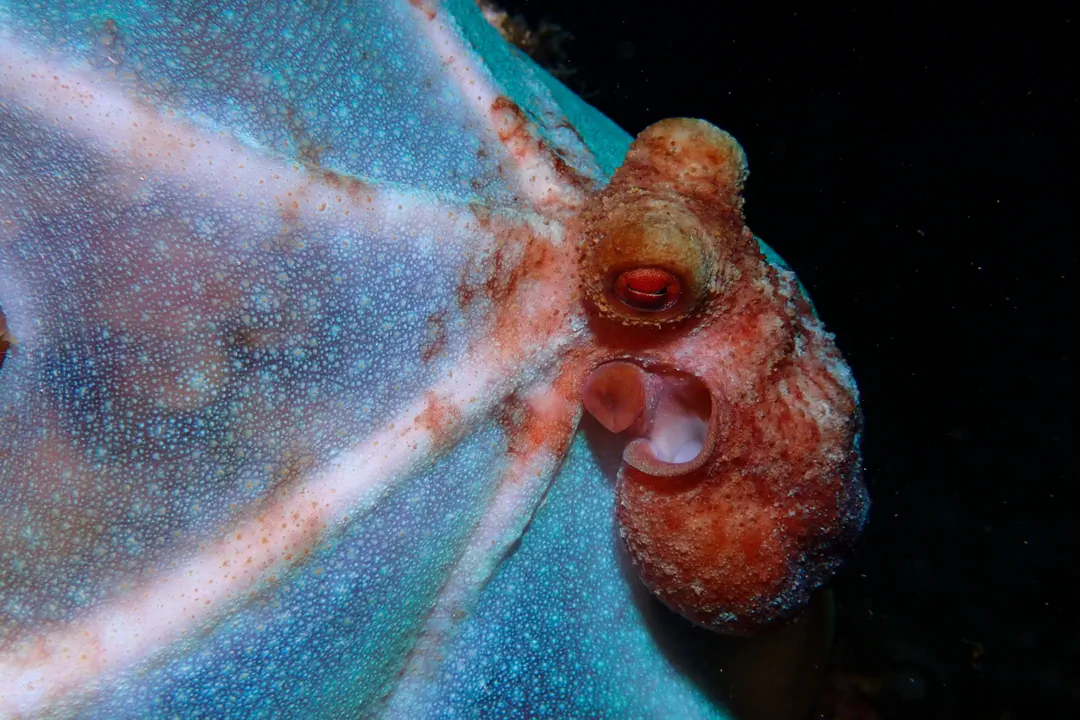
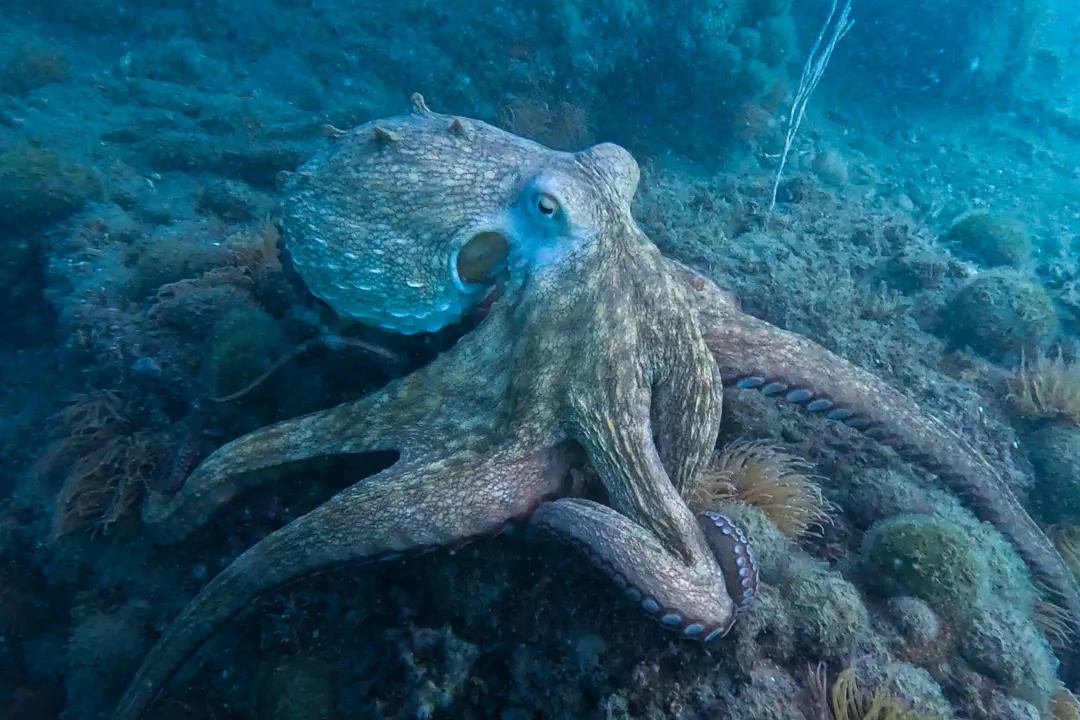
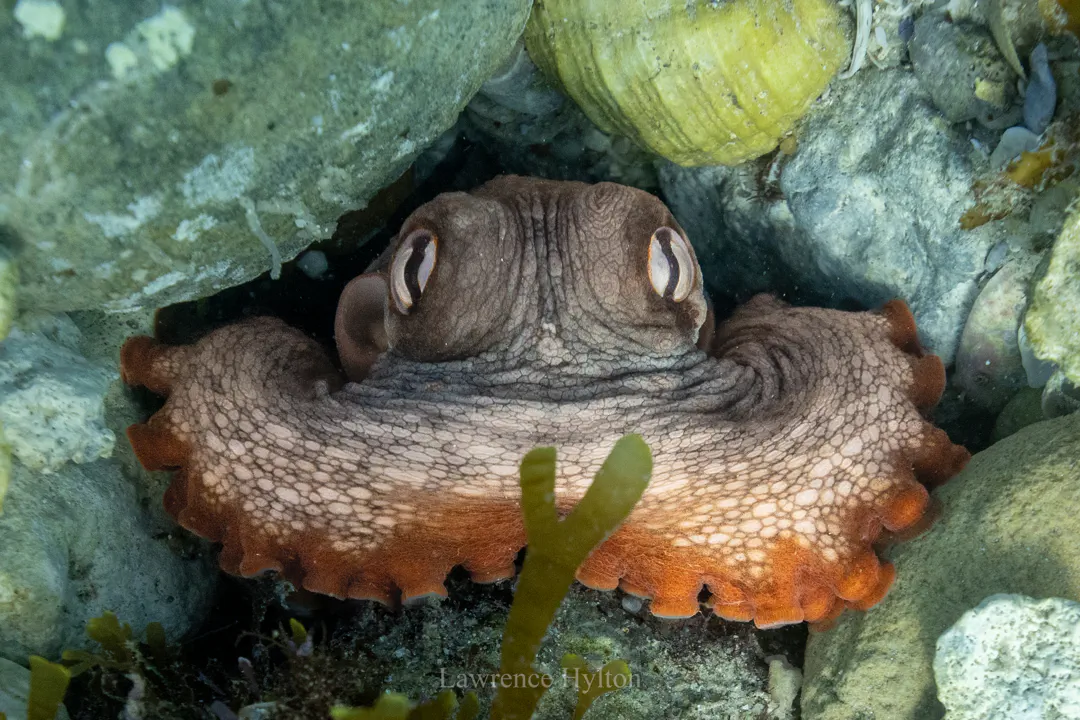
Octopus cyanea is an octopus in the family Octopodidae. It occurs in both the Pacific and Indian Oceans, from Hawaii to the eastern coast of Africa.
O. cyanea grows to 16 cm in mantle length with arms to at least 80 cm.
Living as it does on coral reefs, and hunting by day, O. cyanea is adept at camouflage and not only can change colour frequently, but also can change the patterns on and texture of its skin. One researcher observed it change its appearance 1000 times in seven hours. As it moves across the seabed it makes changes in its colouring and appearance to match the substrate beneath. The colour changes are instantaneous and made by chromatophores under direct control of the brain.
This octopus sometimes produces a "passing clouds" display when stationary near prey such as a crab; this mimics a dark shadow passing across its surface and may encourage the crab to move incautiously.
O. cyanea is found on reefs and in shallow waters in the Indo-Pacific. Its range extends from the Red Sea, the East African coast, and Madagascar, to southeastern Asia, Oceania, and as far as Hawaii.
While most species of octopus are nocturnal, O. cyanea is diurnal, although mostly crepuscular, being active at dawn and dusk. It maintains a den to which it returns after foraging; a rock crevice, a hidden place under an overhang, a hiding place among coral heads, or a hole excavated in rubble or sand.
It is a predator and searches the reef for fish, crabs, shrimp, and molluscs. Small items may be eaten where they are caught, while larger items are carried back to the den for consumption. Crabs may be killed by a bite and given an injection of toxic saliva, then chewed up in the beak of the octopus, while molluscs may have their shells drilled and the animal inside being predigested to ease extraction. Empty mollusc shells and crab carapaces are discarded outside the den, forming a midden.
They sometimes engage in cooperative hunting with the roving coral grouper.
O. cyanea has a lifespan of 12–15 months after settling from the planktonic larval state. During this time, it grows from about 67 to 6,500 g (0.1 to 14.3 lb).
The male may mate with several different females, but after this, the suckers on the edge of his webbing expand in size. During the next two to three months, they continue enlarging while the octopus goes into a decline and dies. Meanwhile, the female remains beside her eggs that are deposited in a den, and dies soon after they hatch.
© Dan SchofieldCC BY 4.0 · iNaturalist 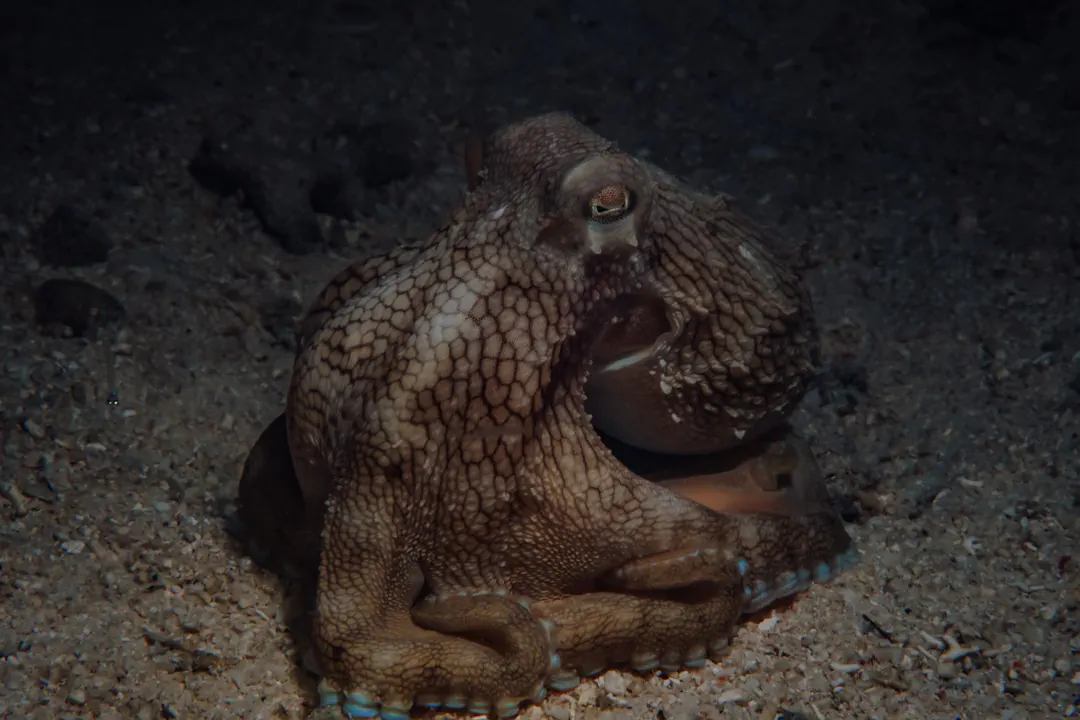 © Stas KuryanAll rights reserved
  Justin PhilboisCC0 · iNaturalist
  © Lawrence HyltonCC BY 4.0 · iNaturalist
  © Stas KuryanAll rights reserved
  © Ewout KnoesterCC BY-SA 4.0 · iNaturalist
 Day Octopus has no known danger to humans. However, always observe marine life responsibly.
Download Seabook free for iOS and Android.