 © Dan SchofieldCC BY 4.0 · iNaturalist
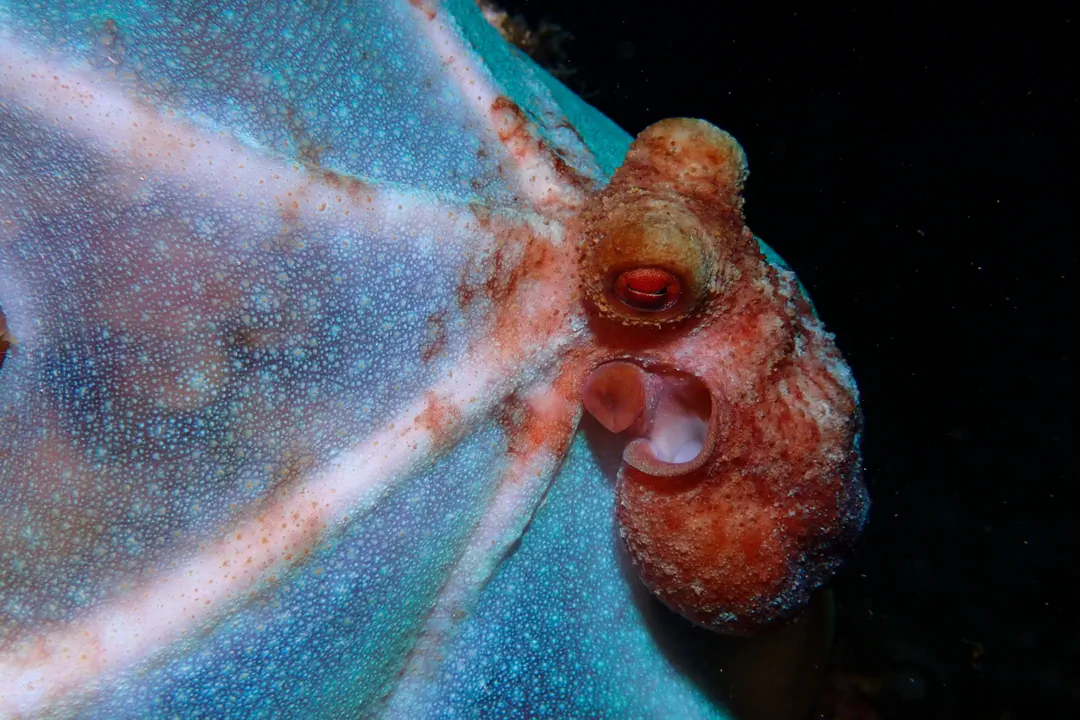
Caribbean Reef Octopus
Octopus briareus
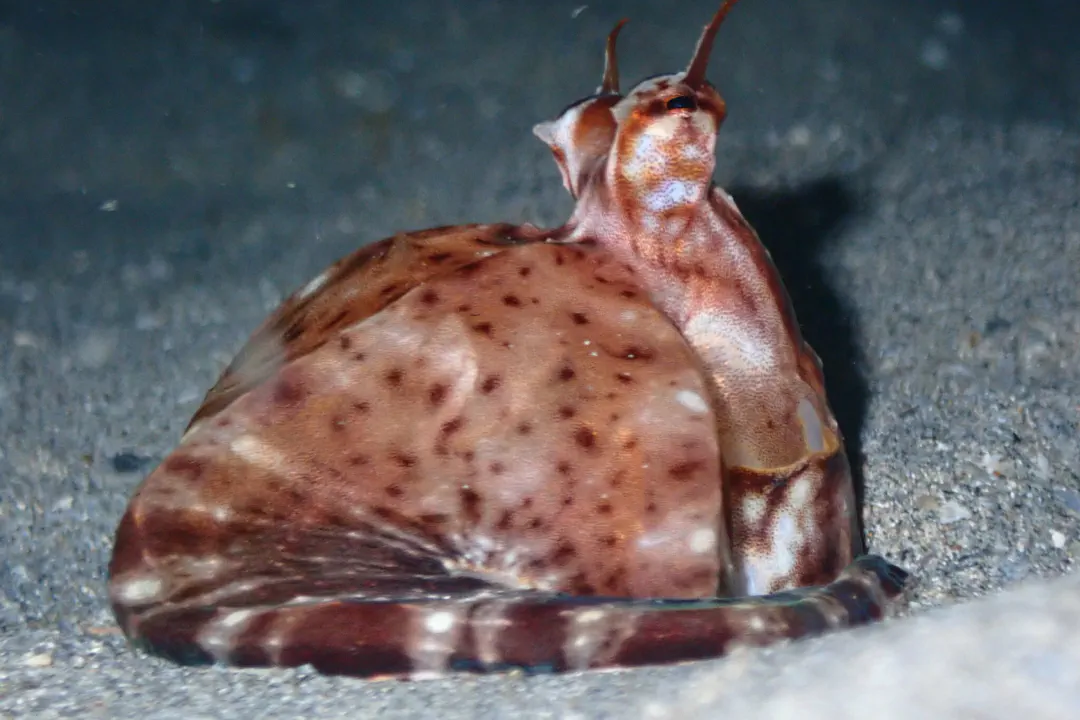
Thaumoctopus mimicus
Thaumoctopus mimicus is an Indo-Pacific species of octopus capable of impersonating other local species and/or predators. They are notable for being able to change their skin color and texture in order to blend in with their environment, such as algae-encrusted rock and nearby coral through pigment sacs known as chromatophores. The mimic octopus possesses chromatophores as well as the unique behaviour of taking shape of various objects and animals. The mimic octopus is the only currently known marine animal to be able to mimic such a wide variety of animals. Many animals can imitate a different species to avoid or intimidate predators, but the mimic octopus is the only one that can imitate as diverse a range of forms in order to elude predators.
The mimic octopus was first discovered off the coast of Sulawesi, Indonesia by a group of scientists in 1998. The species was thought to only inhabit the western and central Indo-Pacific (with most documented records from Indonesia) until one was spotted near the Great Barrier Reef on a shallow sand flat off Lizard Island in June 2012.
The mimic octopus is a smaller octopus, growing to a total length of about 60 cm (2 ft), including arms, with a diameter approximately that of a pencil at their widest. The octopus' natural color is a light brown/beige color, but usually appear a more noticeable color of striped white and brown to scare off predators by imitating poisonous species and vicious, territorial sea creatures. Its ability to change shape is the reason it was named the "mimic" octopus, and that is its main defense besides camouflage.
The mimic octopus uses a jet of water through its funnel to glide over the sand while searching for prey, typically small fish, crabs, and worms, protected by its apparently Batesian mimicry of aposematic animals. It also uses aggressive mimicry to approach wary prey, for example mimicking a crab as an apparent mate, only to devour its deceived suitor. It also prefers river mouths and estuaries, as opposed to reefs which are usually preferred as shelter by other types of octopus. As it is able to impersonate poisonous fish, it is at less risk of predation than others in the open.
The mimic octopus’s strategy is quite impressive. Mimicry is a common survival strategy in nature. Certain flies have the black and yellow stripes of a bee, which discourages potential predators, but the mimic octopus is the first known species to mimic more than one other species, and the first of its kind to possess the ability of mimicry. It is not known how many animals the mimic octopus can imitate, but it is known that most of the animals that it mimics are poisonous. This information adds to the likelihood that the octopus's shape-changing improves survival. Some of the more common animals the mimic octopus imitates are the following:
Lion fish – a venomous fish with brown and white stripes, and spines that trail behind it on all sides. When the octopus changes its color and shapes its eight legs to look like spines, it may be perceived by a potential predator as a venomous creature that should be avoided.
Sea snake – If under attack, a mimic octopus may hide completely in a hole except for two of its legs, which it sticks out in opposite directions. What remains in view is a long thin object with white and black bands running across the elongated body, resembling a venomous sea snake, which most predators avoid.
Flatfish – By pulling its arms together on one side, and flattening out its body while moving forward along the ocean floor, the mimic octopus imitates a flatfish.
Jellyfish – The mimic octopus will act as a jellyfish sometimes, by puffing up its head and siphon and letting its arms trail behind it. The octopus will then impersonate the motions of a jellyfish swimming by going to the surface and then slowly sinking with its arms spread evenly around its body; many octopus predators avoid jellyfish.
The so-called "mimic octopus" of tropical Indo-Pacific are reputed to mimic up to 15 species of other local marine organisms. Mimicry of a local, abundant flounder was observed; nearly 500 episodes were analyzed. Both octopus species mimicked the shape, swimming actions, speed, duration, and sometimes the coloration of swimming flounders. During flounder mimicry, octopuses were actively moving and conspicuous, whereas immediately before and afterwards they were camouflaged and motionless (sitting or very slowly crawling). Furthermore, when motionless, the octopuses assumed body patterns and postures that resembled small sponges, tube-worm tubes, or colonial tunicates, which were among the few objects in the open sand habitat. The key finding was that octopuses used flounder mimicry only when their movement would give away camouflage in this open habitat. In all cases, octopuses used mimicry as a primary defense. The mimic's behaviour remained undiscovered for years because its dull homelands are poorly studied. But it is precisely in this barren environment that this behaviour is advantageous.
The octopus may mimic animals known to deter a specific threatening predator. For example it has been observed that an octopus attacked by damselfish mimicked a black and yellow banded sea snake, a damselfish predator.
The mimic octopus can either be classified as a hunter or a forager. It is believed to be a hunter because scientists have observed and recorded the octopus having the ability to stalk prey and hunt down small fish and catch them. More often, however, the Mimic Octopus can be seen foraging for food. It does this by using a jet of water through its siphon to glide over the sand while searching for prey, and using its slender tentacles to reach into crevices in coral, as well as holes in the sand, and use its suction cups to grab small crustaceans and eat them. Because the Mimic Octopus prefers to live in shallow, murky waters, it is believed that its diet consists almost exclusively of small fish and crustaceans. That is because those are the only two animals that are common to those conditions that a mimic octopus can survive on. They are believed to be carnivores, and are not known to eat any type of plant or vegetation. Living in the tropical Indo-Pacific seas, it was first discovered in 1998 off Sulawesi. The octopus mimics other animals using changes in both coloration and body posture; like other cephalopods it can also mimic its background.
The mimic octopus is distinct from Wunderpus photogenicus, which has fixed white markings.
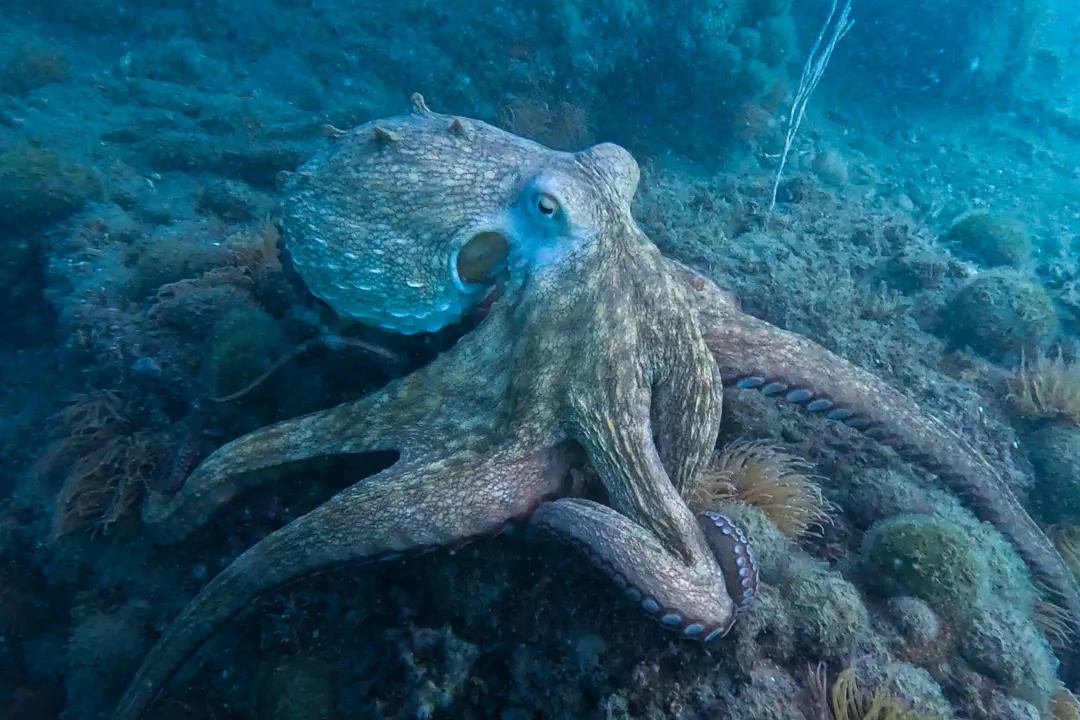
The mimic octopus is native to Indonesia, especially Sulawesi, Gulf of Thailand, and the Great Barrier Reef in south. Most documented records are from Indonesia. It is primarily found in areas with sand or silt at depths of less than 15 m (49 ft). It prefers obscuring murky and muddy sea floors to blend in with its natural brown, beige color.
© Dan SchofieldCC BY 4.0 · iNaturalist 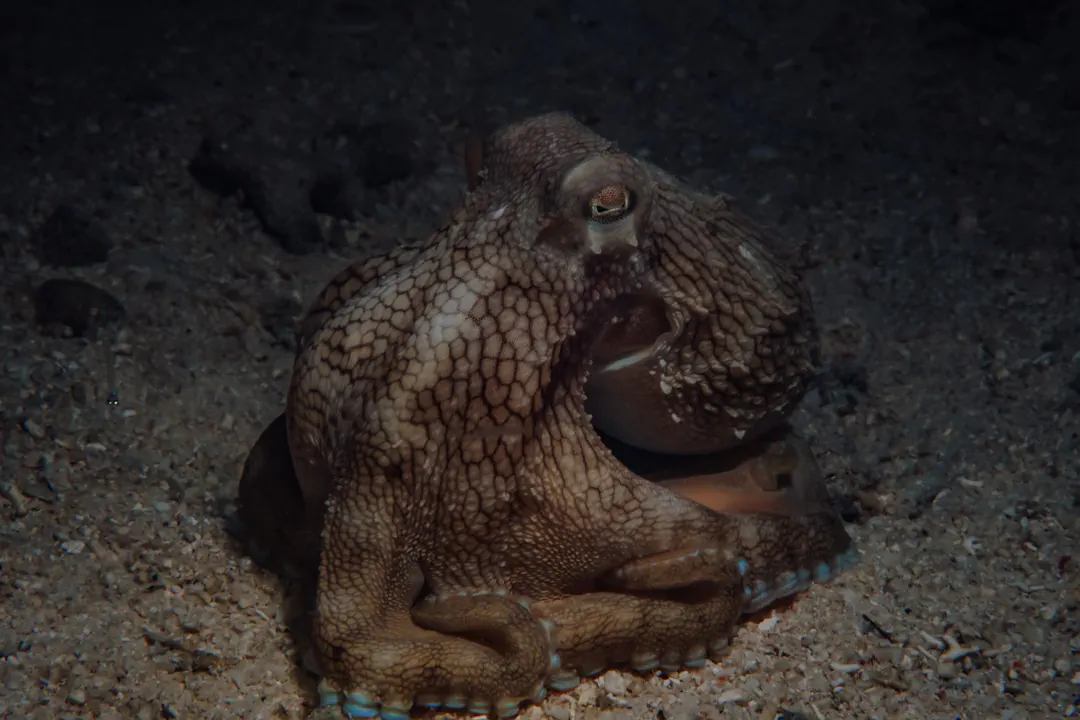 © Stas KuryanAll rights reserved
  Justin PhilboisCC0 · iNaturalist
 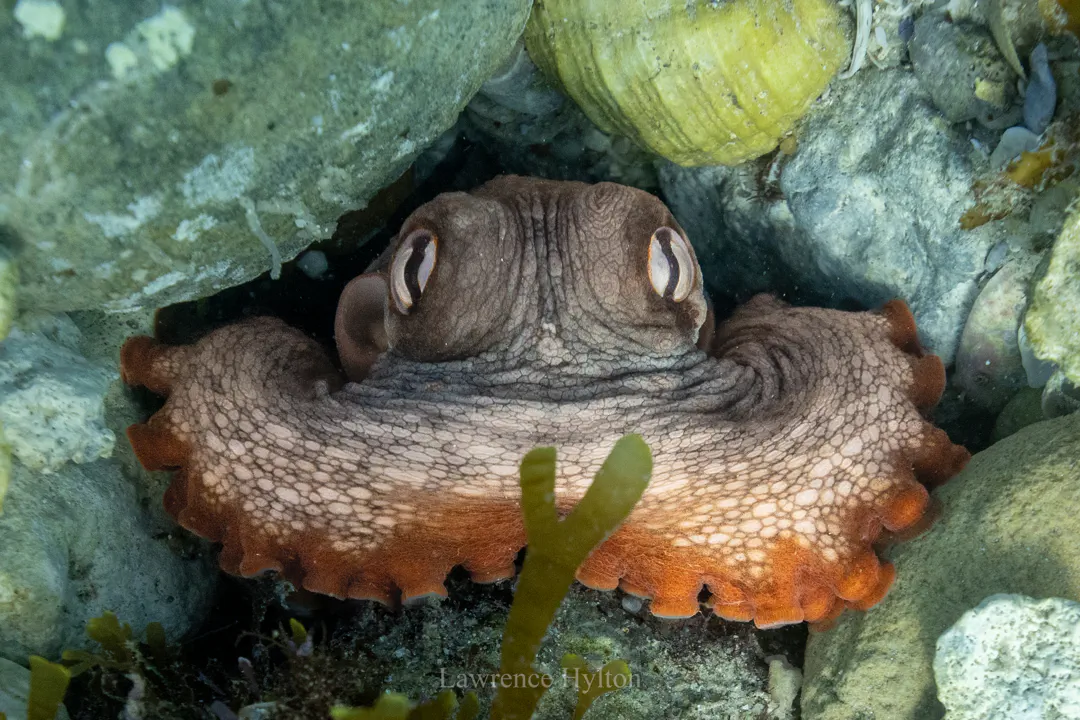 © Lawrence HyltonCC BY 4.0 · iNaturalist
 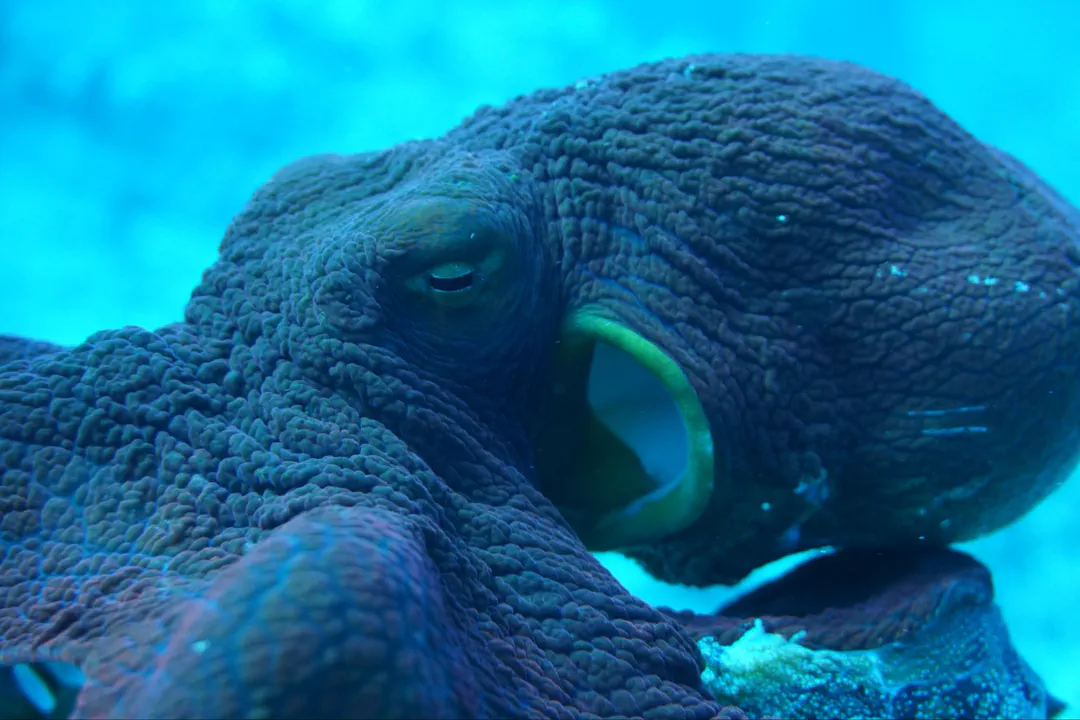 © cello caruso-turielloCC BY 4.0 · iNaturalist
 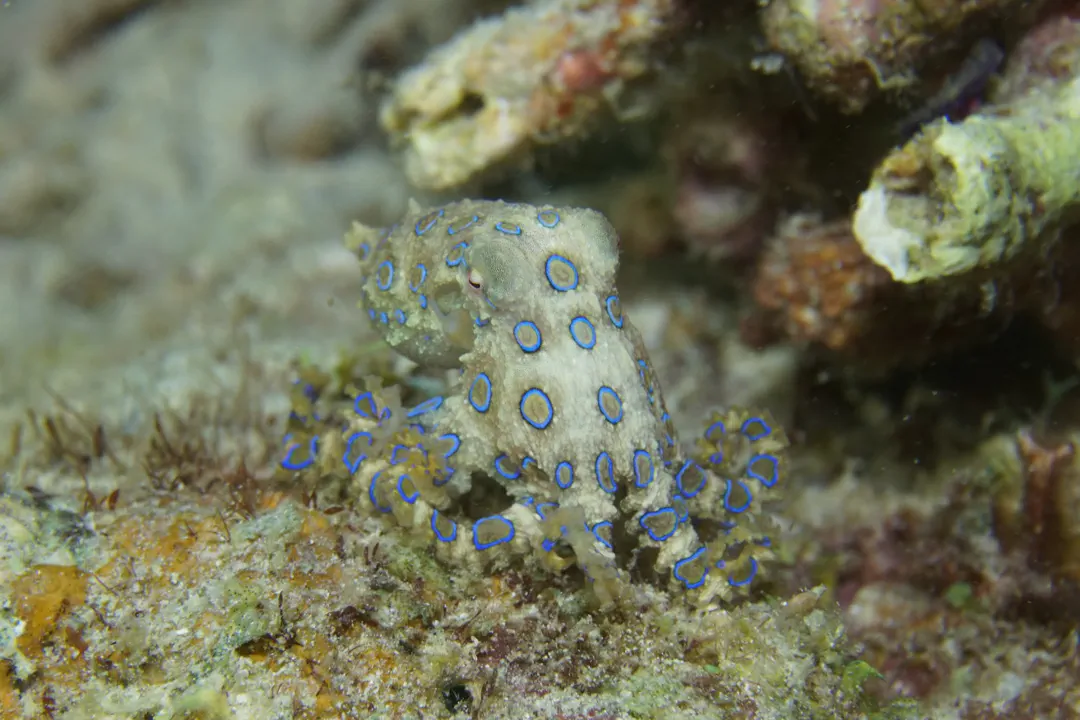 © Stas KuryanAll rights reserved
 Mimic Octopus has no known danger to humans. However, always observe marine life responsibly.
Mimic Octopus can be found at depths of up to 15 meters.
Download Seabook free for iOS and Android.