At eight metres below the surface at Manta Point, a five-metre reef manta ray hovers motionless over a solitary limestone rock. Wrasses dart from the stone to pick parasites from her wingtips while ocean swell rocks the diver beneath. Sunlight filters down through plankton-thick water, casting shimmering ribbons across the dark back of the ray as she tilts her wings and glides silently into the blue.
For travellers planning a trip, diving in Nusa Penida centers on high-voltage marine encounters shaped by deep ocean trenches. The primary diving season runs during the dry months from May to October, when cold upwellings lower water temperatures to 18–24°C and bring clear visibility ranging from 20 to 40 metres. During the wet season from November to April, surface temperatures warm to 26–29°C, offering calmer seas and quieter sites despite occasional rain showers.
Signature sites such as Manta Point, Crystal Bay, Toyapakeh, and SD Point showcase a mix of resident reef manta rays, seasonal bumphead sunfish (mola mola), whitetip reef sharks, and green sea turtles. Due to sudden downcurrents, heavy surge, and fast drift conditions, Nusa Penida is best suited to Advanced Open Water divers and those comfortable with currents. However, sheltered sites like Mangrove Point provide safe conditions for beginners and snorkellers.
What Is Diving in Nusa Penida Like?
Diving around Nusa Penida, Nusa Lembongan, and Nusa Ceningan is defined by the oceanographic engine of the Lombok Strait. This deep ocean passage serves as a primary funnel for the Indonesian Throughflow, transporting massive volumes of water from the Pacific Ocean into the Indian Ocean. The interaction between deep bathymetry and narrow shallow channels creates strong tidal streams, rapid current shifts, and nutrient-dense water conditions.
These physical forces create cold upwellings that lift nutrient-rich water from depths exceeding 200 metres straight onto the shallow reef slopes. As these ocean nutrients hit sunlight, they trigger plankton blooms that sustain large filter feeders and dense fish populations. The trade-off for divers is an environment that requires careful tide monitoring and constant depth awareness, as horizontal currents can transform into sudden vertical downcurrents along exposed headlands.
The underwater landscape transitions sharply from broad, shallow hard-coral gardens along the northern coastline to sheer vertical drop-offs and limestone overhangs on the south and west. Coral coverage ranges from massive brain corals and table formations on northern slopes to low-profile soft coral colonies adapted to persistent wave surge in the south. Visibility shifts with tidal flow, ranging from 15 metres during heavy plankton surges to over 40 metres during clear dry-season upwellings.
Best Time to Dive in Nusa Penida
The dry season, spanning from May through October, offers peak visibility and the highest probability of pelagic encounters. Southeast trade winds blow steadily during these months, driving cool oceanic upwellings toward the island group. July through October marks the prime window for spotting bumphead sunfish (Mola alexandrini) as they ascend into recreational diving depths to visit cleaning stations in cold thermoclines.
From November to April, the wet season brings the northwest monsoon, raising sea surface temperatures to 26–29°C. While rainfall and wind can disrupt boat crossings from Sanur and lower surface visibility, underwater conditions remain productive. Reef manta rays are present throughout these months, and dive sites experience significantly lower boat traffic and fewer divers in the water.
The shoulder months of March, April, and May provide a balance between warming water temperatures and calmer surface conditions. Plankton density during these transition periods often concentrations along southern bays, creating optimal conditions for feeding manta rays. Divers visiting during these months encounter moderate currents and reliable sea conditions across both northern and southern dive sites.
Nusa Penida Water Temperature by Month
Water temperature
Nusa Penida, Bali, monthly average
Reference point: Nusa Penida Island, using the surrounding south Bali / Badung Strait coastal waters near the main dive area off Nusa Penida; surface temperatures only, not dive-depth water.
Water temperatures around Nusa Penida do not follow a uniform tropical profile due to localized thermoclines. While northern sites like Toyapakeh and SD Point often hover between 26°C and 28°C for most of the year, southern and western sites like Crystal Bay experience abrupt temperature drops. A diver descending through a calm 27°C surface layer can cross a thermocline at 18 metres depth where the temperature plunges to 19°C in a matter of seconds.
Exposure protection must be chosen based on the season and specific site selection. During the warm wet season from November to May, a standard 3mm wetsuit provides sufficient insulation for most dives. However, from July to October, a 5mm full wetsuit combined with a hooded vest is strongly recommended to combat repeated exposure to persistent 18–22°C thermoclines.
Cold water increases breathing gas consumption and physical fatigue during current dives. Divers should monitor their depth gauges and pressure indicators closely when crossing into sharp thermoclines. If thermal stress causes discomfort or uncontrollable shivering, terminating the dive conservatively with your buddy is the safest course of action.
Best Dive Sites in Nusa Penida
The dive sites across Nusa Penida, Nusa Lembongan, and Nusa Ceningan split into three distinct exposure zones. The southern coast faces the open Indian Ocean, where heavy sea swells wash over shallow cleaning stations. The northern coast features continuous coral slopes swept by horizontal drift currents, while the narrow channels between the islands host deep drop-offs and wall topography.
Selecting the right site depends on daily tidal predictions, swell forecasts, and diver certification levels. Northern sites allow long, effortless drift dives along miles of hard coral, whereas western sites demand tight buddy positioning and precise buoyancy control near deep water drop-offs.
Manta Point: Year-Round Manta Ray Cleaning Station
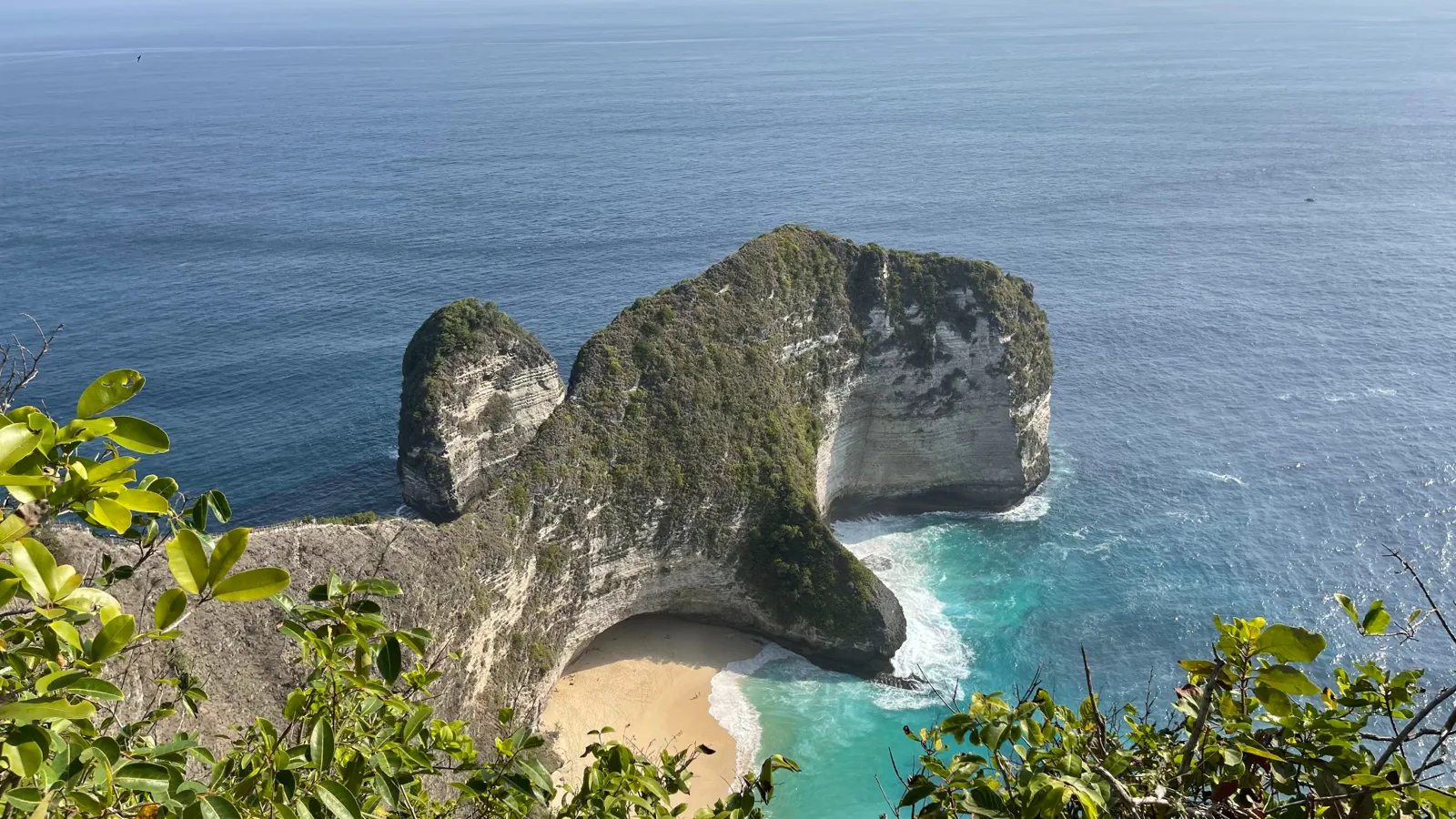
Located at the foot of dramatic limestone cliffs on Nusa Penida's southern coast, Manta Point centers around a set of large rock bommies rising from a sandy floor at a depth of 8 to 12 metres. Ocean currents push plankton into this exposed bay, attracting resident reef manta rays (Mobula alfredi) throughout the year. Cleaner wrasses inhabit the rock formations, picking parasites from the skin, gills, and mouth cavities of visiting rays.
Surge is a constant factor at Manta Point, as open ocean swells break against the adjacent cliff faces and roll across the shallow bay floor. Divers maintain position by staying close to the rocky substrate, avoiding the temptation to float directly above the cleaning station bommies. During heavy swell conditions, surge can sway divers several metres back and forth, requiring relaxed breathing and secure camera gear.
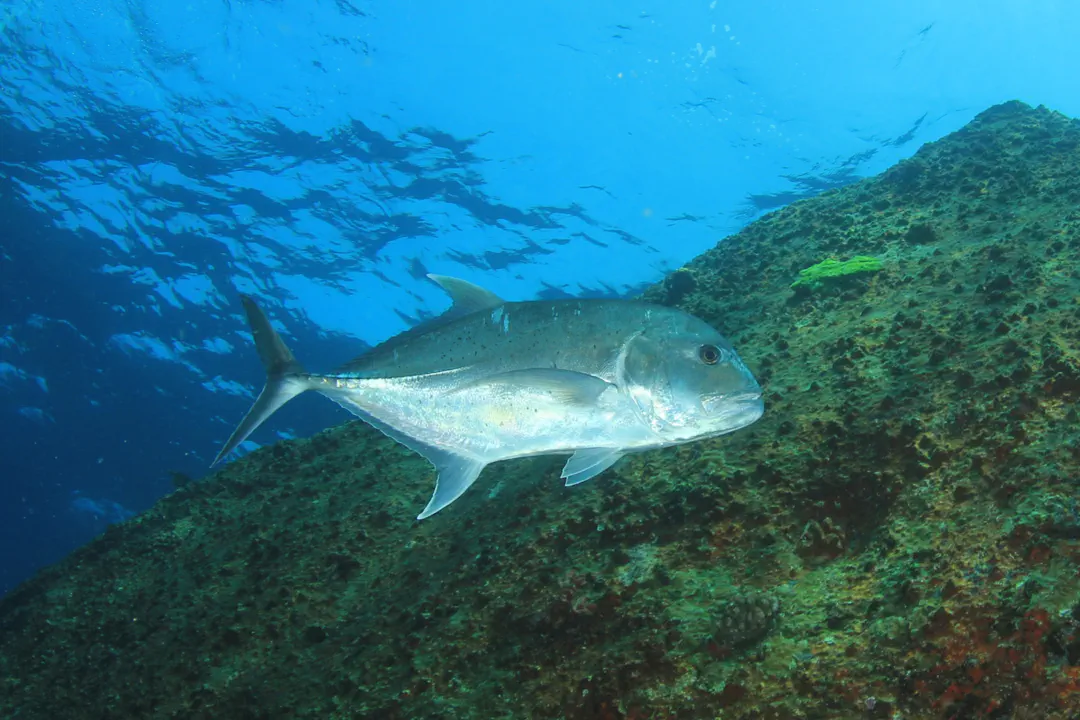
Beyond the cleaning stations, the sandy floor slopes downward to 20 metres, where blue-spotted stingrays and nurse sharks rest in sheltered alcoves. Whitetip reef sharks occasionally patrol the deeper perimeter, while schools of trevally hunt along the rocky wall. Strict non-contact guidelines apply here: divers must not chase, touch, or block the escape routes of approaching rays.
Depth: 8–20 m. Access: boat, 45 minutes from Toyapakeh. Level: Open Water. Best months: Year-round.
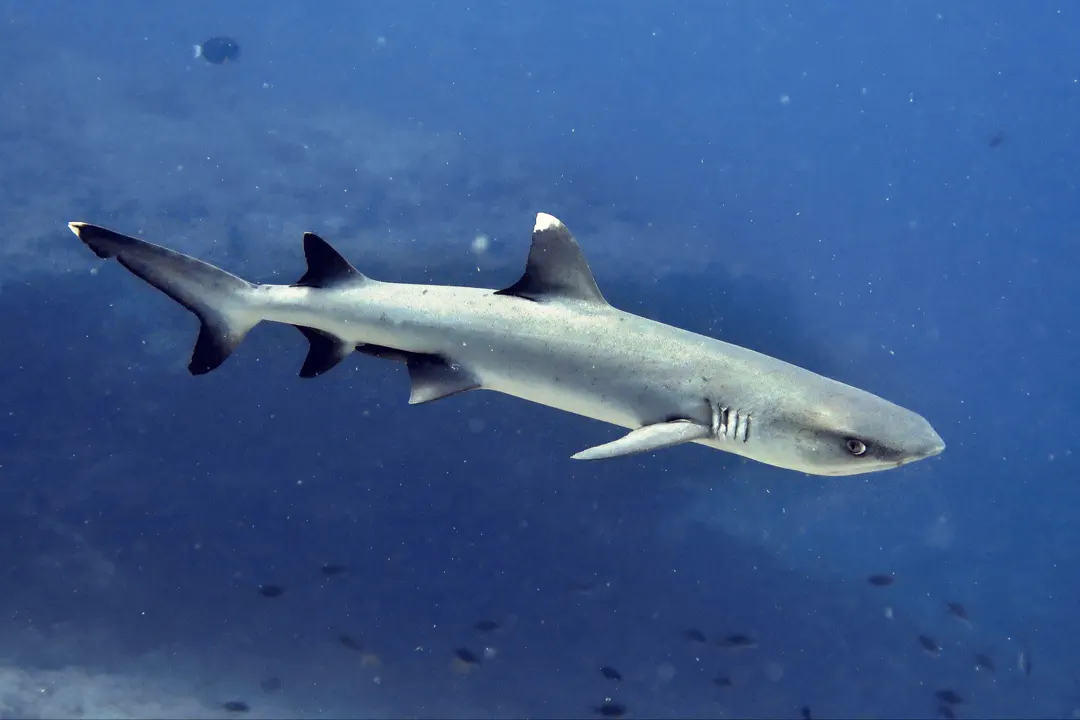 © Daniel BenákCC BY 4.0 · iNaturalist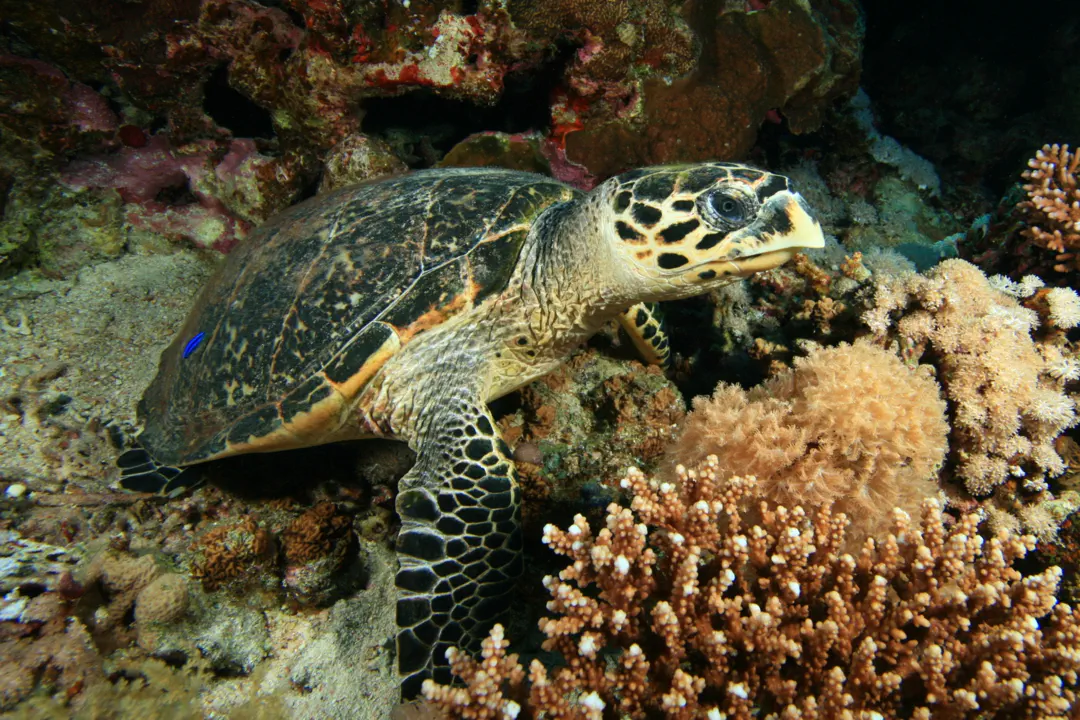
 © João D'AndrettaCC BY 4.0 · iNaturalist
  © cello caruso-turielloCC BY 4.0 · iNaturalist
 Crystal Bay: Mola Mola Sightings and Deep Coral Reefs
Crystal Bay sits on the sheltered western edge of Nusa Penida, directly facing the deep waters of the Ceningan Channel. The bay features a central rocky islet surrounded by a shallow sand flat that drops off steeply into a deep ocean valley. From July through October, cold ocean currents sweep up this valley, bringing bumphead sunfish (Mola alexandrini) from deep water up to cleaning stations between 18 and 30 metres depth.
The dive site requires caution due to complex hydrodynamic conditions near the outer headland. As tidal water rushes through the narrow channel between Nusa Penida and Ceningan, current shear can generate severe downcurrents capable of pulling divers toward deeper water. Guides carefully evaluate the tide chart before entering and keep groups tucked close to the reef slope away from the open channel gap.
The shallow bay inside the islet provides safer conditions, with hard coral mounds sheltering hawksbill turtles and schools of surgeonfish. Giant trevally and emperor angelfish swim along the wall edges, while macro enthusiasts search crevices for nudibranchs. Thermal protection is critical here during the upwelling season, as temperatures frequently drop below 20°C.
Depth: 5–40 m. Access: boat, 20 minutes from Toyapakeh. Level: Advanced Open Water. Best months: July–October.
 © Matteo BellucciCC BY 4.0 · iNaturalist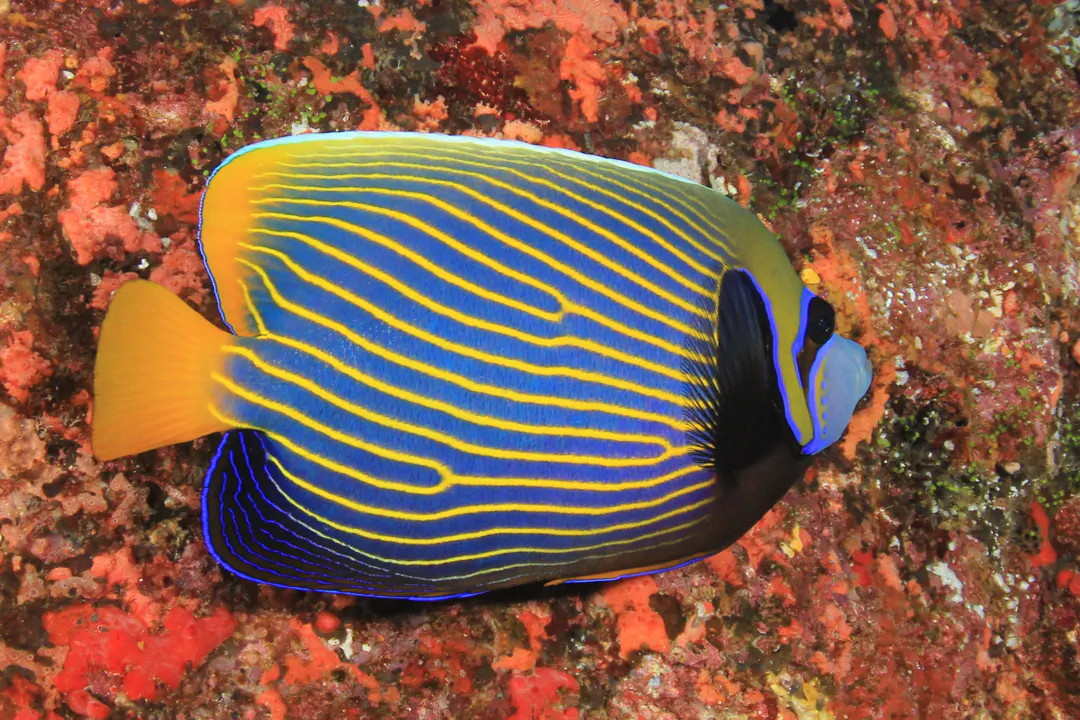
 © Dan SchofieldCC BY 4.0 · iNaturalist
 Toyapakeh: Coral Pillars and Currents
Situated at the northern mouth of the Ceningan Strait, Toyapakeh features a rich structural reef environment. The topography includes steep step-downs, broad coral terraces, and giant soft coral pillars that rise from depths of 30 metres toward the surface. The site's location exposes it to strong, nutrient-rich tidal flows, nourishing dense stands of hard and soft corals.
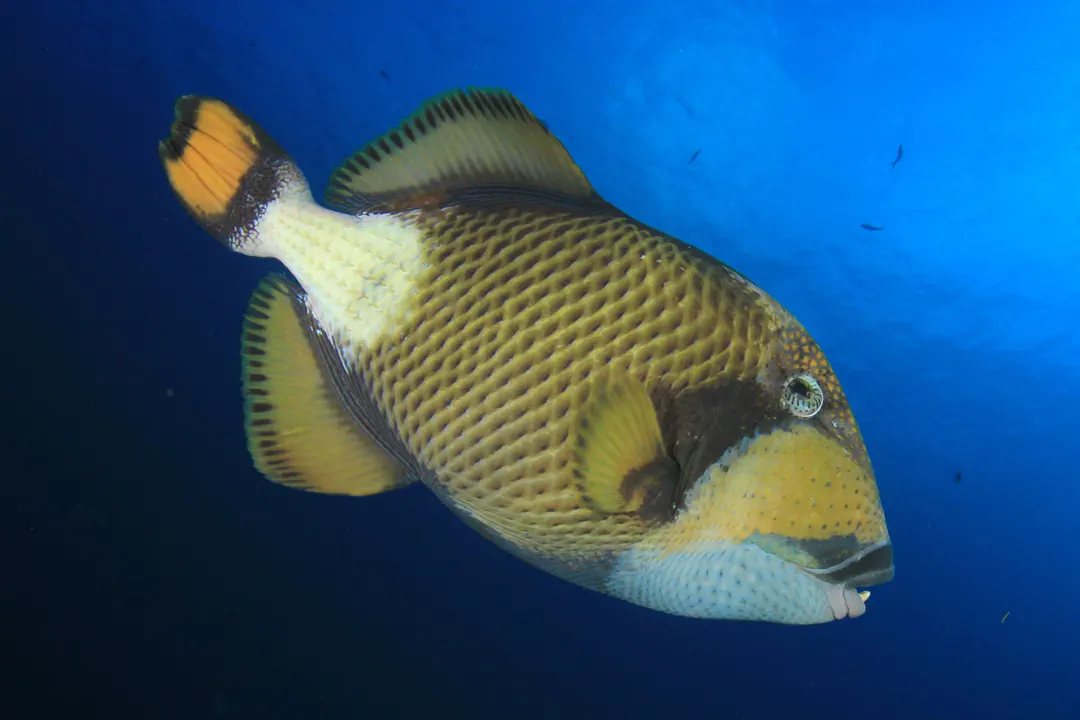
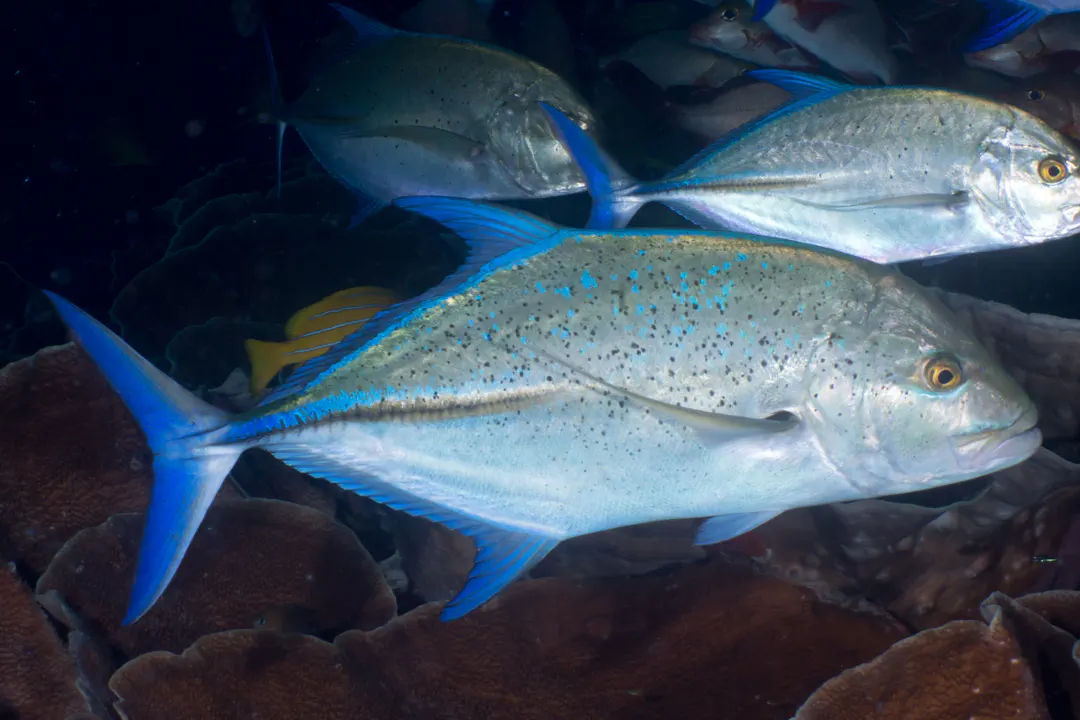
Currents at Toyapakeh are dynamic and often change direction during a single dive. Divers typically perform negative entries to descend beneath surface chop, drifting alongside the sloping wall while watching for pelagic visitors in the blue. Swirling eddies near the edge of the strait frequently concentrate massive schools of bluefin trevally, redtooth triggerfish, and sweetlips.
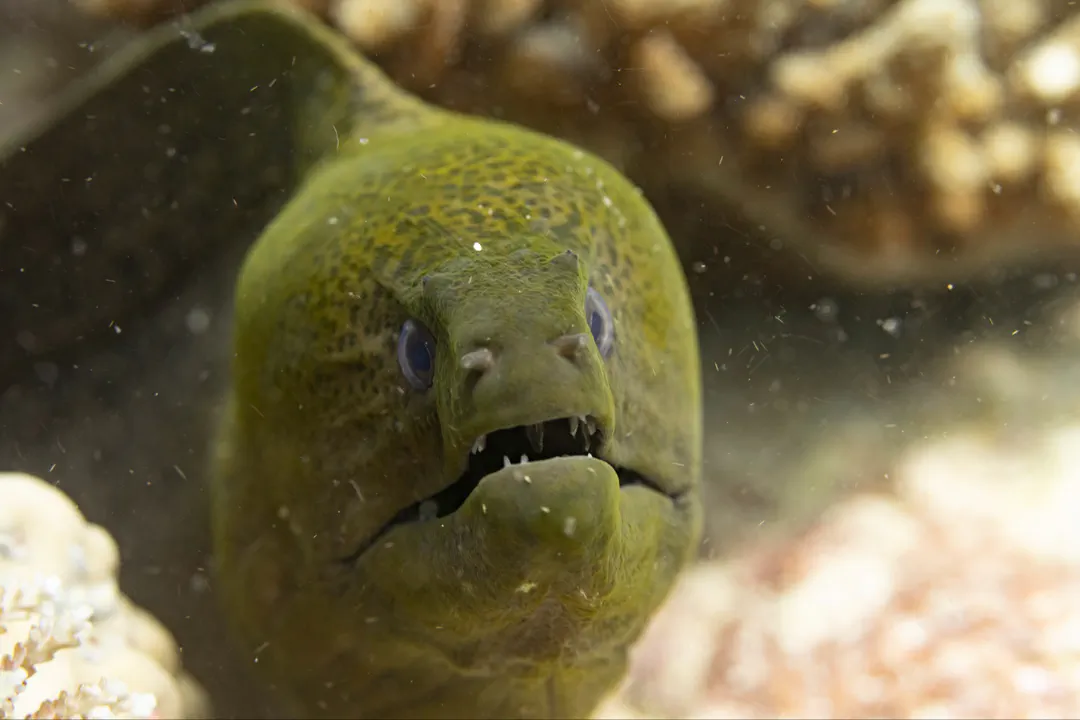
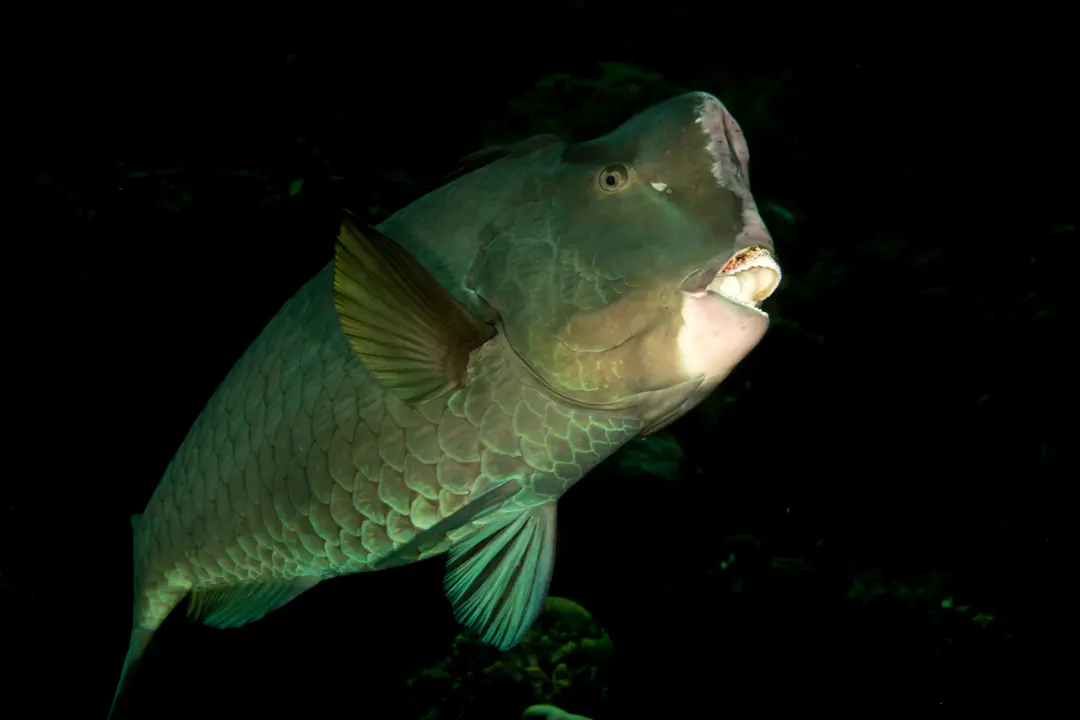
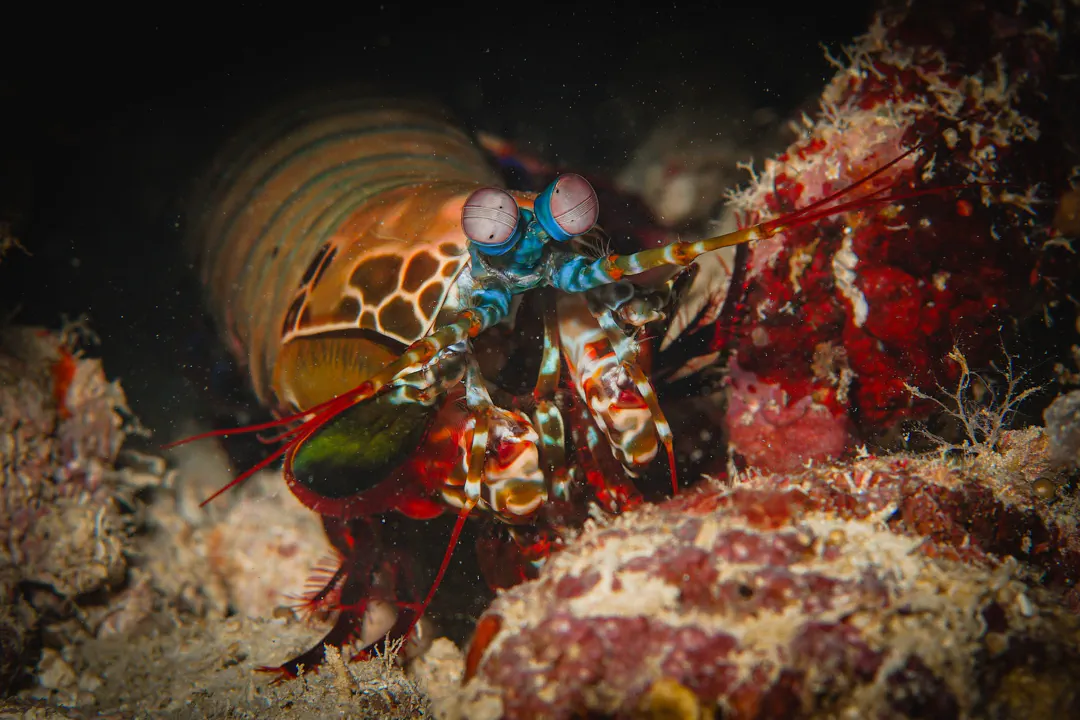
Along the deeper sections of the wall, giant moray eels occupy deep crevices, while peacock mantis shrimp and ribbon eels inhabit the rubble zone along the lower slope. Bumphead parrotfish occasionally crunch through hard coral colonies in small groups. The dive ends over a shallow 6-metre plateau where safety stops can be completed while drifting over hard coral gardens.
Depth: 6–30 m. Access: boat, 10 minutes from Toyapakeh harbour. Level: Advanced Open Water. Best months: April–November.
 © Rickard ZerpeCC BY 4.0 · iNaturalist
  © Rickard ZerpeCC BY 4.0 · iNaturalist
  Andrew DeaconCC0 · iNaturalist
  © BJ SmitCC BY 4.0 · iNaturalist
  © Stas KuryanAll rights reserved
 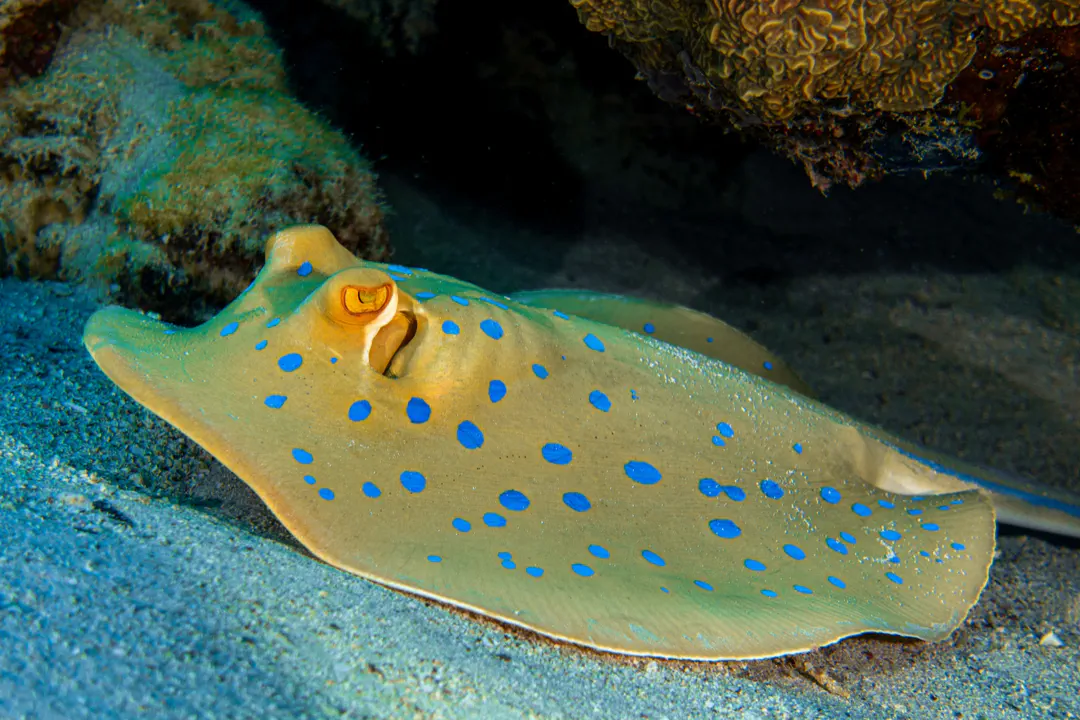 © Dirk FroebelCC BY 4.0 · iNaturalist
 SD Point: Drift Diving Along Coral Slopes
SD Point takes its name from the elementary school (Sekolah Dasar) situated along the coastal road directly opposite the site. The topography consists of an uninterrupted hard coral slope that extends for several kilometres along Nusa Penida's northern coast. A constant, directional drift current pushes divers parallel to the shore, creating effortless flying conditions over the reef.
The health of the hard coral cover along SD Point is exceptionally high, dominated by staghorn, table, and brain coral formations. Millions of orange anthias and redtooth triggerfish hover directly above the coral heads, retreating into the branches in unison as divers drift past. Hawksbill turtles feed on sponges along the slope, showing little fear of drifting observers.
As you drift over deeper reef sections at 20 to 25 metres, look into the open water blue for pelagic species. Dogtooth tuna, Spanish mackerel, and giant trevally regularly cruise parallel to the current line hunting smaller reef fish. Whitetip reef sharks are frequently spotted resting on small sand patches nestled between coral bommies.
Depth: 5–30 m. Access: boat, 15 minutes from Toyapakeh. Level: Advanced Open Water. Best months: May–October.
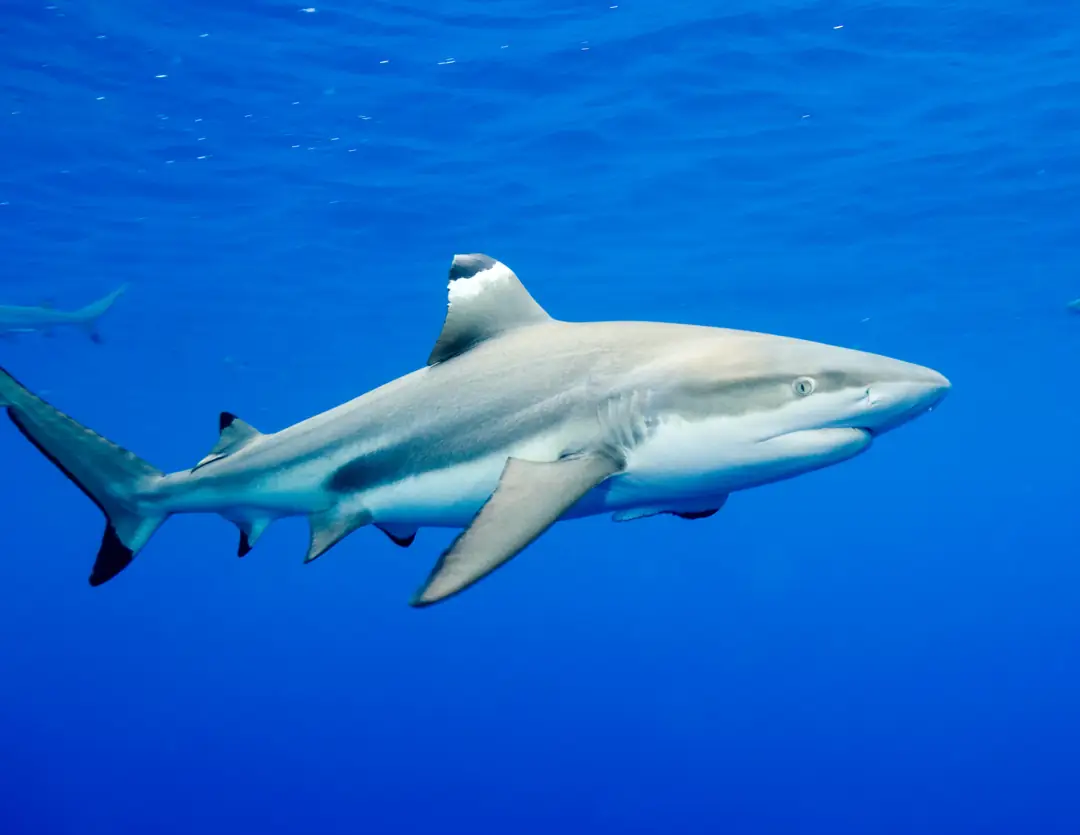
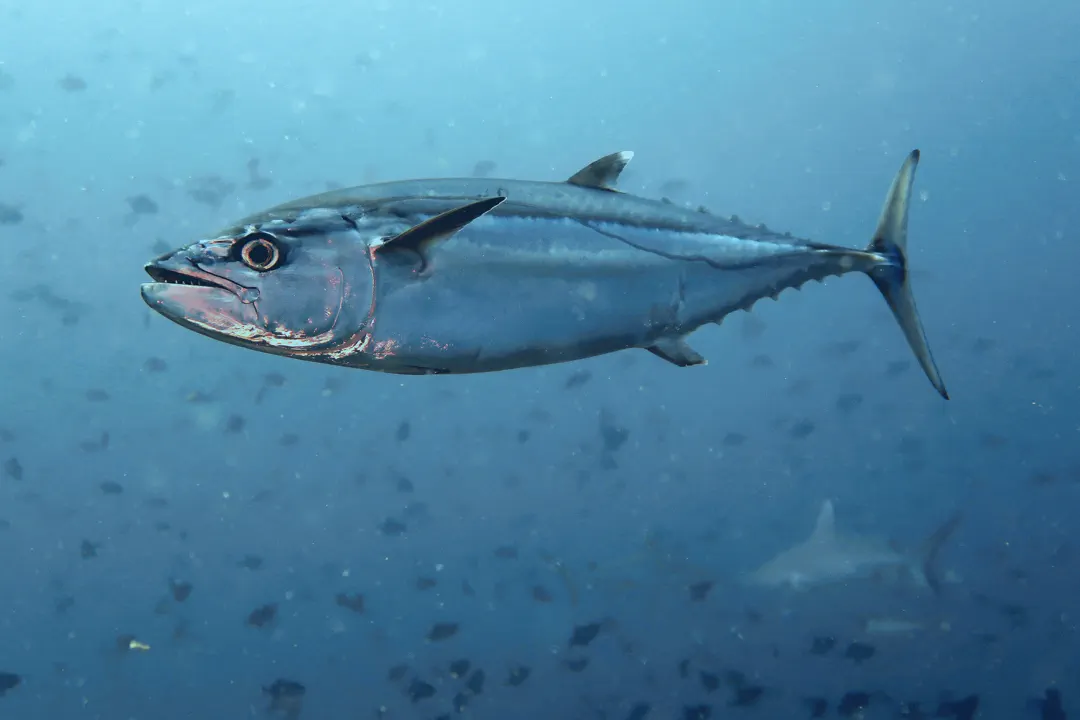 © Daniel BenákCC BY 4.0 · iNaturalist
 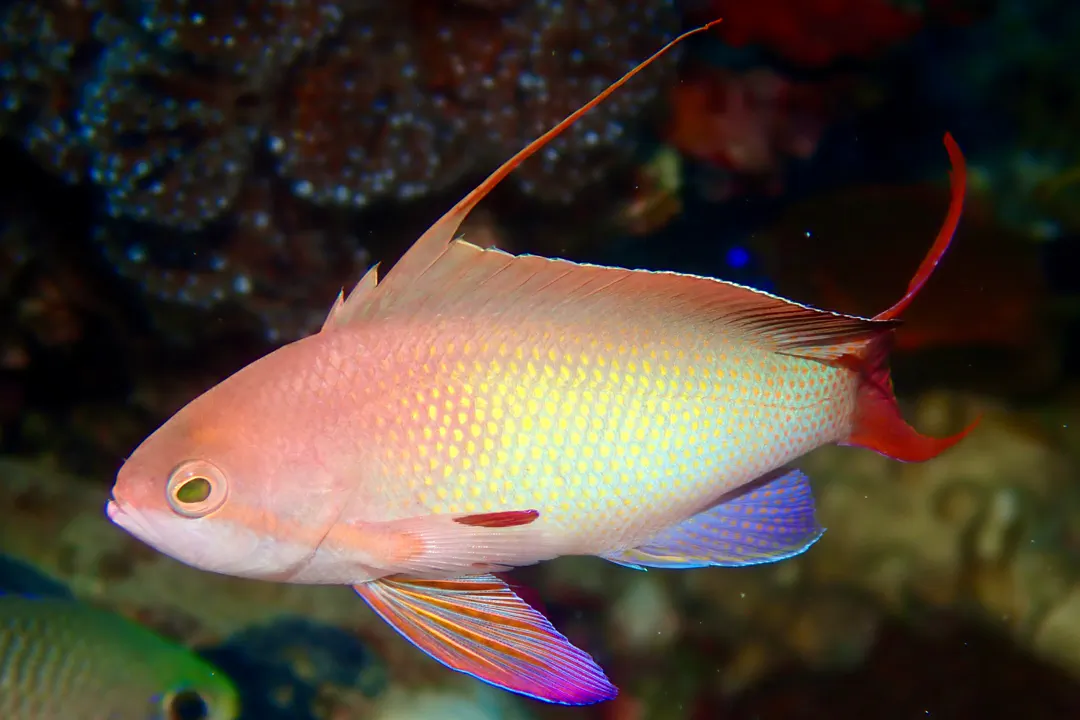 © Libby KeatleyCC BY 4.0 · iNaturalist
 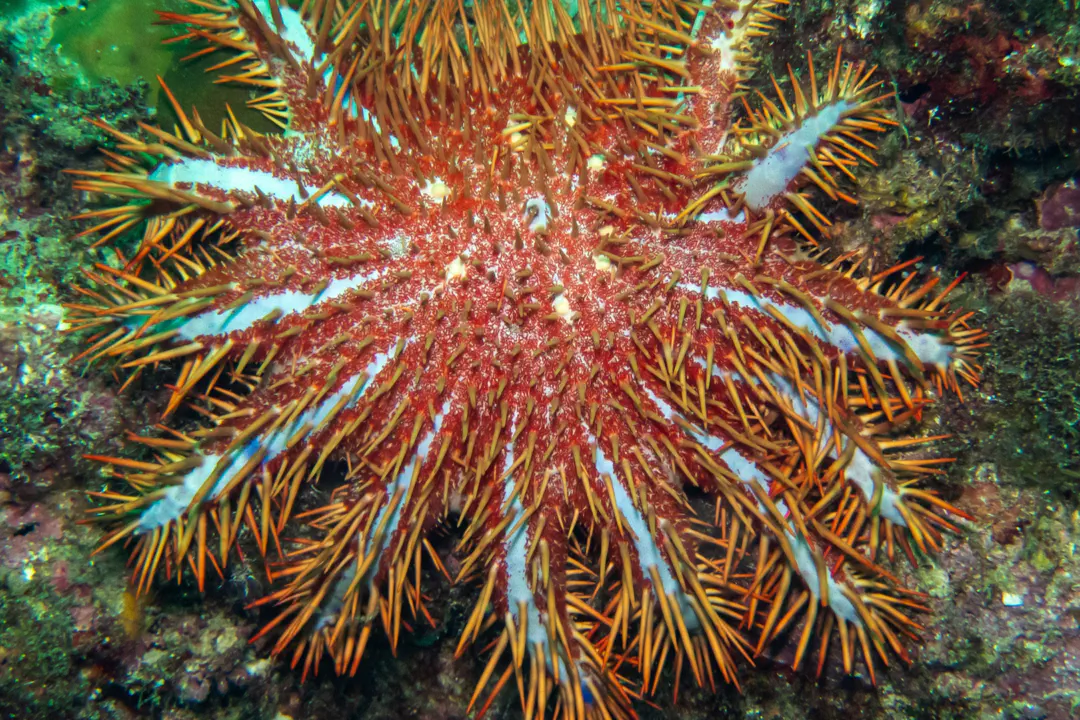 © portioidCC BY 4.0 · iNaturalist
 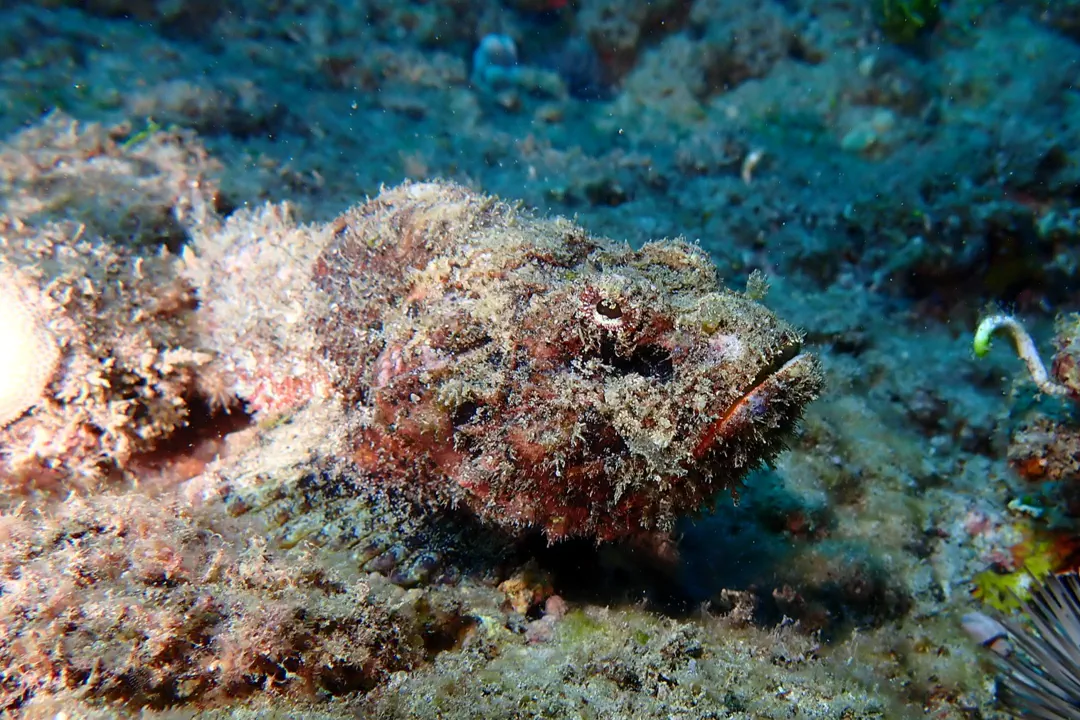 © Robin WhiteCC BY 4.0 · iNaturalist
 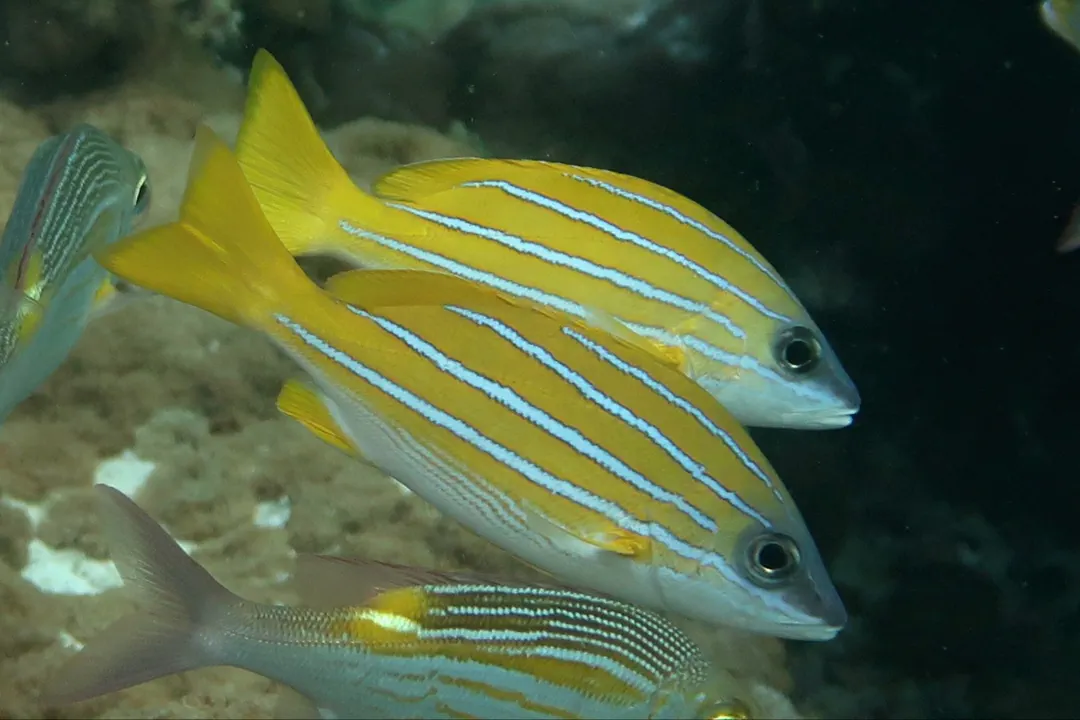 © Daniel BenákCC BY 4.0 · iNaturalist
 Ped: Deep Wall Diving and Open-Ocean Patrols
Ped lies just west of SD Point on the island's northern shore, sharing a similar current-driven environment but featuring a steeper, wall-like transition into deep water. Massive barrel sponges—some over two metres tall—garnish the wall face alongside whip corals and sea fans. Current speeds here range from gentle glides to fast-paced drift runs depending on the moon phase.
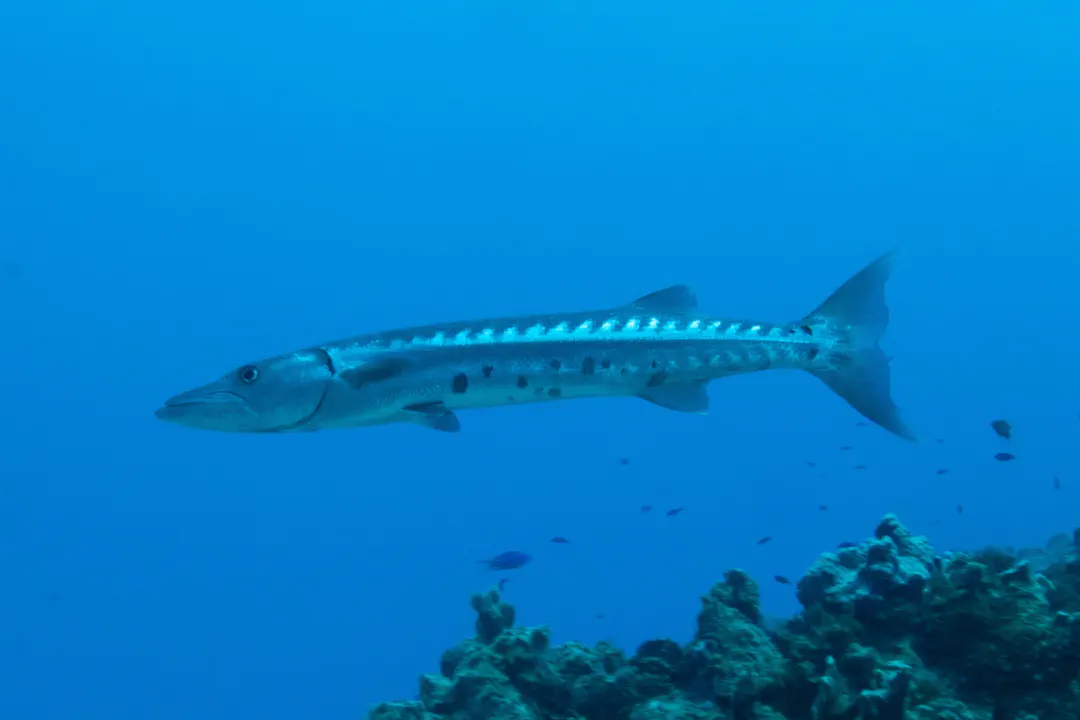
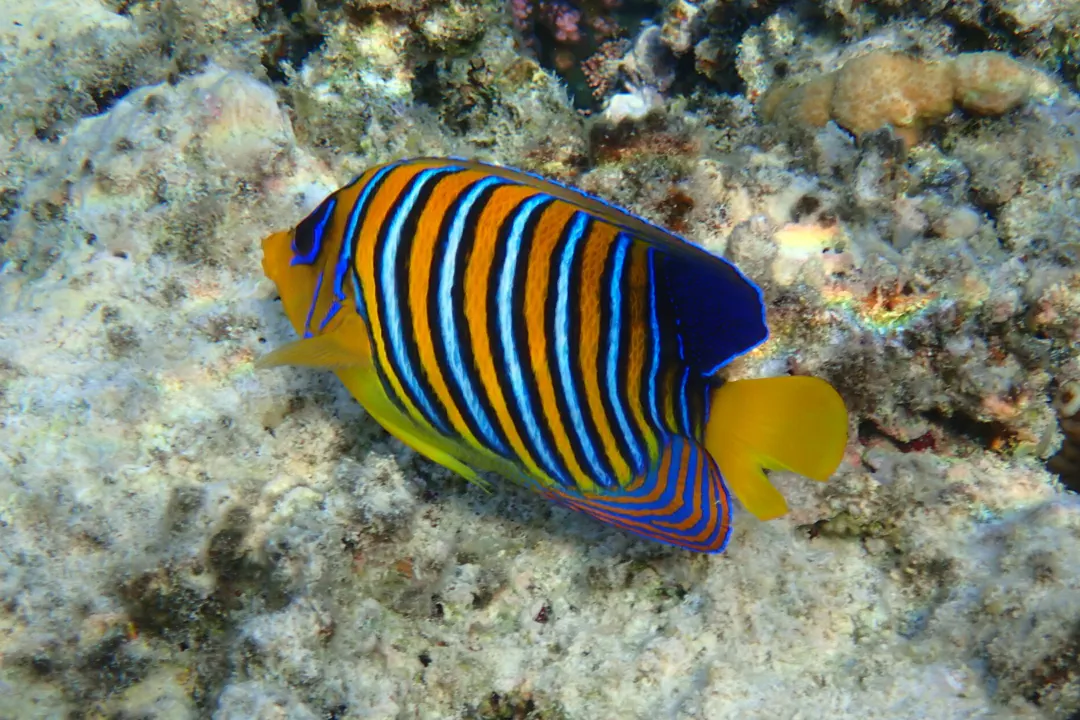
The deep orientation of the wall makes Ped an ideal location for encountering open-water pelagics. Schools of chevron barracuda often form stationary spirals in the current off the drop-off, while emperor angelfish and blue-girdled angelfish pick at sponge growth along the rock face. Large reef octopus hunt along the wall, changing color rapidly as they move across different coral surfaces.
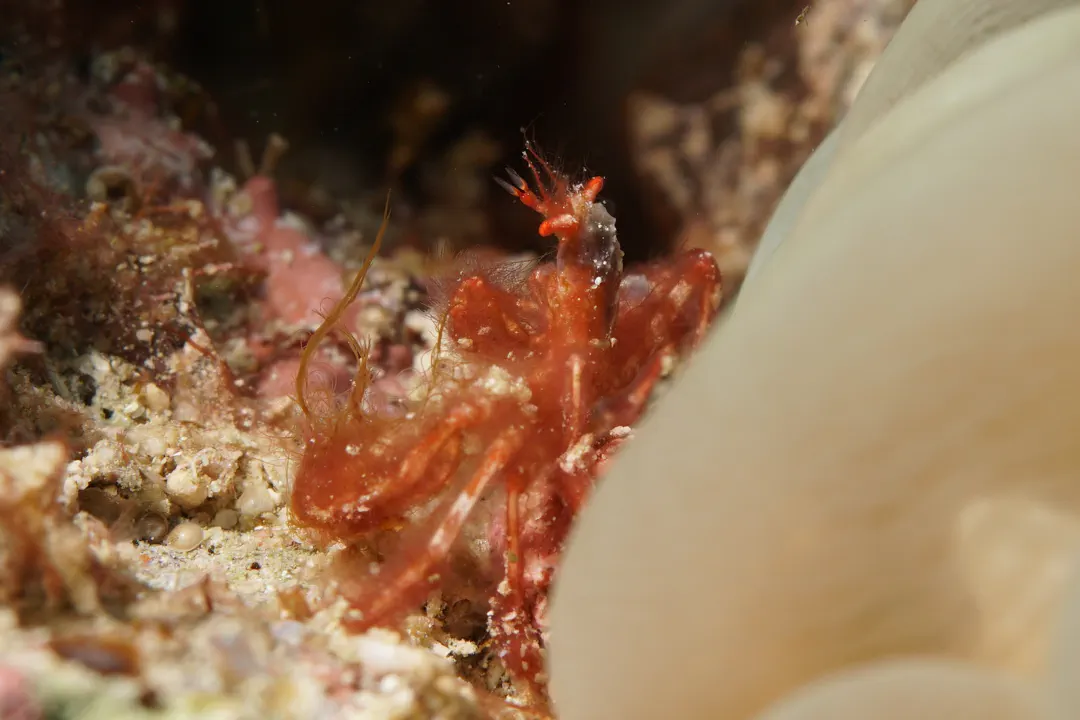
Buoyancy control is paramount at Ped, as the wall plunges down past recreational limits into the deep strait. Macro photographers with precise hover control can spot harlequin shrimp, leaf scorpionfish, and thorny seahorses clinging to hydroids in wall recesses. Divers deploy delayed surface marker buoys before ascending into open water for safe boat pickup.
Depth: 10–40 m. Access: boat, 15 minutes from Toyapakeh. Level: Advanced Open Water. Best months: May–October.
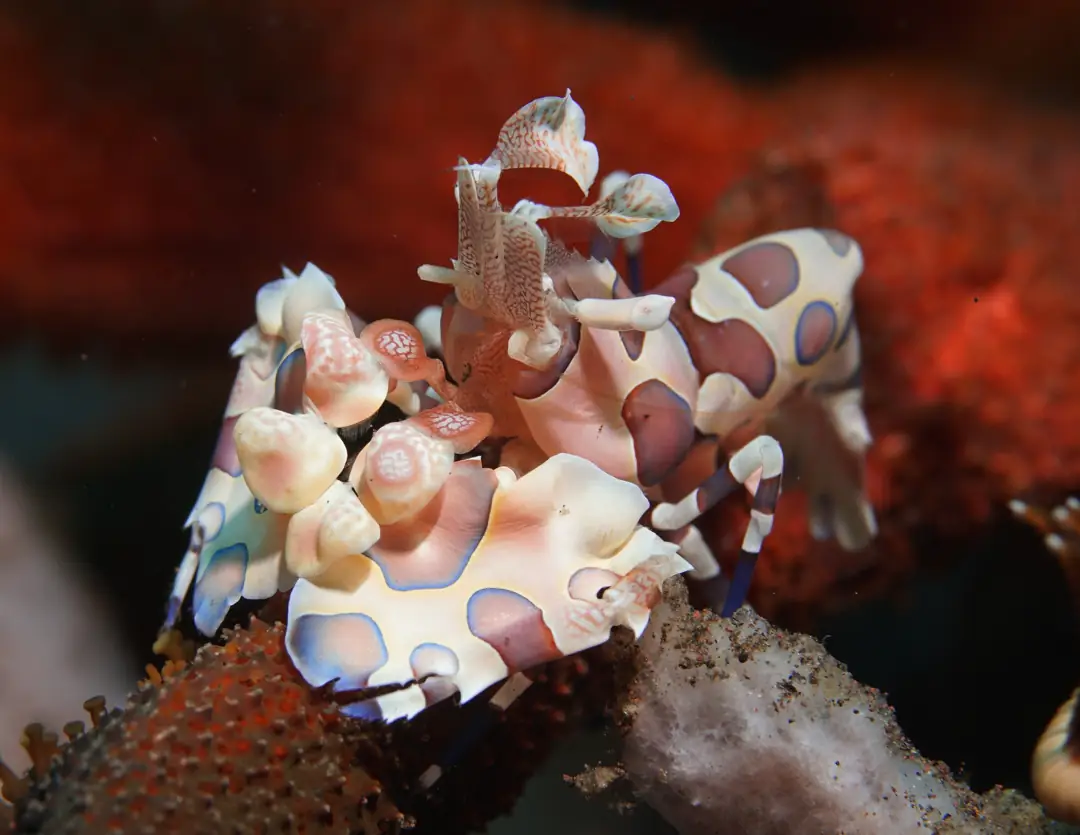 © Stas KuryanAll rights reserved
 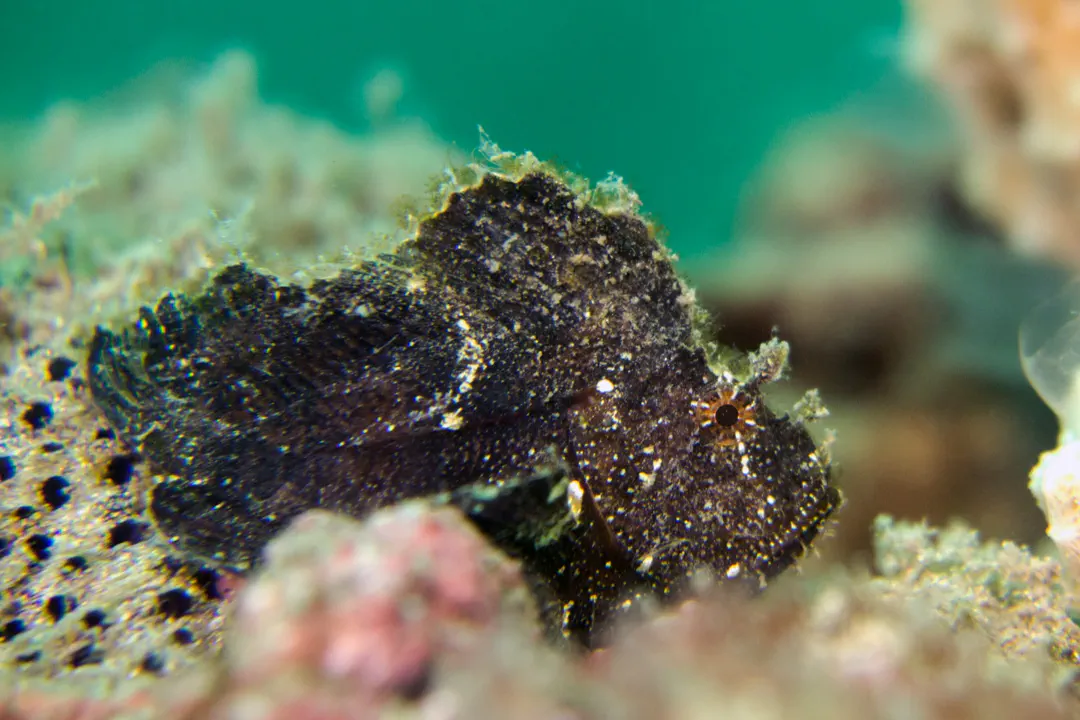 © Ewout KnoesterCC BY-SA 4.0 · iNaturalist
 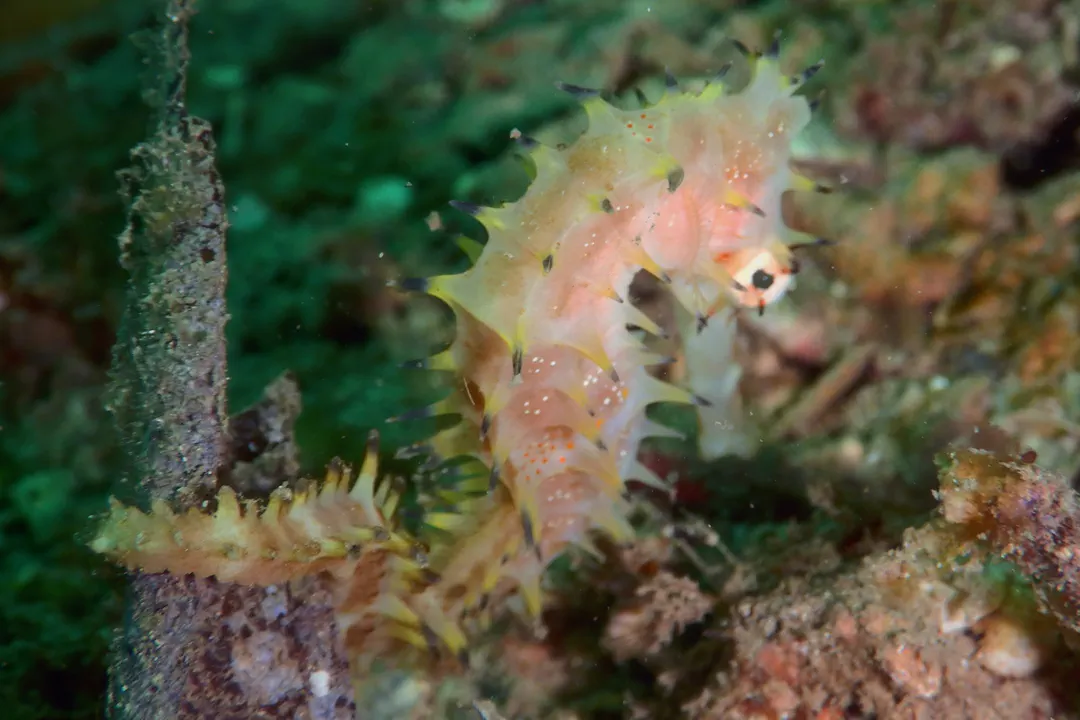 © Ewout KnoesterCC BY-SA 4.0 · iNaturalist
 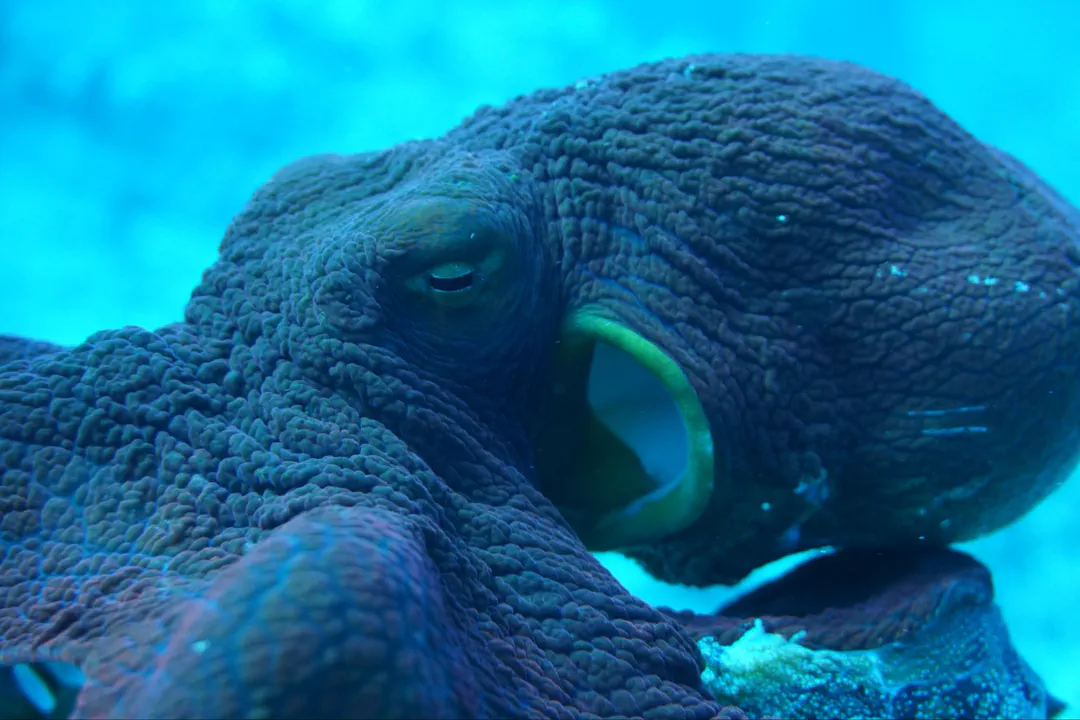 © cello caruso-turielloCC BY 4.0 · iNaturalist
 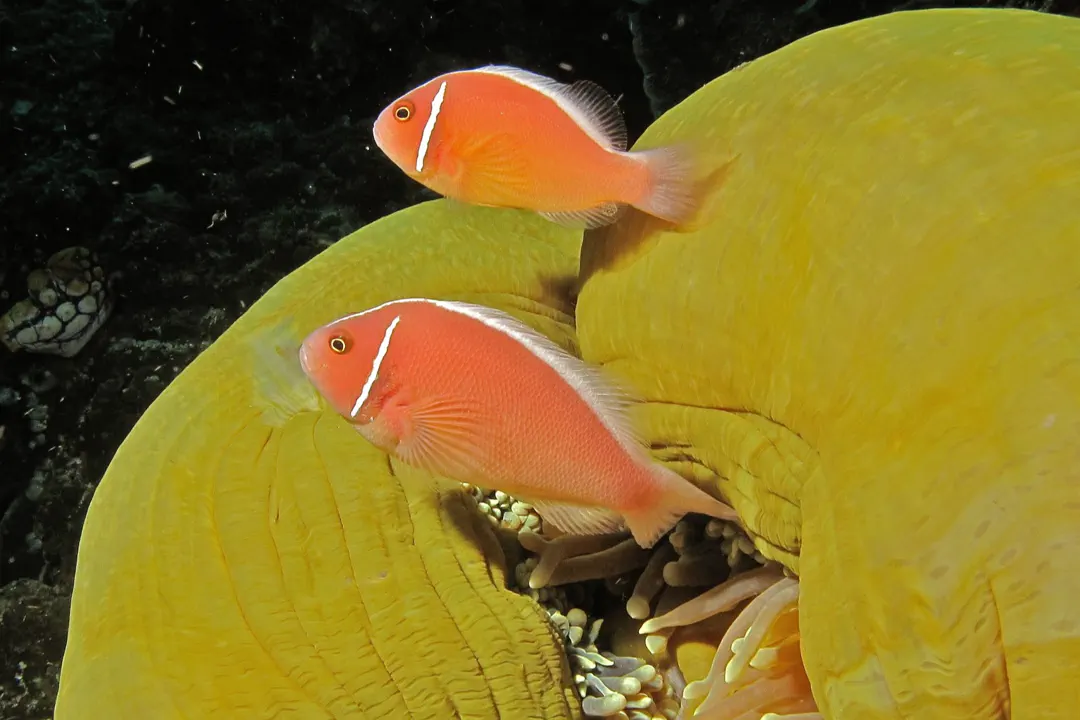 © Bernard DUPONTCC BY 4.0 · iNaturalist
 Mangrove Point: Shallow Coral Slope
Located on the northeastern tip of Nusa Lembongan, Mangrove Point sits directly adjacent to a large mangrove forest estuary. This biological connection provides a steady flow of organic nutrients, supporting high fish density across a gently sloping hard-coral reef. The site is sheltered from open ocean swells, offering calmer surface conditions than southern Penida sites.
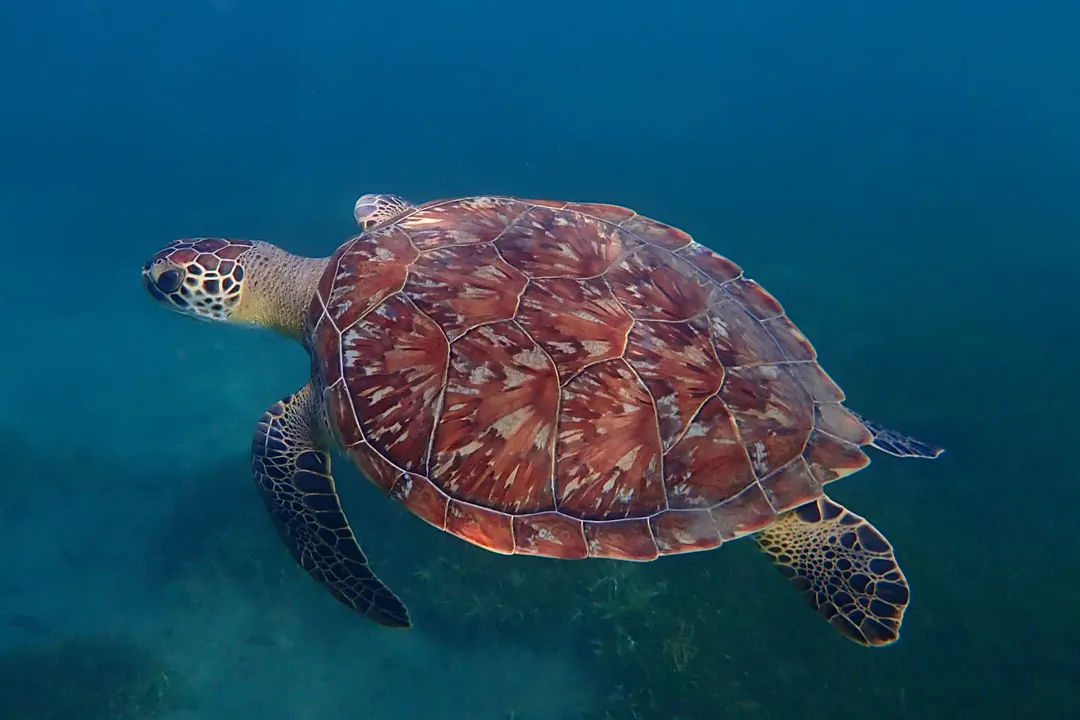
The drift current here is typically gentle and predictable, carrying divers along a sprawling garden of branching acropora corals, soft leather corals, and anemone colonies. Green sea turtles are common throughout the dive, often found resting on shallow ledges at depths between 6 and 12 metres. Anemonefish colonies occupy nearly every sea anemone along the upper slope.
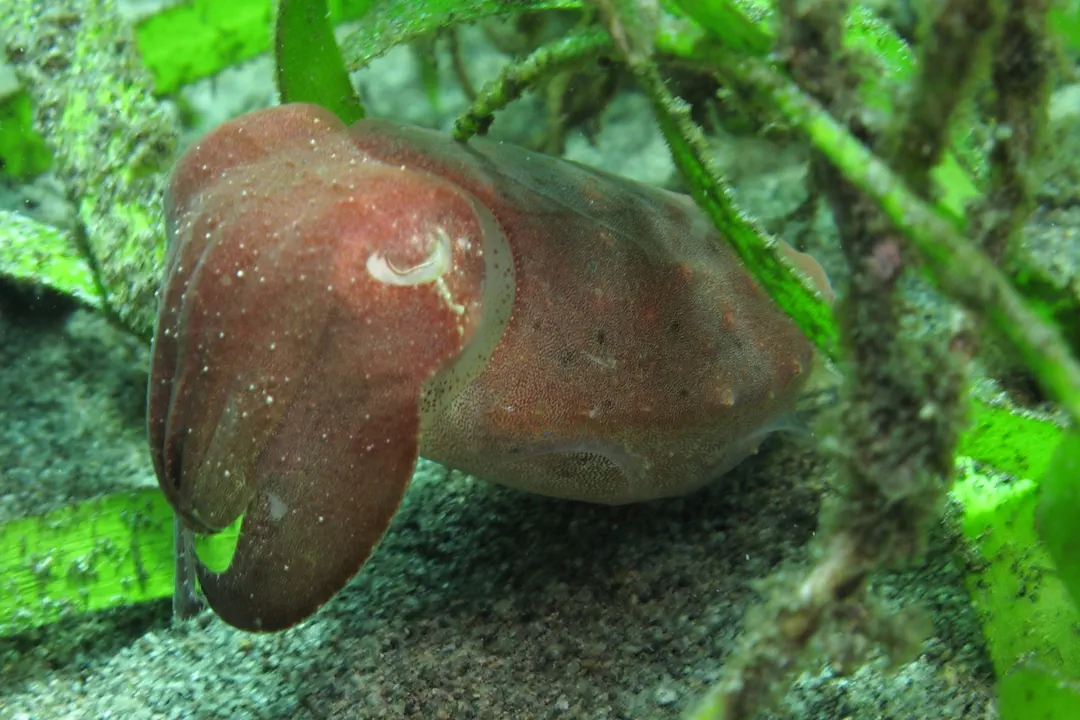
Because of its moderate depths and light current, Mangrove Point serves as an ideal warm-up dive and an exceptional venue for snorkellers. Broadhead cuttlefish, zebra morays, and peacock mantis shrimp inhabit the lower reef boundaries near 18 metres. Water temperatures remain warm and stable, usually hovering between 26°C and 28°C year-round.
Depth: 4–22 m. Access: boat, 10 minutes from Jungut Batu. Level: Open Water. Best months: Year-round.
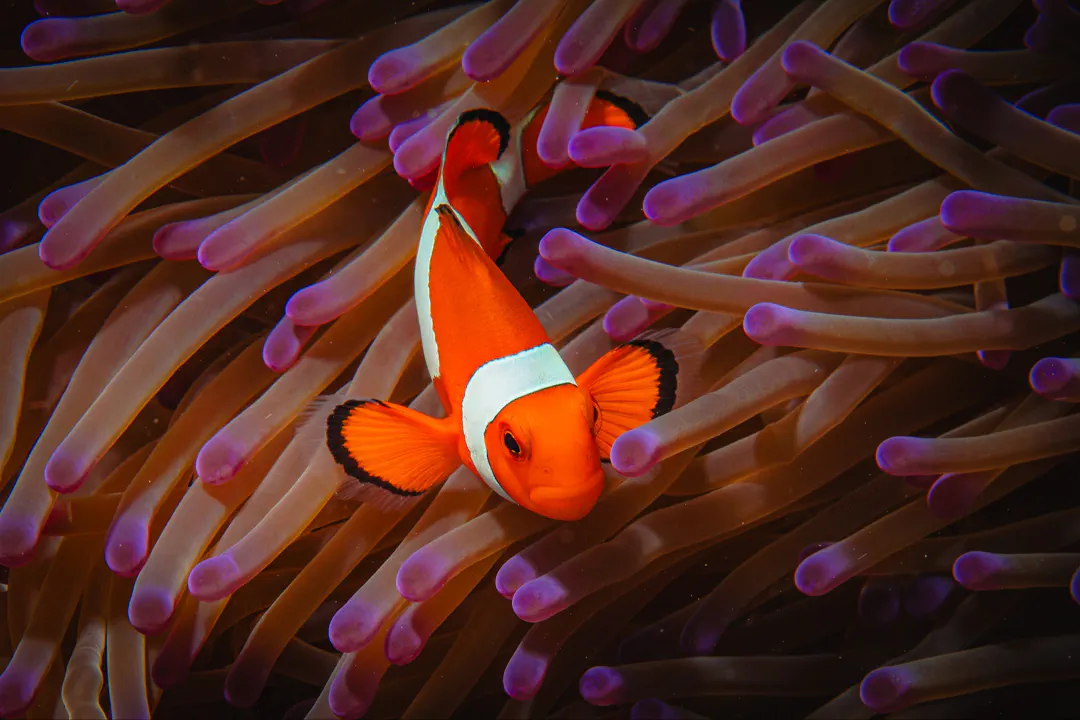 © Olka KuryanAll rights reserved
 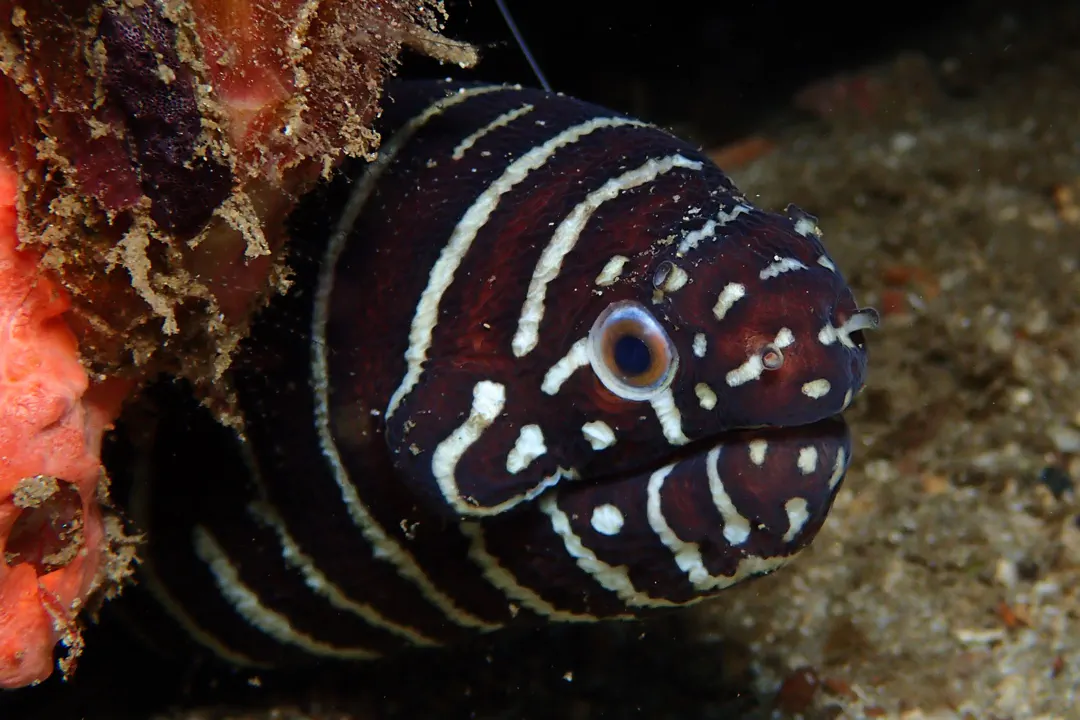 © Dan SchofieldCC BY 4.0 · iNaturalist
 Ceningan Wall: Deep Drop-Offs and Overhangs
Ceningan Wall runs along the eastern coast of Nusa Ceningan, dropping straight into the deep channel separating Ceningan from Penida. The vertical wall face is covered in bright yellow tube corals, red encrusting sponges, and deep undercut overhangs. Strong tidal currents squeeze through this narrow marine passage, creating rapid drift conditions that demand excellent buoyancy control.
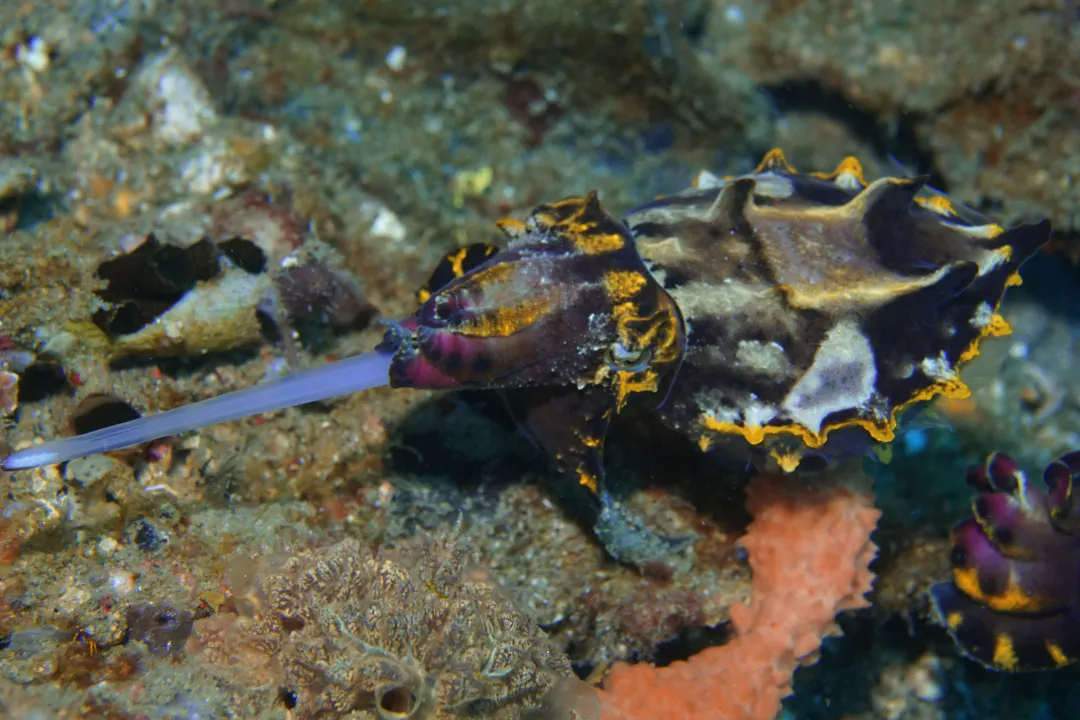
The overhangs along the wall provide shelter for sensitive macro life and nocturnal species. Blue-ringed octopuses, flamboyant cuttlefish, and mimic octopuses reside in the deep rubble zones along the wall's base. Looking outward into the fast-flowing blue water, divers frequently spot whitetip reef sharks and marble rays cruising against the current.
Due to the wall's sheer drop and unpredictable vertical current components, Ceningan Wall is strictly suited for experienced divers. Guides conduct detailed briefings on how to navigate the overhangs without touching delicate coral growth or entering low-visibility eddies. Dives are timed carefully around slack tide to ensure manageable drift speeds.
Depth: 12–40 m. Access: boat, 15 minutes from Jungut Batu. Level: Advanced Open Water. Best months: April–November.
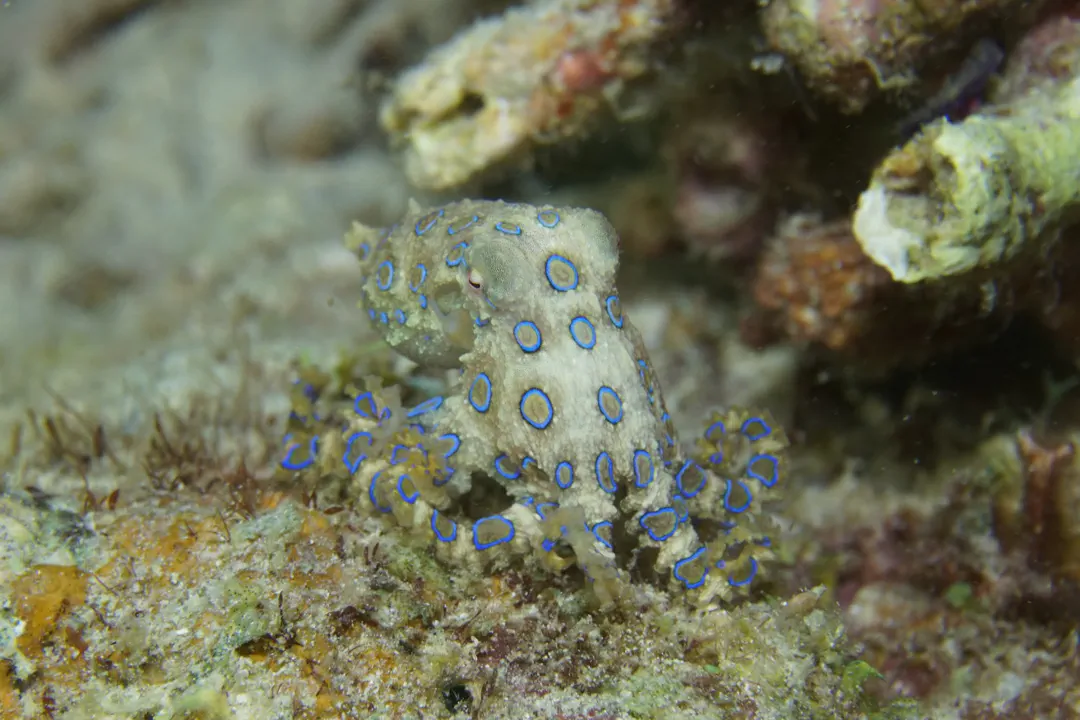 © Stas KuryanAll rights reserved
 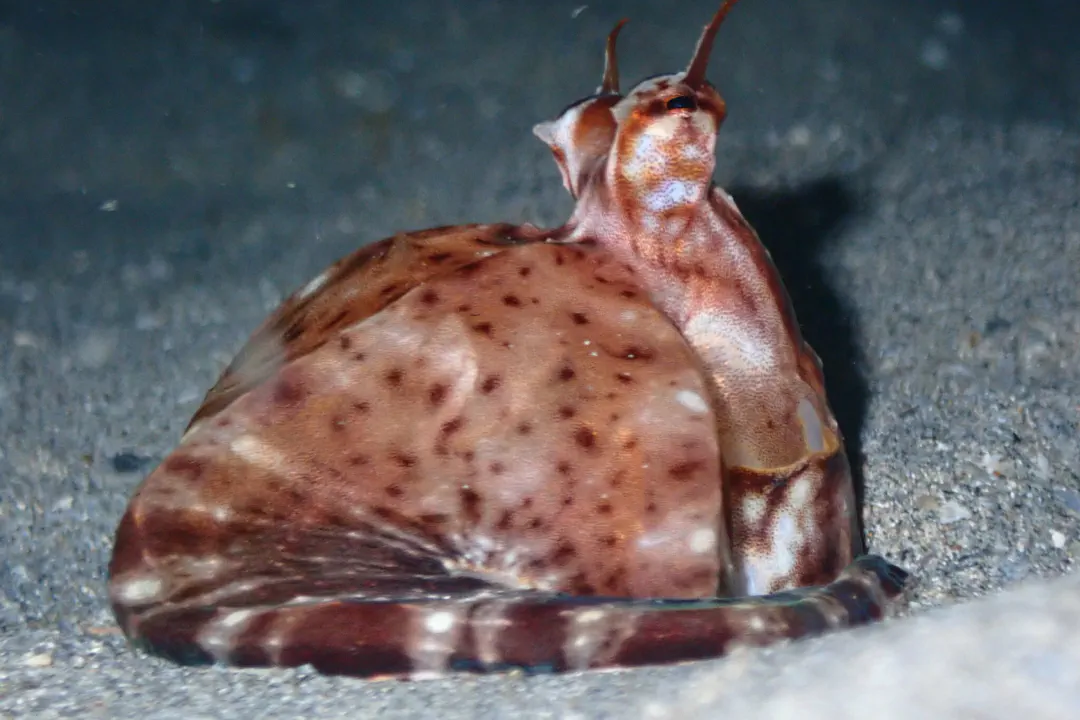 © Ewout KnoesterCC BY-SA 4.0 · iNaturalist
  © Stas KuryanAll rights reserved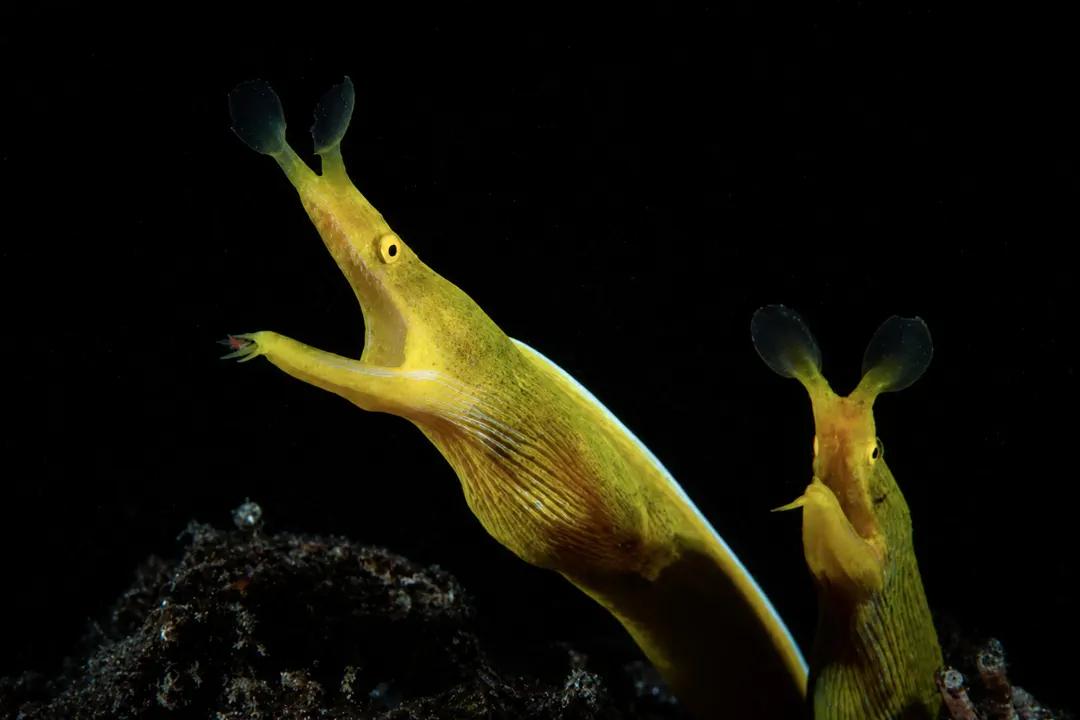
 © Stas KuryanAll rights reserved
 Marine Life in Nusa Penida
The marine species diversity around Nusa Penida spans from tiny macro critters hidden in sponges to large pelagic ocean wanderers. The island's position within the Wallacea transitional zone creates an ecosystem where Indian Ocean species mingle with West Pacific fauna. Filter feeders thrive on plankton brought up by ocean currents, forming the base of a dense marine food web.
Oceanic megafauna dominate the headline sightings. Reef manta rays (Mobula alfredi) maintain resident populations along southern cleaning stations, while oceanic bumphead sunfish (Mola alexandrini) visit during cool dry-season upwellings. Whitetip reef sharks, blacktip reef sharks, green sea turtles, and hawksbill turtles occur across northern reef slopes, while giant trevally and barracuda hunt along current lines.
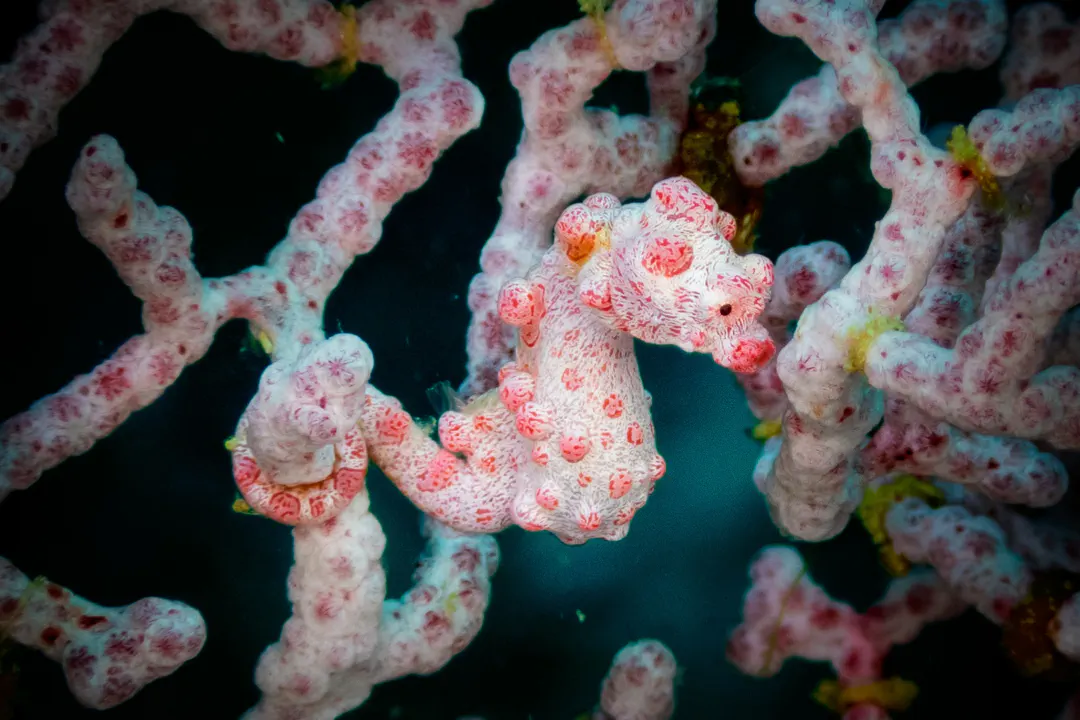
Macro enthusiasts can discover Bargibant's pygmy seahorses tucked inside gorgonian sea fans, blue-ringed octopuses hunting on rubble flats, and delicate ribbon eels extending from burrows. Divers can use the Seabook app to identify reef species and log sightings directly after returning to the boat. Soft corals, whip corals, and giant barrel sponges provide habitat for hundreds of invertebrate species along the drop-offs.
 © Pierre PericardCC BY 4.0 · iNaturalist
 Is Nusa Penida Good for Beginners and Snorkellers?
Nusa Penida is primarily an advanced diving destination due to its powerful, complex ocean currents. Sites along the northern coast and western passages frequently feature rapid horizontal drift speeds, sudden downcurrents, and cold thermoclines that can challenge under-prepared divers. An Open Water certification alone does not automatically prepare a diver for the conditions found at sites like Crystal Bay or Ceningan Wall.
However, beginner divers can safely enjoy Nusa Penida by selecting sheltered locations under instructor supervision. Mangrove Point on Nusa Lembongan and the inner bay of Crystal Bay offer mild current conditions, warm water, and shallow hard-coral slopes suitable for training or refresher dives. Operators match site selection strictly to diver experience and daily tidal forecasts.
Snorkelling is exceptionally rewarding in sheltered areas where hard coral reefs rise to within two metres of the surface. Mangrove Point and Crystal Bay inner lagoon provide clear, safe snorkelling over turtle feeding grounds and anemone gardens. Snorkellers visiting Manta Point should wear flotation vests and stay clear of heavy wave surge near the cliff margins.
Getting There and Practical Tips
Reaching Nusa Penida is straightforward via daily speedboats departing from Sanur harbor in main Bali. The boat crossing takes approximately 30 to 45 minutes across the Badung Strait, depending on sea conditions and harbor congestion. Boats arrive at several ports on Nusa Penida, including Toyapakeh and Sampalan, as well as Jungut Batu on neighboring Nusa Lembongan.
Deciding where to stay depends on your diving priorities. Staying on Nusa Penida places you closer to southern sites like Manta Point, shortening morning boat rides. Staying on Nusa Lembongan offers a wider selection of eco-resorts, restaurants, and immediate access to northern sites like Mangrove Point and Toyapakeh. Many dive centers operate daily charters between all three islands.
Packing appropriate equipment is essential for a safe, comfortable trip. A 3mm to 5mm full wetsuit, a delayed surface marker buoy (DSMB), and a signaling whistle should be standard gear for every diver. Always carry surface safety gear on current dives, maintain conservative gas planning limits, and schedule at least 18 hours of surface interval before flying out of Bali.
Questions
When is the best time to see mola mola in Nusa Penida?
Bumphead sunfish, Mola alexandrini, are most commonly reported from July through October, with August and September often producing the strongest sightings. Encounters depend on upwelling, depth, visibility and animal behavior, so the season increases the probability but does not guarantee a sighting. Crystal Bay can be cold and current-affected, making local guidance and appropriate thermal protection essential.
Are there sharks in Nusa Penida?
Yes. Whitetip reef sharks, Triaenodon obesus, are plausible sightings around walls, caves and reef slopes, and blacktip reef sharks, Carcharhinus melanopterus, may occur in suitable shallow reef habitat. Grey reef sharks, Carcharhinus amblyrhynchos, are less predictable and should be described as occasional rather than frequent; shark sightings vary by site, tide and season.
Is diving in Nusa Penida suitable for beginners?
Some sites, particularly relatively sheltered areas around Mangrove Point and the inner bay at Crystal Bay when conditions are calm, can suit beginners with an instructor. Many signature sites involve current, surge, drift entries, downcurrents or cold thermoclines, so beginners should not assume that an Open Water certification qualifies them for every location. Operators should match the site to recent experience and provide a detailed current and boat-safety briefing.
How cold is the water when diving in Nusa Penida?
Surface temperatures commonly sit around 26–29°C for much of the year. During the July–October upwelling season, exposed sites may develop thermoclines around 18–24°C, with occasional local readings below 20°C; these colder conditions do not affect every site or every dive. A 3 mm suit may be adequate in warm periods, while a 5 mm suit or extra thermal layer is often more comfortable during mola season.
Can you see manta rays year-round in Nusa Penida?
Reef manta rays, Mobula alfredi, are reported at Manta Point throughout the year, and Manta Bay can also produce encounters. Weather, swell, tide, plankton concentration and cleaning-station activity affect daily sightings, so “year-round” means a persistent opportunity rather than a guarantee on every dive. Divers should remain stationary, avoid touching or chasing mantas, and keep clear of their approach and exit paths.
How do you get to Nusa Penida from Bali?
Fast boats operate from Sanur to Nusa Penida and Nusa Lembongan, with scheduled crossing times commonly advertised at about 30–45 minutes in favorable conditions. Actual travel can take longer because of boarding, harbor procedures, luggage handling, traffic and sea state. Confirm the departure pier, arrival harbor and weather policy before booking, and allow extra time when connecting to a dive charter.