 © Lesley ClementsAll rights reserved
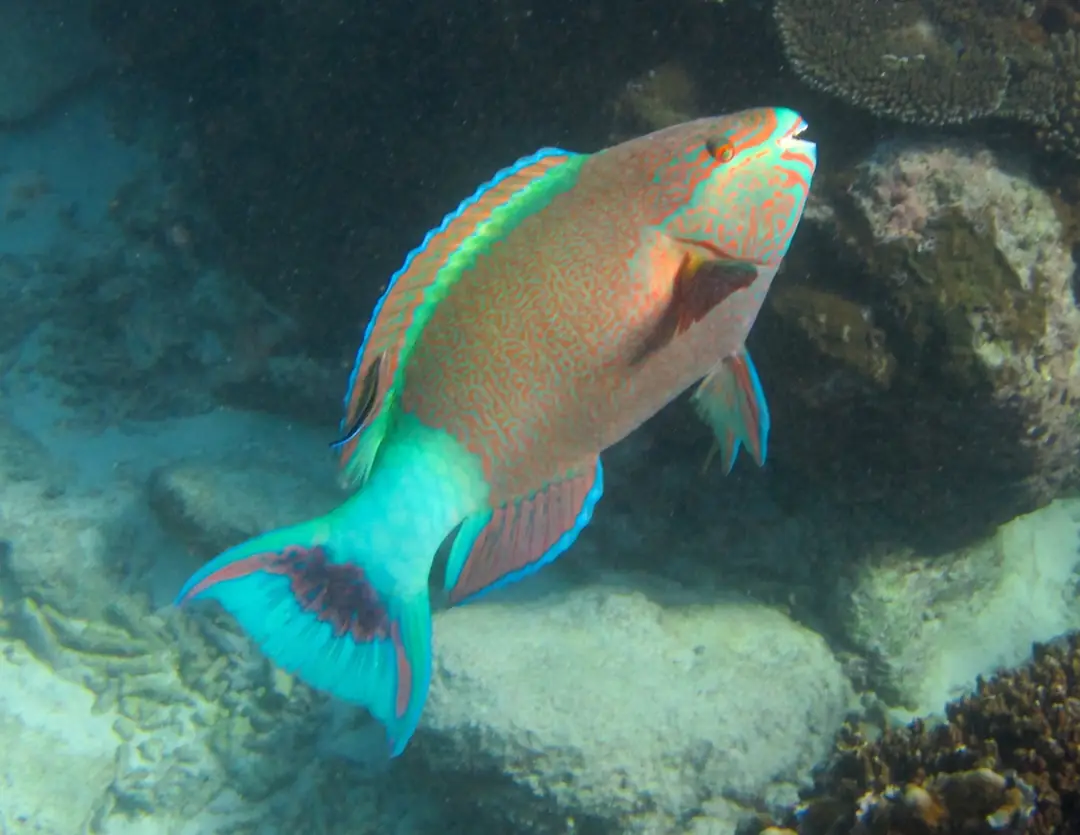
Bicolour Parrotfish
Cetoscarus bicolor
Bolbometopon muricatum
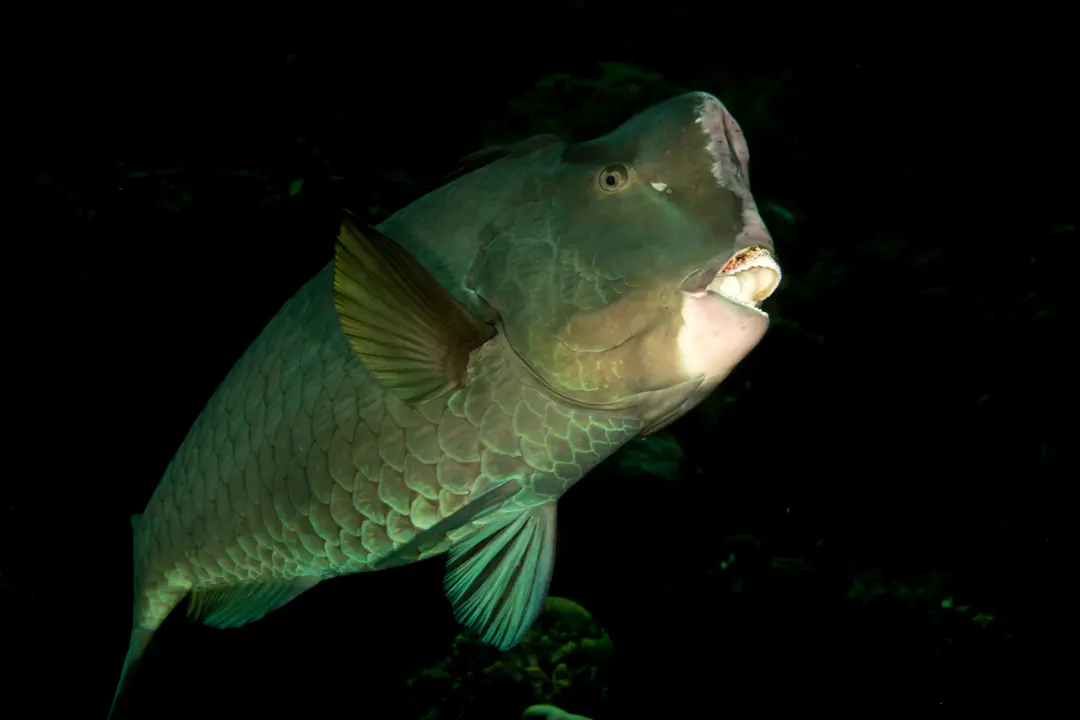
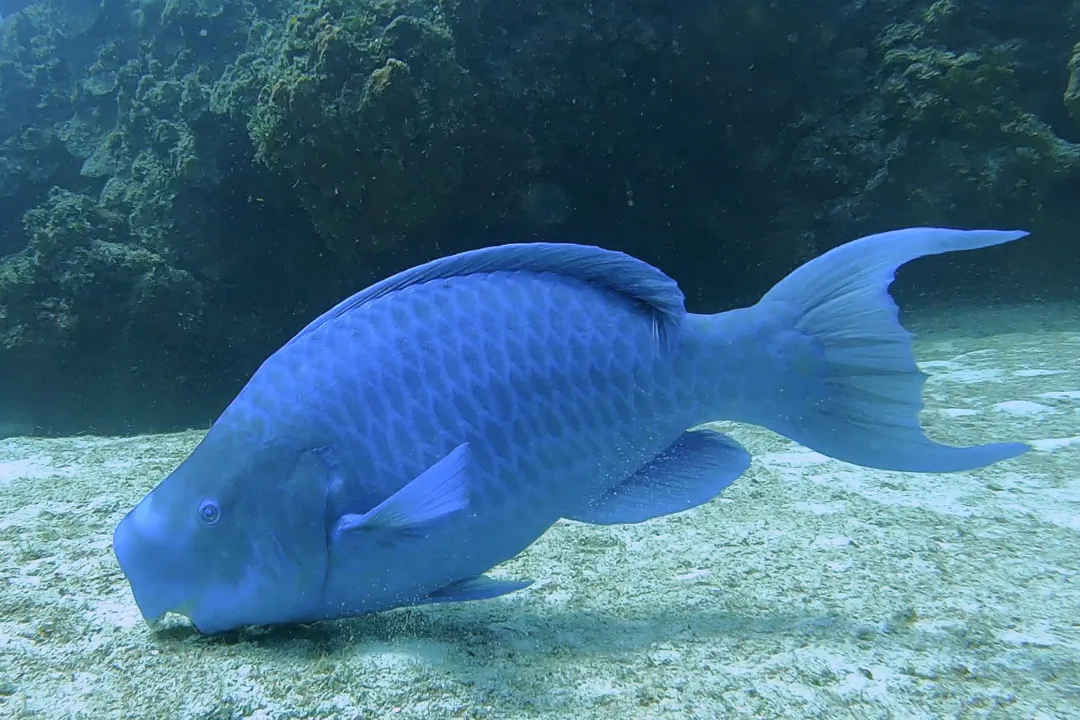
Bolbometopon muricatum is the largest species of parrotfish, growing to lengths of 1.3 m (4.3 ft) and weighing up to 46 kg (101 lb). It is found on reefs in the Indian and Pacific Oceans, from the Red Sea in the west to Samoa in the east, and from the Yaeyama Islands in the north to the Great Barrier Reef, Australia, in the south.
It is the only species in the monotypic genus Bolbometopon.
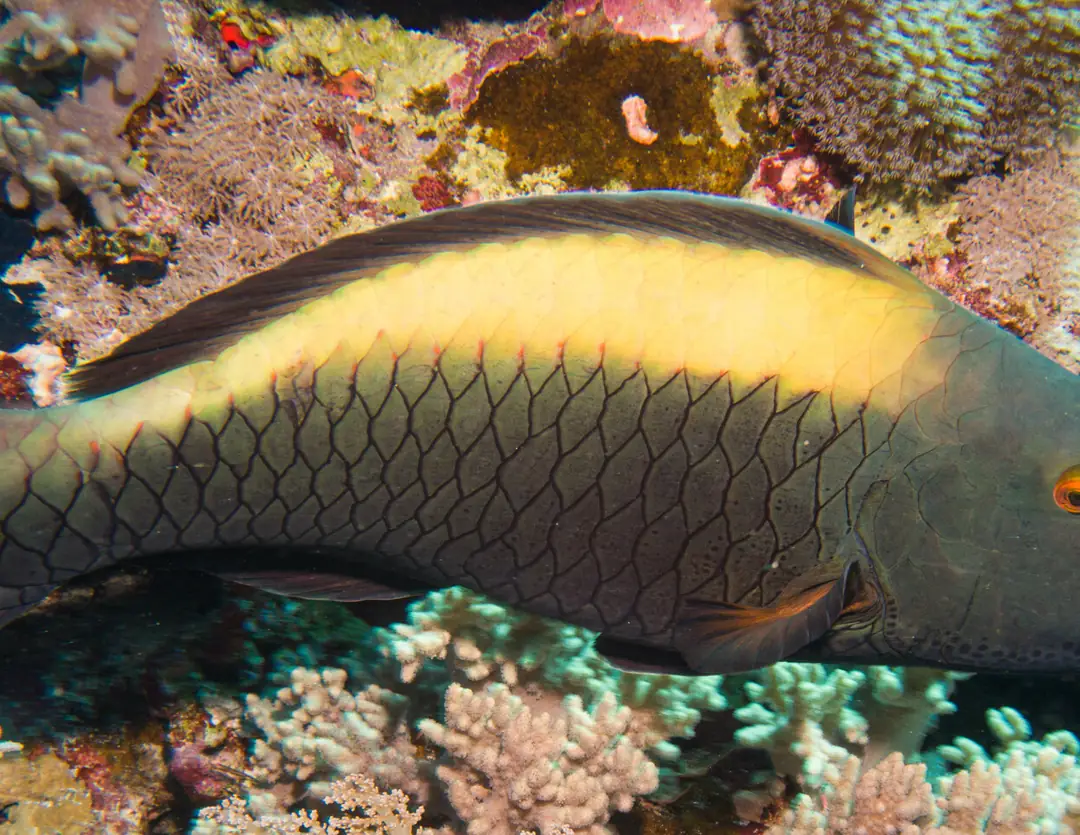
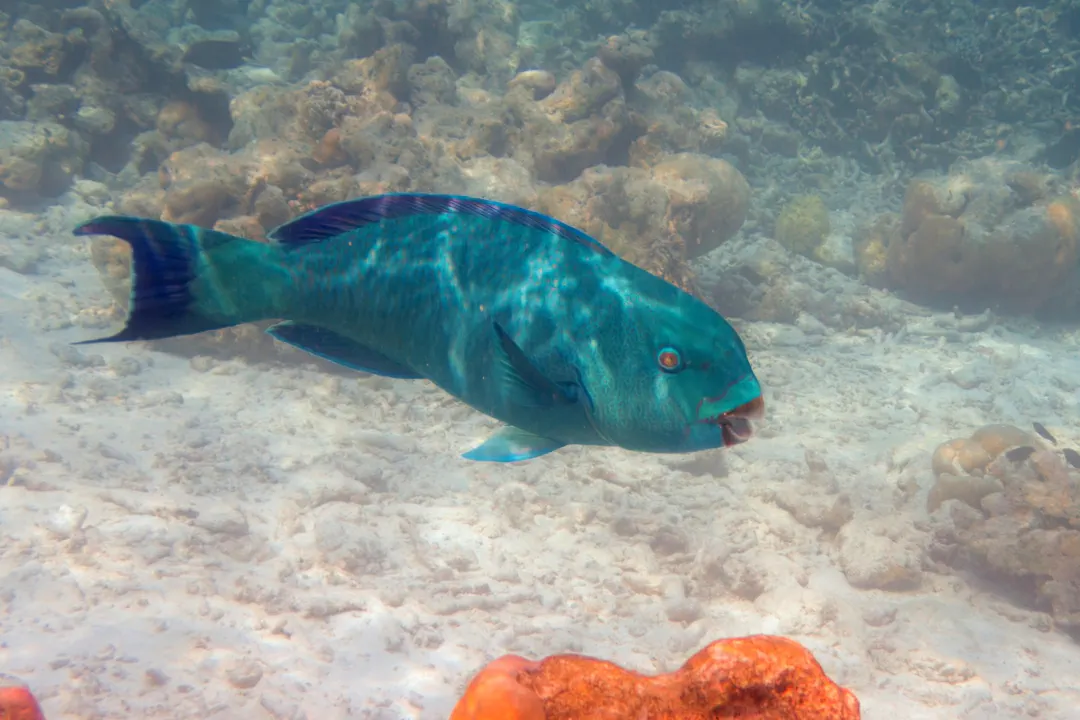
Unlike wrasses, it has a vertical head profile, and unlike other parrotfishes, it is uniformly covered with scales except for the leading edge of the head, which is often light green to pink. Primary phase colouration is a dull gray with scattered white spots, gradually becoming uniformly dark green. This species does not display sex-associated patterns of color change. The adult develops a bulbous forehead and the teeth plates are exposed, being only partly covered by lips. The species is slow-growing and long-lived (up to 40 years), with delayed reproduction and low replenishment rates.
This species is gregarious and usually occurs in small aggregations, but group size can be quite large on seaward and clear outer lagoon reefs, exceeding 75 individuals.
The fish spawn pelagically near the outer reef slope or near promontories, gutters, or channel mouths during a lunar cycle, and they use spawning aggregation sites.
The juvenile green humphead parrotfish is found in lagoons, often in seagrass beds, and the adult is found in clear outer lagoons and seaward reefs up to a depth of 30 m. It feeds on benthic algae and live corals. It may ram its head against corals to facilitate feeding. Each adult fish ingests over five tons of structural reef carbonates per year, contributing significantly to the bioerosion of reefs. The fish sleeps in caves and shipwrecks at night, usually in large groups.
This species is highly sought after by fishermen throughout its range, and it has declined from overharvesting. Habitat degradation and destruction has sped the decline. Spearfishers and netters target the large groups as they sleep at night. This is a NOAA Species of Concern, thought to be threatened, but for which insufficient data are available to justify a listing under the Endangered Species Act.
Spearfishing while scuba diving was banned in American Samoa in 2001, but enforcement is limited. The waters surrounding Wake Island, Johnston Atoll, and Palmyra Atoll from the shoreline out to 50 fathoms (91 m) are protected as low-use marine protected areas, which means any person of the United States fishing for, taking, or retaining this fish must have a special permit. Also, it may not be taken by means of spearfishing with SCUBA gear from 6 pm to 6 am in the US Exclusive Economic Zone waters around these territories. The population of the fish in Palau is now protected by an export ban and a national minimum size restriction of 25 in (640 mm).
© Lesley ClementsAll rights reserved  © seabook.appAll rights reserved
  © portioidCC BY 4.0 · iNaturalist
  © Dan SchofieldCC BY 4.0 · iNaturalist
  © Geoff ShuetrimCC BY 4.0
  © Darren ObbardCC BY 4.0 · iNaturalist
 Green Humphead Parrotfish has no known danger to humans. However, always observe marine life responsibly.
Green Humphead Parrotfish can be found at depths of up to 40 meters.
Download Seabook free for iOS and Android.