 © Lesley ClementsAll rights reserved
Bicolour Parrotfish
Cetoscarus bicolor
Scarus ghobban
Scarus ghobban is a species of marine fish in the Scaridae family.
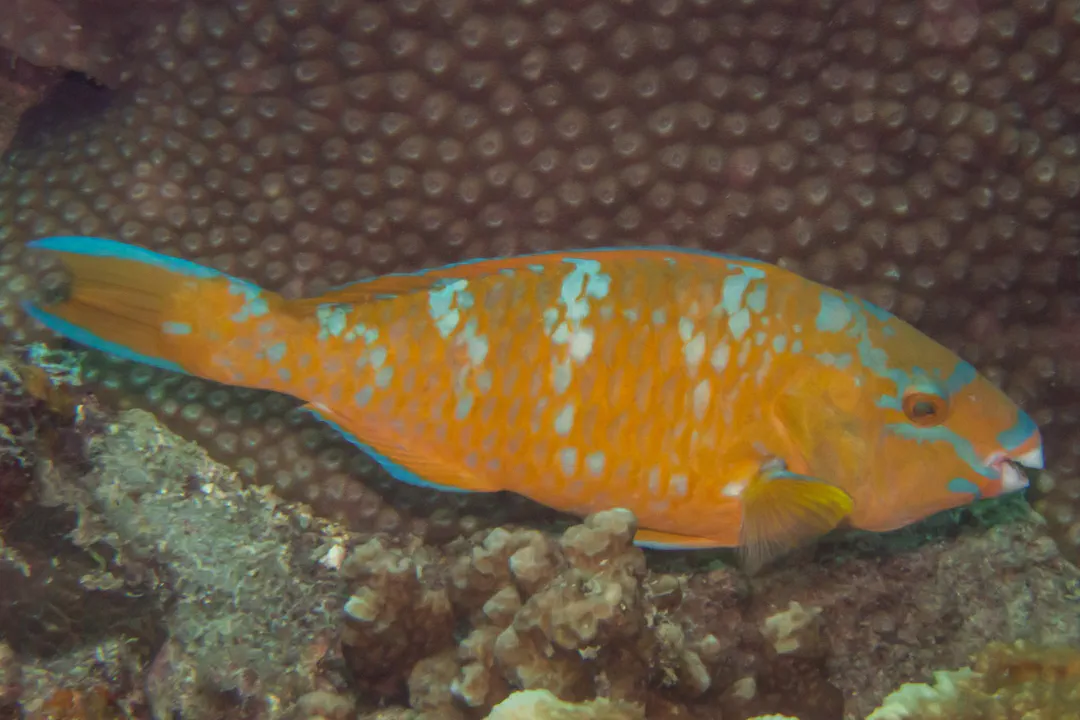
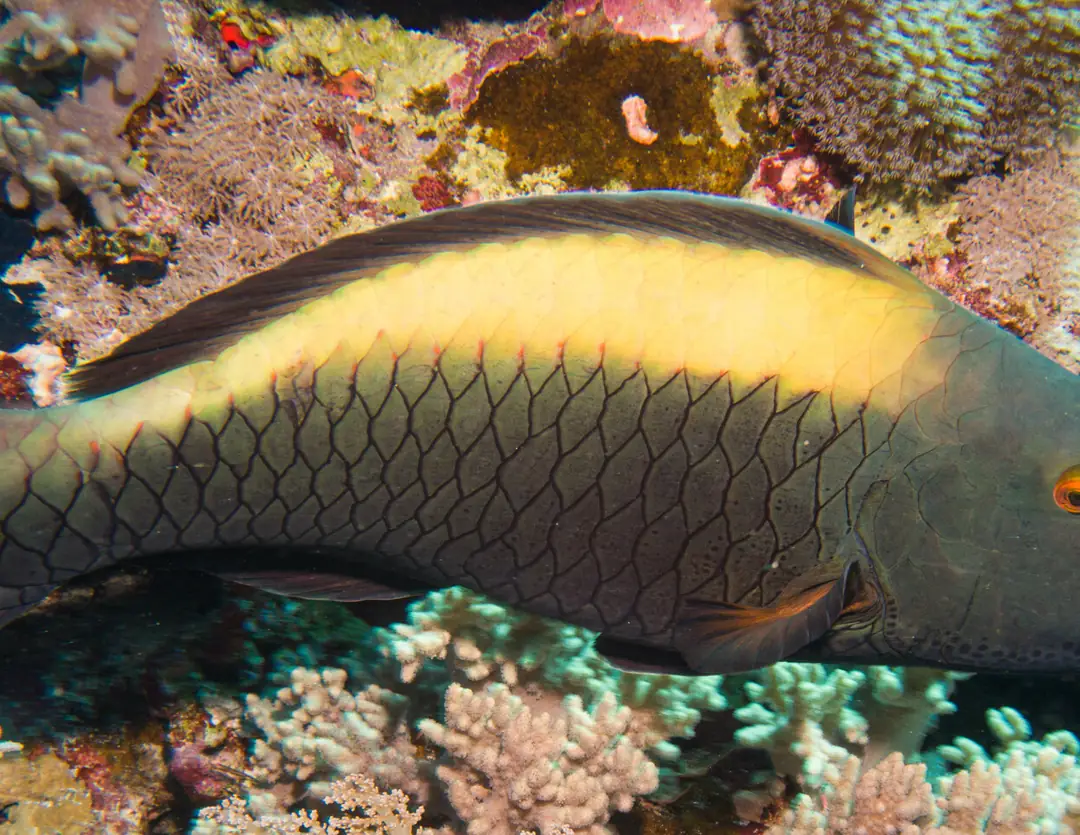
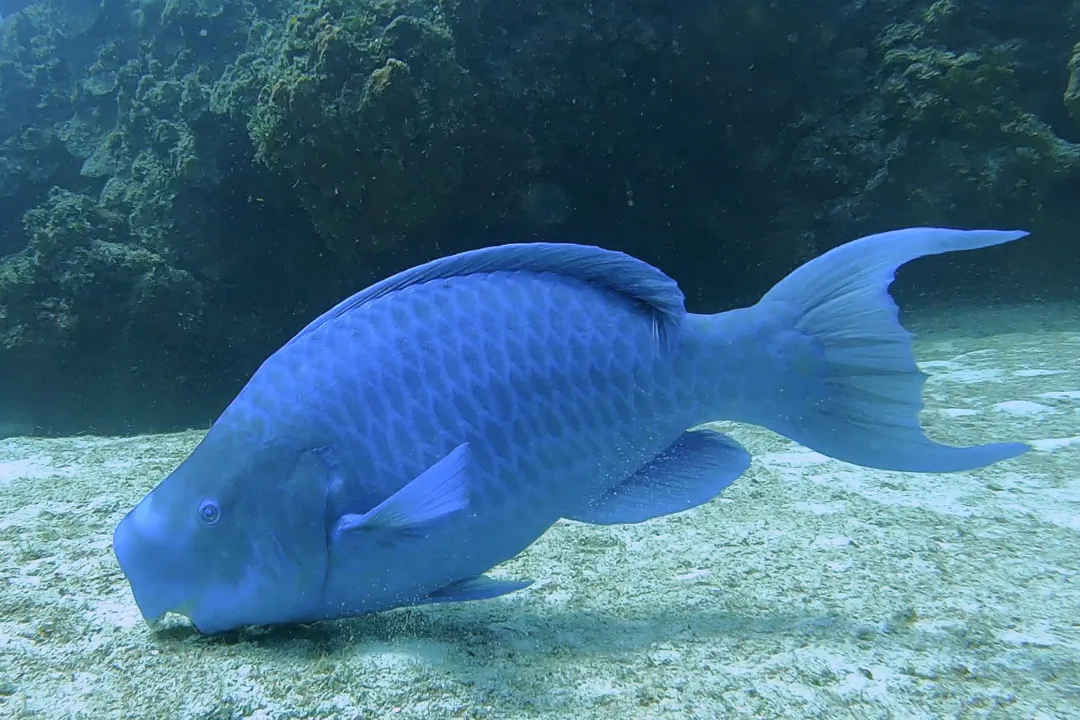
This species is blue-green to green in colour and commonly grows to approximately 46 cm. It may have a central stripe on the dorsal and anal fins that is pink in colour. The underside of the body may be pinkish or yellowish. There may be blue markings around the area of the pectoral fin.
Scarus ghobban is widespread, known to live in waters from East Africa to Indonesia. It has laso been found in the Mediterranean, likely having entered by way of the Red Sea. It also occurs at the Galápagos Islands.
Scarus Ghobban occurs in places with sandy bottoms and in areas with seagrass. It is also known to live in marginal reefs and in deeper waters.
Scarus ghobban grows quickly and can live up to 13 years. It tends to congregate in small schools.
While the species is captured in large numbers by fishermen for consumption and sale, and there is also a high amount of bycatch from other fisheries, it is not particularly targeted and appears not to be threatened at this point. As other parrotfish, it is dependent on coral reefs to some degree, and is likely to suffer from the continued degradation of same.
According to the World Register of Marine Species, synonyms include:
© Lesley ClementsAll rights reserved 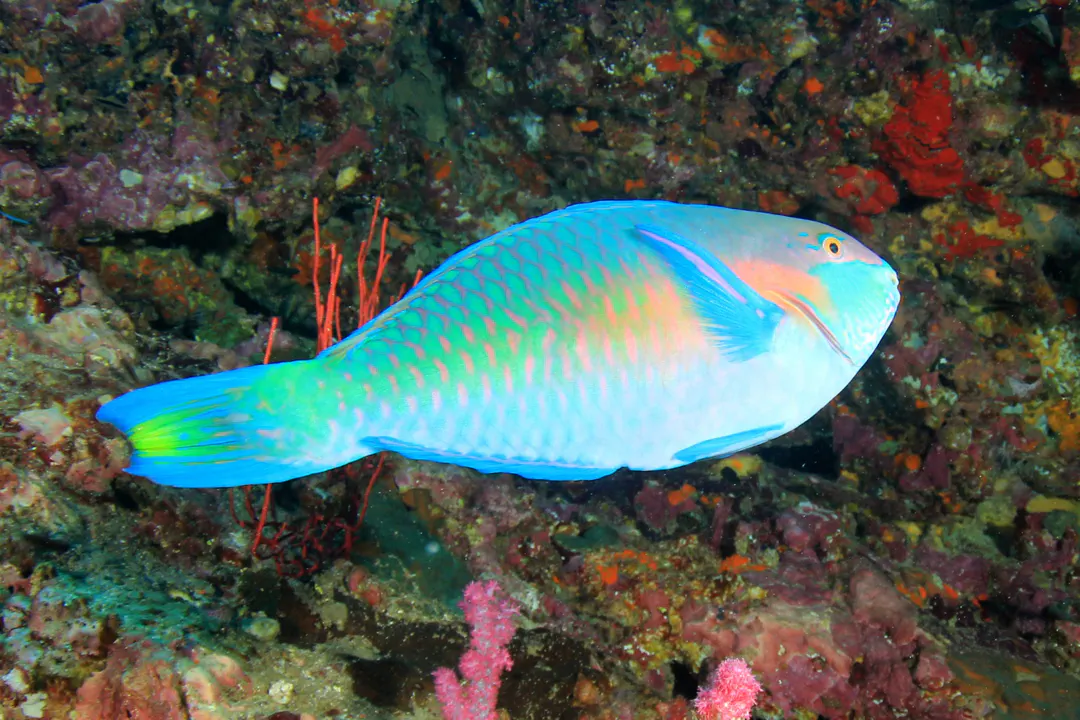 © seabook.appAll rights reserved
  © Dan SchofieldCC BY 4.0 · iNaturalist
 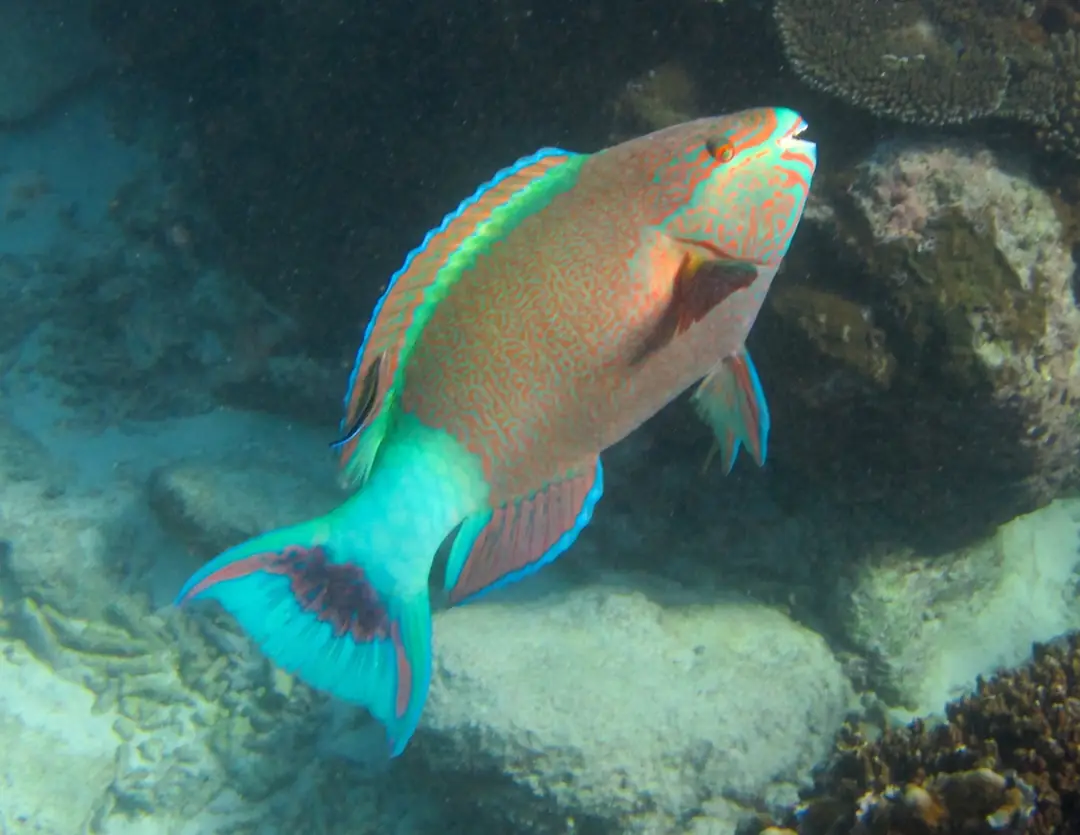 © Geoff ShuetrimCC BY 4.0
 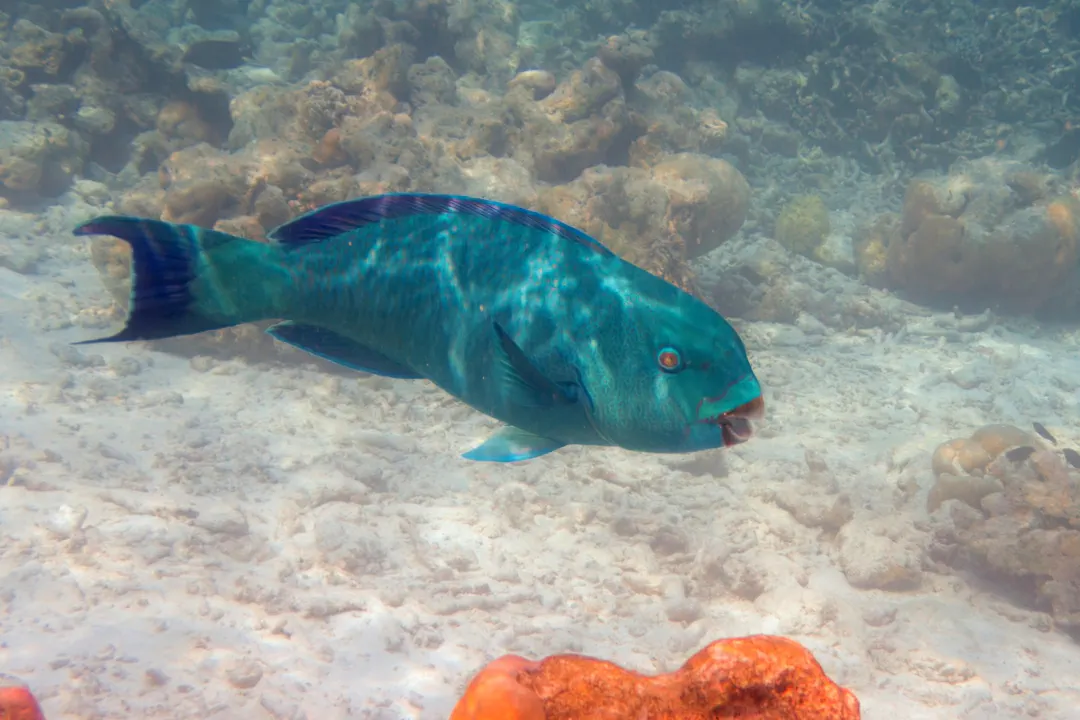 © Darren ObbardCC BY 4.0 · iNaturalist
 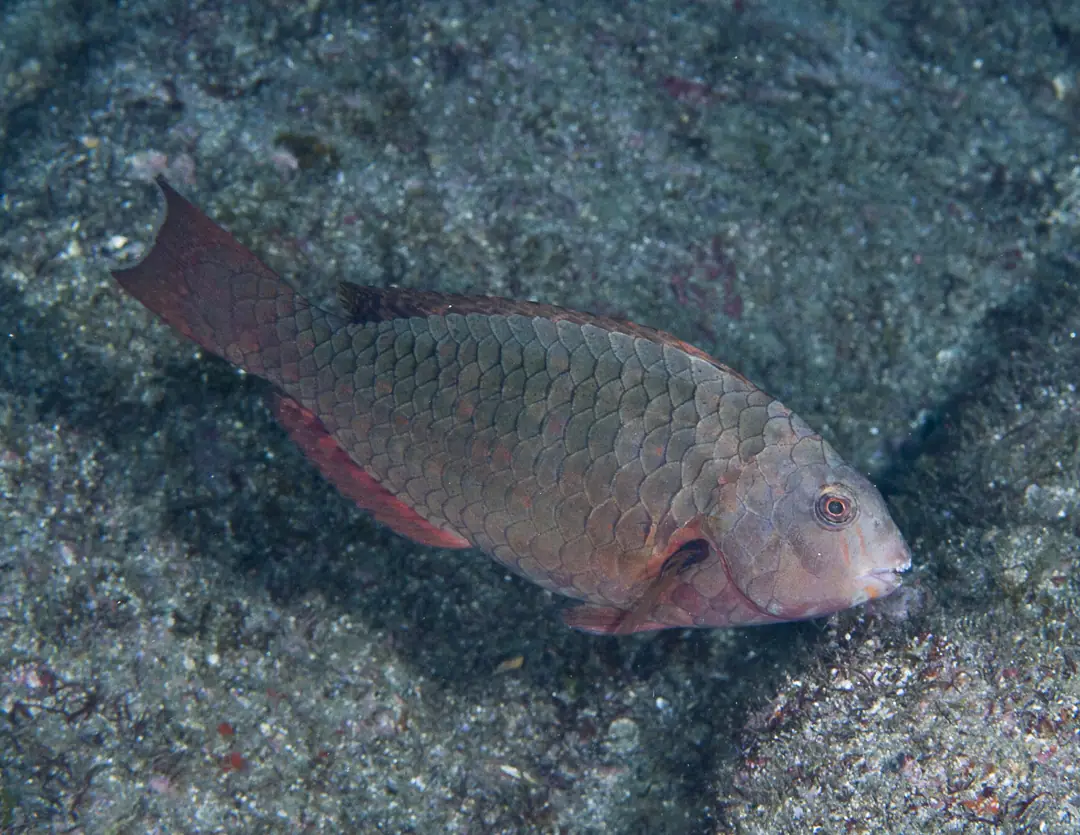 © Shigeru HarazakiAll rights reserved
 Bluebarred Parrotfish has no known danger to humans. However, always observe marine life responsibly.
Bluebarred Parrotfish can be found at depths of up to 90 meters.
Download Seabook free for iOS and Android.