Arabian Picasso Triggerfish
Rhinecanthus assasi
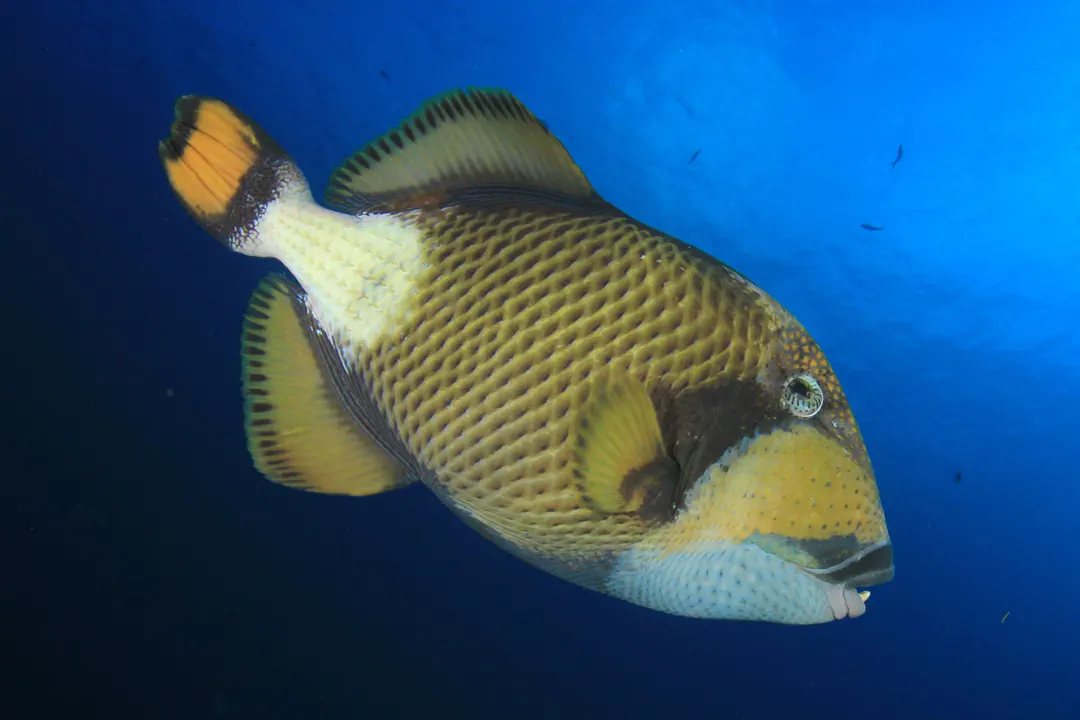
Titan Triggerfish
Balistoides viridescens
- Max size
- View in app
- Max depth
- 60 m
- Found in
- 78 regions
How to recognise it
- Colours
- blackbrownyelloworangegreen
- Body shape
- Compressed
- Pattern
- Spines pattern
Balistoides viridescens is a large species of triggerfish found in lagoons and at reefs to depths of 50 m (160 ft) in most of the Indo-Pacific, though it is absent from Hawaii. With a length of up to 75 centimetres (30 in), it is the largest species of triggerfish in its range (the stone triggerfish, Pseudobalistes naufragium, from the east Pacific is larger).
Description
The Titan Triggerfish has a heavily scaled head and body. There is a deep groove in front of both eyes and scaleless area around lips. It has about five rows of spines on either side of the caudal peduncle. Caudal peduncle is compressed.
The species is distinctively coloured. Greyish body is with light scale margins forming a crosshatch pattern, dark ‘moustache’ behind mouth, separating light chin from yellow cheek, white tail base and yellow rear tail with a black rear margin. The scales have dark centres. There is a black region with yellow spots covering the eyes and extending to the pectoral fin bases. The dorsal and anal fins have black margins.
Dorsal spines (total): 3; Dorsal soft rays (total): 24-26; Anal spines: 0; Anal soft rays: 22 - 24.
Distribution
Indo-Pacific: Red Sea south to Delagoa Bay, Mozambique and east to the Line and Tuamoto islands, north to southern Japan, south to New Caledonia.
Habitat
Recorded from lagoons, seaward reefs and sheltered inner reef slopes. Juveniles often associated with isolated patches of branching coral or rubble of shallow sandy protected areas. Adults occur singly or in pairs on the slopes of deep lagoon or seaward reefs. Often hostile towards divers and may attack unprovoked when caring for eggs. Oviparous.
Behavior
The titan triggerfish is diurnal and solitary. It feeds on sea urchins, molluscs, crustaceans, tube worms and coral. It often feeds by turning over rocks, stirring up sand and biting off pieces of branching coral. This is why other smaller fish species are often seen around it, as they feed on the detritus and smaller organisms that are stirred up. Titan triggerfish have been observed being aggressive to other fish who enter their territory.
Interaction with humans
The titan triggerfish is usually wary of divers and snorkelers, but during the reproduction season the female guards its nest, which is placed in a flat sandy area, vigorously against any intruders. The territory around the nest is roughly cone-shaped and divers who accidentally enter it may be attacked. Divers should swim horizontally away from the nest rather than upwards which would only take them further into the territory. Although bites are not venomous, the strong teeth can inflict serious injury that may require medical attention.
The threat posture includes the triggerfish facing the intruder while holding its first dorsal spine erect. It may also roll onto its side, allowing it a better look at the intruder it perceives as threatening its nest. The titan triggerfish will not always bite, but can swim at snorkellers and divers escorting them out of their territory.
The flesh of the titan triggerfish is sometimes ciguatoxic.
Similar species
 © Nicola CrockfordCC BY 4.0 · iNaturalist
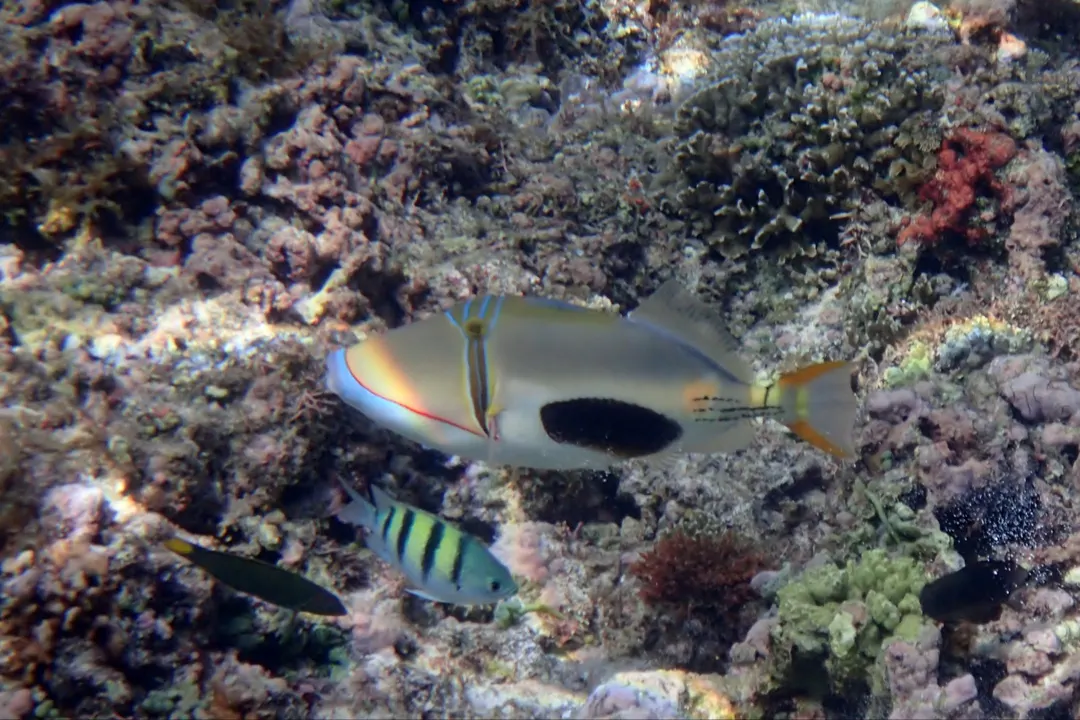
Blackbelly Triggerfish
Rhinecanthus verrucosus
 © Roger RittmasterCC BY 4.0 · iNaturalist
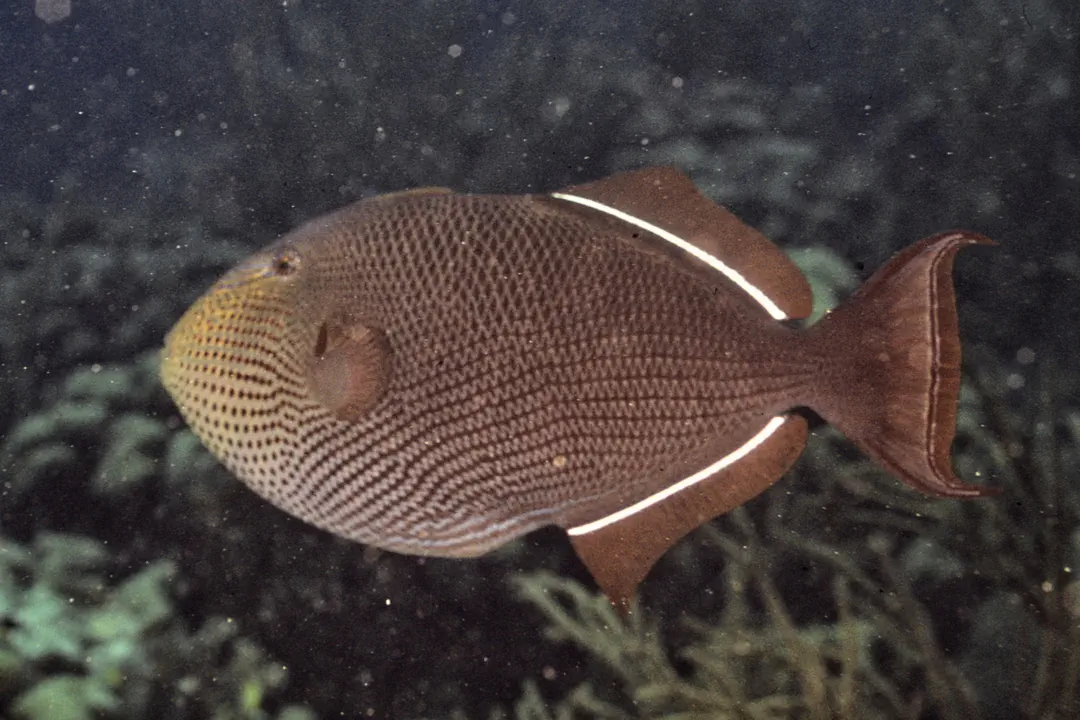
Black Triggerfish
Melichthys niger
 © Georgina JonesCC BY-SA 4.0 · iNaturalist
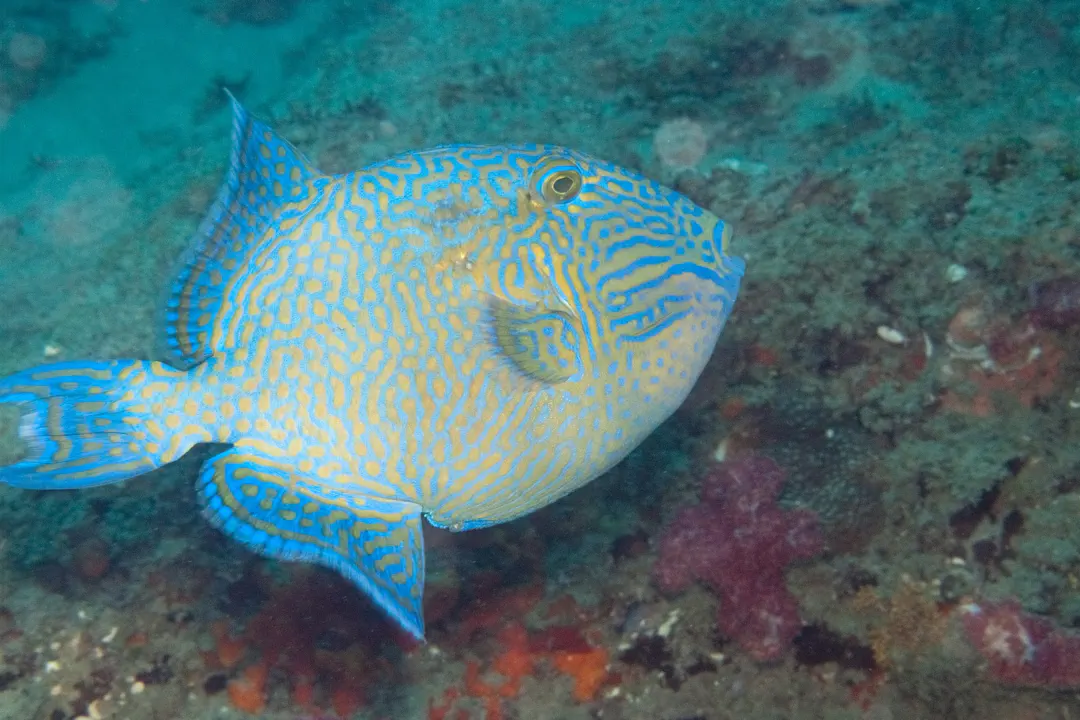
Blue Triggerfish
Pseudobalistes fuscus
 © Darren ObbardCC BY 4.0 · iNaturalist
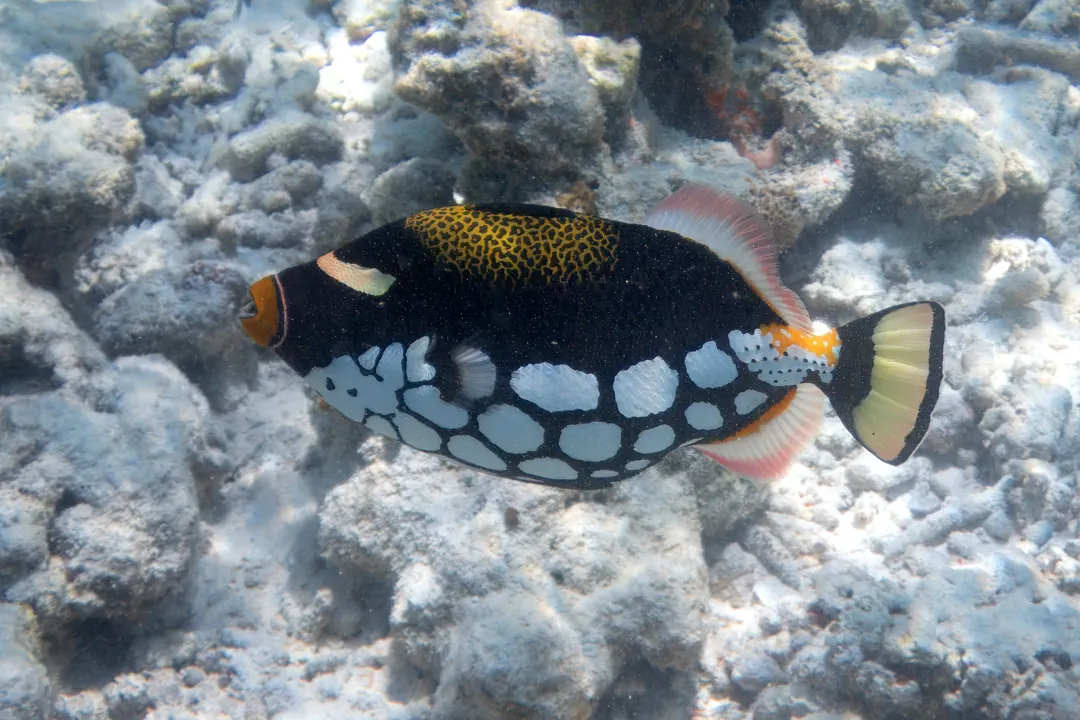
Clown Triggerfish
Balistoides conspicillum
 © seabook.appAll rights reserved
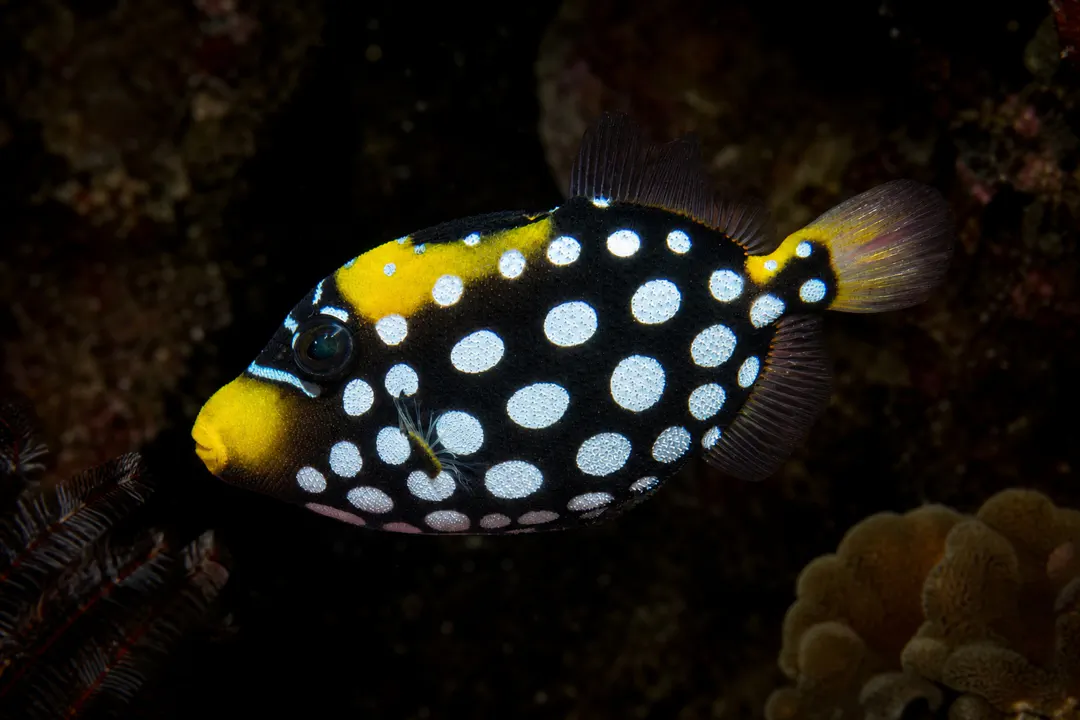
Clown Triggerfish (juvenile)
Balistoides conspicillum
Questions
Is Titan Triggerfish dangerous?
Titan Triggerfish is classified as poisonous, dangerous to humans. Always exercise caution and keep a safe distance.
Where can you find Titan Triggerfish?
How deep does Titan Triggerfish live?
Titan Triggerfish can be found at depths of up to 60 meters.