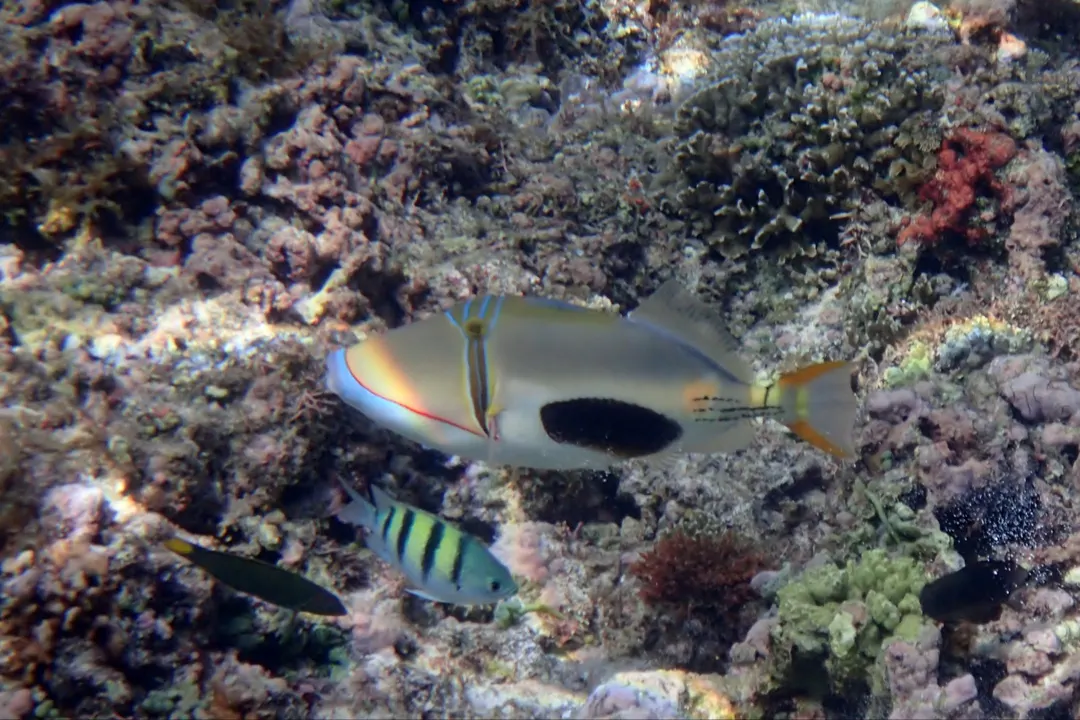
Arabian Picasso Triggerfish
Rhinecanthus assasi
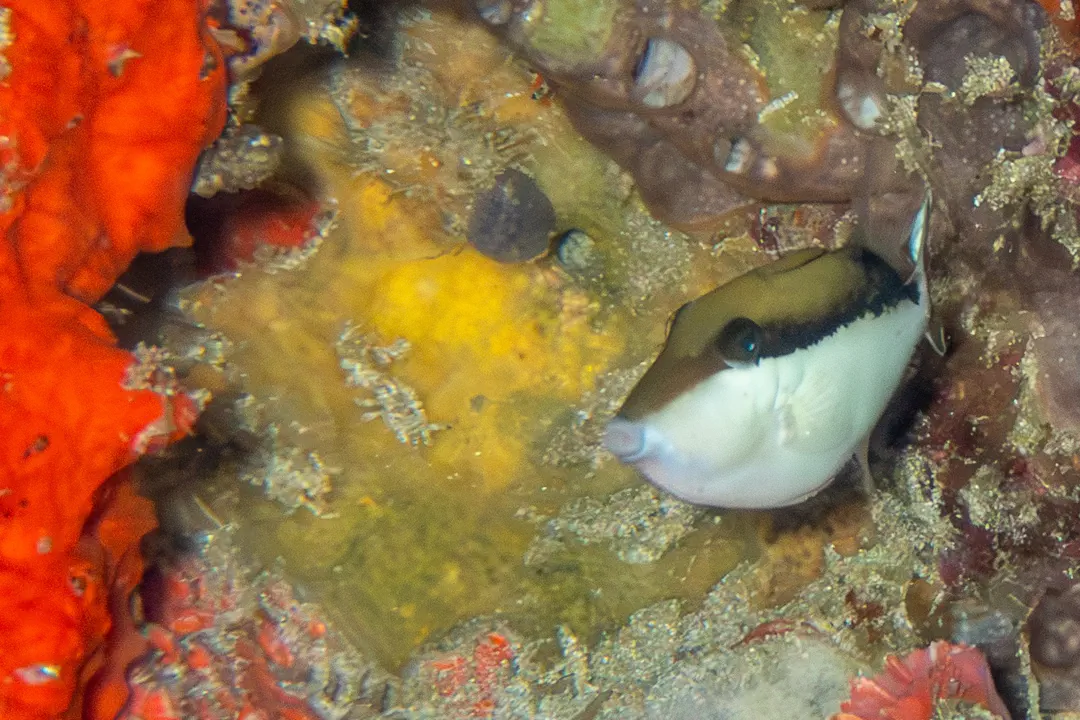
Flagtail Triggerfish (juvenile)
Sufflamen chrysopterum
- Max size
- View in app
- Max depth
- 80 m
- Found in
- 54 regions
How to recognise it
- Colours
- whiteblackbrown
- Body shape
- Compressed
Sufflamen chrysopterum is a triggerfish of the tropical Indo-West Pacific area.
Description
Dorsal spines (total): 3; Dorsal soft rays (total): 26-28; Anal spines: 0; Anal soft rays: 23 - 26. Juveniles dark brown above, white below with a dark horseshoe-shaped mark on the tail. Adult variable in color: often a pale yellowish-brown to brown with a narrow whitish to bluish or yellowish-orange bar below the rear of the eye, a yellowish-brown triangle edged in white on the tail, and sometimes a bluish chin and belly. The bar running through the pectoral base can either be yellow or black, and some individuals may be largely yellowish posteriorly.
Distribution
Indo-West Pacific: Reported from Persian Gulf, East Africa south to the Chalumna River, South Africa and east to Samoa, north to southern Japan, south to Lord Howe Island. Replaced by closely related Sufflamen albicaudatus in the Red Sea
Habitat
The halfmoon triggerfish lives around seaward reefs and shallow lagoons. It is solitary and is often found around coral looking for small invertebrates, like crustaceans and worms, on which it feeds.
Similar species
 © Nicola CrockfordCC BY 4.0 · iNaturalist
Blackbelly Triggerfish
Rhinecanthus verrucosus
 © Roger RittmasterCC BY 4.0 · iNaturalist
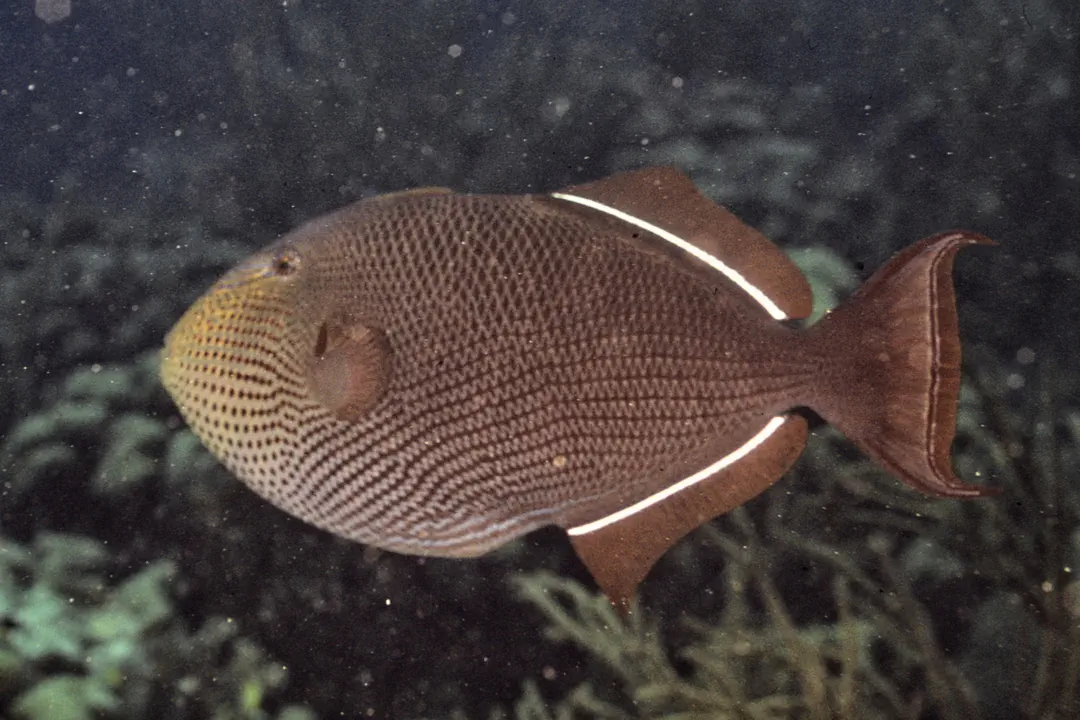
Black Triggerfish
Melichthys niger
 © Georgina JonesCC BY-SA 4.0 · iNaturalist
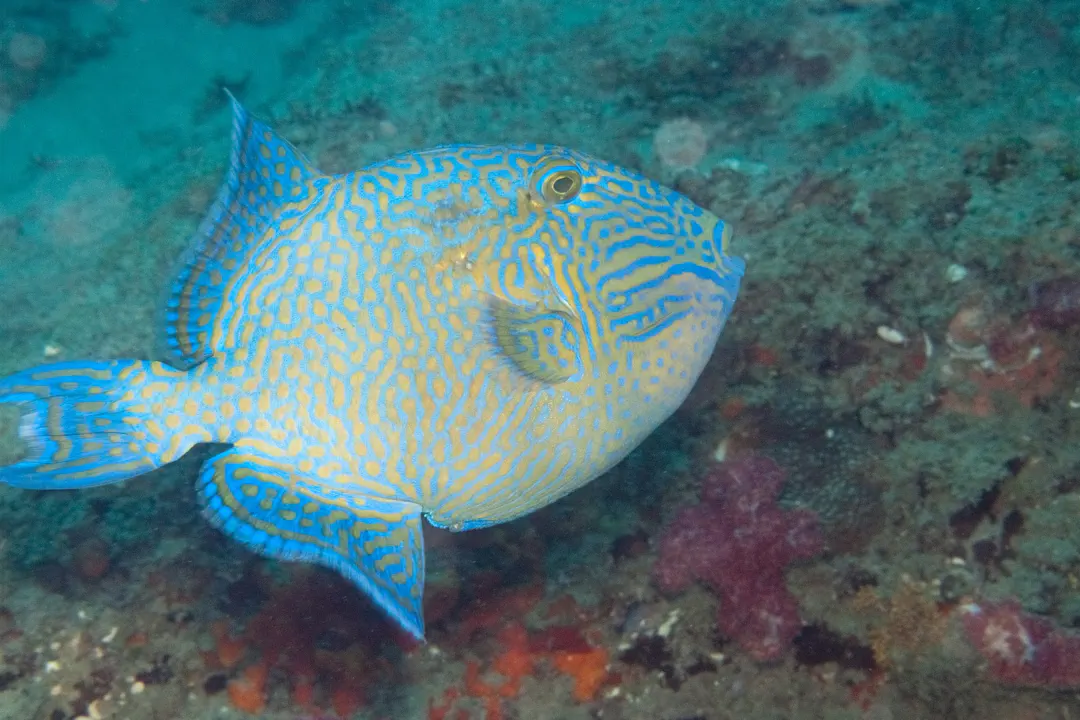
Blue Triggerfish
Pseudobalistes fuscus
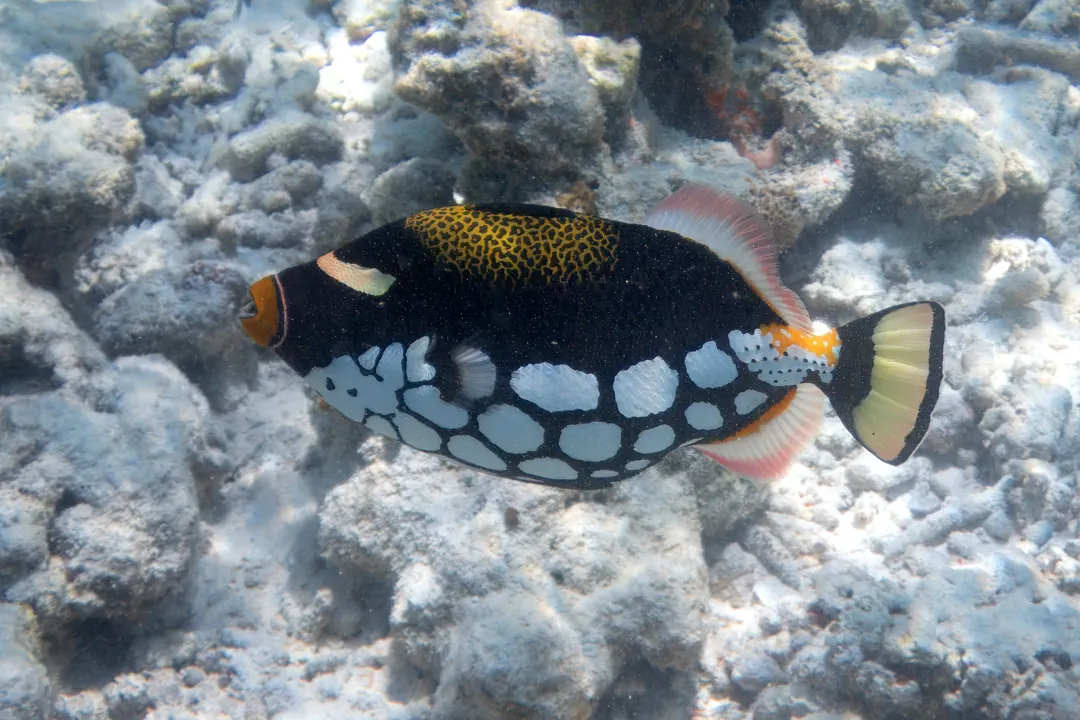 © Darren ObbardCC BY 4.0 · iNaturalist
Clown Triggerfish
Balistoides conspicillum
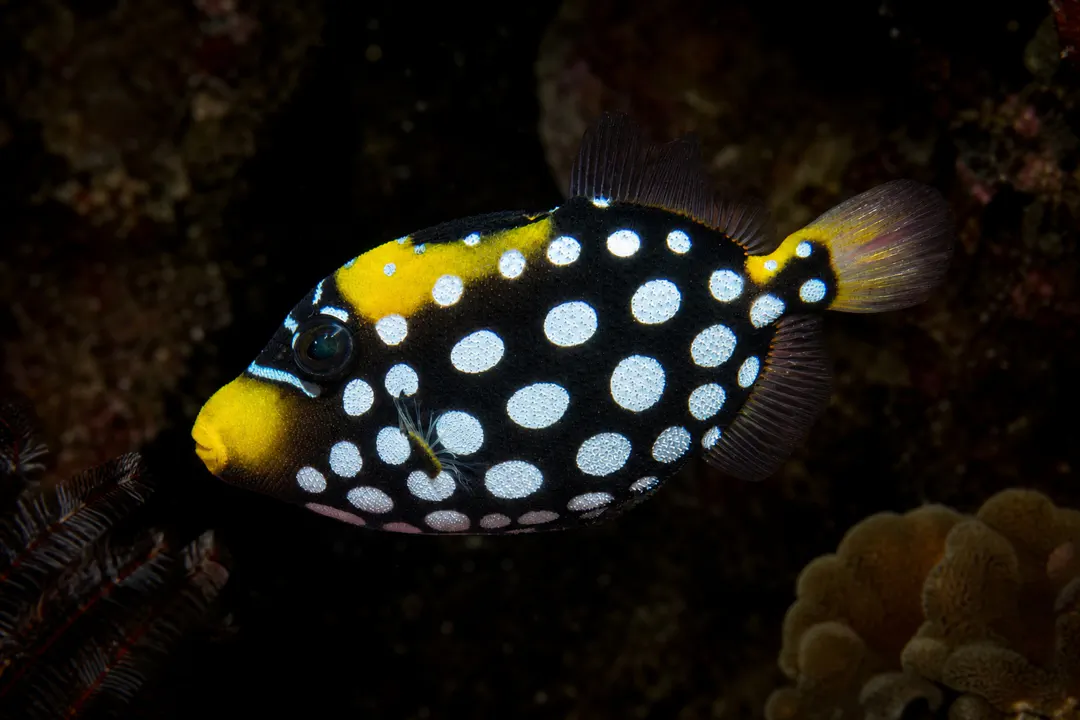 © seabook.appAll rights reserved
Clown Triggerfish (juvenile)
Balistoides conspicillum
Questions
Is Flagtail Triggerfish (juvenile) dangerous?
Flagtail Triggerfish (juvenile) has no known danger to humans. However, always observe marine life responsibly.
Where can you find Flagtail Triggerfish (juvenile)?
How deep does Flagtail Triggerfish (juvenile) live?
Flagtail Triggerfish (juvenile) can be found at depths of up to 80 meters.