Arabian Picasso Triggerfish
Rhinecanthus assasi
Blackbelly Triggerfish
Rhinecanthus verrucosus
- Max size
- View in app
- Max depth
- 20 m
- Found in
- 27 regions
How to recognise it
- Colours
- whiteblackbrownyelloworangebluered
- Body shape
- Compressed
- Pattern
- Blotches or dots, Vertical markings, Horizontal markings
Rhinecanthus verrucosus is a ray-finned fish in the family Balistidae found in the west Indo-Pacific. It occasionally makes its way into the aquarium trade. It is sometimes known as the Blackpatch Triggerfish.
Description
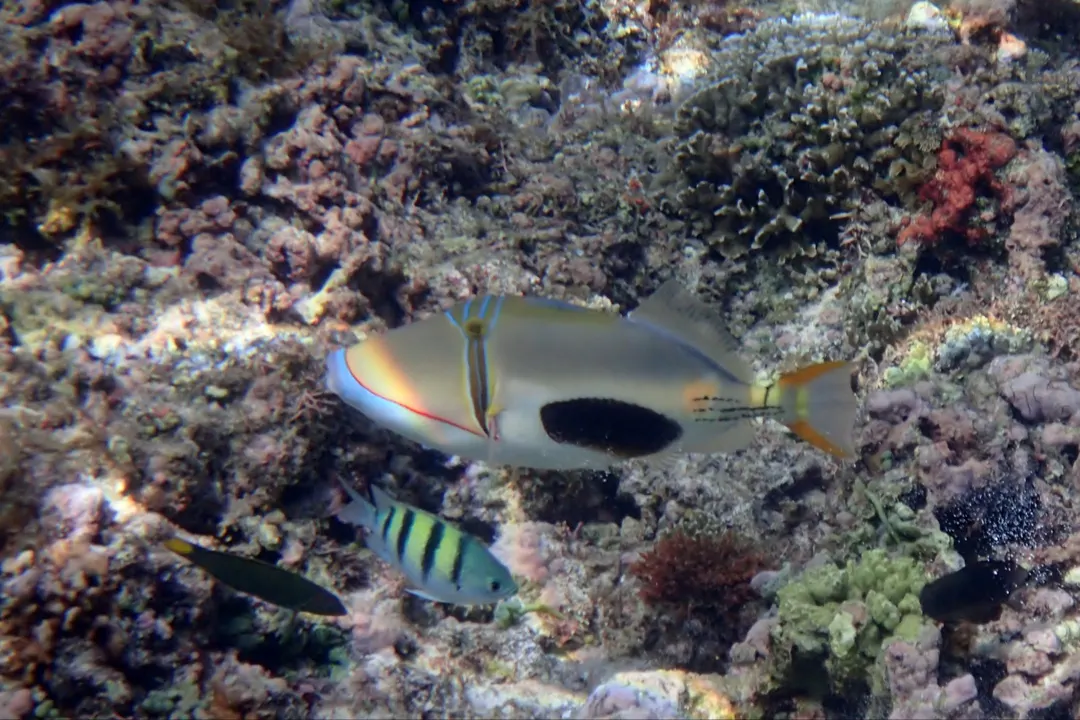
The blackbelly triggerfish has a laterally compressed, deep body and a long snout. In shape it is rhomboidal and it grows to a maximum length of 23 cm (9.1 in). The mouth is at the tip of the snout and the eye is set high on a long, straight forehead. The upper half of the body is pale brown and the underparts are white. There is a dark brown streak below the eye and a very large black spot on the underside just anterior to the anal fin. There are three short rows of forward pointing spines on the caudal peduncle. The anterior part of the dorsal fin consists of three spines which can be retracted into a groove and the separate posterior part has 23–26 soft rays. The anal fin is very much the same shape as the posterior dorsal fin and has 21–23 soft rays. The pectoral fin has 13–14 rays. The pelvic fin is covered by a flap of skin except for its extreme tip.
Coloration: a pale brown triggerfish becoming white below, with a large dark patch on the lower side, a narrow red stripe from the snout to the pectoral-fin base, vertical bars with pale margins running across the top of the head through the eye to the pectoral-fin base, and three rows of small black spines on the caudal peduncle. A head is with a black bar across eyes and down cheek, that with blue lines between eyes and blue edges. A top lip is in blue area. A tail fin is clear sometimes with yellow base, with yellow to red-brown upper and lower borders.
Distribution
The blackbelly triggerfish is found in shallow areas of the west Indo-Pacific. The range includes the Seychelles, the Chagos Islands, Japan, Vanuatu, and western Australia. In 1995, this species was sighted near Boca Raton, Florida.
Habitat
The blackbelly triggerfish is a territorial species and defends its territory against other triggerfish including the lagoon triggerfish (Rhinecanthus aculeatus). Its habitat is lagoons and reef flats where it favours areas with seaweed, corals, seagrasses, sandy flats, and stony places. It may move from place to place according to the status of the tide.
Similar species
 © Georgina JonesCC BY-SA 4.0 · iNaturalist
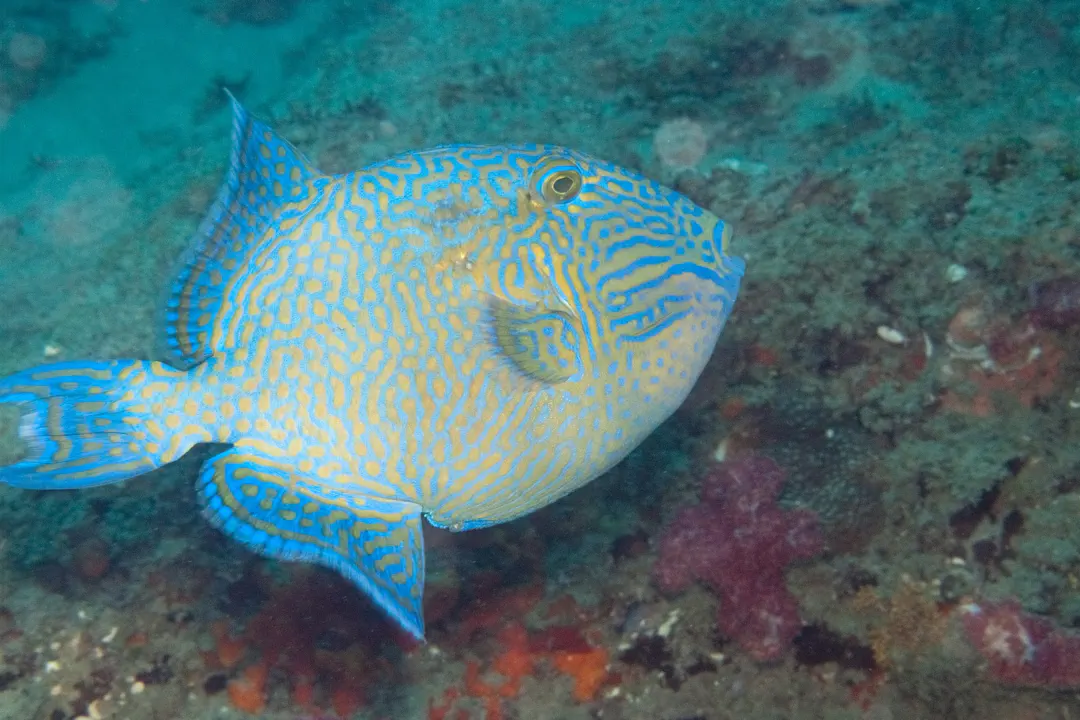
Blue Triggerfish
Pseudobalistes fuscus
 © Darren ObbardCC BY 4.0 · iNaturalist
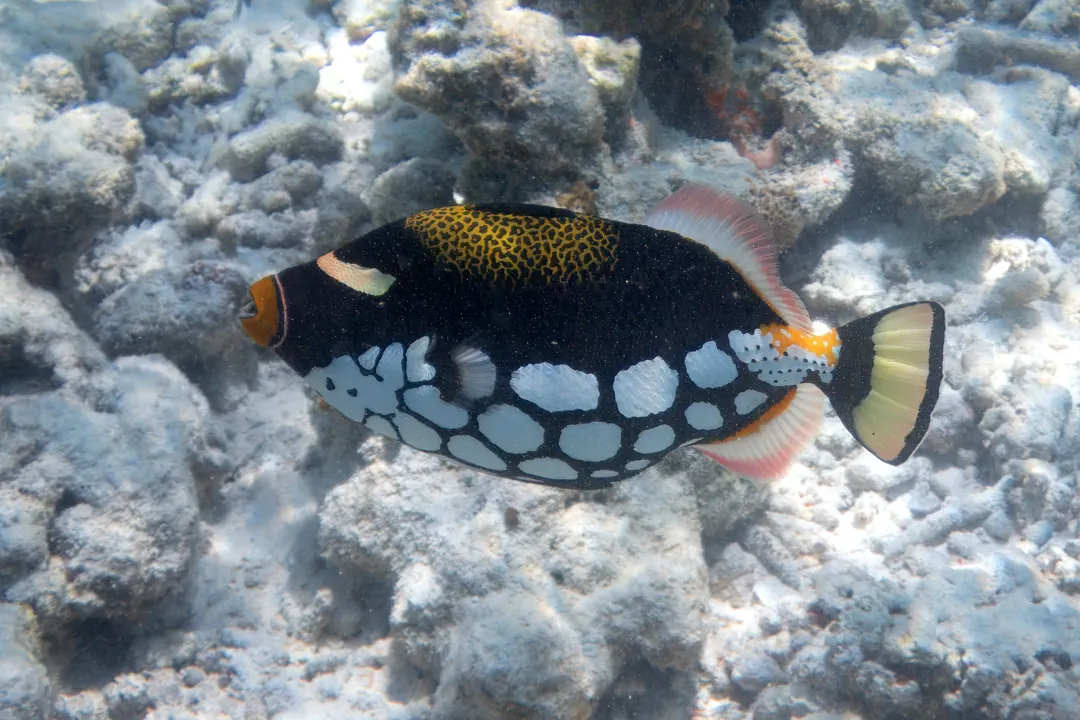
Clown Triggerfish
Balistoides conspicillum
 © seabook.appAll rights reserved
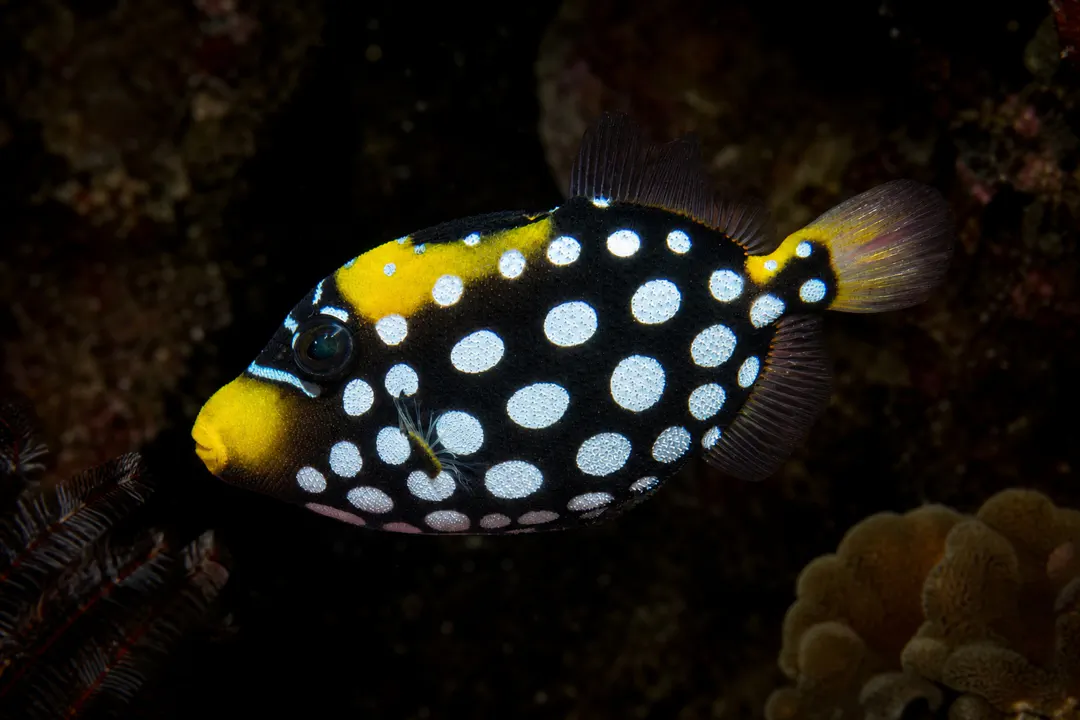
Clown Triggerfish (juvenile)
Balistoides conspicillum
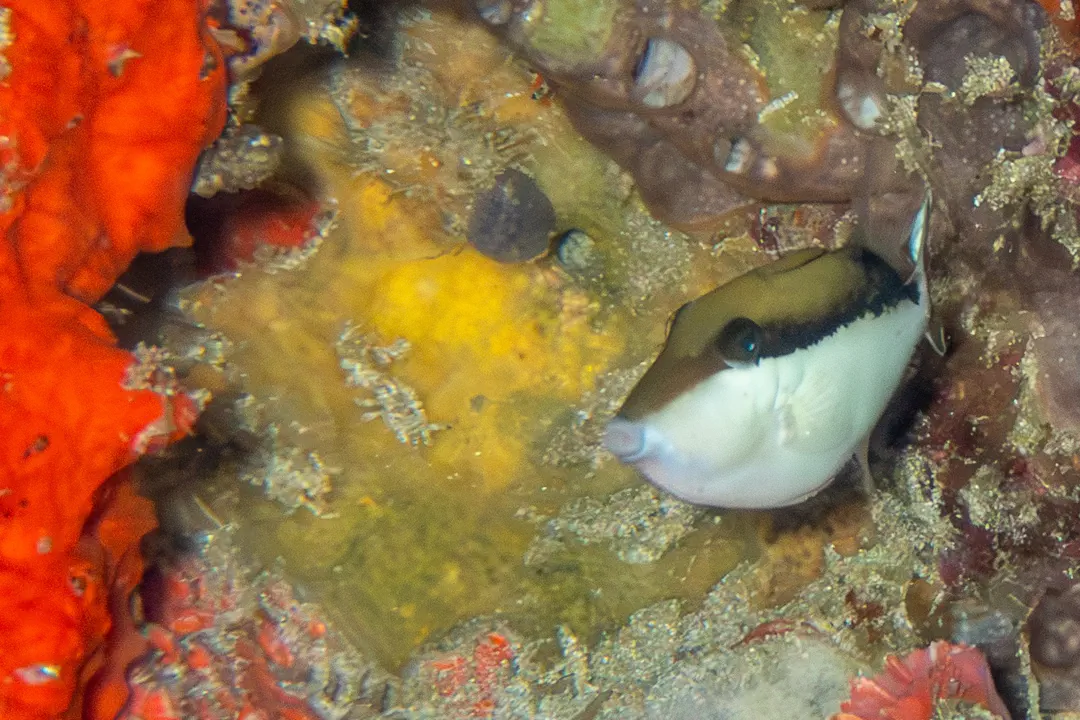 © Piotr LukasikCC BY 4.0 · iNaturalist
Flagtail Triggerfish (juvenile)
Sufflamen chrysopterum
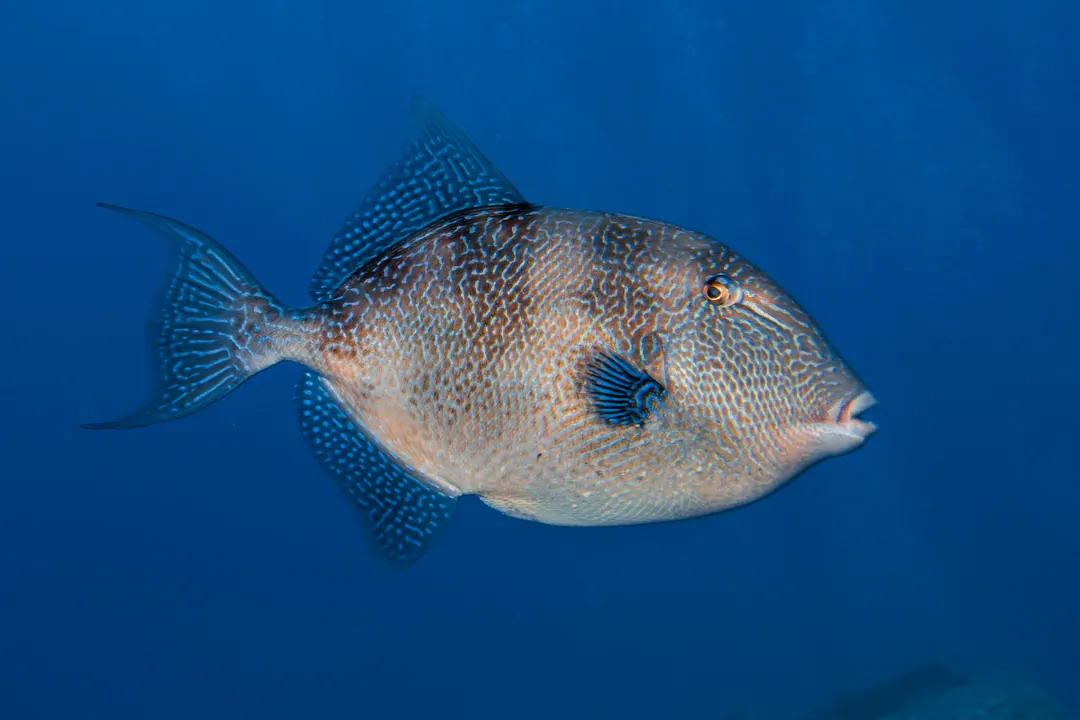 © seabook.appAll rights reserved
Grey Triggerfish
Balistes capriscus
Questions
Is Blackbelly Triggerfish dangerous?
Blackbelly Triggerfish has no known danger to humans. However, always observe marine life responsibly.
Where can you find Blackbelly Triggerfish?
How deep does Blackbelly Triggerfish live?
Blackbelly Triggerfish can be found at depths of up to 20 meters.