 © Rickard ZerpeCC BY-SA 4.0 · iNaturalist
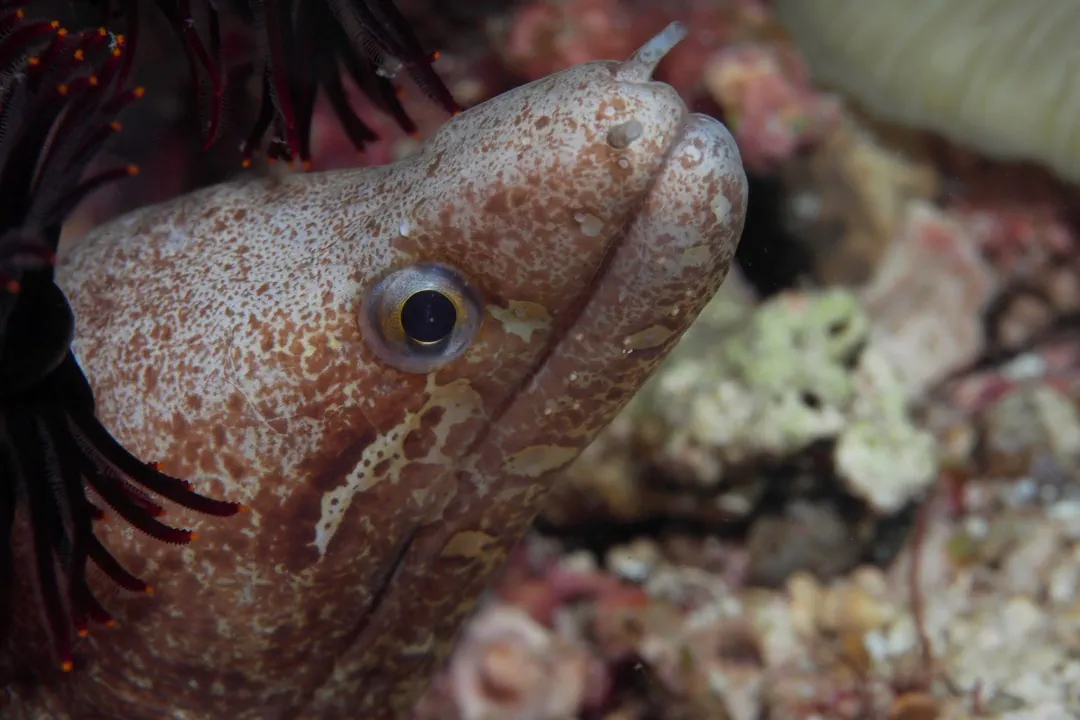
Barred-fin Moray
Gymnothorax zonipectis
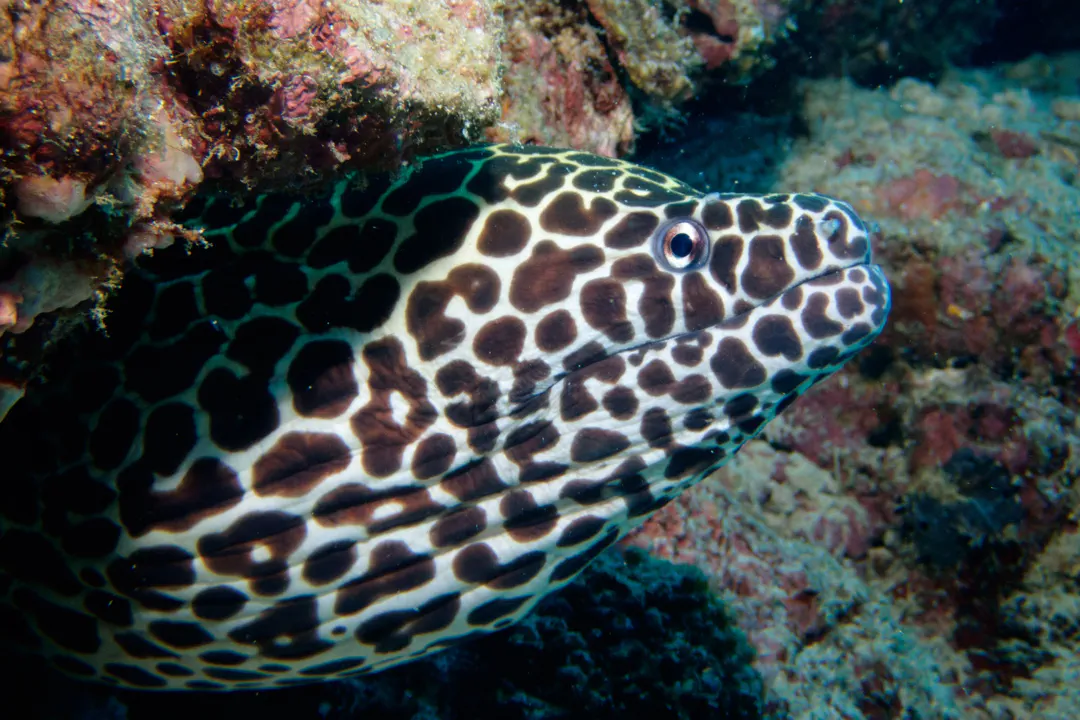
Gymnothorax javanicus
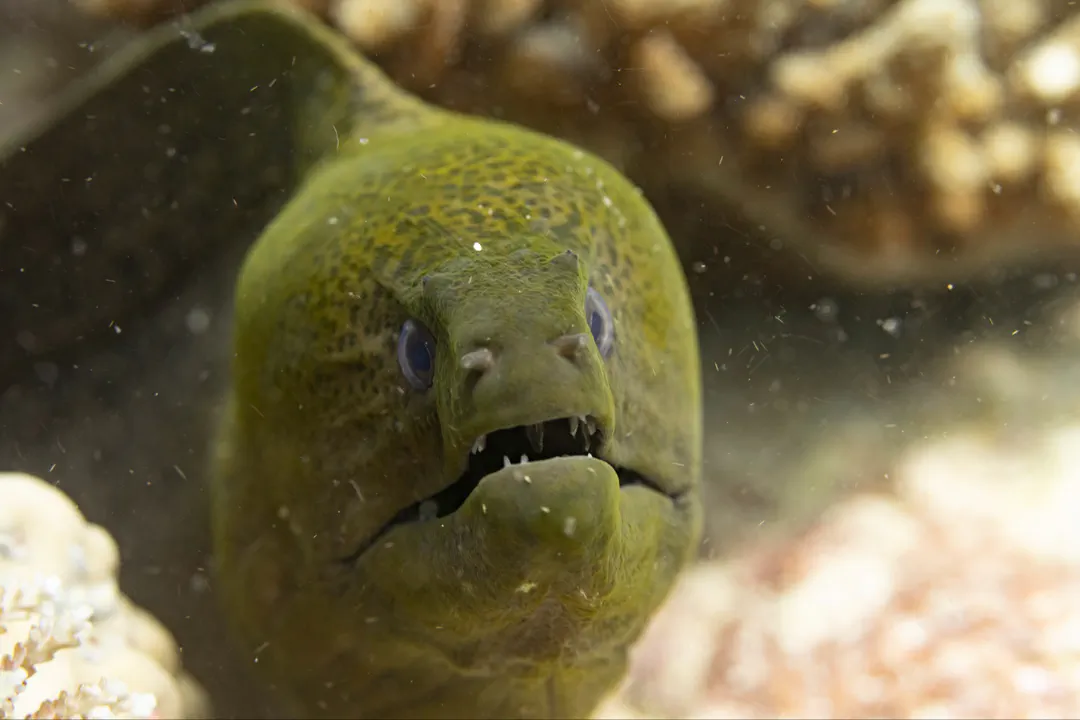
The Giant Moray (Gymnothorax javanicus) is a species of moray eel is a species of marine fish in the family Muraenidae. In terms of body mass, it is the largest moray eel (the Slender Giant Moray (Strophidon sathete) is longer).
As the name suggests, it is a large eel, reaching up to 3 m (9.8 ft) in length and 30 kg (66 lb) in weight. Its head is large, its eyes stick out, its mouth is wide, and its teeth are rather sinister looking because they are so large. Its serpentine in shape body has a greenish brown background color. While juveniles are tan in color with large black spots, adults have black specks that grade into leopard-like spots behind the head and a black area surrounding the gill opening.
The giant moray is widespread in the Indo-Pacific region, being found from eastern coast of Africa, Red Sea included, until the Pitcairn group, Hawaiian islands and also Polynesia. North to south Japan and south to New Caledonia, Fiji and the Austral Islands.
It lives in lagoons and on the outer slopes of coral reefs, during the day it sits sheltered in crevices between 1 and 50 meters deep.
The giant moray is carnivorous, it leaves its lair at night to actively hunt its prey along the reef. It mainly feeds on fish and occasionally on crustaceans. With its slender body, the moray can get into crevices where the reef fish hide. The moray has poor vision, but it uses its sense of smell to find its prey. It is known to engage in cooperative hunting with the roving coralgrouper (Plectropomus pessuliferus).
The moray has two sets of jaws with teeth. It holds the prey with the first set of jaws, and sucks the flesh from the prey with the second set.
This species may be hazardous to people. Being at the top of the food chain, it is likely to cause ciguatera poisoning if eaten. It has been implicated in provoked and unprovoked attacks on scuba divers.
© Rickard ZerpeCC BY-SA 4.0 · iNaturalist  © Robin WhiteCC BY 4.0 · iNaturalist
  © Borja FierroCC BY 4.0 · iNaturalist
 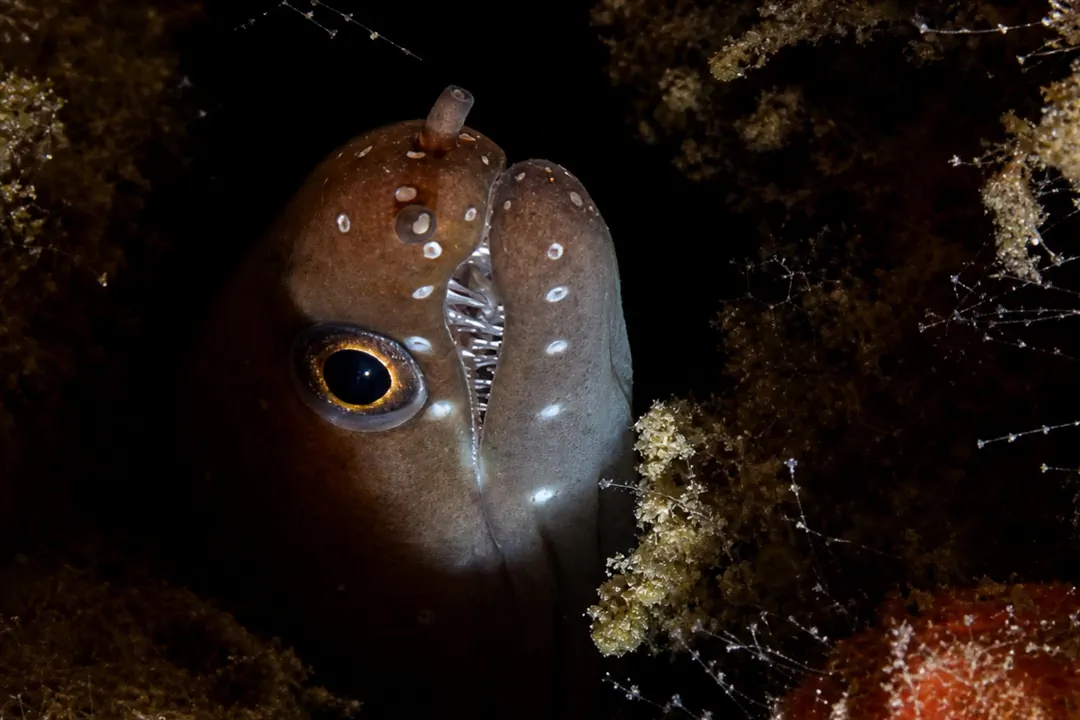 © seabook.appAll rights reserved
 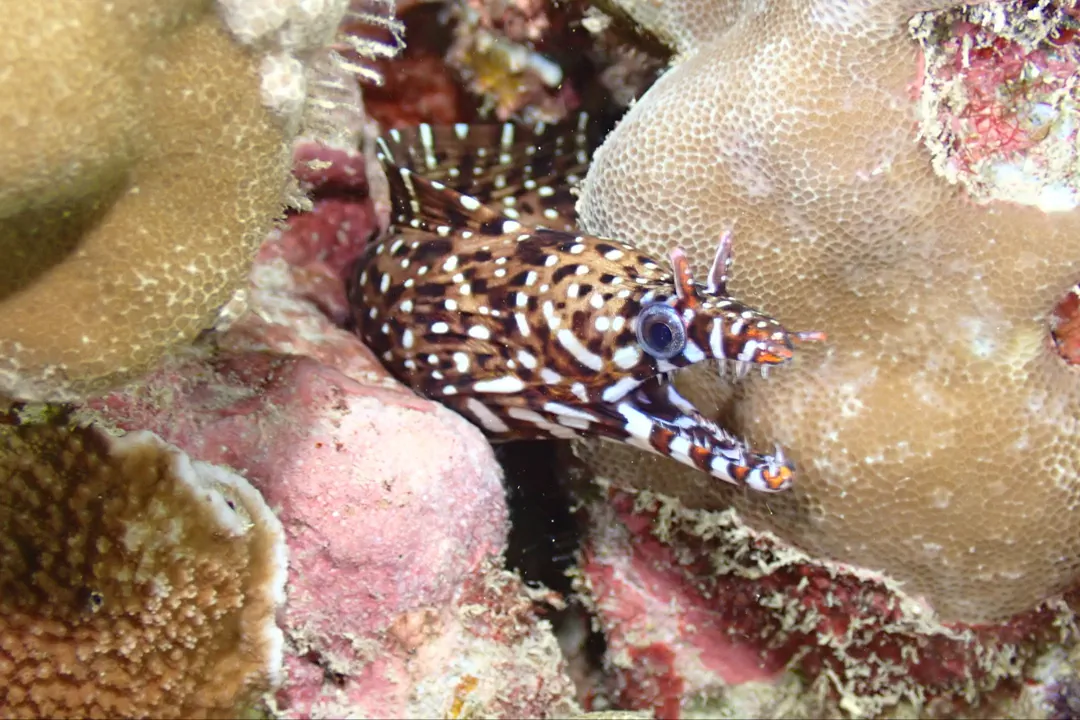 © Robin WhiteCC BY 4.0 · iNaturalist
 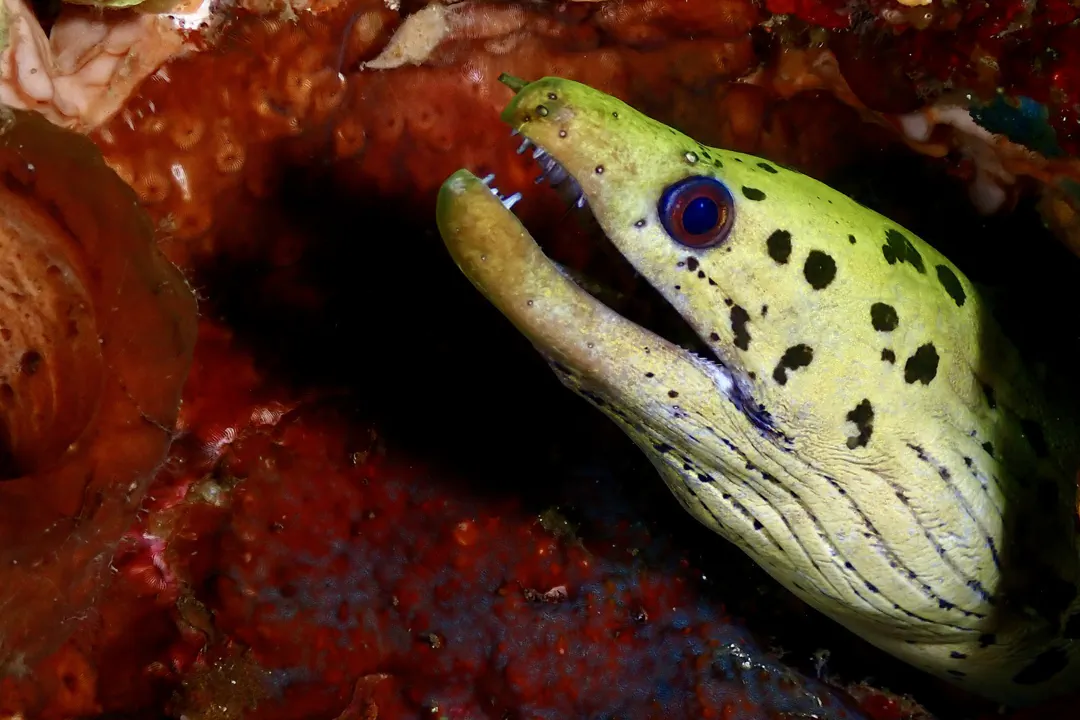 Chris SpainCC0
 Giant Moray is classified as poisonous, dangerous to humans. Always exercise caution and keep a safe distance.
Giant Moray can be found at depths of up to 50 meters.
Download Seabook free for iOS and Android.