 © Rickard ZerpeCC BY-SA 4.0 · iNaturalist
Barred-fin Moray
Gymnothorax zonipectis
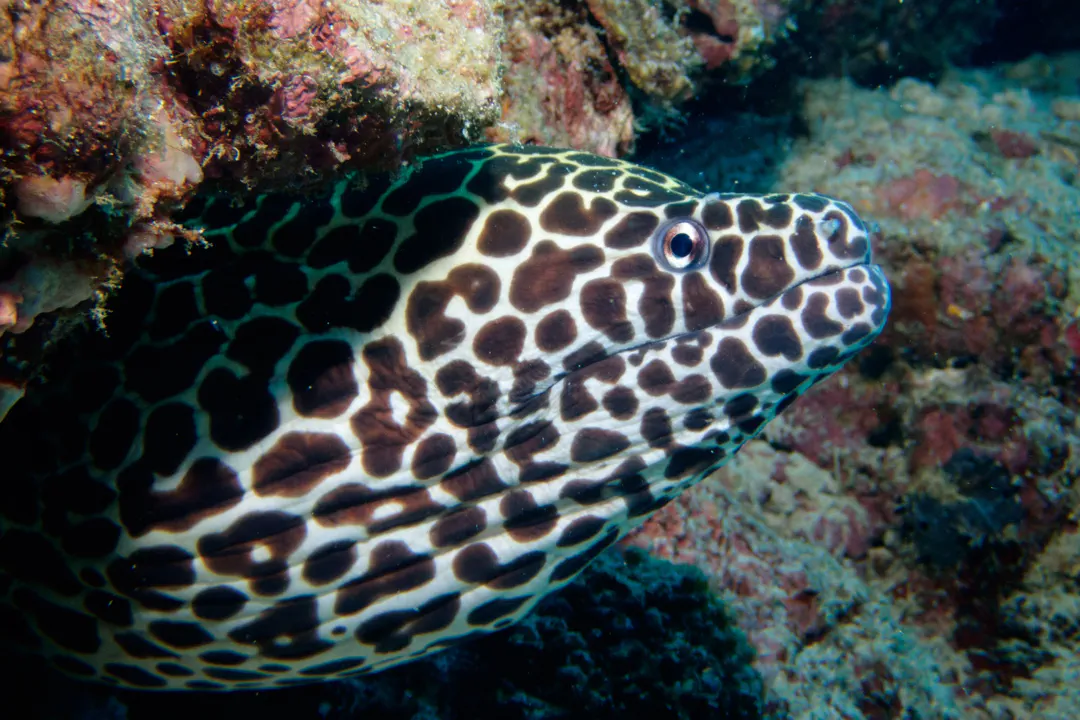
Gymnothorax favagineus
Gymnothorax favagineus is a species of marine fish in the family Muraenidae.
Gymnothorax favagineus is a large moray which can reach a maximum length of 300 cm, but specimens usually encountered are much smaller. Its serpentine in shape body has a white to yellowish background color dotted with numerous black spots which latter vary in size and shape depending on the individual and on the environment in which the animals live. Therefore, morays living on a reef with clear water will have less black spots than those of a turbid environment. It is from this characteristic color pattern that ensue its vernacular names.
The laced moray is widespread throughout the Indo-West Pacific area from eastern coast of Africa, Red Sea included, until Papua New Guinea and from south Japan to the Great Barrier Reef.
It lives on the outer slopes of coral reefs. During the day, it sits sheltered in crevices between 3.3 and 148.5 feet (1 and 45 meters) deep.
The laced moray is carnivorous, it leaves its lair at night to actively hunt its preys along the reef. It feeds mainly on small fish and cephalopods. Large adults are prone to be aggressive in the wild.
© Rickard ZerpeCC BY-SA 4.0 · iNaturalist 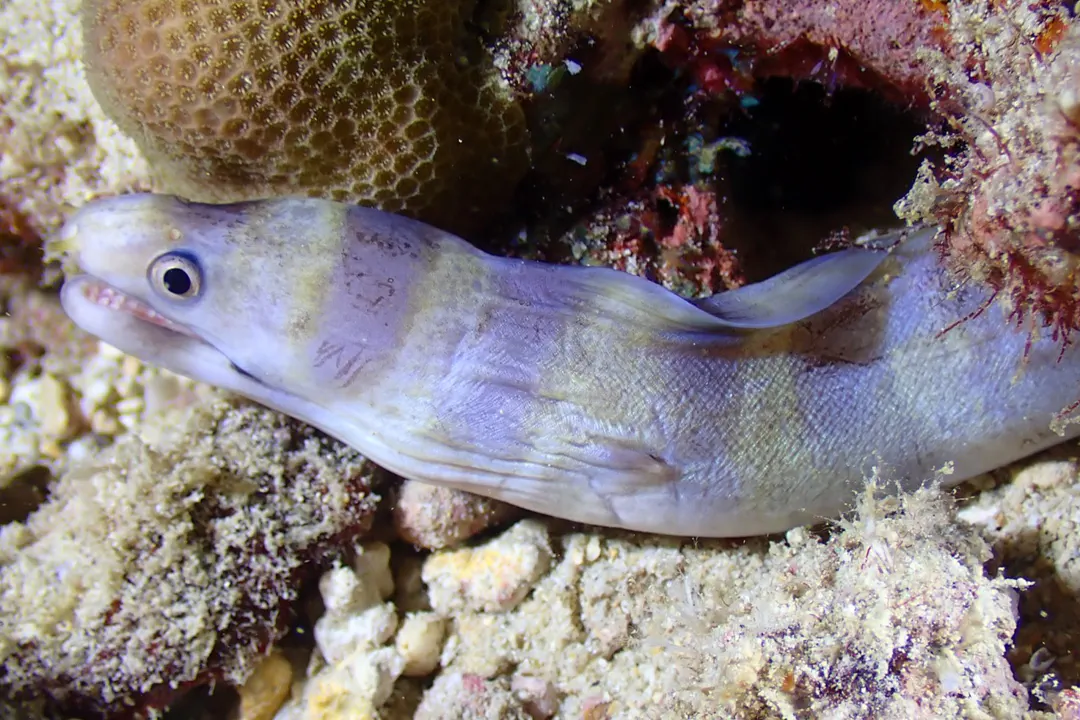 © Robin WhiteCC BY 4.0 · iNaturalist
  © seabook.appAll rights reserved
 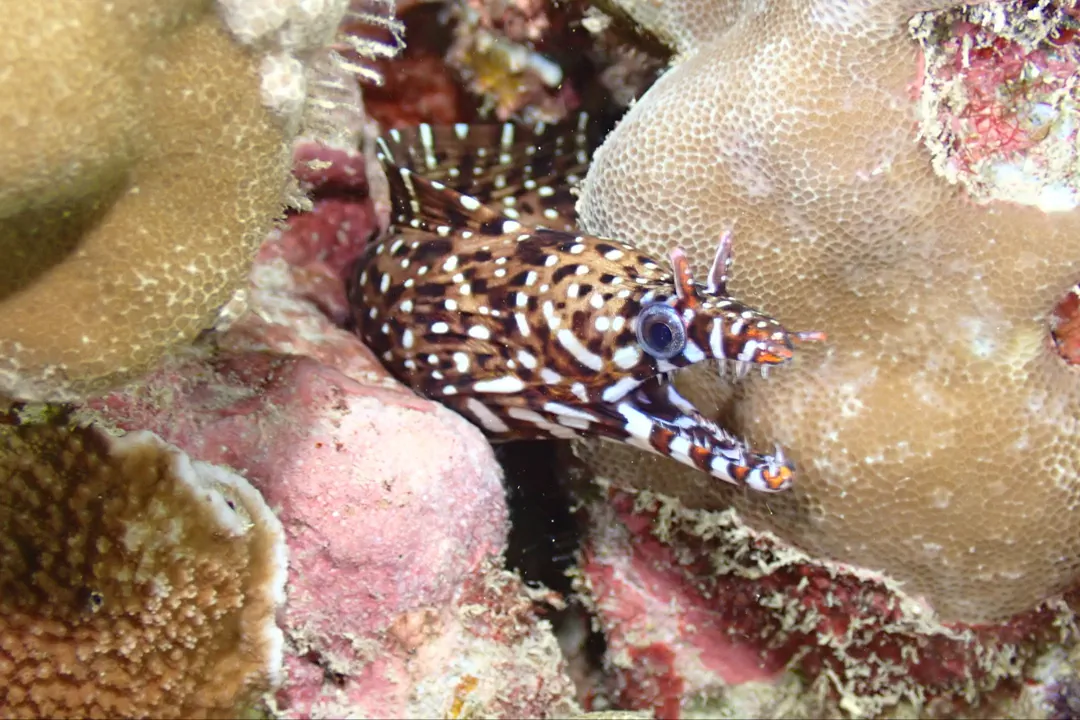 © Robin WhiteCC BY 4.0 · iNaturalist
 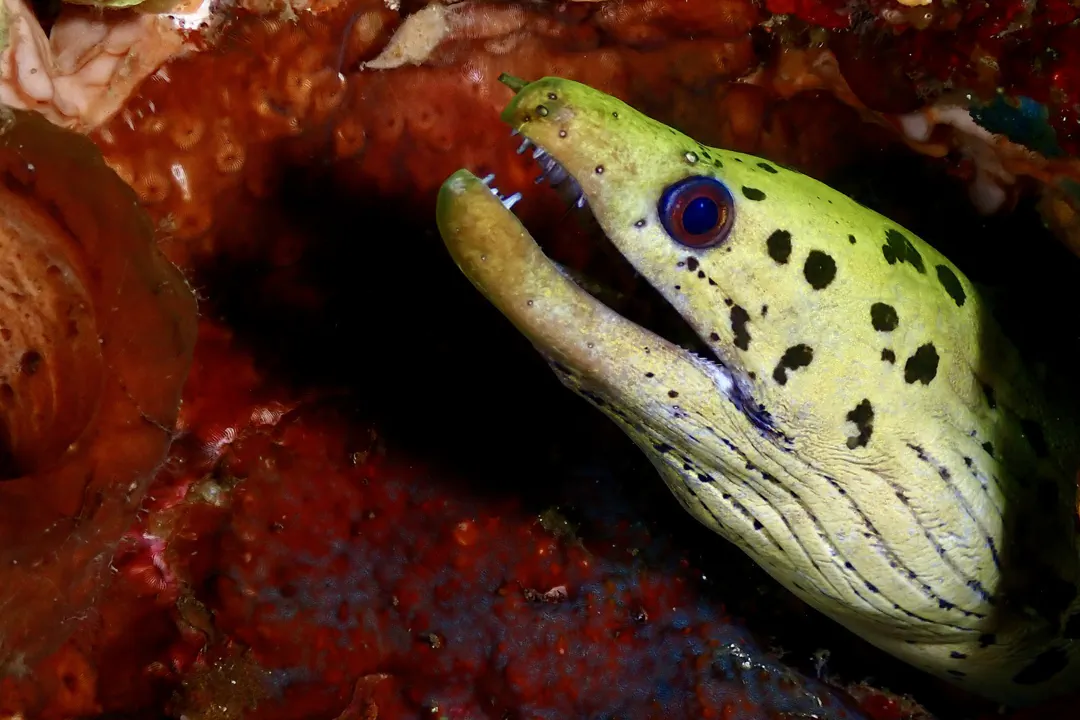 Chris SpainCC0
 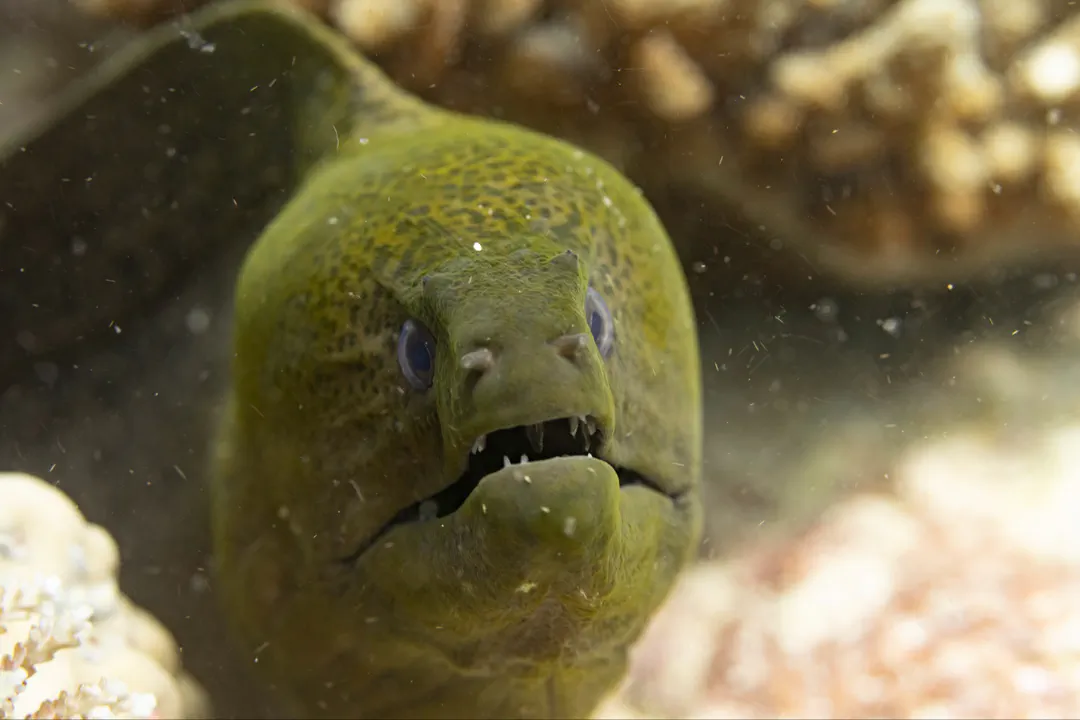 © cello caruso-turielloCC BY 4.0 · iNaturalist
 Blackspotted moray is classified as poisonous. Always exercise caution and keep a safe distance.
Blackspotted moray can be found at depths of up to 50 meters.
Download Seabook free for iOS and Android.