 © Ewout KnoesterCC BY-SA 4.0 · iNaturalist
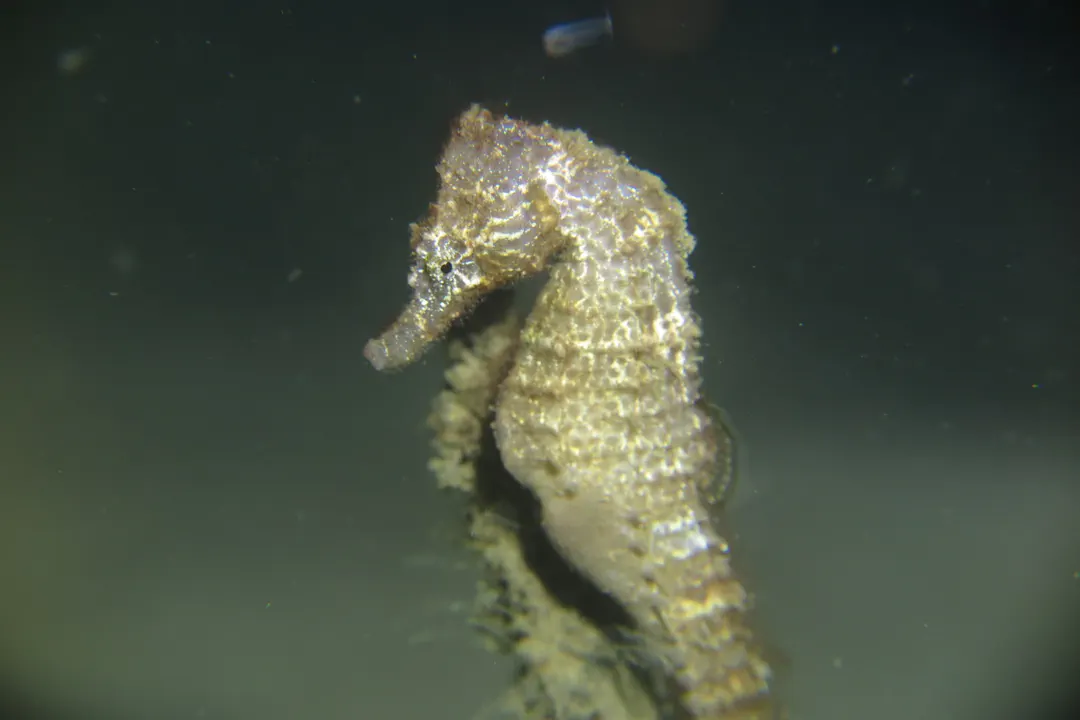
Common Seahorse
Hippocampus kuda
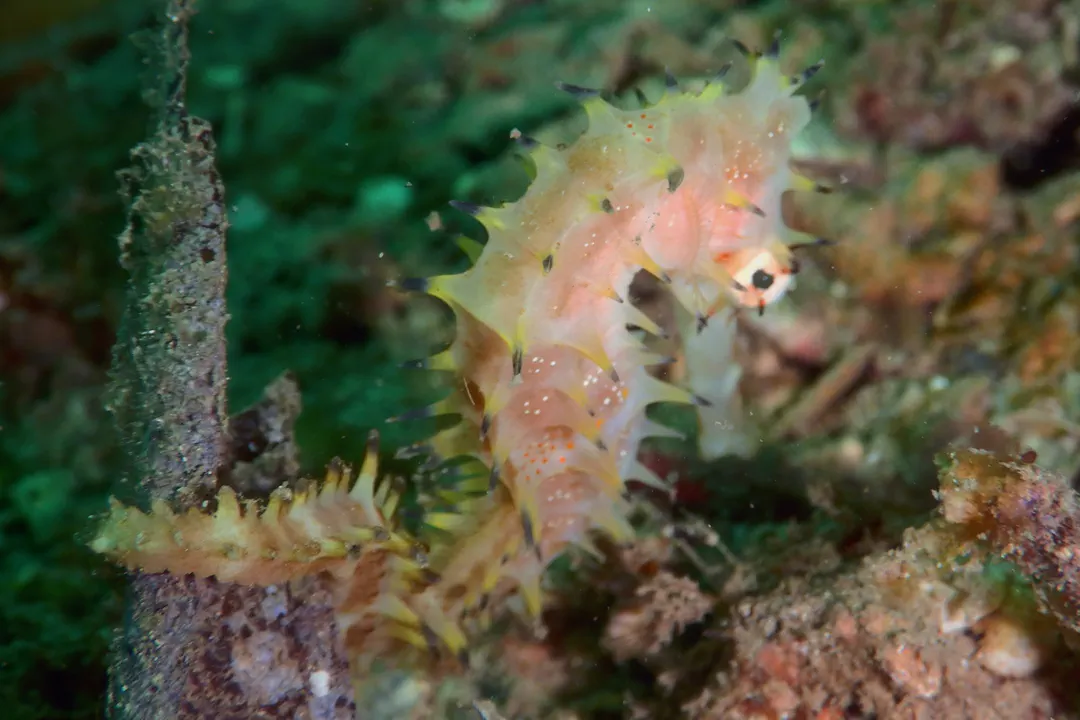
Hippocampus histrix
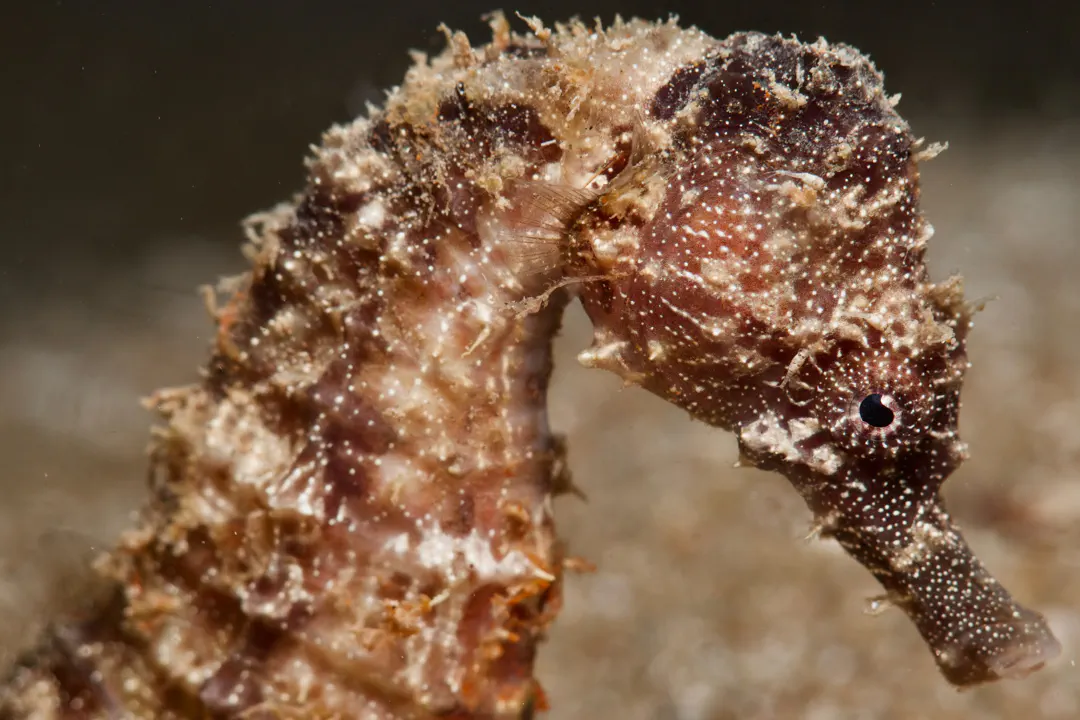
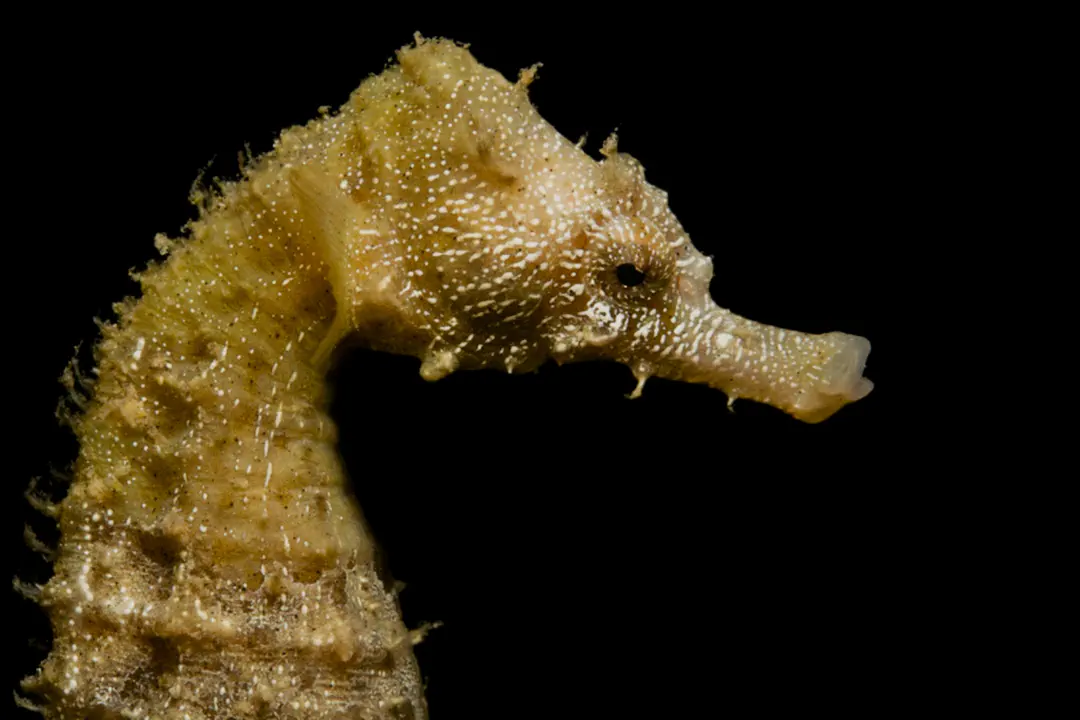
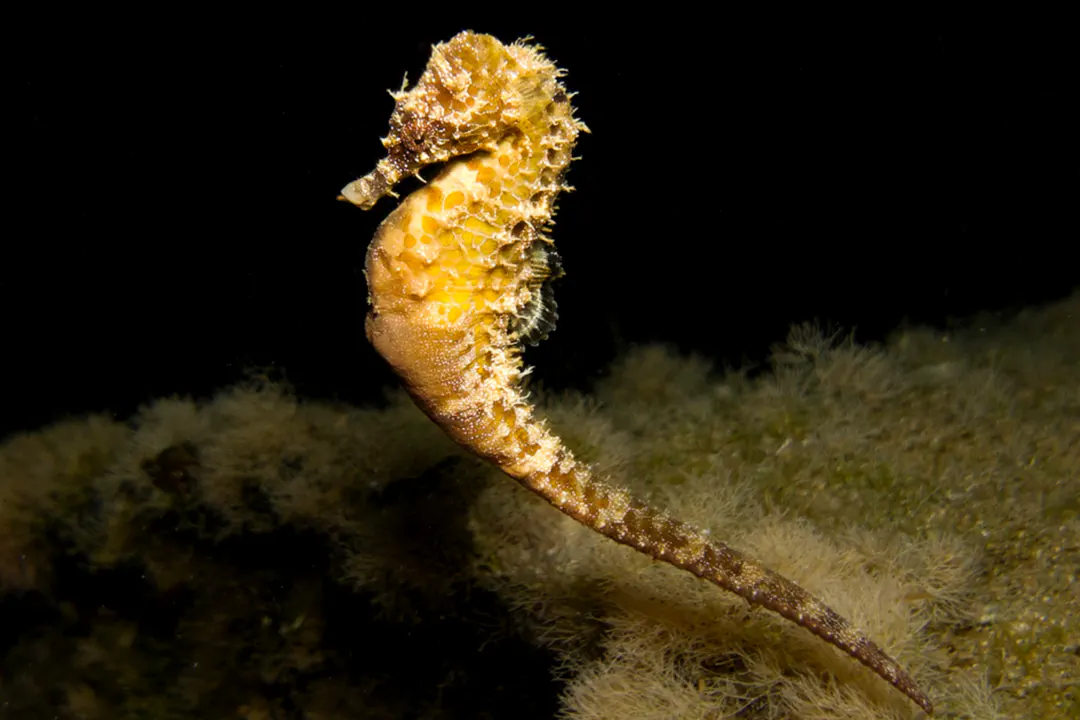
Hippocampus histrix is a marine fish belonging to the Syngnathidae family, native from the Indo-Pacific area.
The spiny seahorse is a small fish that can reach a maximum length of 15–17 cm.
The body is slender, elongated and completely covered with thorns. These are sharp with dark tips, and uniformly sized on the prehensile tail. The trunk has long thorns which continue until the coronet, which has 4-5. The head is also provided with numerous spines especially on the forehead, the base of the cheeks, the nose and above the eyes. The snout is very long and tapered. Body coloration is highly variable to match surroundings and goes from grey to cream, and from bright yellow, to green or red and even brownish. It can be plain or with different pattern on the side or/and on the backside. The snout is generally striped with one or more thin white lines.
The spiny seahorse is relatively rare but widespread troughout the Indo-Pacific. In Australia it has been reported from the Timor Sea and New South Wales. It is also found at Bali, Indonesia, Papua New Guinea, New Caledonia and Japan. The species favours relatively deep waters (10–95 m) and is usually found below 15 m depths. It often attaches itself to soft corals or sponges but may also frequent algae-rubble or rocky reefs.
The spiny seahorse has a carnivorous diet and feeds on small crustaceans and other planktonic organisms.
It is ovoviviparous and it is the male who broods the eggs in its ventral brood pouch. The latter includes villi rich in capillaries that surround each fertilized egg creating a sort of placenta supplying the embryos. When fully grown, pups will be expelled from the pocket and evolve in complete autonomy.
H. histrix is listed as vulnerable by the IUCN. It is subject both to targeted exploitation for use in traditional medicine and the aquarium trade, and to population losses from bycatch in the shrimp fishery. Inshore sea-grass habitats frequented by the species are also in decline. Like all seahorses, it is listed in Appendix II of the Convention on International Trade in Endangered Species of Wild Fauna and Flora (CITES), meaning that it is on the list of species the trade of which must be controlled to ensure their survival.
© Ewout KnoesterCC BY-SA 4.0 · iNaturalist 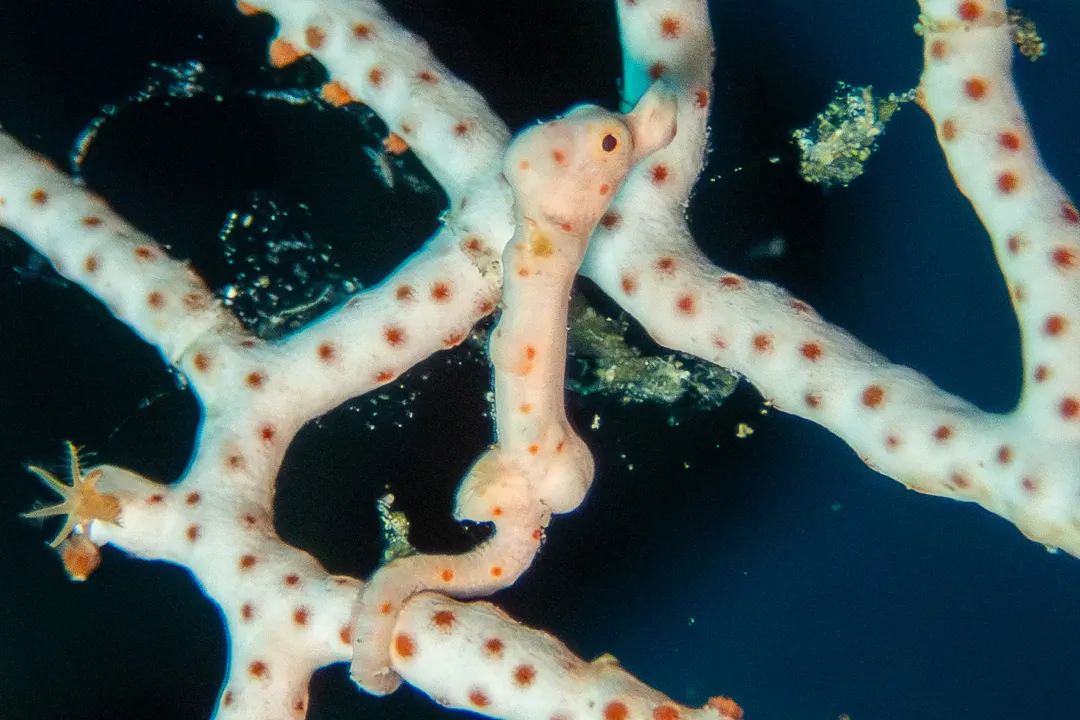 © Piotr LukasikCC BY 4.0 · iNaturalist
  © seabook.appAll rights reserved
  © seabook.appAll rights reserved
  © seabook.appAll rights reserved
  © seabook.appAll rights reserved
 Spiny Seahorse (pale) has no known danger to humans. However, always observe marine life responsibly.
Spiny Seahorse (pale) can be found at depths of up to 82 meters.
Download Seabook free for iOS and Android.