 © Ewout KnoesterCC BY-SA 4.0 · iNaturalist
Common Seahorse
Hippocampus kuda
Hippocampus guttulatus
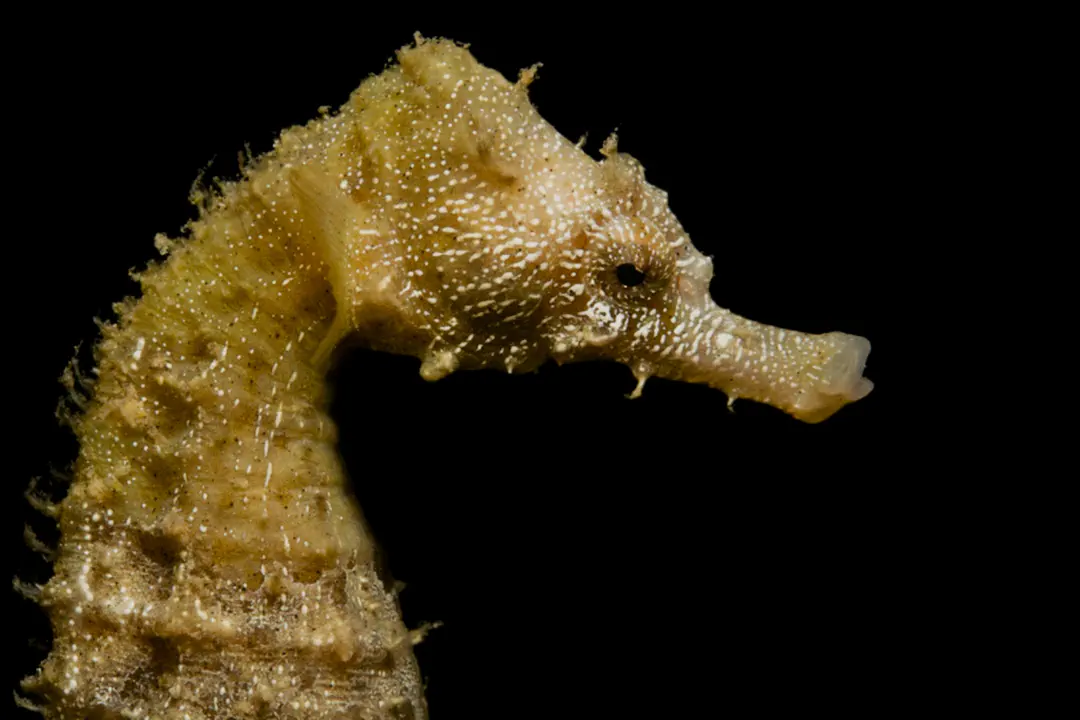
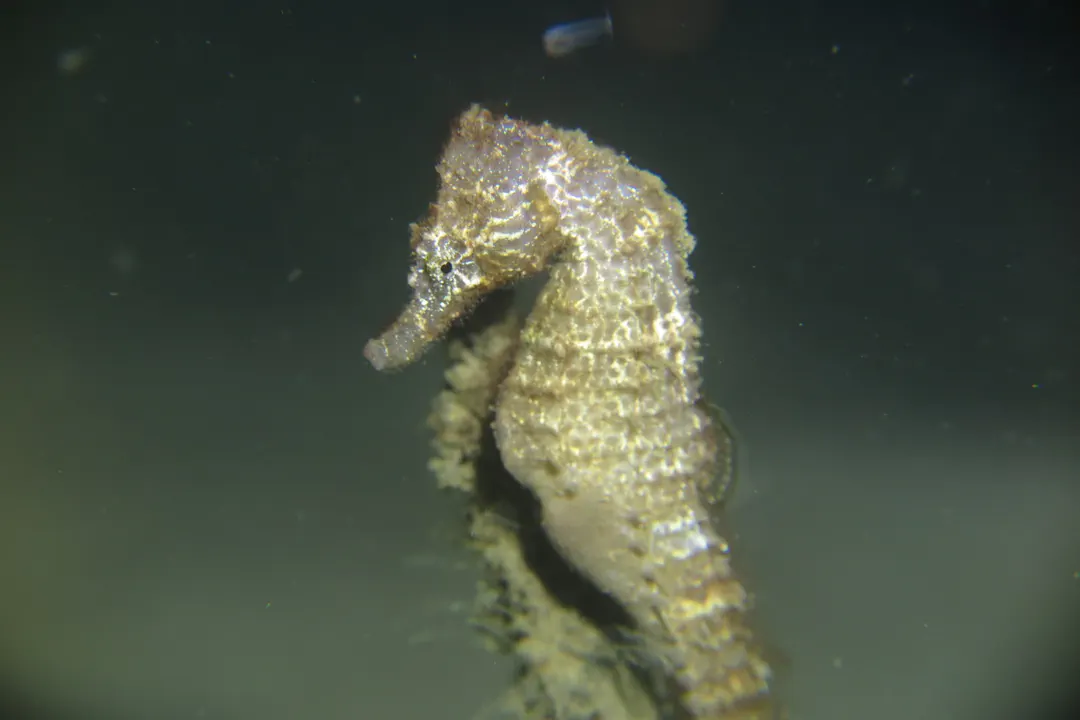
Hippocampus guttulatus is a marine fish belonging to the Syngnathidae family, native from the northeast Atlantic, including the Mediterranean.
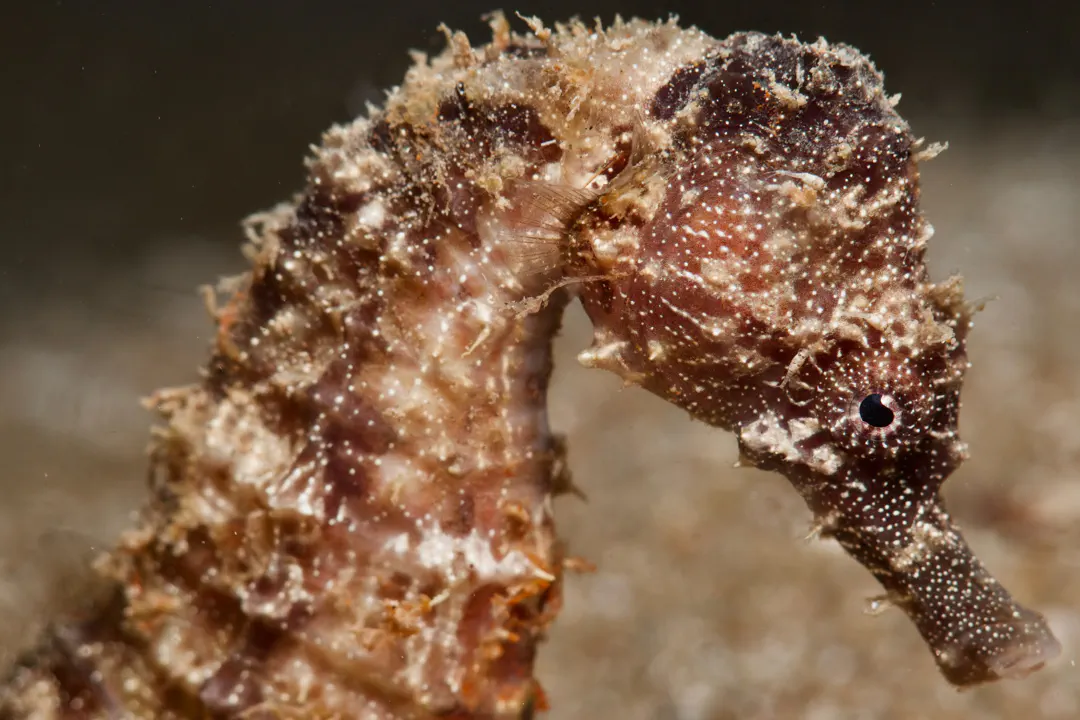
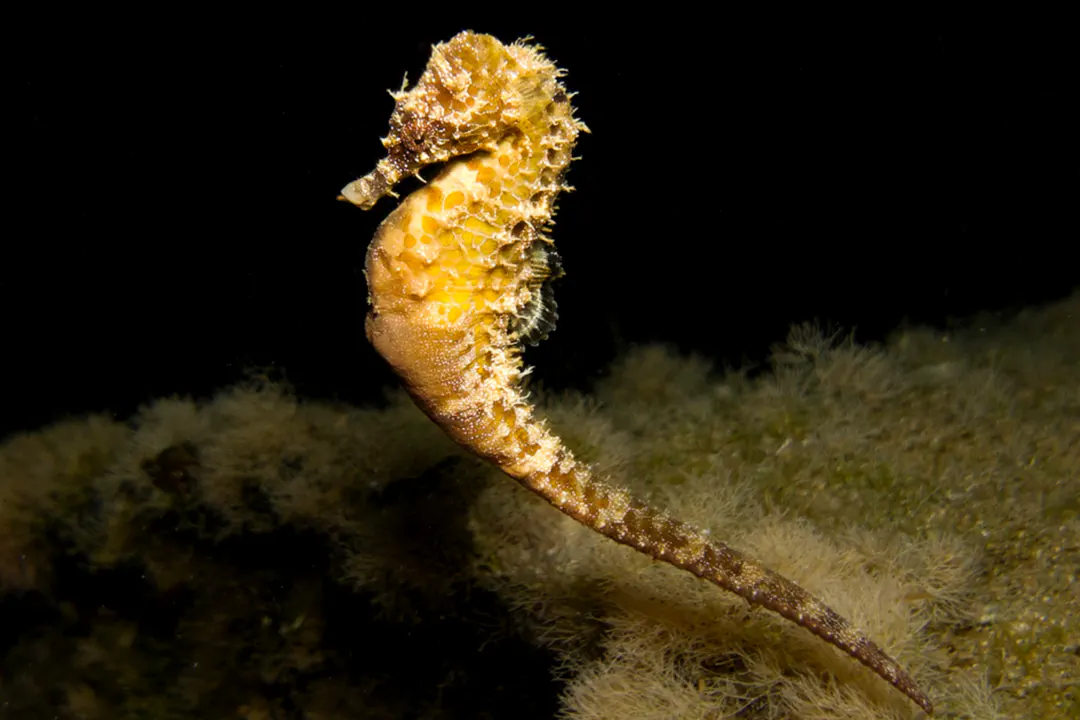
The long-snouted seahorse is a small-sized fish that can reach a maximum length of 21.5 cm but the average size is more or less 12 cm. The body is slender, the snout is long and the tail is prehensile. Its head and dorsal ridge have often some more or less long and numerous dermal filaments which can be simple or bifid. Its color ranges from dark green to different variants of brown to yellow, the body is often speckled with small white dots.
The long-snouted seahorse is widespread throughout the temperate waters of the eastern Atlantic Ocean from the south coast of the United Kingdom to the Netherlands and south to Morocco, including the Canary Islands, the Azores and Madeira and the Mediterranean Sea.
This seahorse likes shallow coastal waters from 1 to 20 m deep. It occurs close by Posidonia and eelgrass meadows or in mixed habitat with sandy bottom and rocks with algae.
The long-snouted seahorse has a carnivorous diet and feeds on small crustaceans, larvae, fish eggs and other planktonic organisms. It is ovoviviparous and it is the male who broods the eggs in its ventral brood pouch. The latter includes villi rich in capillaries that surround each fertilized egg creating a sort of placenta supplying the embryos. When fully grown, pups will be expelled from the pocket and evolve in complete autonomy.
The long-snouted seahorse is relatively rare and limited data exist on its population and about the volume and the impact of trade for the traditional chinese medicine and for the aquarium, thus the species is considered as "Data Deficient" on the IUCN Red List. Internationally, it is also listed in Appendix II of the Convention on International Trade in Endangered Species of Wild Fauna and Flora (CITES) this means that it is on the list of species not necessarily threatened with extinction, but in which trade must be controlled in order to avoid utilization incompatible with their survival.
© Ewout KnoesterCC BY-SA 4.0 · iNaturalist 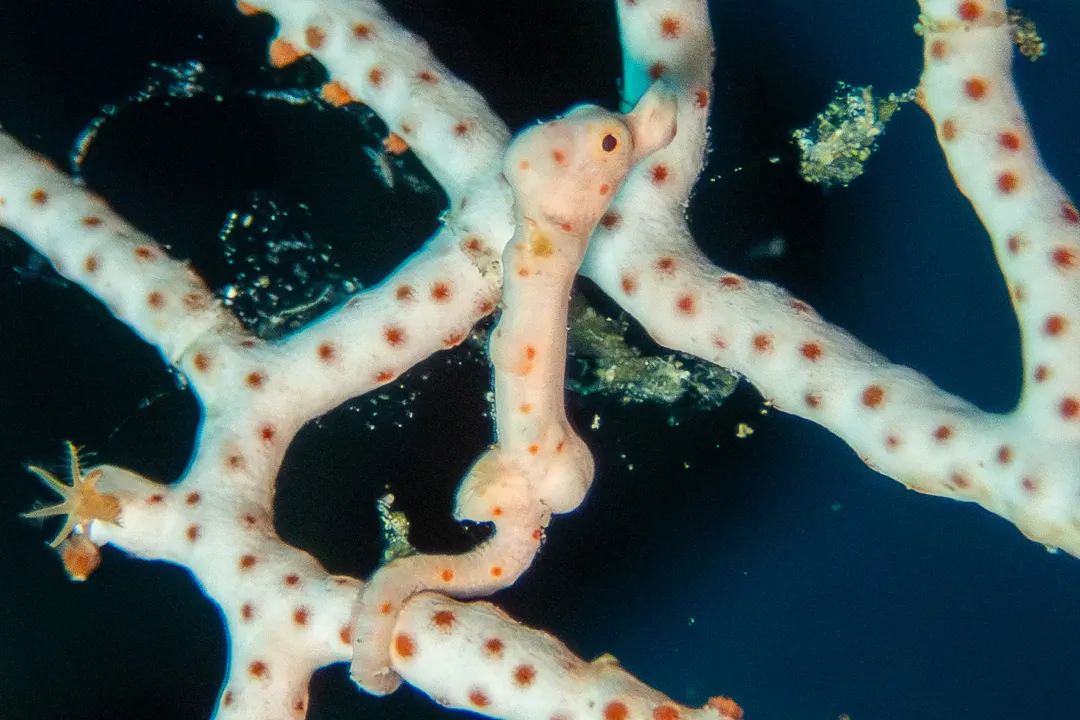 © Piotr LukasikCC BY 4.0 · iNaturalist
  © seabook.appAll rights reserved
  © seabook.appAll rights reserved
  © seabook.appAll rights reserved
  © Pierre PericardCC BY 4.0 · iNaturalist
 Long-Snouted Seahorse (pale) has no known danger to humans. However, always observe marine life responsibly.
Long-Snouted Seahorse (pale) can be found at depths of up to 30 meters.
Download Seabook free for iOS and Android.