 © Dan SchofieldCC BY 4.0 · iNaturalist
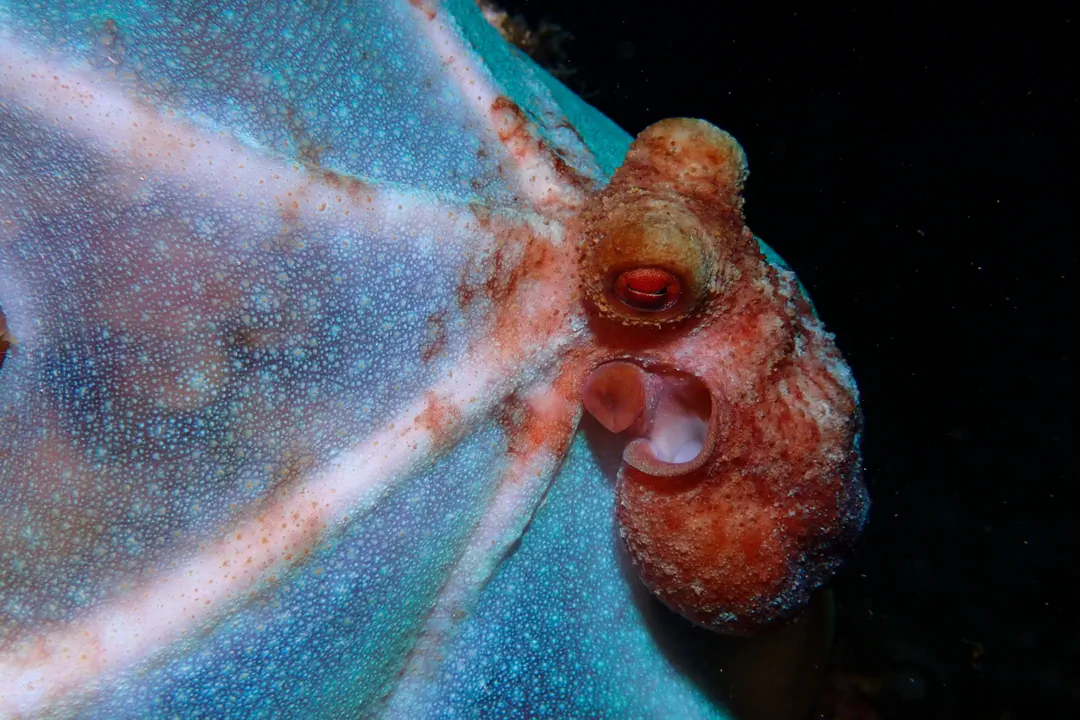
Caribbean Reef Octopus
Octopus briareus
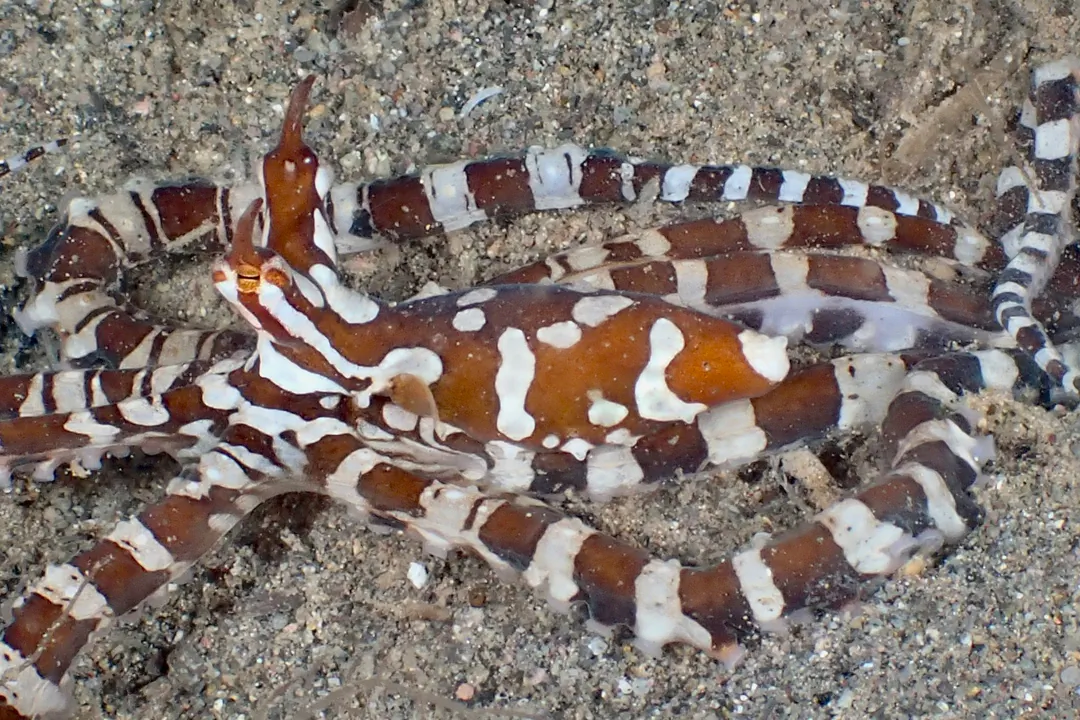
Wunderpus photogenicus
Wunderpus photogenicus is a species of octopus in the monotypic genus Wunderpus. It is found in shallow waters from Bali and Sulawesi north to the Philippines and east to Vanuatu.W. photogenicus is a long-armed species characterised by "small eyes on elongate stalks, a long, conical papilla over each eye and a dramatic and fixed colour pattern of white bars and spots over a brown-red background."
W. photogenicus is often confused with the similarly coloured mimic octopus, Thaumoctopus mimicus. Both T. mimicus and W. photogenicus can have variable activity patterns; however, T. mimicus is most often diurnal, while Wunderpus tends to emerge very slowly from dens in the sand at dusk and dawn and is a crepuscular hunter.
Wunderpus photogenicus has well-defined white spots on the mantle, and bars on the arms. They lack a white border at the base of the suckers. These are some of the traits that distinguish it from T. mimicus, which has poorly defined dark and white markings on the mantle, and a bright white line along the base of the suckers.
The white spots of Wunderpus are unique among individuals, allowing for the use of photo identification to monitor individuals in the wild.
Wunderpus hatchlings can be identified by their unique 'founder chromatophore' patterns.
The wunderpus octopus has small, subraocular eyes on top of elongated stalks protruding from its mantle. Over each eye is a conical papilla. The thin-walled mantle of the wunderpus octopus has weak musculature and wide aperture. The head has a distinct neck area and is Y-shaped with the eye on each branch of the ‘Y’. The head of a male wunderpus is wider than its mantle and for female wunderpus octopuses, their mantle is wider than their head. For females, this is due to the large ovary in their mantle. They have gill with 6-7 lamellae per demibranch present.
The wunderpus octopus has a relatively small body and a flexible hydrostatic skeleton. Their funnel organ is generally W-shaped and adjacent to the short-lateral arms. The dorsal arms of the wunderpus are the shortest, while the ventral or lateral arms are the longest. For males, the third right arm is hectocotylized and lack functional tips. The arms are an important appendage because the octopus relies on it for aggression, display, locomotion and prey capture. Each arm is typically thin, elastic and triangular in cross-section. The width of each arm increases as you move down away from the mouth, towards a quarter of the arm length. Webs develop of the ventro-lateral edge of the arms and are present the entire length of the arms. This is what allows them to make a “net” out of their arms to capture prey. Their webs, like their arms, are also thin and elastic. Their suckers on their arms are smaller and more spaced than most cephalopods and they lack enlarged suckers in both sexes.
Inside the wunderpus octopus is a short, robust intestine. Due to the short nature of the intestine, it is relatively wide. The wunderpus octopus has a crop with a distinct diverticulum and elongated anal flaps. The wunderpus octopus lack an interbranchial water pore system. They have a stylet located above the heart, that is short and made of chitin. In the mouth parts of the wunderpus octopus there are posterior salivary glands. The beak has a small upper hood and a rounded lower hood. The rostrum is bluntly hooked and there are seven teeth and two marginal plates with the radula for chewing.
The wunderpus octopus is found in shallow waters from Bali and Sulawesi north to the Philippines and east to Vanuatu. A popular spot for the wunderpus octopus, documented by dive photographers, is in the volcanic sand plain near the Lembeh Strait. These soft-bodied octopuses are benthic creatures, living along the bottom sediments in relatively shallow waters (no deeper than 20 m or 66 ft). The wunderpus octopus prefers a habitat with soft sediment substrates that allows them to burrow under the substrate or other organisms to seek shelter. Populations of the wunderpus octopus can vary and be as dense as up to 5 individuals per 25 m2 (270 sq ft) or as little as not even being able to be spotted.
The wunderpus octopus feed from dusk to dawn on small crustaceans and fishes. They have two prime feeding strategies. The first method is the “probing” method, where the wunderpus octopus will extend their arms to crevices and holes to look for prey. When prey is encountered, they use their arms and suckers to hold onto the prey and remove it from its burrow. The second method of feeding requires them to flare their arms and webs over coral and sand to trap their prey and this method is called “web-casting”. When the wunderpus octopus does this, it almost looks like an opened umbrella.While feeding, the wunderpus octopus will retract back into its shelter to feed so they are not exposed to predators while feeding. The wunderpus octopus is a favorite in the home aquarium trade and in captivity, where they display a different feeding behavior. In the wild, they typically feed in the low light of the dusk, but in captivity they have been observed feeding during the day.
The wunderpus octopus is known to display an interspecific aggressive foraging behavior. Using its right dorsolateral arm or its dorsal and dorsolateral arms, the wunderpus octopus forms a loop around the mantle opening of the other octopus. Studies have found that the wunderpus octopus exhibit this aggressive behavior on its close relative the mimic octopus (Thaumoctopus mimicus). Using its longest arm to form the loop around its opponent, its begins to tighten the loop, constricting it like a snake would constrict its prey. This aggressive display of asphyxiation doesn’t immediately choke its opponent but instead prevents the flow of water into the mantle and out of the funnel. This flow of water is important because it’s what carries water over the gill to oxygenate their blood. Without this replenishment, the octopus will gradually deplete its oxygen and ultimately die. This constriction over the mantle also prevents their opponent from releasing its ink.
Cephalopods are constantly at risk of predation due to their soft bodies, which provide no protection against elements and predators like fish. Most cephalopods are equipped with the ability to ink to deter their predators but unfortunately for the Wunderpus octopus, they have a reduced ink sac and are unable to release ink. When attacked, the Wunderpus octopus is capable of releasing an arm, allowing it to escape from its predators. It will later regenerate its lost limb. It is unknown what the specific predators of the wunderpus octopus are, but it is believed that they are likely preyed upon by aggressive mantis shrimps, flounders and scorpion fishes.
© Dan SchofieldCC BY 4.0 · iNaturalist  © Stas KuryanAll rights reserved
  Justin PhilboisCC0 · iNaturalist
 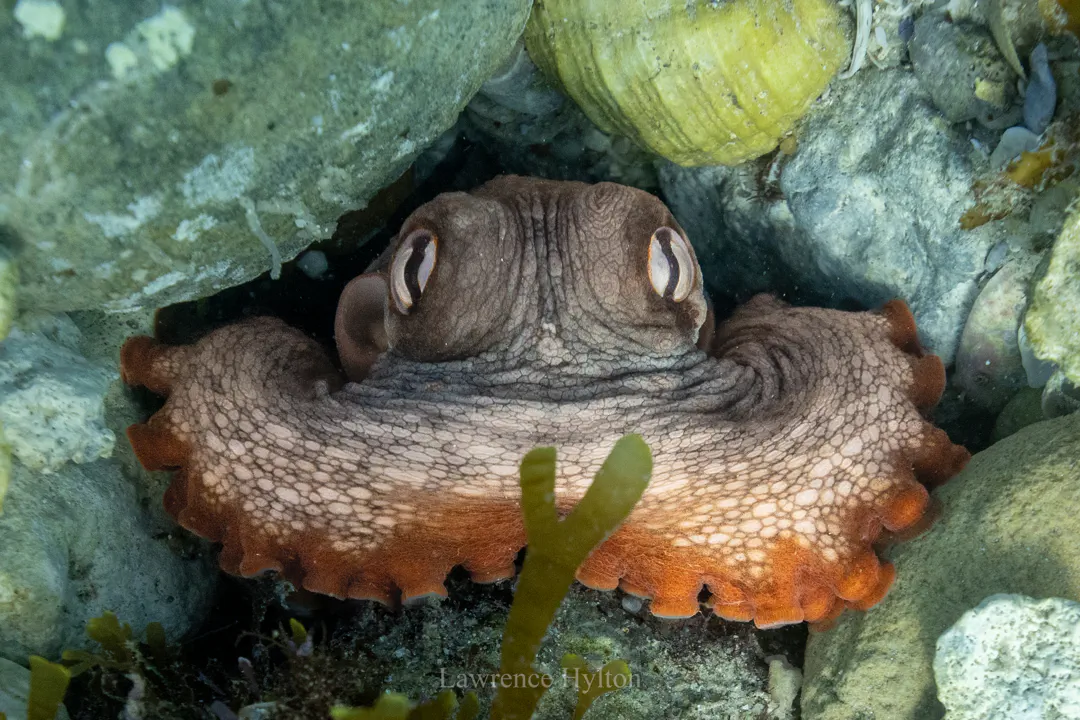 © Lawrence HyltonCC BY 4.0 · iNaturalist
 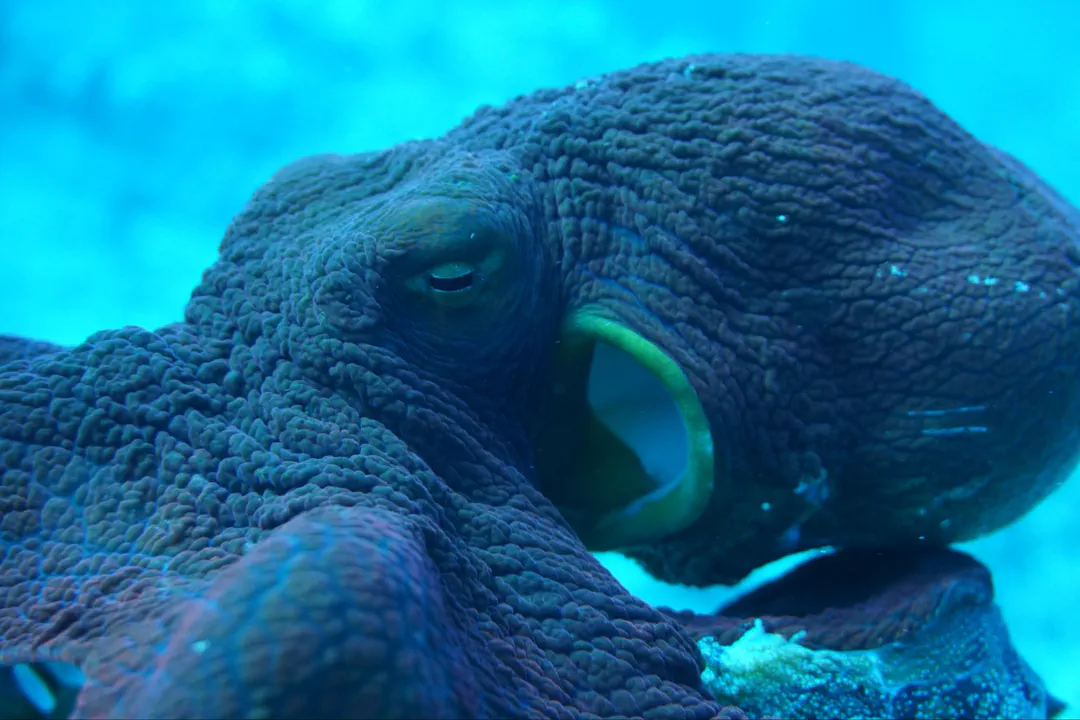 © cello caruso-turielloCC BY 4.0 · iNaturalist
 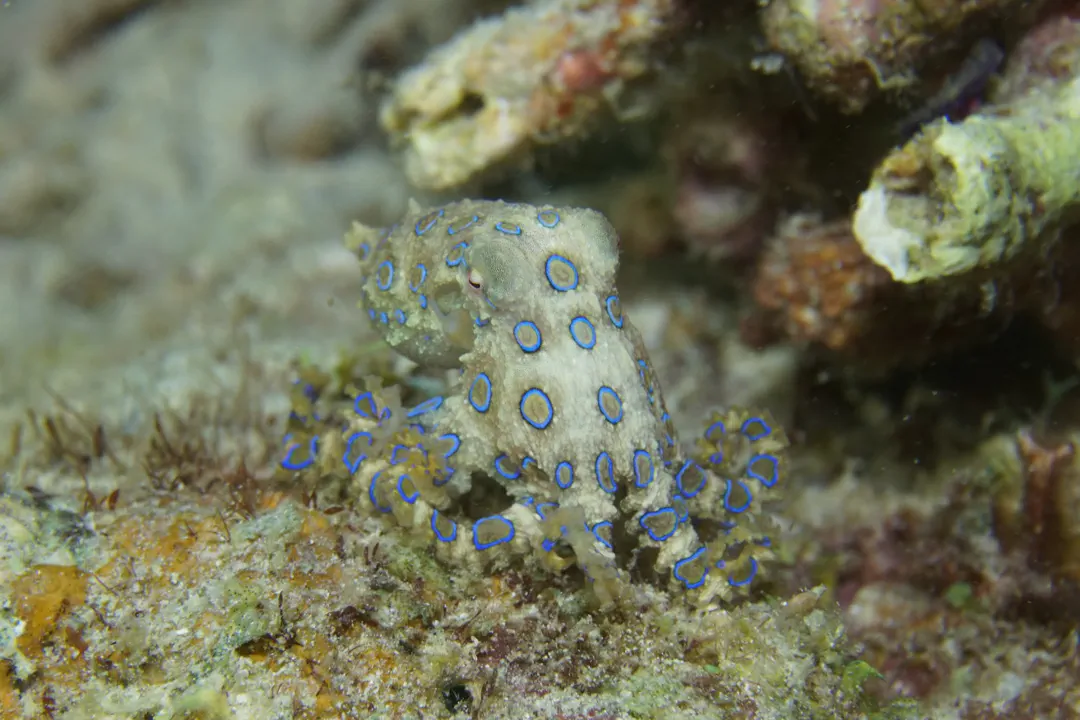 © Stas KuryanAll rights reserved
 Wonderpus Octopus has no known danger to humans. However, always observe marine life responsibly.
Wonderpus Octopus can be found at depths of up to 20 meters.
Download Seabook free for iOS and Android.