 © Ewout KnoesterCC BY-SA 4.0 · iNaturalist
Common Seahorse
Hippocampus kuda
Hippocampus spinosissimus
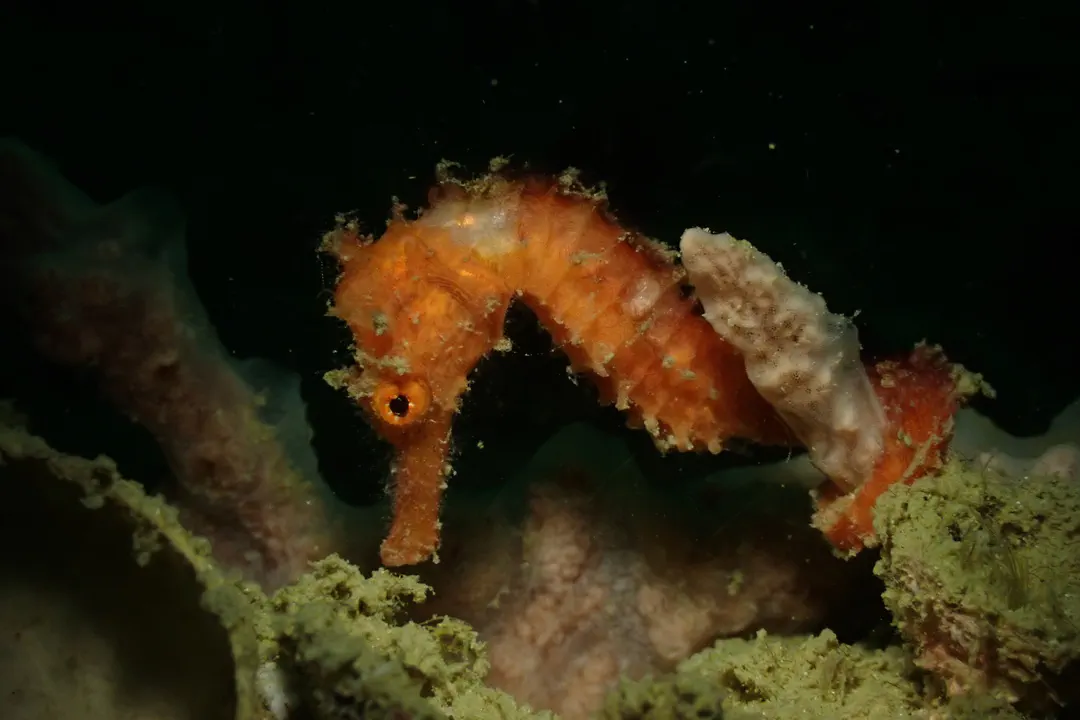
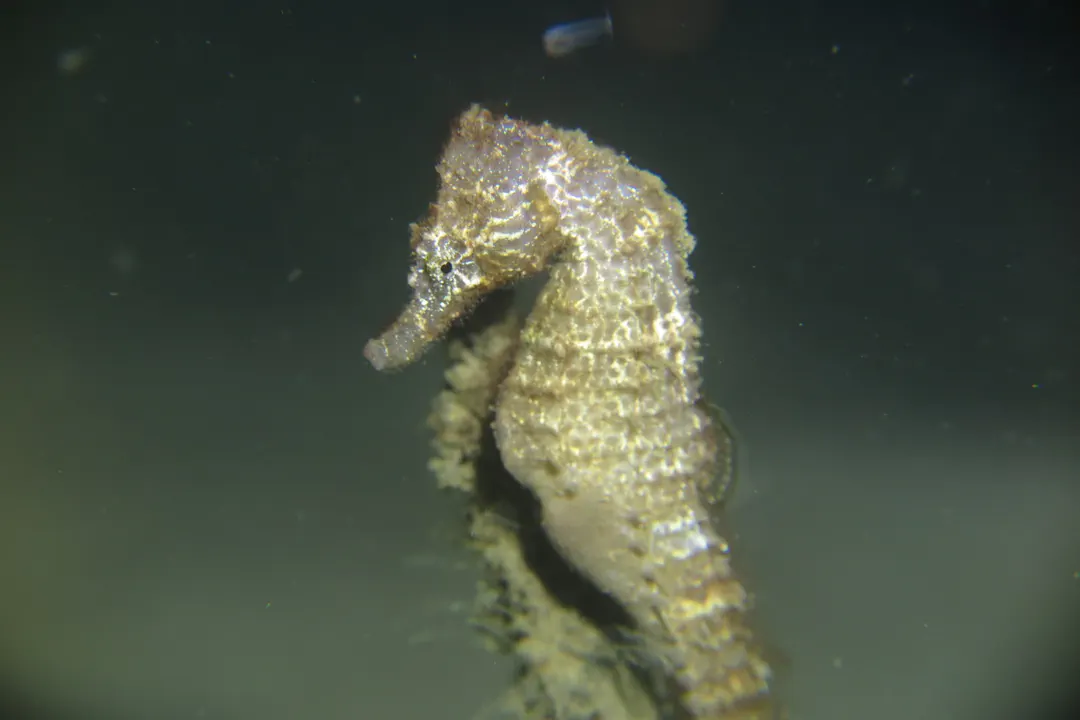
Hippocampus alatus is a marine fish belonging to the Syngnathidae family, native from the central Indo-Pacific area.
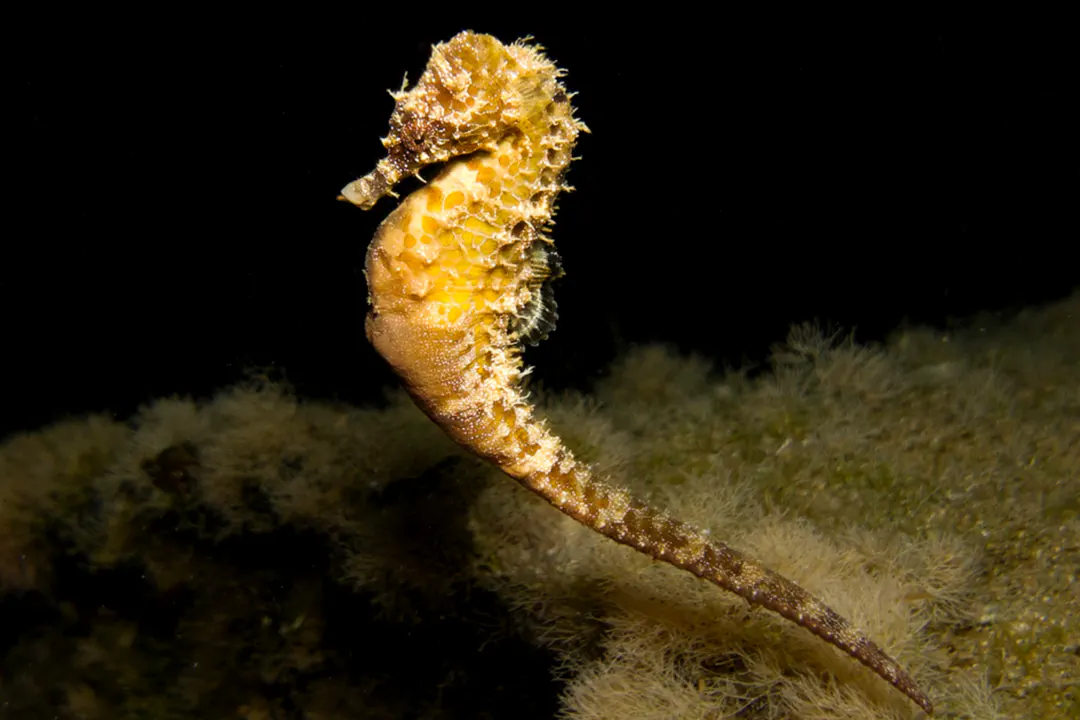
The winged seahorse is a small fish that can reach a maximum length of 18 cm, but an average size of around 12 cm is more common.
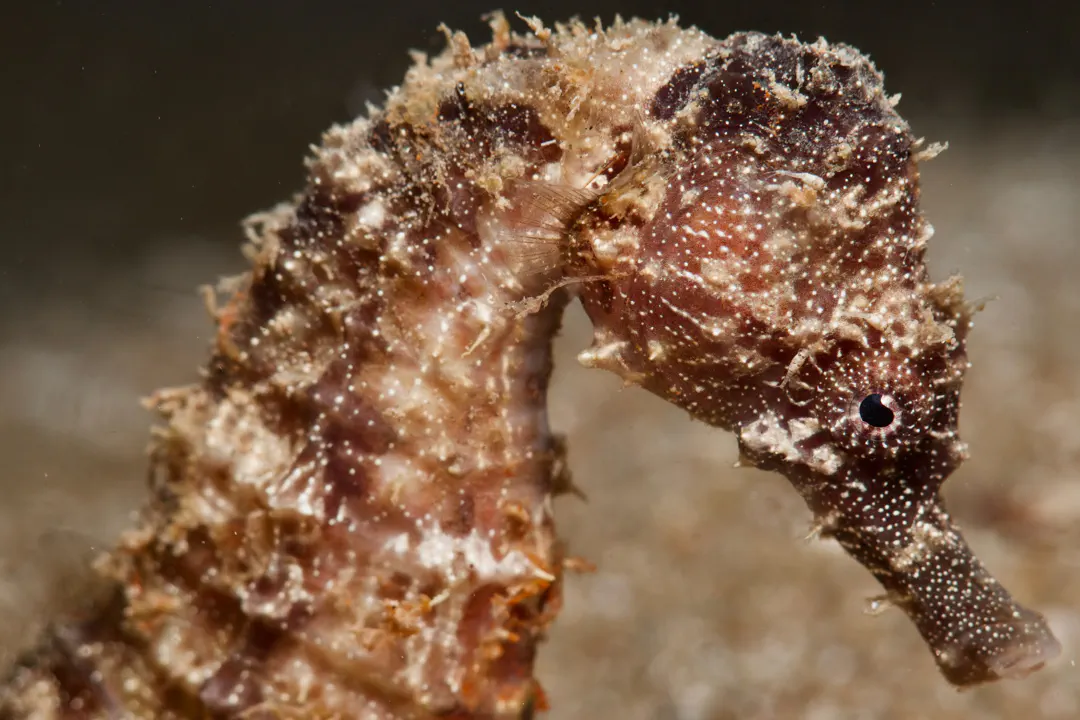
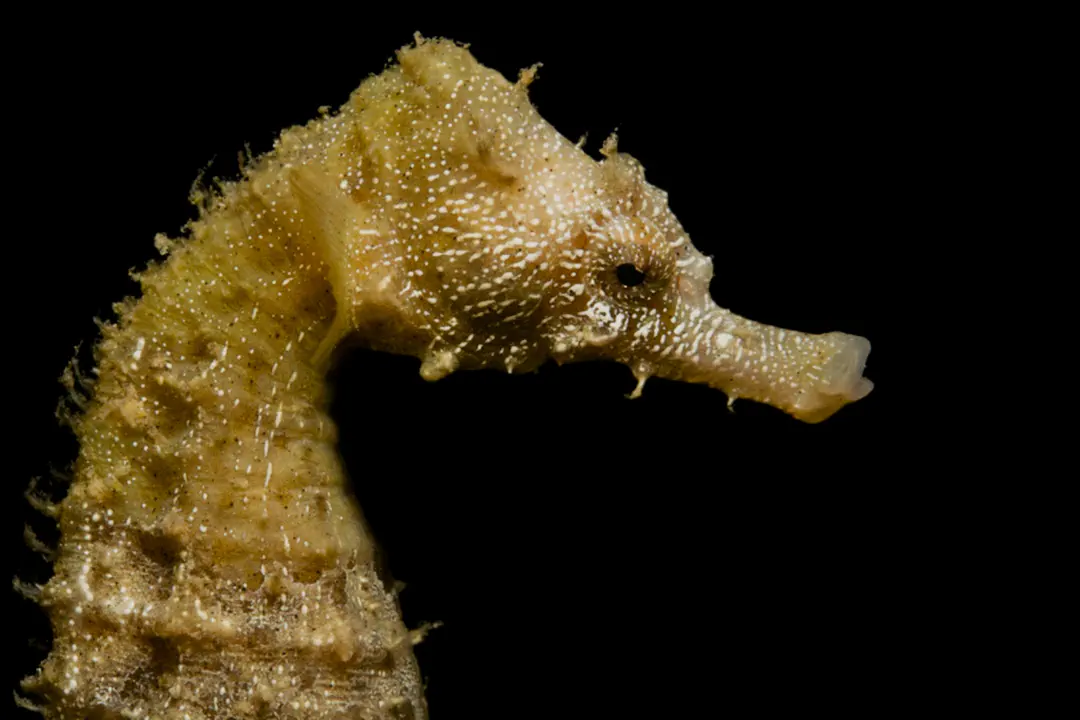
The body is slender and elongate. The upper part of the trunk and tail have spines on their outer edges which size reduce with age. On the nape, there is a pair of spines directed outwards and covered with dermal filaments which have given its scientific and common name. The head is relatively large, the snout is long and deep. Like many seahorses, the head is provided with a certain number of characteristic spines. Thus the top of the head has a coronet composed of five to seven blunt spines, a pair of spines is also located above the eyes but smaller in size. This species has no nose spine but had one on the basis of the cheeks.
Body coloration is pale pinkish-white with numerous small dark spots. Dark reddish dermal filaments are more or less developed on the nape, the middle of the trunk, the anterior part of the tail and the head.
The winged seahorse is widespread throughout the tropical waters of the central Indo-Pacific area from Indonesia to Philippines and also on the northern coasts of Australia.
This seahorse likes strong current channels with soft bottoms with coral outcrops and various debris among which it can shelter and hang with his tail. It occurs at depths from 10 to 80 m deep.
The winged seahorse has a carnivorous diet and is supposed to feed on small crustaceans and other planktonic organisms. It is ovoviviparous and it is the male who broods the eggs in its ventral brood pouch. The latter includes villi rich in capillaries that surround each fertilized egg creating a sort of placenta supplying the embryos. Pups exit the pocket when fully grown to embark on an autonomous lifestyle.
This species is relatively rare and limited data on population exist. The winged seahorse is caught accidentally and considered as discarded when trawling for shrimp fishing. No information is known about the international trade of the species for the aquarium or traditional Chinese medicine markets. Because of this lack of information and the rarity of the species, it is considered as "Data Deficient" on the IUCN Red List.
Internationally, it is also listed in Appendix II of the Convention on International Trade in Endangered Species of Wild Fauna and Flora (CITES) this means that it is on the list of species not necessarily threatened with extinction, but in which trade must be controlled in order to avoid utilization incompatible with their survival.
In Australia, this seahorse is also on the list of marine species of " Environment Protection and Biodiversity Conservation" (EPBC) which sets out the standards for the protection and commercialization nationally and internationally of certain species.
© Ewout KnoesterCC BY-SA 4.0 · iNaturalist 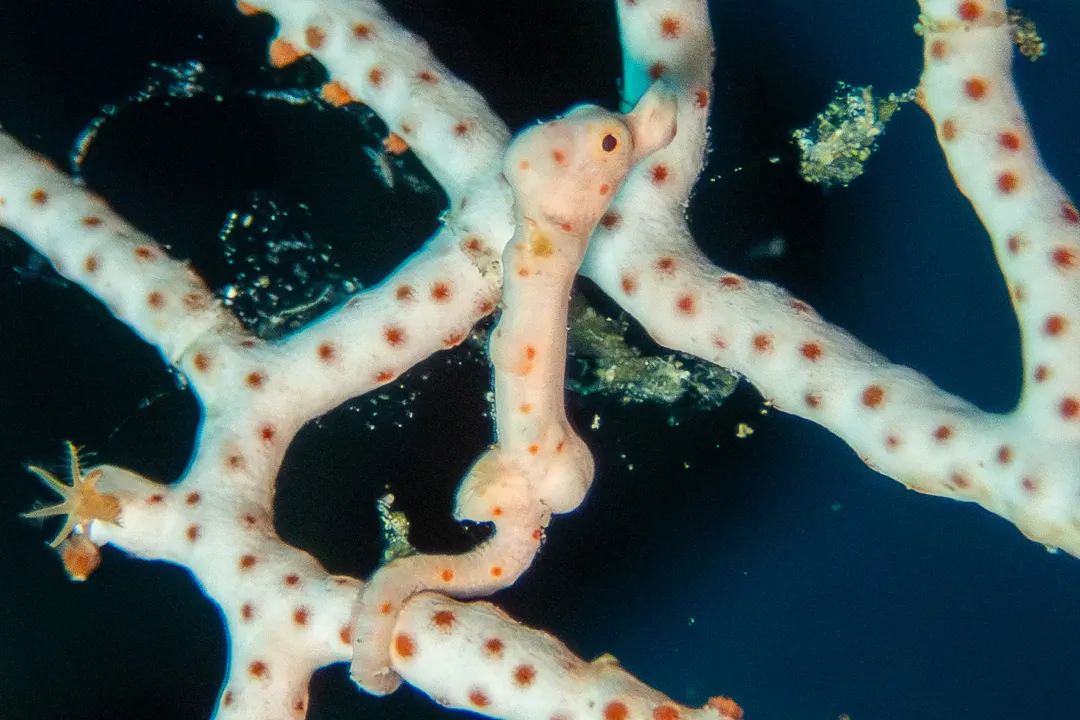 © Piotr LukasikCC BY 4.0 · iNaturalist
  © seabook.appAll rights reserved
  © seabook.appAll rights reserved
  © seabook.appAll rights reserved
  © seabook.appAll rights reserved
 Winged Seahorse has no known danger to humans. However, always observe marine life responsibly.
Winged Seahorse can be found at depths of up to 80 meters.
Download Seabook free for iOS and Android.