 © seabook.appAll rights reserved
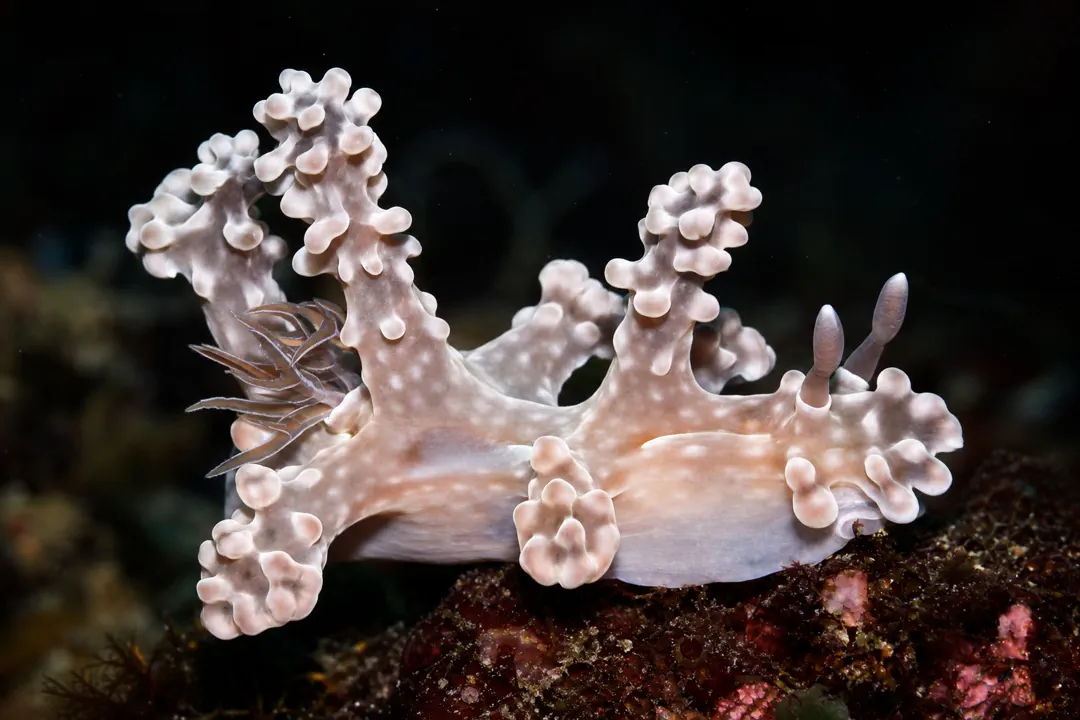
Allen’s Ceratosoma
Miamira alleni
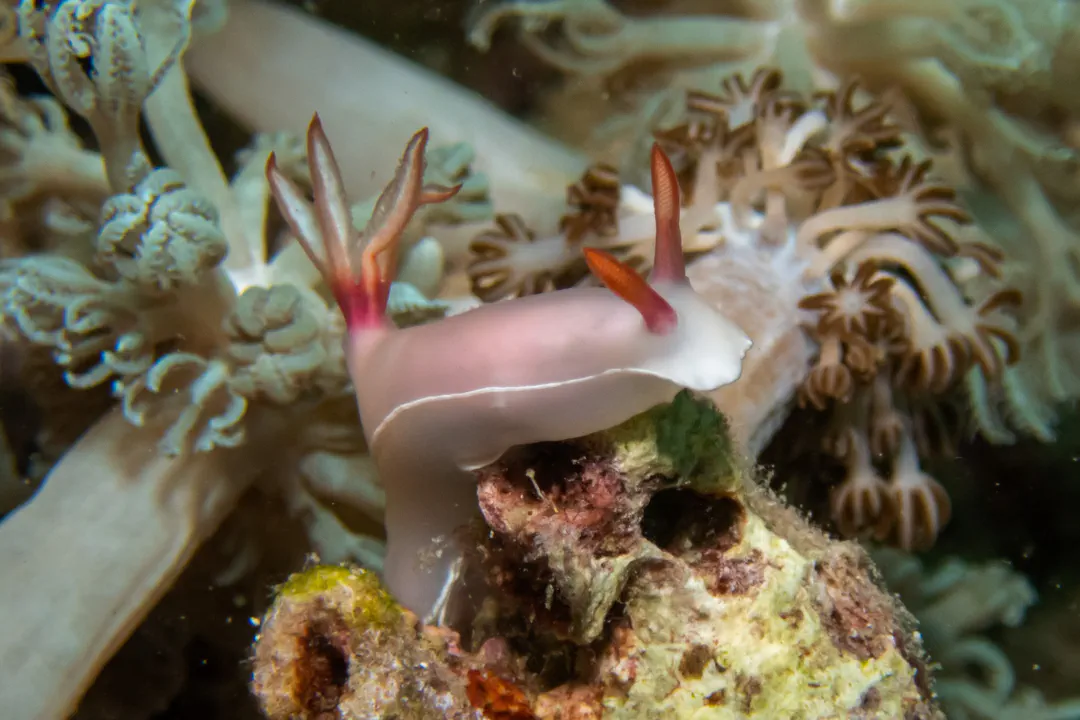
Hypselodoris bullockii
Hypselodoris bullockii is a species of colourful sea slug or dorid nudibranch, a marine gastropod mollusc in the family Chromodorididae.
It ranges in colour from a pale straw, or even white background to a deep purplish pink. There is usually a thin opaque white line at the mantle border, but some specimens have a reddish purple border. Typically the gills and rhinophores are yellow or orange with a basal pink or purplish band.
Believed it is widespread in the central Indo-Pacific region.
Many records are incorrect as it has now been shown that at least eight species have been confused under this name in the past. The H. bullockii clade contains seven species, plus H. iba is a mimic of H. bullocki. Six of these can be found in the Philippines.
Hypselodoris apolegma is found throughout the western Pacific from Japan (Okinawa), the Philippines, Indonesia Malaysia (Sabah) whereas H. brycei, is found only in Western Australia (Houtman Abrolhos Islands to the Exmouth Region and Dampier Archipelago).
Hypselodoris bullockii is considered to be widespread in the western and central Pacific, from Japan, Taiwan, Hong Kong, the Philippines, Indonesia, Malaysia, eastern Australia, the Marshall Islands and New Caledonia, whereas H. melanesica is known only from Papua New Guinea and the Solomon Islands, both of which are areas where H. bullockii is absent.
Hypselodoris rositoi is apparently restricted to the northern Philippines and H. violacea is apparently restricted to Sabah, Malaysia and Palawan Island, Philippines.
Hypselodoris variobranchia is apparently restricted to Japan (Okinawa), Taiwan, the Philippines, Malaysia, Indonesia and Queensland, Australia.
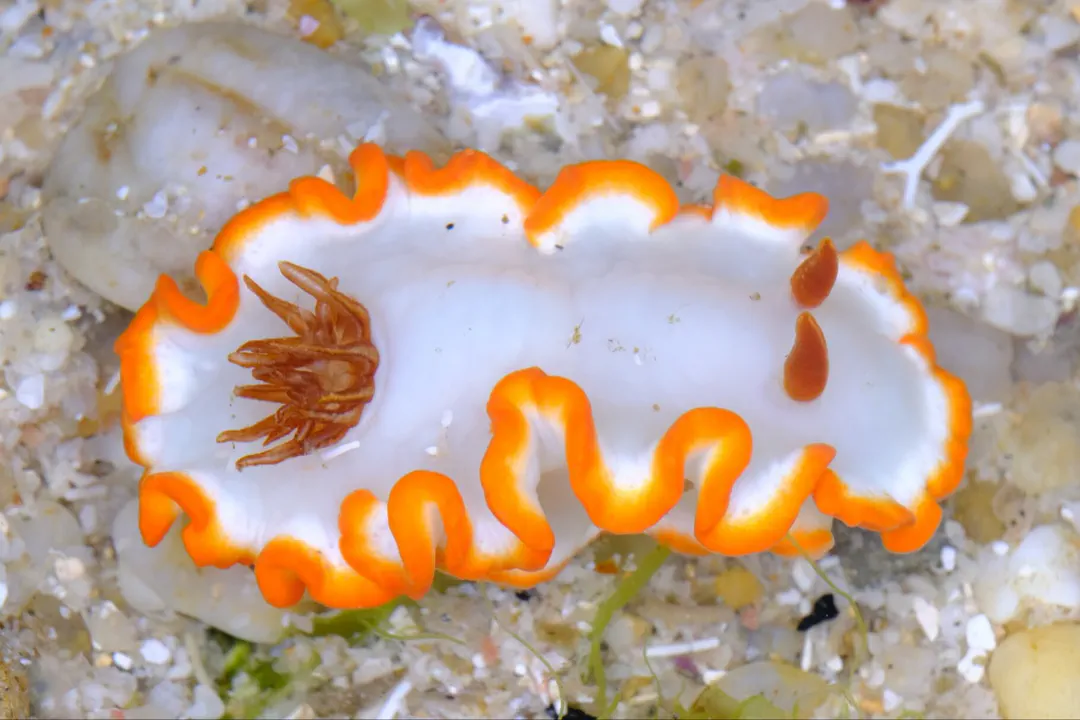
The Chromodorididae, or chromodorids, are a taxonomic family of colorful, sea slugs; dorid nudibranchs, marine gastropod mollusks in the superfamily Doridoidea. “Chromodorid nudibranchs are among the most gorgeously colored of all animals.” The over 360 described species are primarily found in tropical and subtropical waters, as members of coral reef communities, specifically associated with their sponge prey. The chromodorids are the most speciose family of opisthobranchs. They range in size from <1mm to over 30 cm, although most species are approximately 2-3 cm in size.
Although, they have a worldwide distribution, most species are found in the Indo-Pacific region. A scientific paper published in 2007, found the most widespread chromodorid genera, (Mexichromis, Chromodoris, Glossodoris and Hypselodoris) to be paraphyletic or polyphyletic.
The family Cadlinidae Bergh, 1891 has been considered a synonym of the Chromodorididae. Research by R.F. Johnson in 2011 has shown that Cadlina does not belong to the family Chromodorididae. She has therefore brought back the name Cadlinidae from synonymy with Chromodorididae. The chromodorid nudibranchs without Cadlina are now monophyletic and turn out to be a possible sister to the family Actinocyclidae. Cadlina and Aldisa are the only two genera currently classified in the Cadlinidae.
A comprehensive phylogeny of the chromodorid nudibranchs found every one of the 14 traditional chromodorid genera were either non-monophyletic, or rendered another genus paraphyletic. Additionally, both the monotypic genera Verconia and Diversidoris are nested within clades. The authors presented a new classification of the chromodorid nudibranchs, which used molecular data to untangle evolutionary relationships and at the same time retains a historical connection to traditional systematics by using generic names attached to type species as clade names. All Chromodorid nudibranchs feed on sponges.
Genera within the family Chromodorididae include:
Ardeadoris Rudman, 1984
Berlanguella Ortea, Bacallado & Valdés, 1992 (although this has not been properly investigated)
Cadlinella Thiele, 1931
Ceratosoma J. E. Gray and M. E. Gray, 1850
Chromodoris Alder and Hacock, 1855 - the type genus
Diversidoris Rudman, 1987
Doriprismatica d'Orbigny, 1839
Felimare Ev. Marcus & Er. Marcus, 1967
Felimida Marcus, 1971
Glossodoris Ehrenberg, 1831
Goniobranchus Pease, 1866
Hypselodoris Stimpson, 1855
Mexichromis Bertsch, 1977
Miamira Bergh, 1874
Noumea Risbec, 1928
Thorunna Bergh, 1878
Tyrinna Bergh, 1898
Actinodoris Ehrenberg, 1831 : synonym of Chromodoris Alder & Hancock, 1855
Babaina Odhner in Franc, 1968 : synonym of Thorunna Bergh, 1878
Casella H. Adams & A. Adams, 1854 : synonym of Glossodoris Ehrenberg, 1831
Chromolaichma Bertsch, 1977 : synonym of Glossodoris Ehrenberg, 1831
Crepidodoris Pagenstecher, 1877 : synonym of Glossodoris Ehrenberg, 1831
Digidentis Rudman, 1984 : synonym of Thorunna
Durvilledoris Rudman, 1984 : synonym of Mexichromis
Jeanrisbecia Franc, 1968 : synonym of Risbecia Odhner, 1934 synonym of Hypselodoris Stimpson, 1855
Lissodoris Odhner, 1934 : synonym of Chromodoris Alder & Hancock, 1855
Orodoris Bergh, 1875 : synonym of Ceratosoma Gray, 1850
Pectenodoris Rudman, 1984 : synonym of Mexichromis
Pterodoris Ehrenberg, 1831 : synonym of Hypselodoris Stimpson, 1855
Risbecia Odhner, 1934 : synonym of Hypselodoris
Rosodoris Pruvot-Fol, 1954 : synonym of Glossodoris Ehrenberg, 1831
Verconia Pruvot-Fol, 1931 : synonym of Noumea Risbec, 1928
© seabook.appAll rights reserved 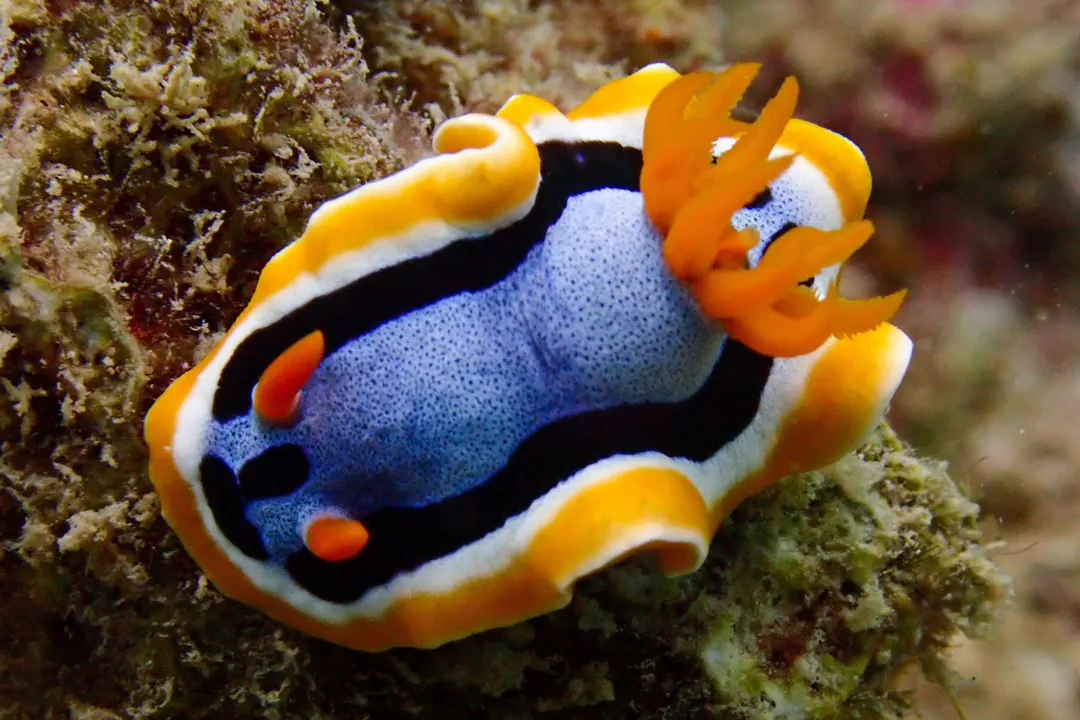 © Dan SchofieldCC BY 4.0 · iNaturalist
  © Peter CrowcroftCC BY 4.0 · iNaturalist
 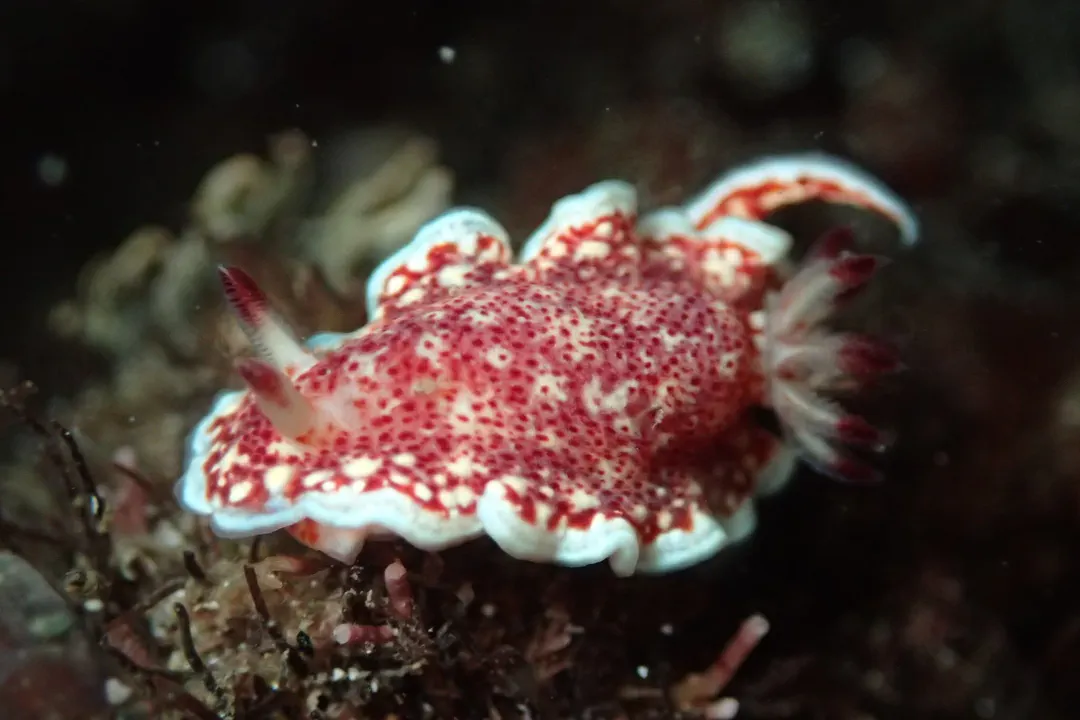 © Cricket RaspetCC BY 4.0 · iNaturalist
 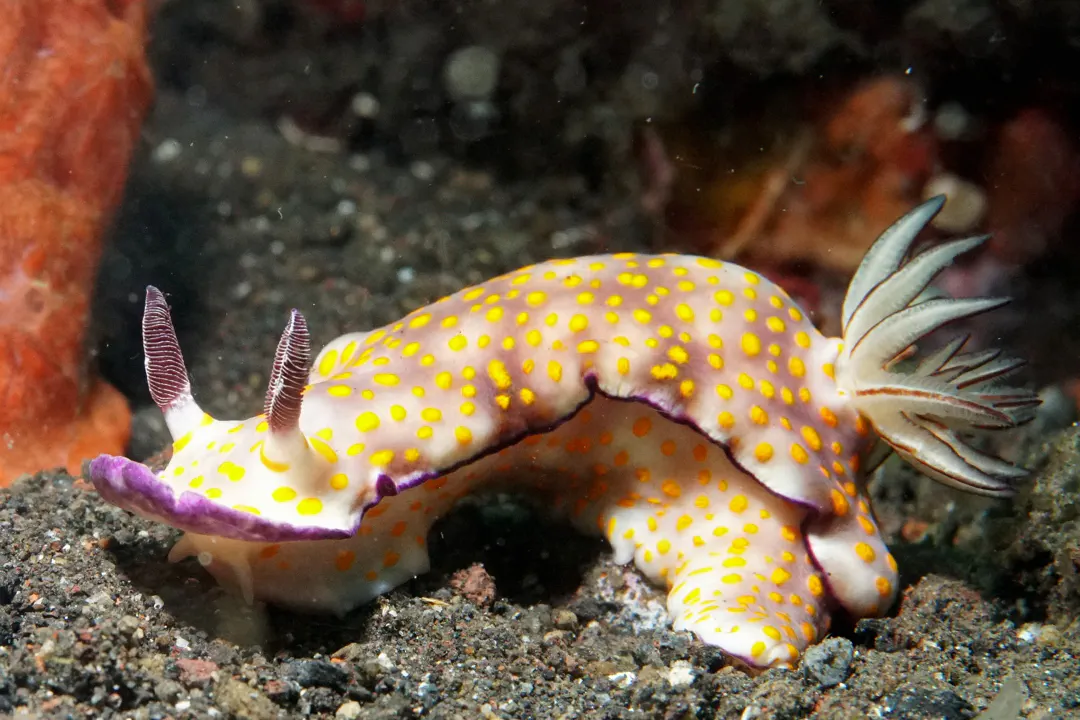 © Stas KuryanAll rights reserved
 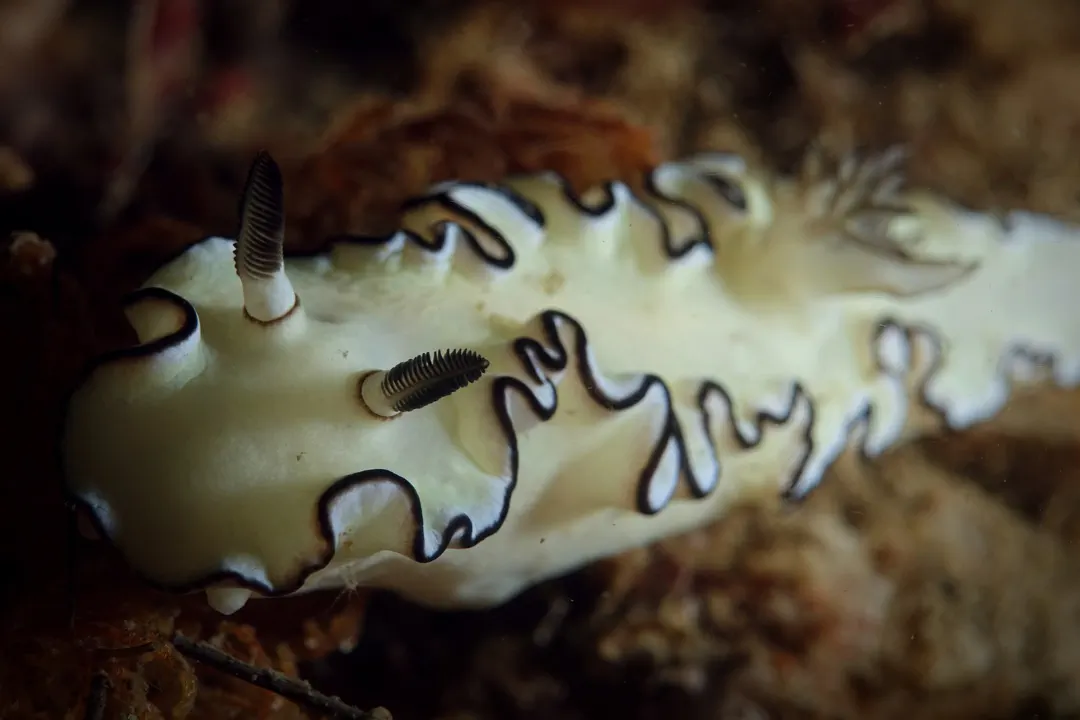 © Joanna ChenCC BY-SA 4.0 · iNaturalist
 Bullock's Hypselodoris (pale) has no known danger to humans. However, always observe marine life responsibly.
Bullock's Hypselodoris (pale) can be found at depths of up to 110 meters.
Download Seabook free for iOS and Android.