 © Roger RittmasterCC BY 4.0 · iNaturalist
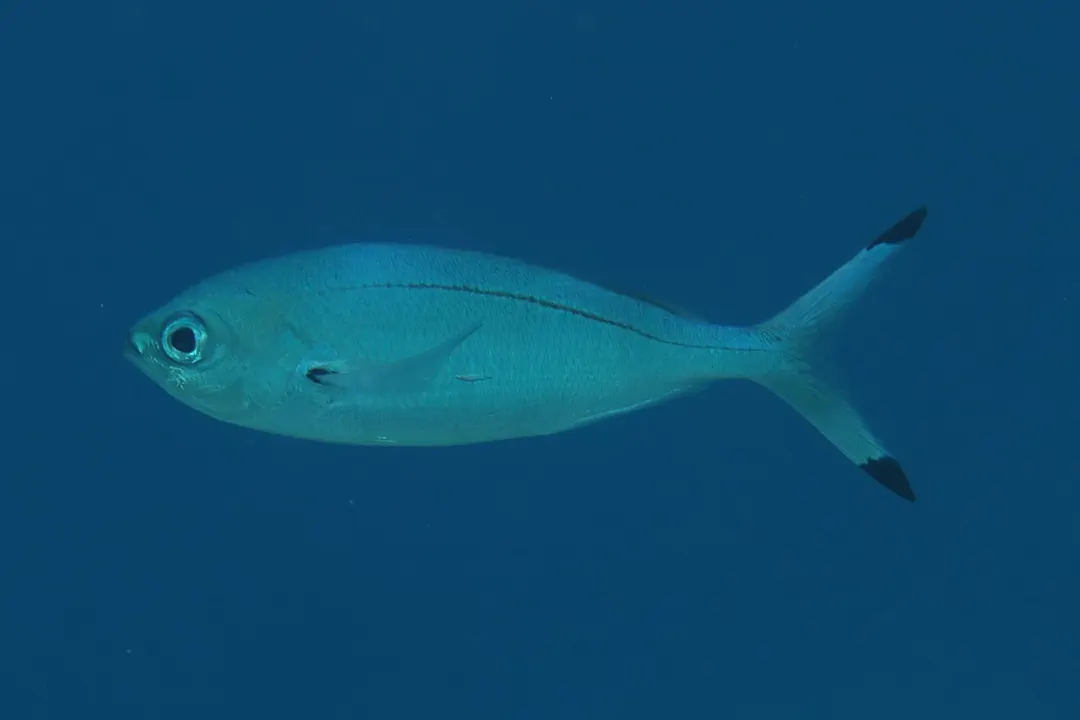
Dark-banded Fusilier
Pterocaesio tile
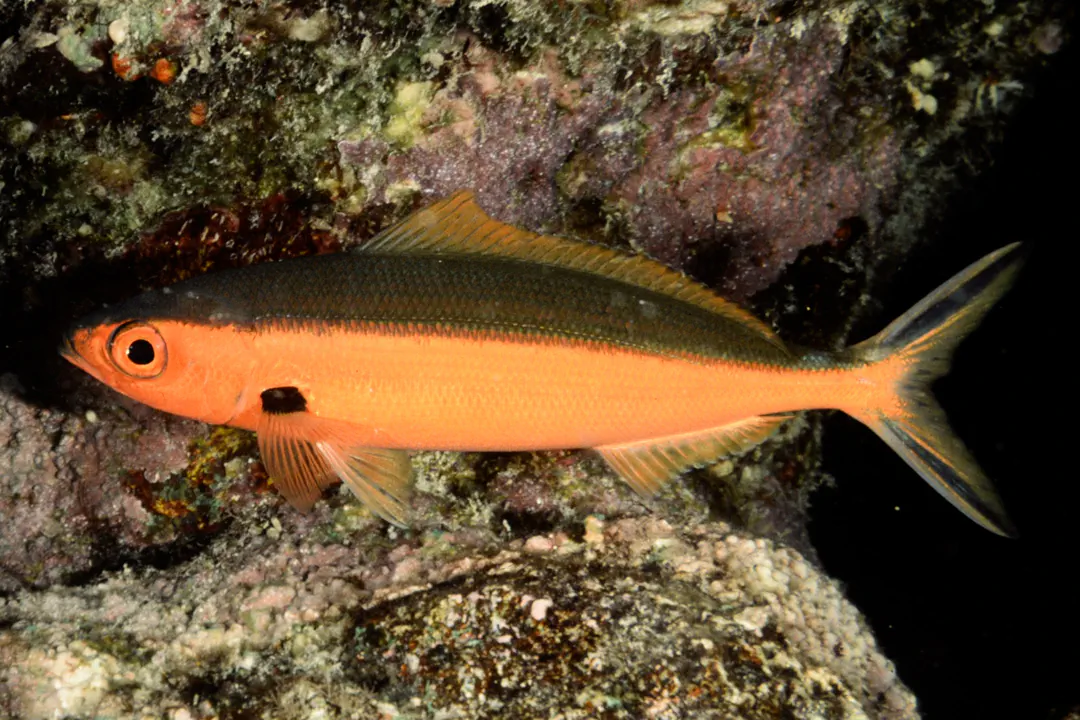
Caesio lunaris
Caesio lunaris is a species of marine fish in the family Caesionidae. The lunar fusilier is widespread throughout the tropical waters of the Indo-West Pacific area, including the Red Sea. This fish can reach a maximum size of 40 cm in length.
Colour of body is bluish, belly is paler than upper sides. Tips of caudal fin lobes, axil of pectoral fins, and upper base of pectoral fins are black. Caudal fin is blue (except in juveniles where caudal fin and portions of caudal peduncle often yellow). Pectoral, pelvic, and anal fins are white to pale blue (pink or reddish after death). Dorsal fin is bluish. Dorsal spines (total): 10; Dorsal soft rays (total): 13-15; Anal spines: 3; Anal soft rays: 10 - 11. This species is distinguished by the following characters: a single postmaxillary process; D X, usually 14 soft rays; A III, usually 11soft rays; supratemporal band of scales generally interrupted at dorsal midline by a narrow scaleless zone; lateral line scales modally 49; scales above lateral line to dorsal -fin origin 7-10 (modally 8), below lateral line to anal-fin origin 14-19; predorsal scales 20-26; greatest body depth 2.2-3.1 in SL, head length 2.7-3.4 in SL.
Indo-West Pacific: Red Sea, Persian Gulf and East Africa to the Solomon Islands, north to southern Japan.
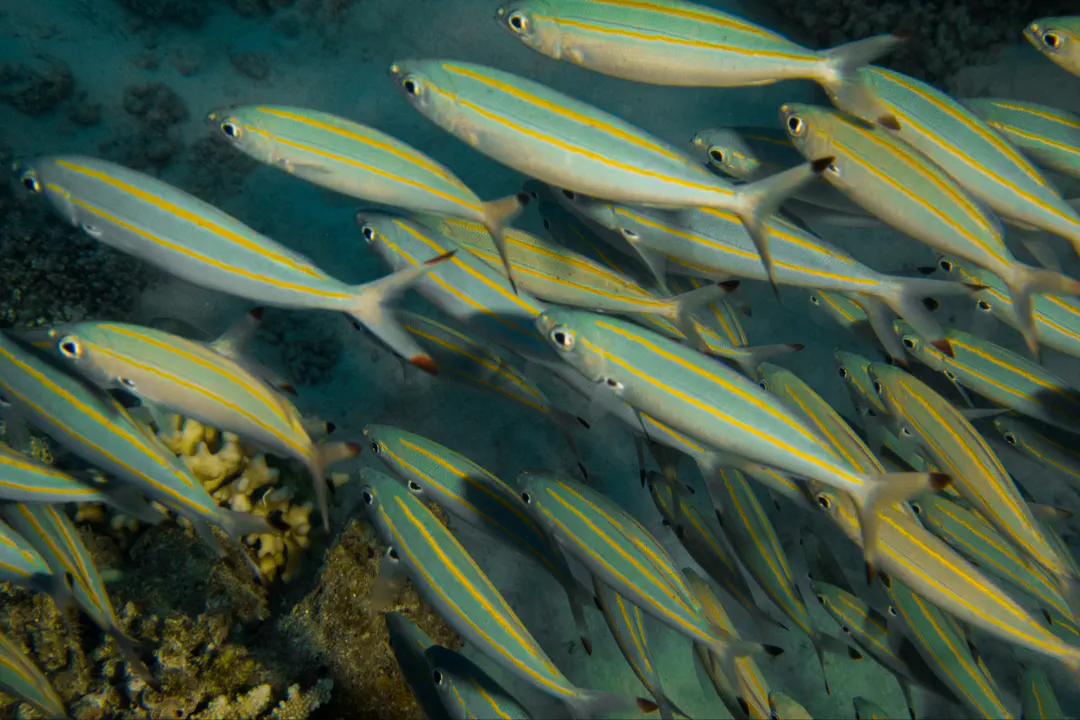
Adults are found in coastal areas, mainly on or near coral reefs. They are more common along steep seaward reefs than in lagoons. They form large aggregations in midwater on upper edge of steep slopes and around patch reefs, often with other fusiliers. They feed on zooplankton. They are oviparous, with numerous, small pelagic eggs.
© Roger RittmasterCC BY 4.0 · iNaturalist 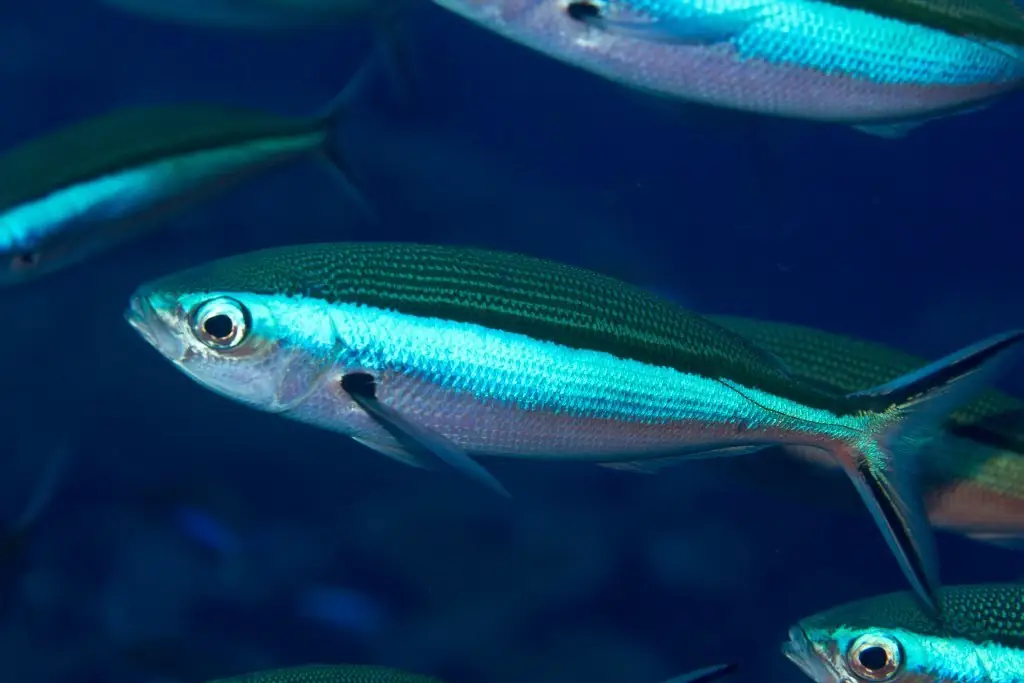 © Hickson FergussonAll rights reserved
  © João D'AndrettaCC BY 4.0 · iNaturalist
  © Rickard ZerpeAll rights reserved
 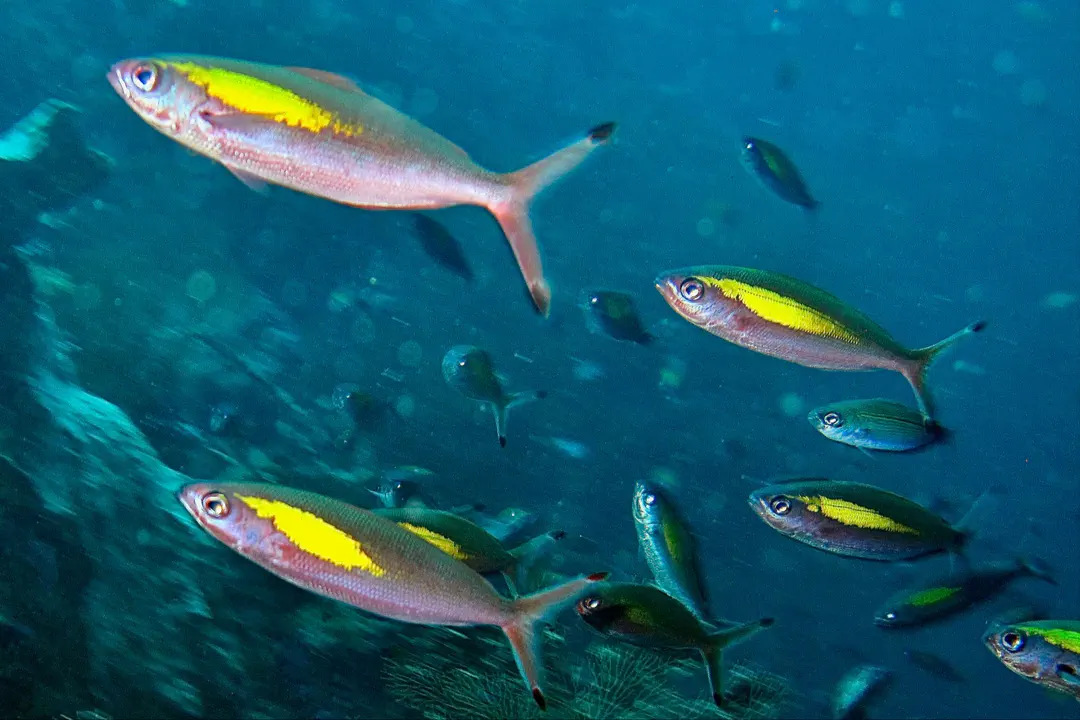 © Bernard DUPONTCC BY 4.0 · iNaturalist
 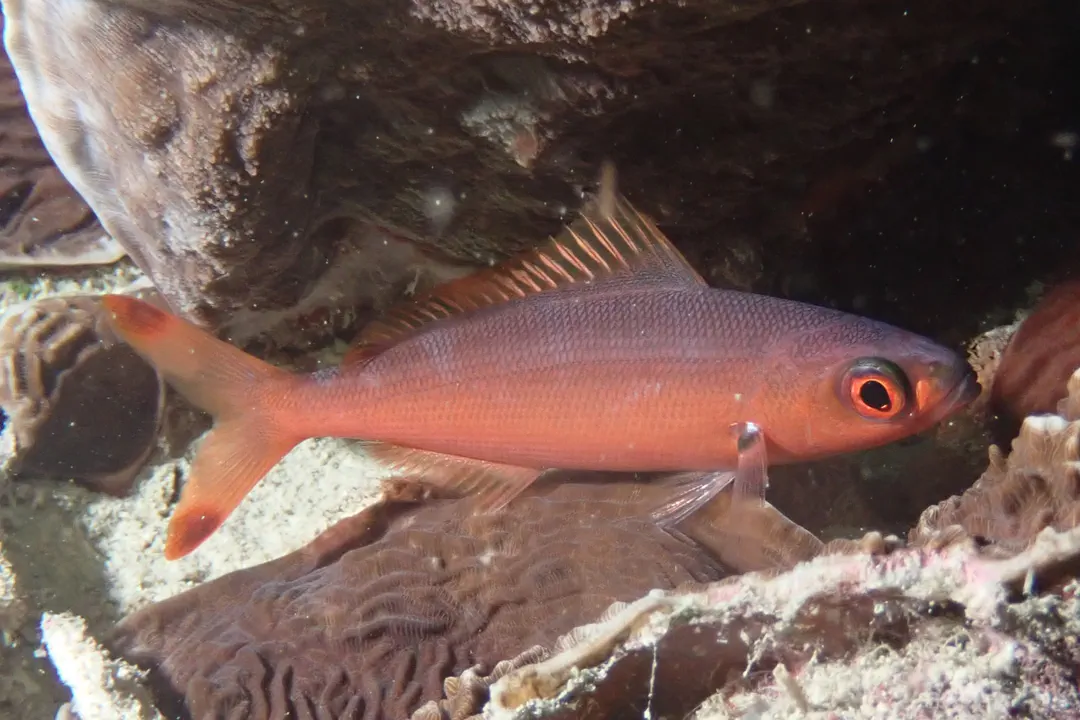 © Roger RittmasterCC BY 4.0 · iNaturalist
 Lunar Fusilier has no known danger to humans. However, always observe marine life responsibly.
Lunar Fusilier can be found at depths of up to 50 meters.
Download Seabook free for iOS and Android.