 © Roger RittmasterCC BY 4.0 · iNaturalist
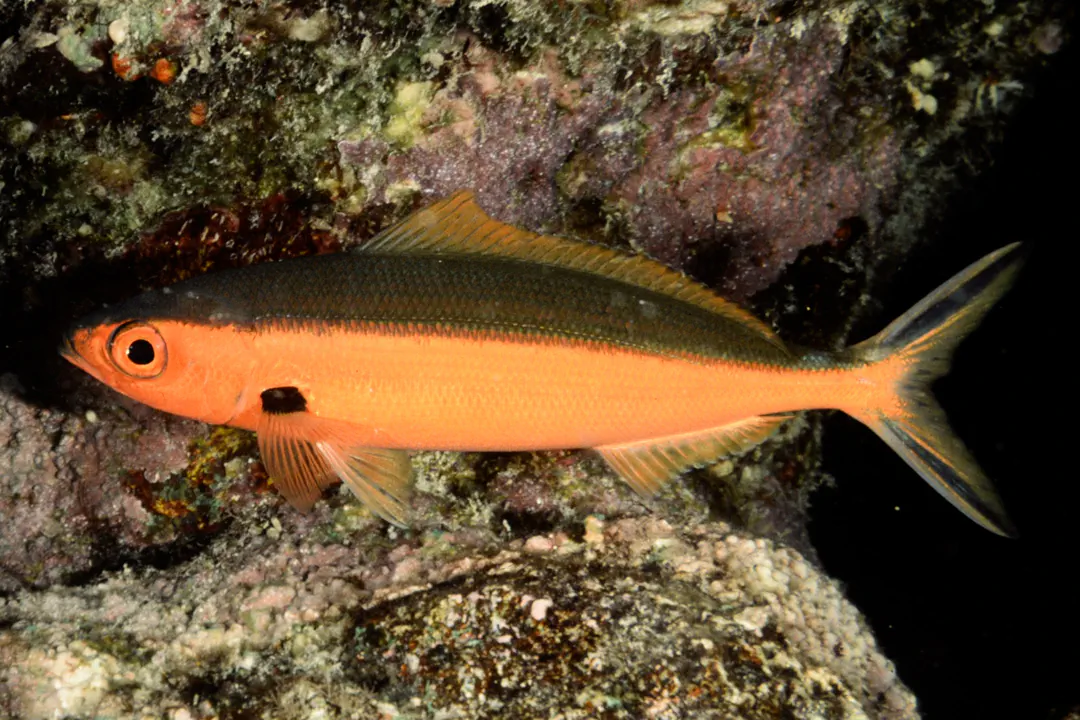
Dark-banded Fusilier
Pterocaesio tile
Pterocaesio digramma
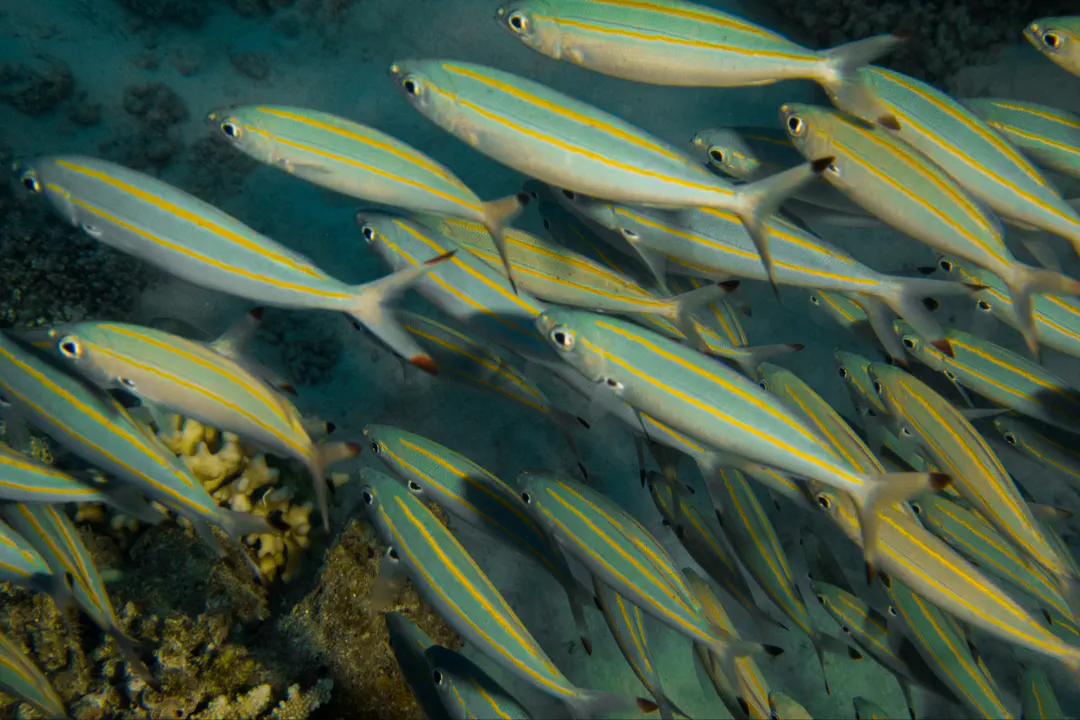
Pterocaesio digramma is a species of fusiliers found in the Indian and Pacific oceans.
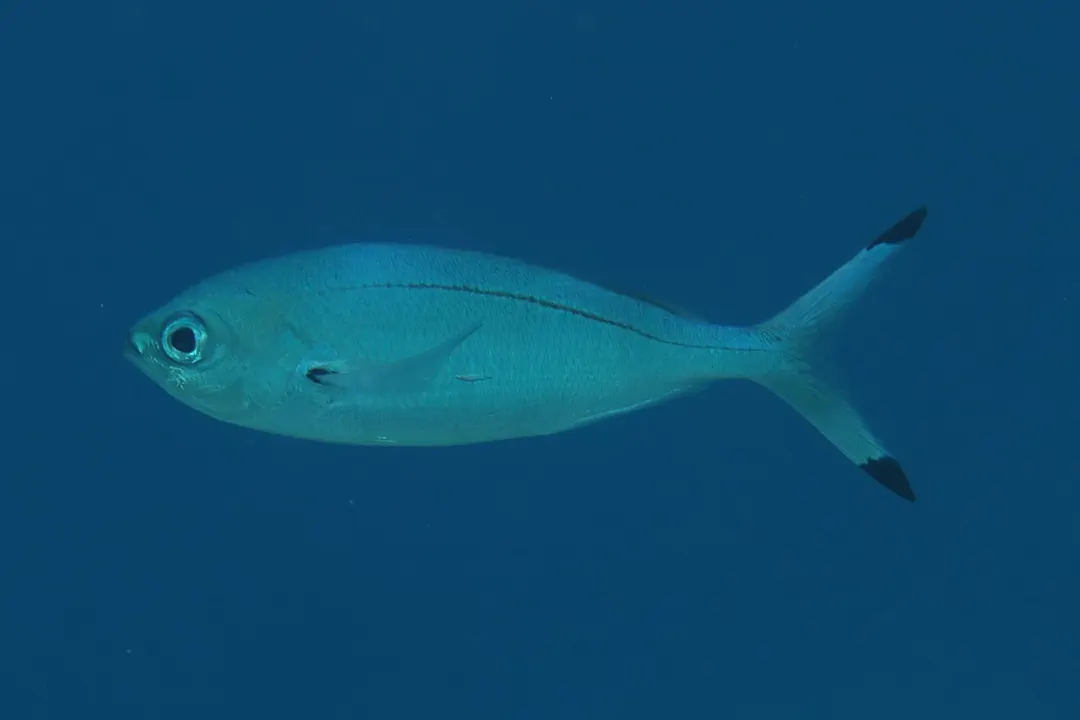
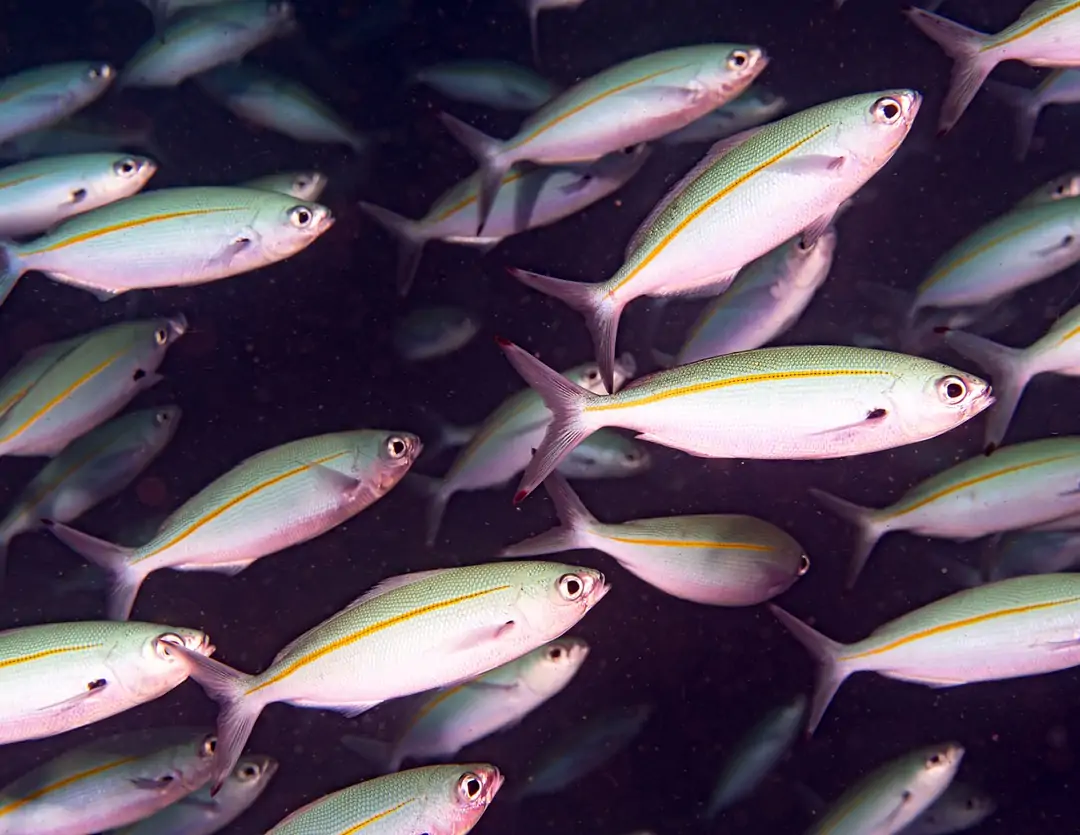
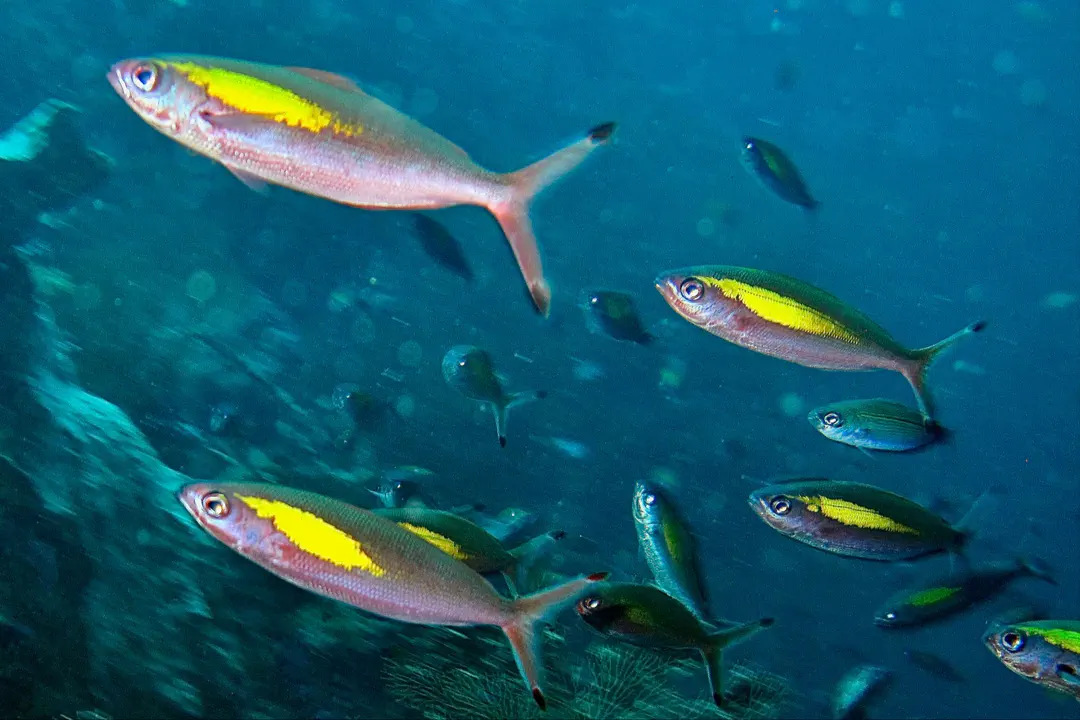
Body is blue to greenish dorsally, white ventrally. With two thin yellow to orange lines; lower line mostly just below lateral line. Black tips on caudal fin. 4-5 scales on cheek; 24-31 predorsal scales; scaled dorsal and anal fins. Upper peduncular scale rows usually 12 or 13 (11-14); lower peduncular scale rows usually 16 or 17 (16-18). A broad process on ventrolateral surface of basioccipital for attachment of Baudelot's ligament, extending ventrally beyond a horizontal with condyle's rim, adjacent to condyle. Post maxillary with 2 processes; posterior end of maxilla tapered. Head length 3.0-3.5 in SL; body depth 3.5-4.1 in SL. Dorsal spines (total): 10; Dorsal soft rays (total): 14-16; Anal spines: 3; Anal soft rays: 11 - 12.
Western Pacific: Indonesia and western Australia to New Caledonia, north to southern Japan.
Found in coastal areas, primarily around coral reefs. Feed on zooplankton in midwater aggregations. Oviparous, with numerous, small pelagic eggs.
© Roger RittmasterCC BY 4.0 · iNaturalist 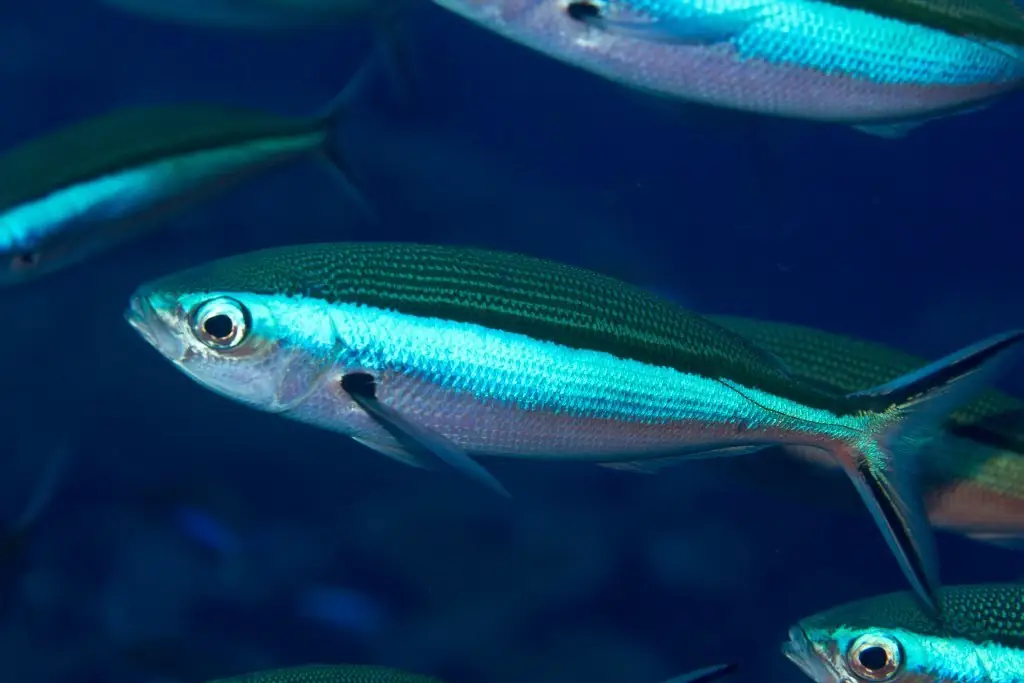 © Hickson FergussonAll rights reserved
  © Julien RenoultCC BY 4.0 · iNaturalist
  © Rickard ZerpeAll rights reserved
  © Bernard DUPONTCC BY 4.0 · iNaturalist
  © Roger RittmasterCC BY 4.0 · iNaturalist
 Doubleline Fusilier has no known danger to humans. However, always observe marine life responsibly.
Doubleline Fusilier can be found at depths of up to 50 meters.
Download Seabook free for iOS and Android.