 © Sarah MacGregorCC BY 4.0 · iNaturalist
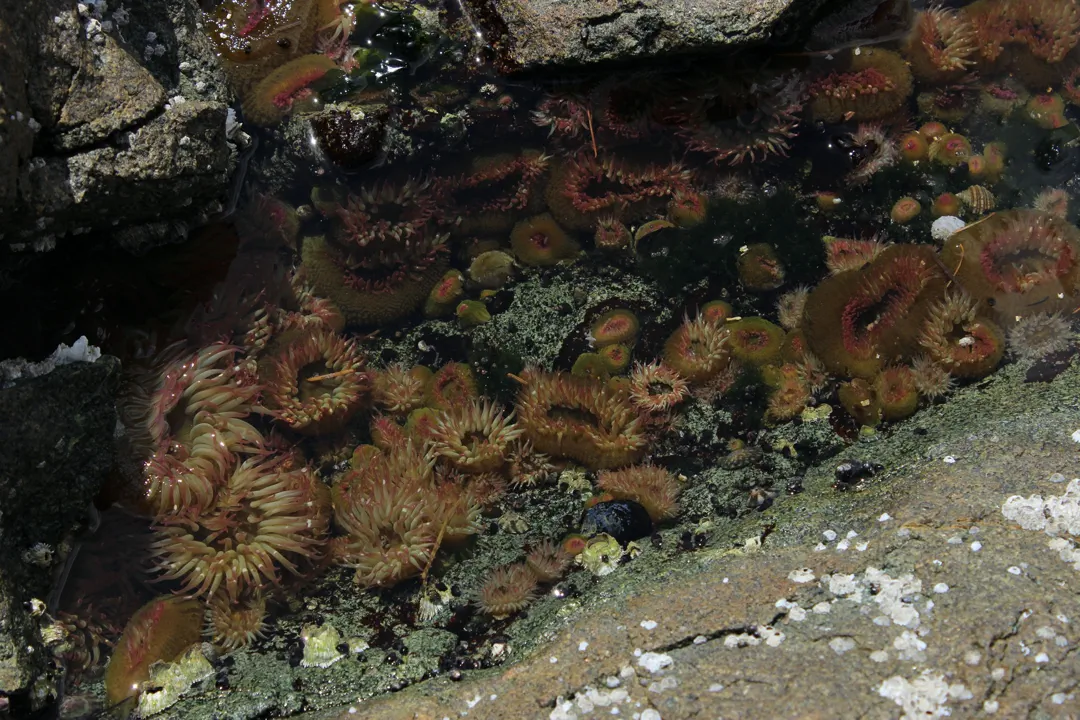
Aggregating Anemone
Anthopleura elegantissima
Radianthus crispa
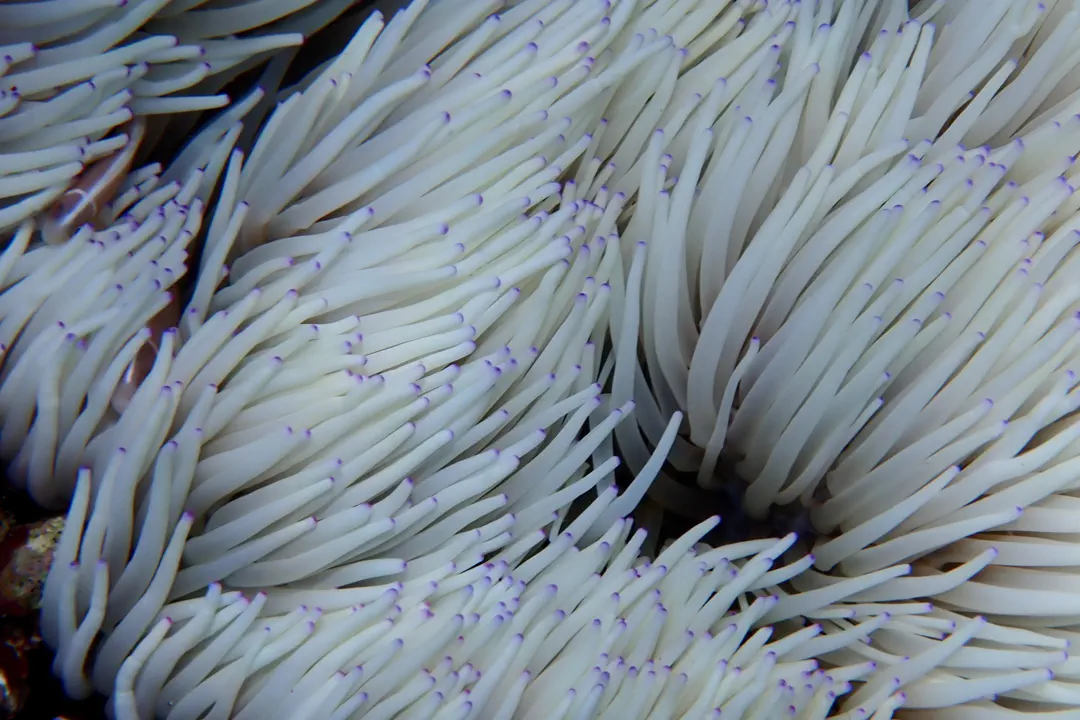
Heteractis crispa, also known as is a species of sea anemone belonging to the Stichodactylidae family native from the Indo-Pacific area.
The sebae anemone is characterized by a flared oral disc which reaches between 20 and 50 centimeters in diameter and with multiple and long tentacles measuring 10 to 15 centimeters. These tentacles have rounded tip and the end is often colored with a purple or blue spot. The column, external structure of an anemone visible when the animal is closed, is gray in color and dotted with sticky whitish "warts". The sea anemone, being member of the Hexacorallia, usually carries a number of tentacles multiple of 6 and they are positioned in concentric circles. These are light beige to purple.
The sebae anemone is widespread throughout the tropical and subtropical waters of the Indo-Pacific area from the eastern coasts of Africa, Red Sea included, to Polynesia and from south Japan to Australia and New-Caledonia.
This sea anemone likes hard base substrates slightly covered with sand but it can also cling to branching corals from the surface to 40 meters deep.
The sebae anemone has two ways to feed. The first one is through the inside via photosynthesis of its symbiotic hosts zooxanthellae, living in its tissues. And the second one is through a normal way by capturing its preys via its tentacles that allow it to immobilize its prey (small invertebrates, fry or juvenile fish).
The reproduction can be sexual by simultaneous transmission of male and female gametes in the water or asexual by scissiparity. This means that the anemone divides itself into two separate individuals from the foot or the mouth.
The relationship between anemonefish and their host sea anemones is highly nested in structure. With 15 species of hosted anemonefish, the sebae anemone is highly generalist,and mostly hosts generalist anemonefish. A. latezonatus, the wide-band anemonefish, is a specialist only hosted by H. crispa.. In the Red Sea it is considered a nursery anemone as sexually mature fish are rarely hosted by H. crispa. A study in the northern Red Sea found anemone density affected whether H. crispa hosted anemonefish, with clusters of juvenile fish only found at low density sites, while either 1 or no juvenile anemonefish were found in H. crispa at the high density site. The authors theorised that H. crispa was a nursery anemone due to being unable to adequately protect adult anemonefish from predation, active emigration of fish to Entacmaea quadricolor and/or environmentally-controlled cessation of fish growth. It is not clear why this would be so in the Red Sea when in the western Pacific adult pairs are found in individuals of H. crispa.
The anemone fish hosted by the sebae anemone are:
Juvenile Dascyllus trimaculatus also associate with H. crispa.
© Sarah MacGregorCC BY 4.0 · iNaturalist  © GolfopolikayakCC BY 4.0 · iNaturalist
  © Susan PriorCC BY 4.0 · iNaturalist
  © Ben CostamagnaCC BY 4.0 · iNaturalist
  © Susan PriorCC BY 4.0 · iNaturalist
  © Dan SchofieldCC BY 4.0 · iNaturalist
 Sebae Anemone has no known danger to humans. However, always observe marine life responsibly.
Sebae Anemone can be found at depths of up to 40 meters.
Download Seabook free for iOS and Android.