 © prilfishCC BY 4.0 · iNaturalist
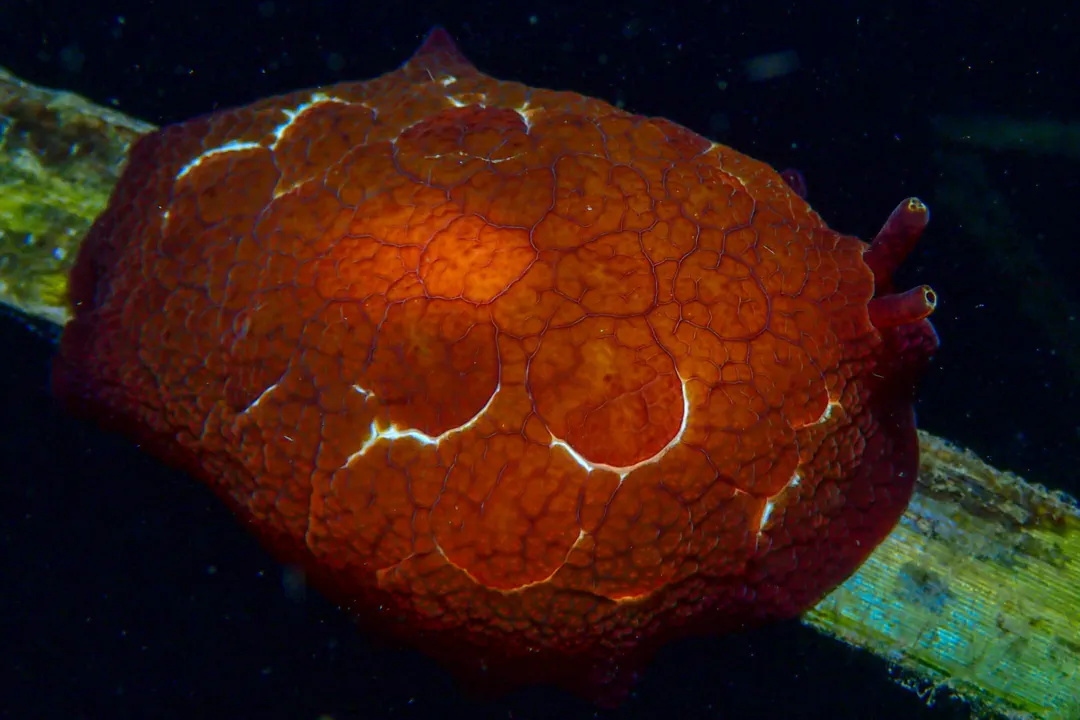
Grand Pleurobranch
Pleurobranchus grandis
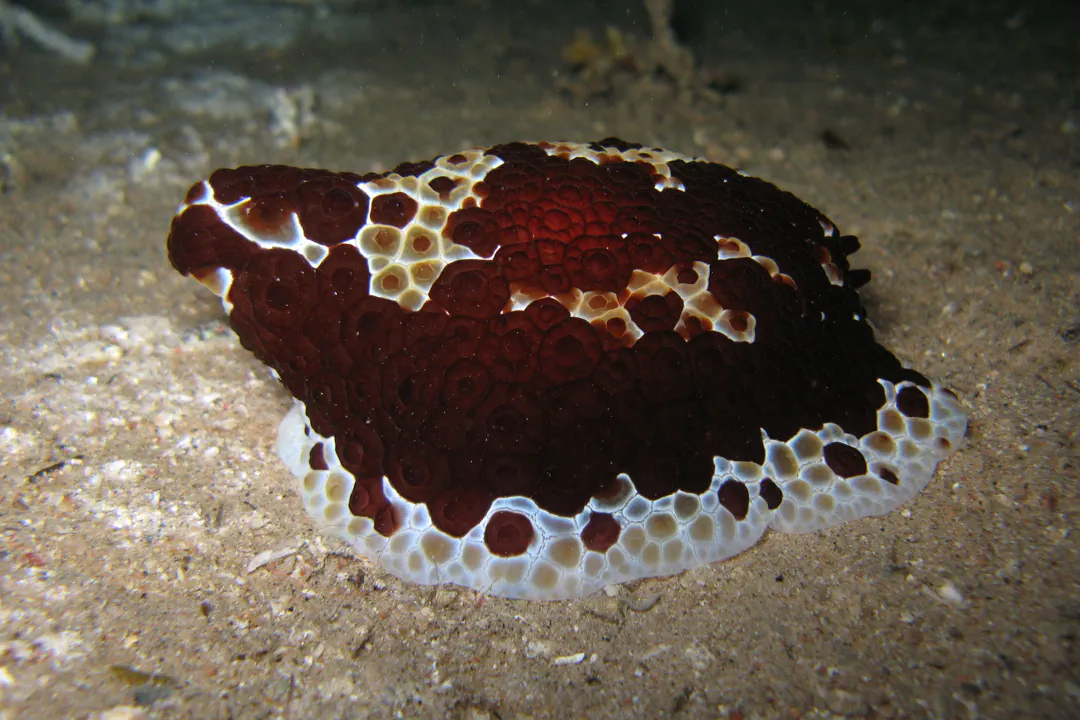
Pleurobranchus forskalii
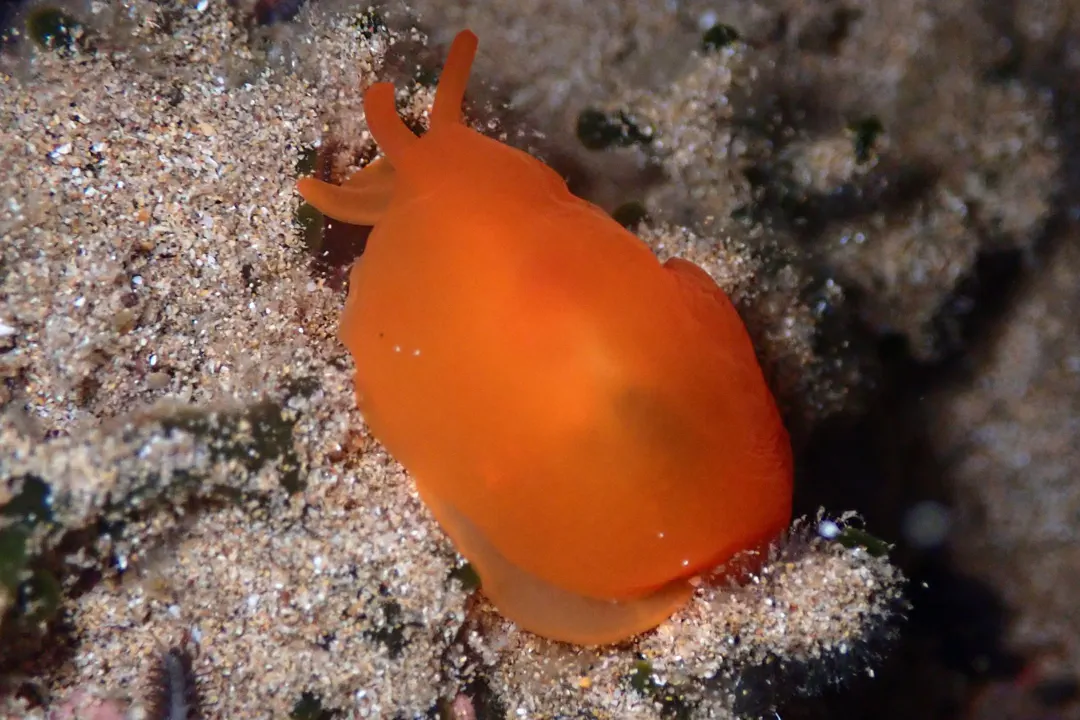
Pleurobranchus forskalii is a species of side-gill sea slug, a notaspidean, a marine gastropod mollusk in the family Pleurobranchidae.
The specific name was coined in honor of Peter Forsskål.
Large side-gilled sea slug, oval in outline. Mantle tough and tuberculate, covering entirely the broad foot, except for the tail that may just appear posteriorly in active animals. Anterior margin of the mantle deeply cleft. Rhinophores curled up to form a tube, united at their bases, with a broad oral veil beneath them. An elongated plume-like gill on the right side, between the mantle and the foot. Gill rachis with an alternating double row of tubercles. In adult animals no trace of any internal shell can be found. Color: body color very variable, from peach or purple to dark brown or almost black. Opaque white or black circles or polygons frequently present on the dorsal surface (Gosliner et al., 1996). Foot of similar color, but slightly lighter.
There are two species of the genus Pleurobranchus in the Mediterranean Sea: P. membranaceus and P. testudinarius. The first clearly differs from P. forskalii by its smaller size, by lacking the characteristic network of opaque white or black lines, and by its very well-developed foot, by means of which it may swim. P. testudinarius is quite similar to P. forskalii at first glance, but it is more rounded in outline, the polygonal lines of the notum are violet and surround prominent swells.
This species occurs in:
It can be frequently observed crawling over sand and rubble bottoms. The Mediterranean specimens were dredged in sandy mud 48 m deep. Nocturnal; feeds on compound ascidians. Its egg masses consist of a white spirally-arranged ribbon with one edge attached to the substratum and the other very wavy.
© prilfishCC BY 4.0 · iNaturalist 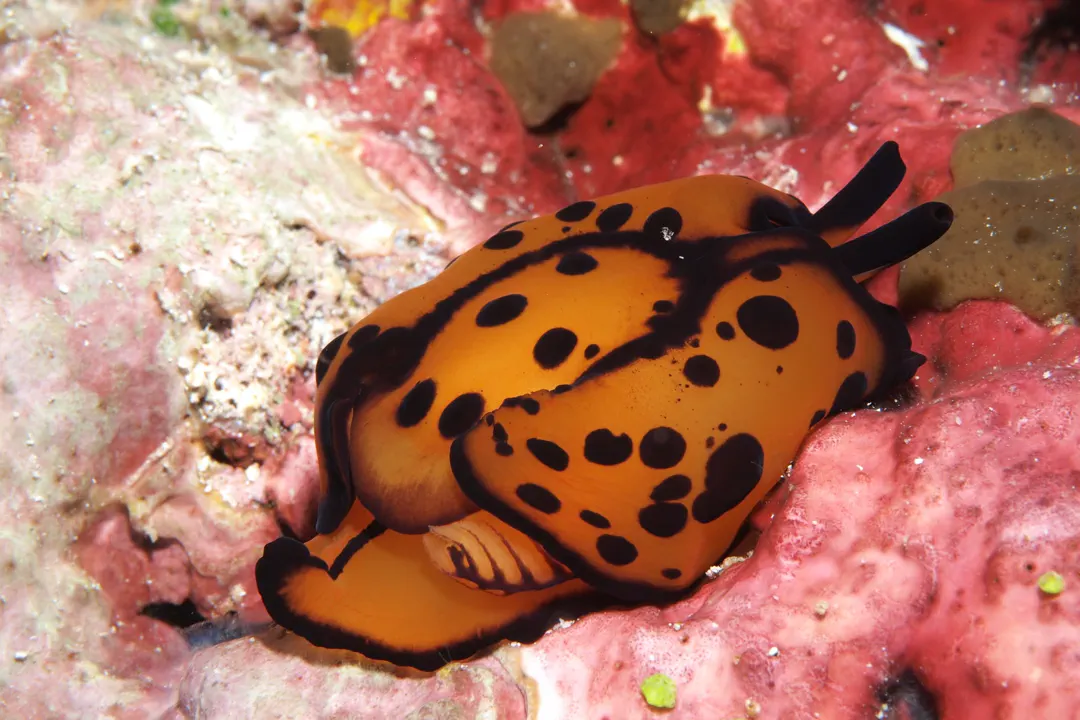 © Steve ChildsCC BY 4.0 · iNaturalist
  © Cricket RaspetCC BY 4.0 · iNaturalist
 Forsskal's Pleurobranch has no known danger to humans. However, always observe marine life responsibly.
Forsskal's Pleurobranch can be found at depths of up to 48 meters.
Download Seabook free for iOS and Android.