 © Rickard ZerpeCC BY 4.0 · iNaturalist
Striped Clingfish
Diademichthys lineatus
Discotrema crinophilum
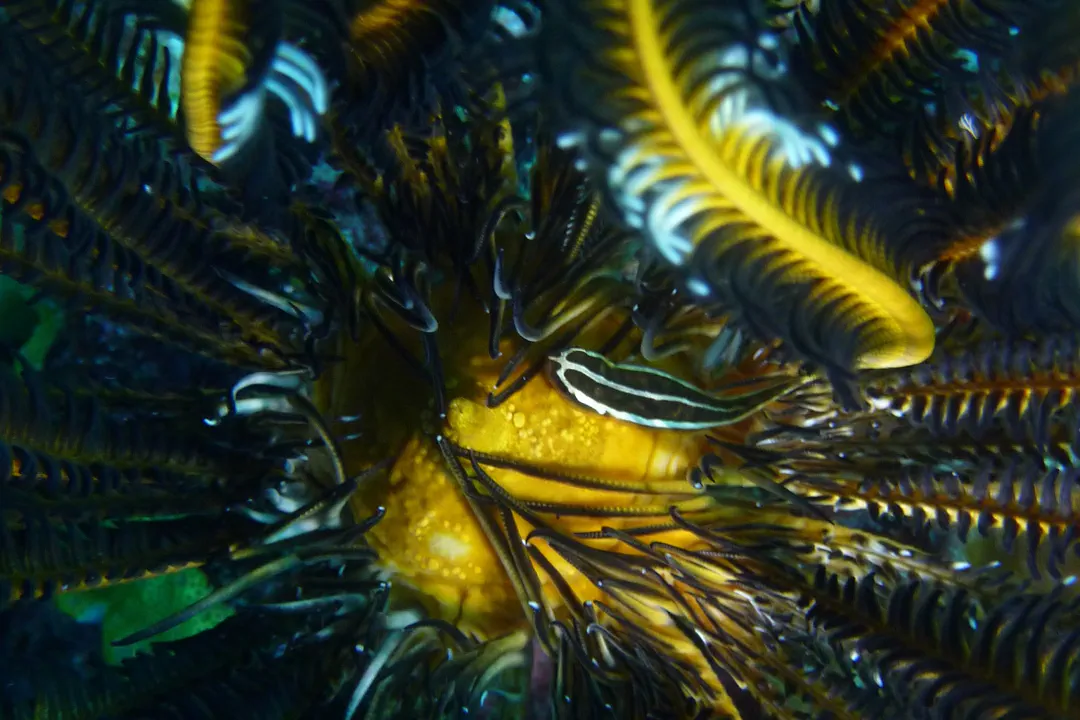
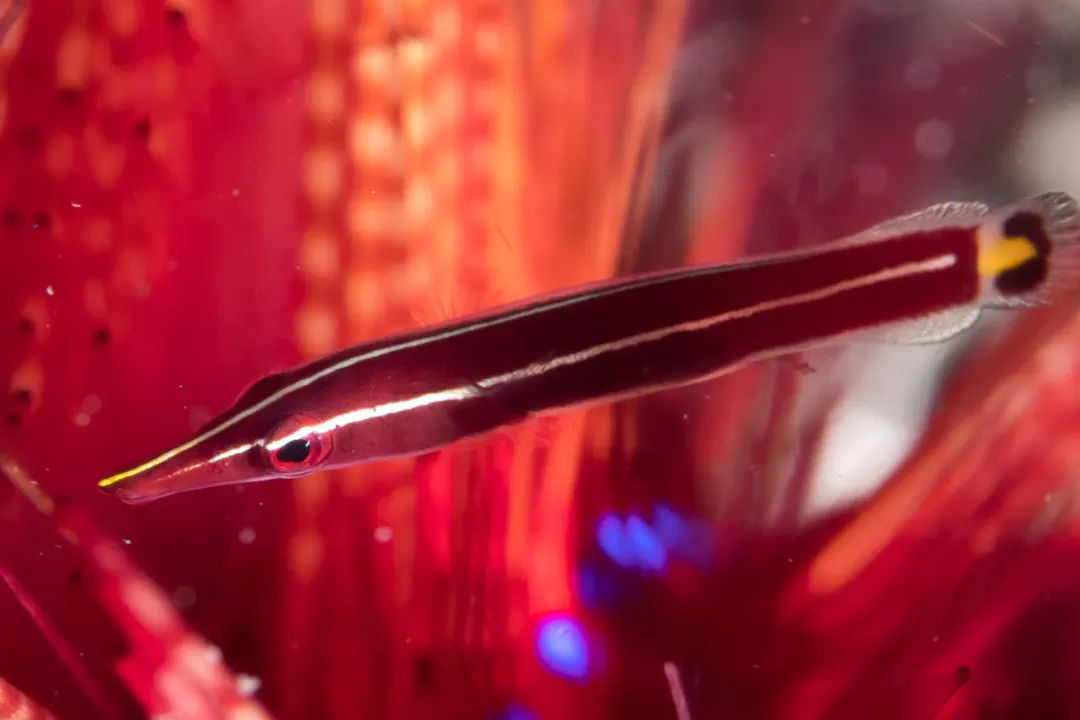
Discotrema crinophilum is a species of clingfishes found on reefs in the Indian and Pacific Oceans.
Body is anteriorly depressed, posteriorly subcylindrical to compressed. Eyes are generally large, located dorsolaterally. Snout is short and rounded, not protruding anterior. Mouth is small. A single short dorsal fin is located posteriorly, usually positioned directly above anal fin, dorsal fin with 9 soft rays and anal fin with 8 soft rays, both fins near caudal fin, but not connected to it by membrane. Pectoral fins are moderate sized, with rounded border, modified to support ventral sucking disc. Pelvic fins are modified to forma sucking disc on breast, sucking disc single type, fleshy base of sucking disk think, with papillae. Caudal fin is rounded. Skin is scaleless, covered with a thick layer of mucous; lower jaw without mandibular canal pores and also without preopercular canal pores. Colour ir reddish brown to black with one yellow stripes on upper half of head and body, and another yellow stripes on dorsal parts.
Western Pacific: Ryukyu Islands, Bismarck Archipelago and the Fiji Islands. Recently reported from Christmas Island, Taiwan and the Great Barrier Reef.
It is found in protected coastal reefs from shallow reef flats to about 20 m depth along slopes and walls. It is found among arms of crinoids as a commensal particularly with Comanthus bennetti.
© Rickard ZerpeCC BY 4.0 · iNaturalist 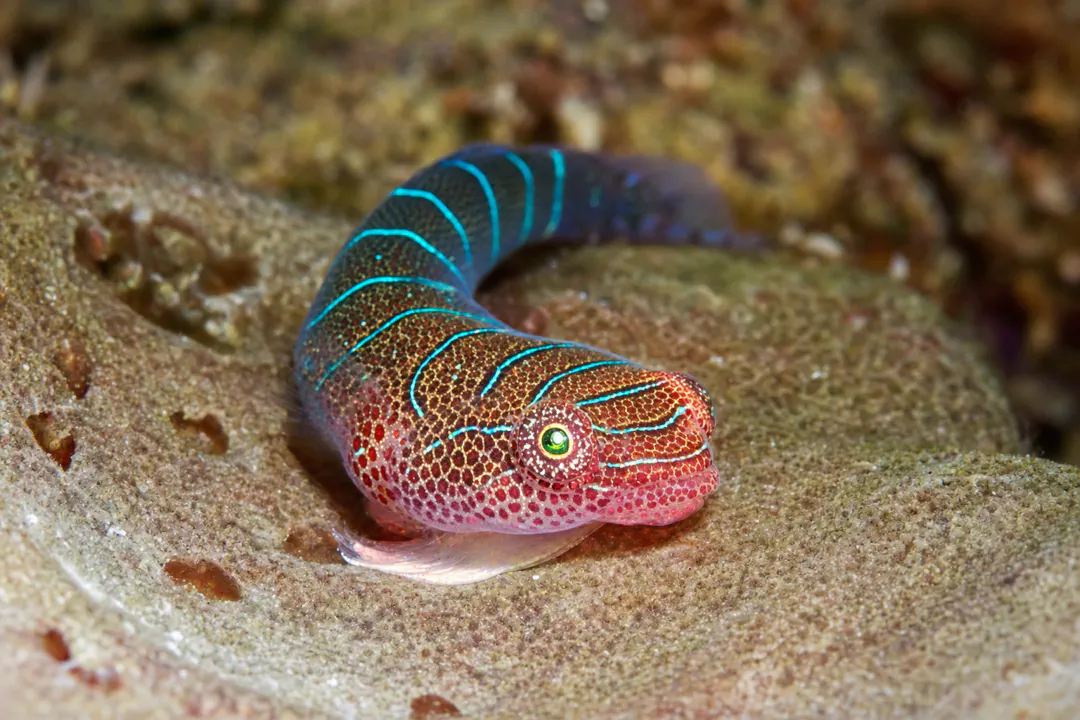 © seabook.appAll rights reserved
 Crinoid Clingfish has no known danger to humans. However, always observe marine life responsibly.
Crinoid Clingfish can be found at depths of up to 20 meters.
Download Seabook free for iOS and Android.