 © Kai SquiresCC BY 4.0 · iNaturalist
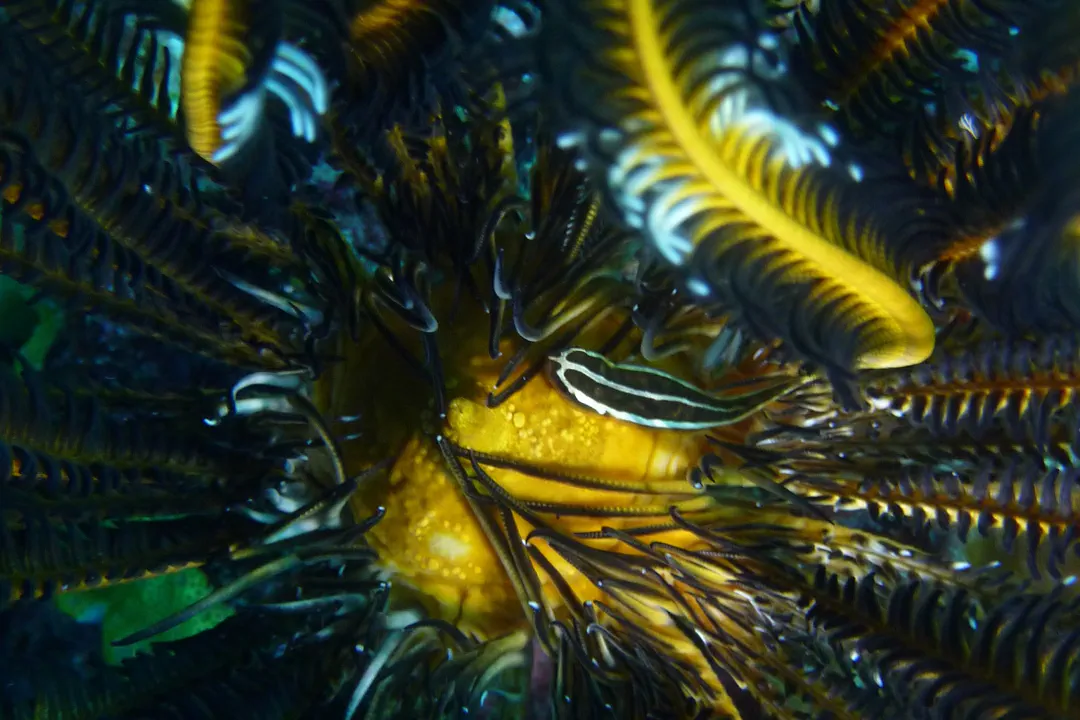
Crinoid Clingfish
Discotrema crinophilum
Cochleoceps bicolor
Cochleoceps bicolor is a species of clingfish from the family Gobiesocidae which is endemic to southern Australia.
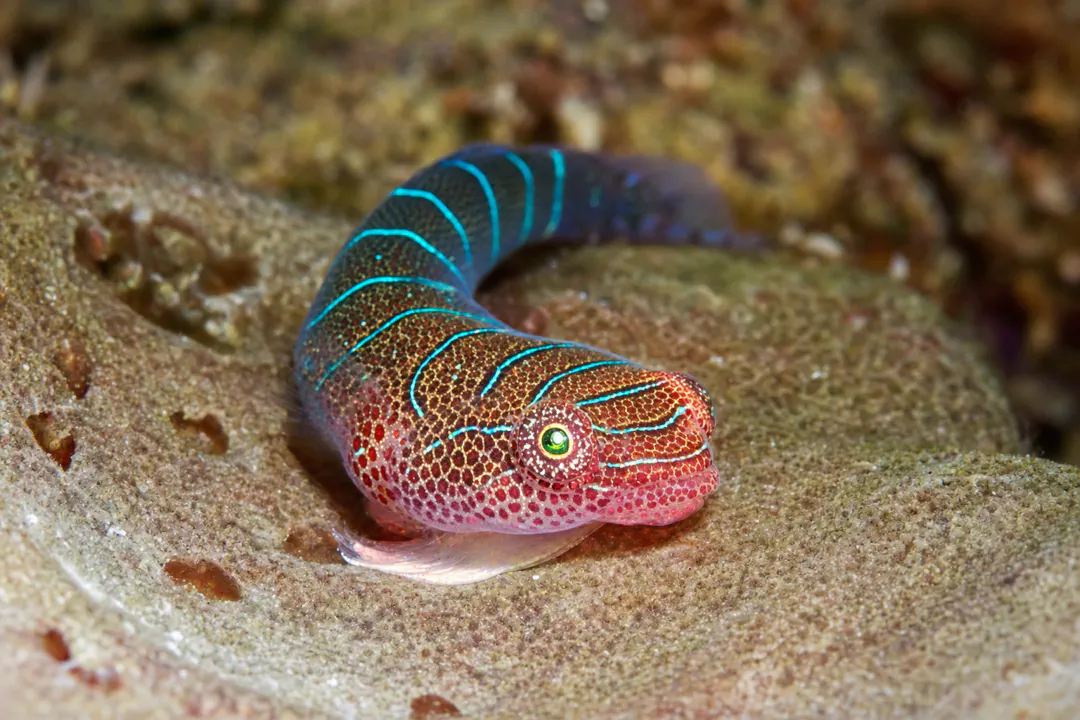
It has a ground colouration which varies from yellowish to reddish marked with regular transverse blue bands along its back and a bluish-grey caudal fin.
The distribution of this species extends from Lancelin, Western Australia to Port Phillip in Victoria. C. bicolor was described in 1991 by Barry Hutchins from a type locality of Flinders Island.
This species occurs on rocky reefs and jetty or pier piles, where they establish cleaning stations, often over sponges and ascidians, but are known to use a wide variety of reef related sites as stations, perhaps the most important criterion being the prominent visibility of a site to passing parasite laden clients .A station may have from one to multiple Western Cleaner Clingfish, depending on the demand for services and other factors. Some divers have observed shared stations, where several other known temperate marine cleaner host species-notably juvenile moonlighter fish (Tilodon sexfasciatus) and rockpool shrimp (Palaemon serenus) - behave in cooperative fashion, possibly when client demand peaks, tide and season depending. They are thought to feed on parasites which they clean off larger fish.
© Kai SquiresCC BY 4.0 · iNaturalist 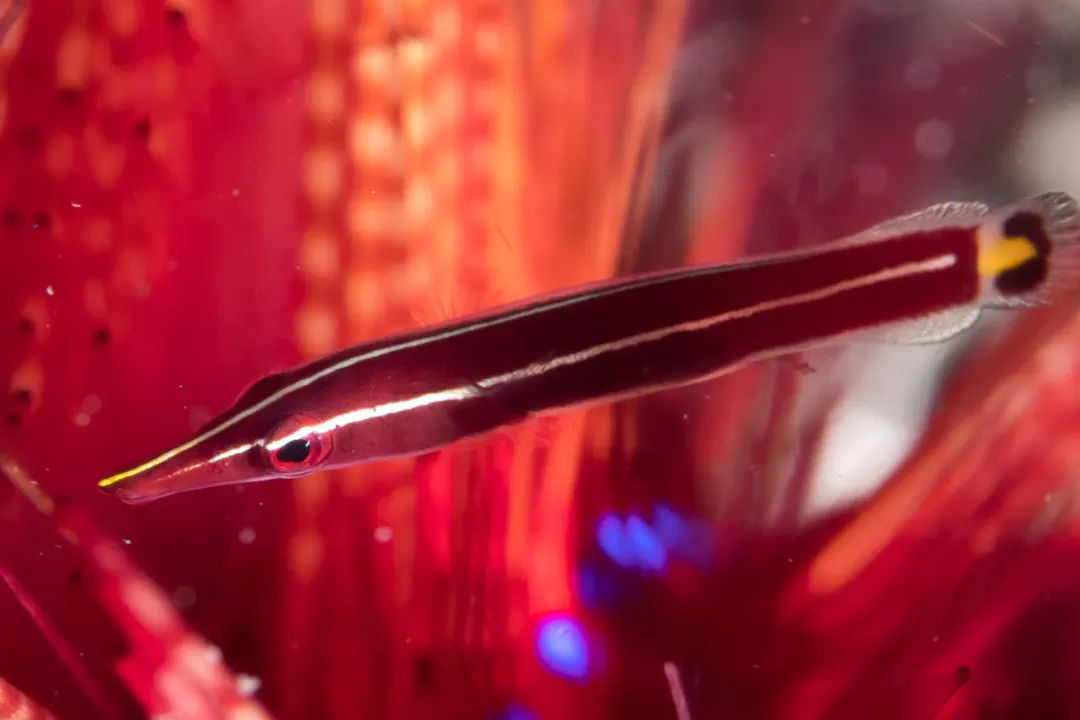 © Rickard ZerpeCC BY 4.0 · iNaturalist
 Western Cleaner Clingfish has no known danger to humans. However, always observe marine life responsibly.
Western Cleaner Clingfish can be found at depths of up to 40 meters.
Download Seabook free for iOS and Android.