 © Georgina JonesCC BY-SA 4.0 · iNaturalist
African Chromodorid
Chromodoris africana
Goniobranchus gleniei
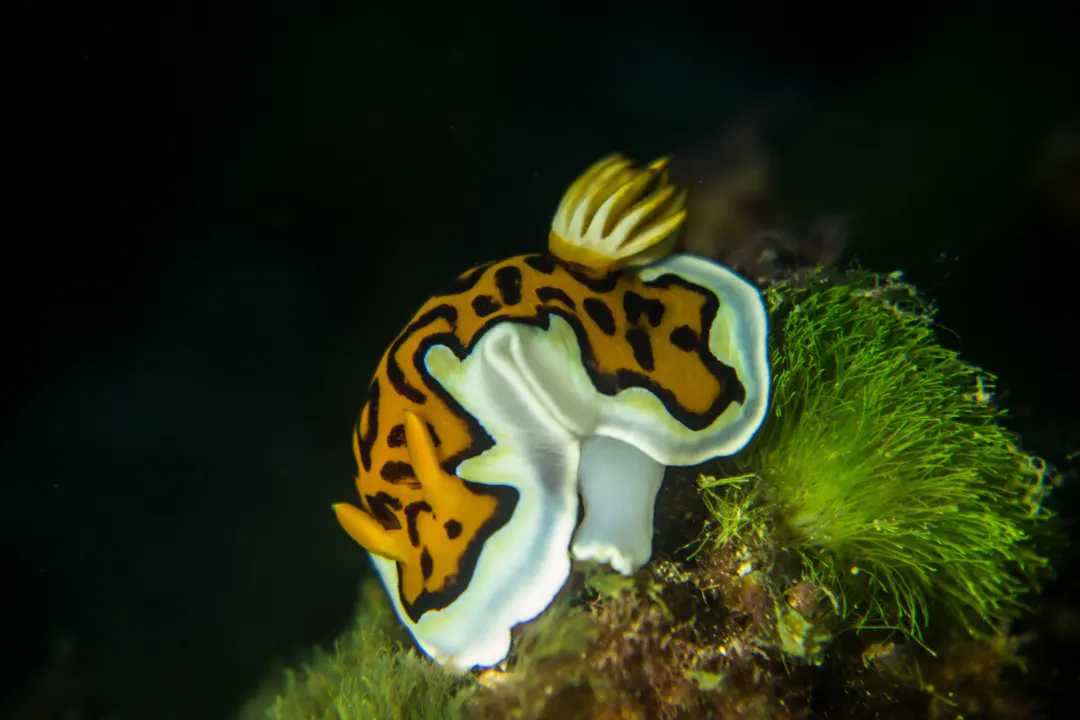
Goniobranchus gleniei is a species of colourful sea slug, a dorid nudibranch, a marine gastropod mollusc in the family Chromodorididae.
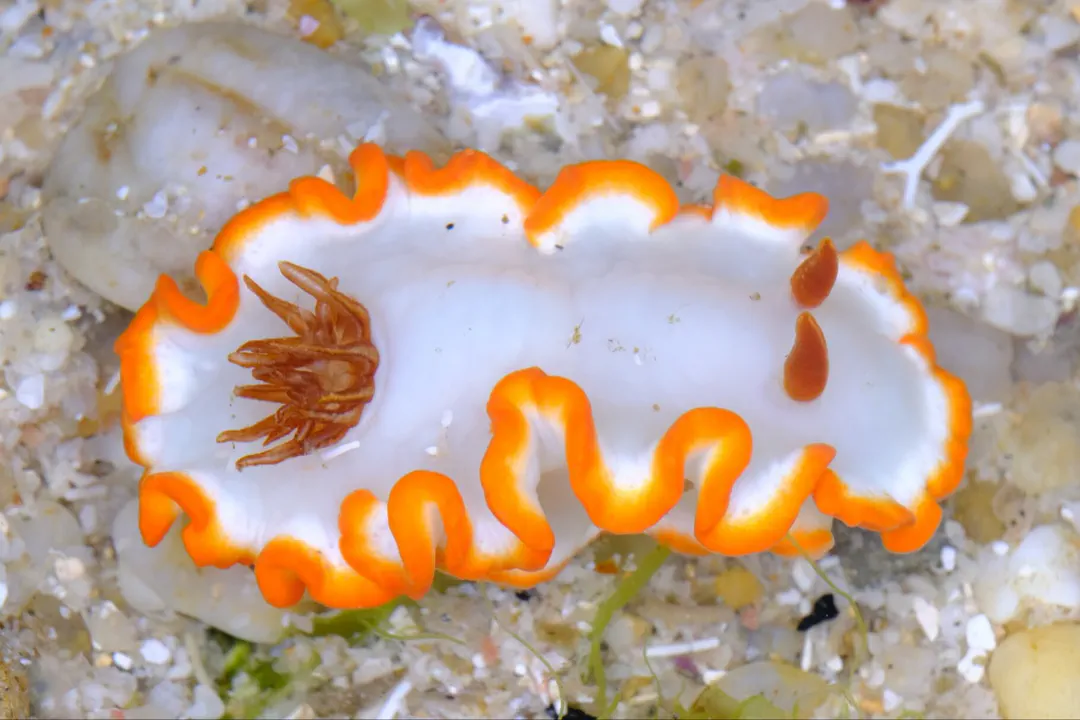
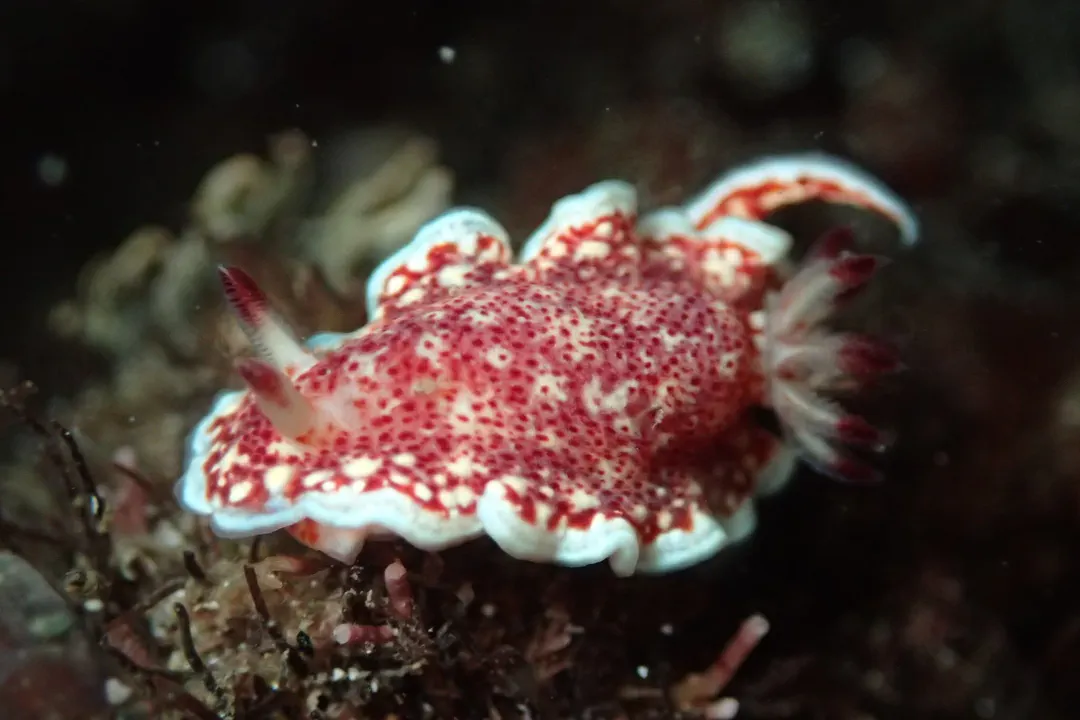
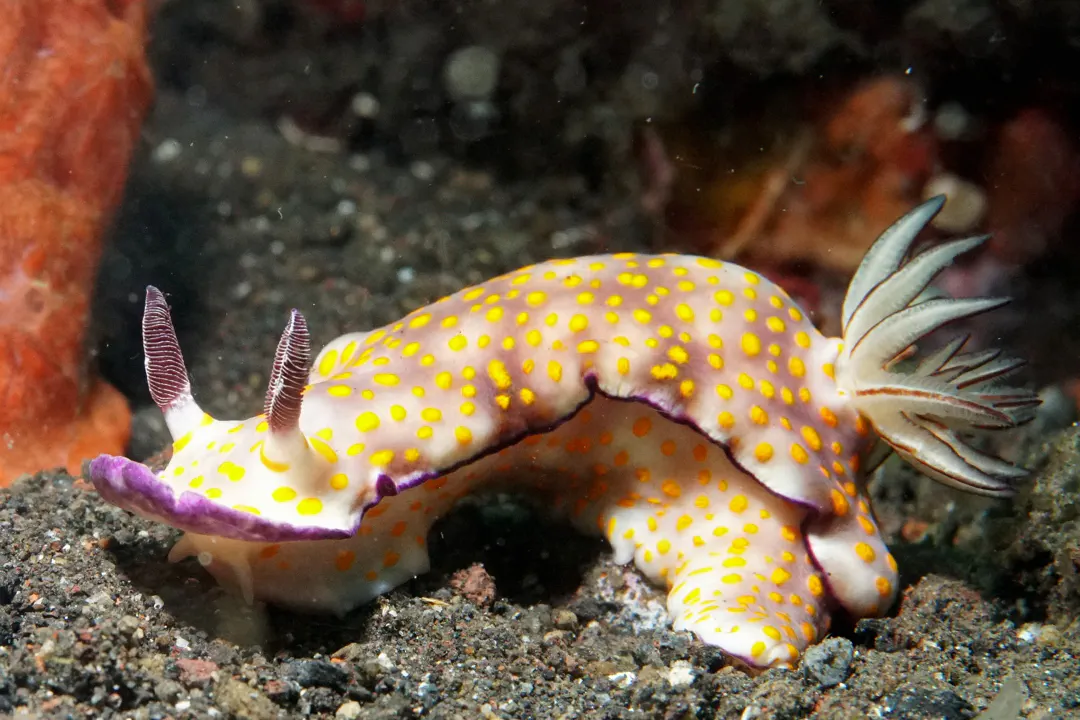
The mantle has a large brownish orange central patch running from in front of the rhinophores to behind the gills, there are irregular black or deep purple markings, sometimes irregular circles, on the orange patch, which is bordered by a sinuous broad black or deep purple line. The mantle outside the sinuous black line surrounding the orange patch is white with a submarginal band of translucent greyish-purple.
The rhinophore are the same brownish orange as the central patch. The gills are orange and white.
The large brownish orange central patch has four waves down each side forming paired identations, three between the gills and rhinophores and one just behind the gills. Midway between the submarginal greyish band and the sinuous black line is a band of milky yellow which on its inside edge runs parallel to the black line and on its outside parallel to the mantle edge.
Thus in the four indentations along each side, the yellow bands expands into a large subtriangular patch which sometimes has a blackish purple central patch. In other specimen the yellow band was broken between some indentations.
The gills: - the nine gills are essentially triangular in cross section, the outer side being smooth and the other two lamellate; - they have a white smooth outer face with the two lamellae sides being a translucent orange; - the inner edge of each gill where the two lamellate sides join is a darker orange, and it widens in the basal half so that is consists of a central washy orange line bordered by a deeper orange line; - the edge where each lamellate side joins the outer smooth side is also a darker orange; - the underside of the mantle is translucent white except for purple pigmentation which covers the entire anterior part of the mantle overlap and forms a purple line along the join of the mantle and the body.
The body and the foot are also translucent white except for a marginal band of opaque white on the foot.
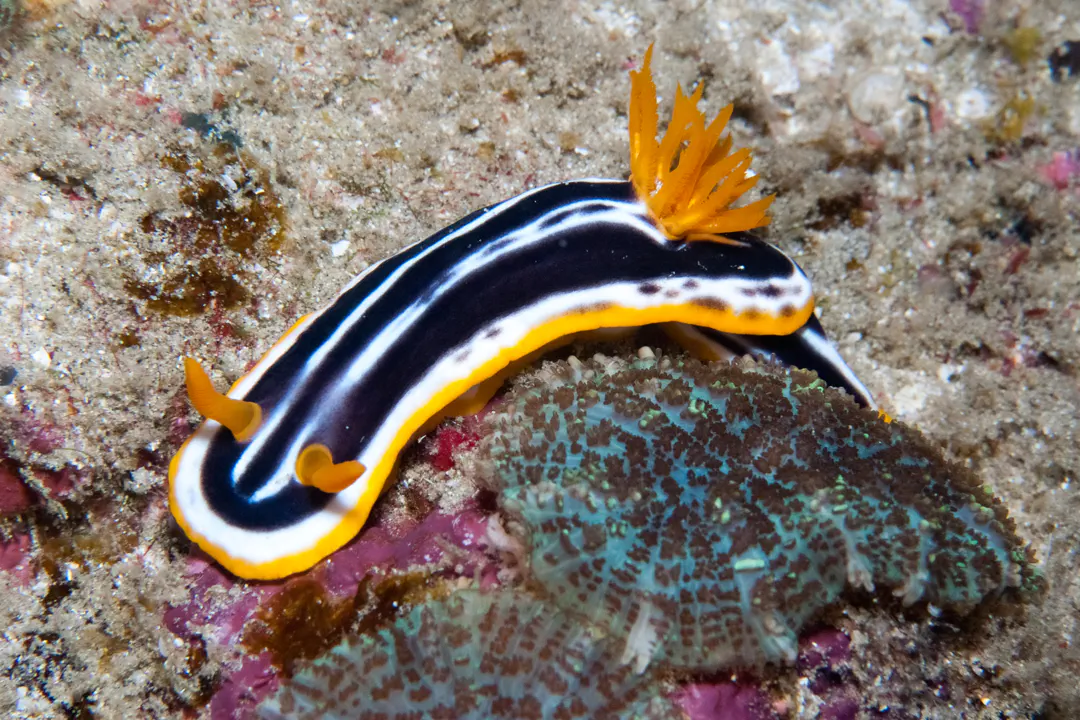
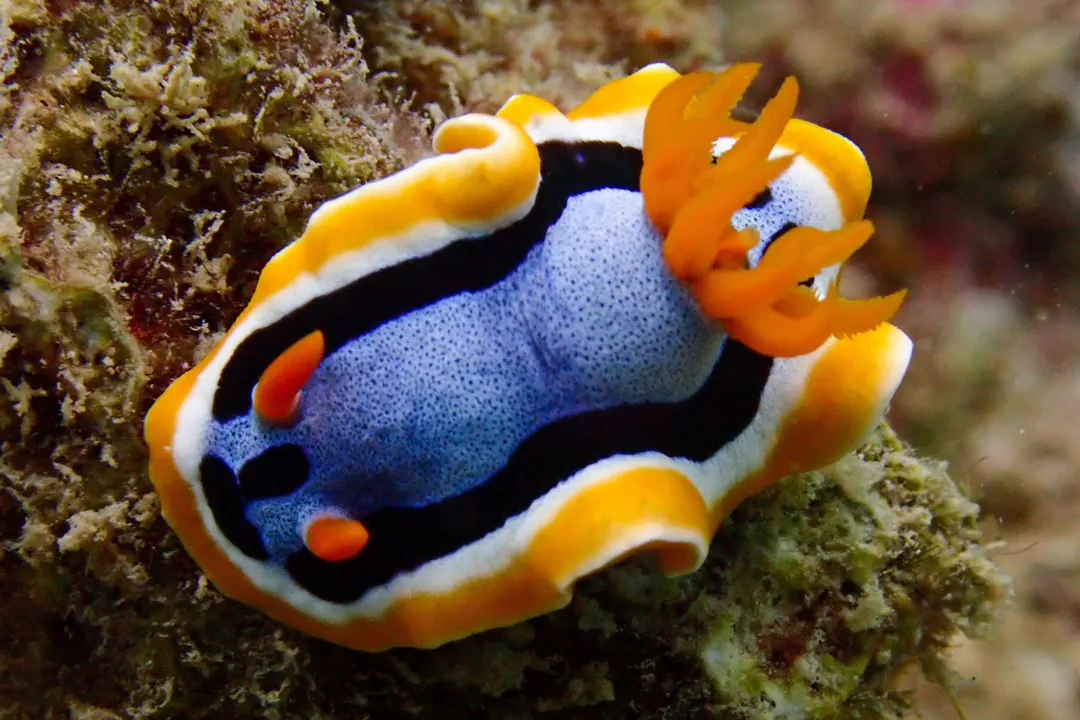
It is similar in appearance to Goniobranchus coi which is found in the Western Pacific. In Goniobranchus coi, the central region is a dull brown colour with a darker mottling of the same color.
This species was described from the inner harbour, Trincomalee and Cottiar, opposite Fort Fredrick, Sri Lanka. It has been reported from the Maldives and Tanzania.
It feeds on sponges. When crawling they sometimes flap the forward section of their mantle upwards exposing the purple underneath. Given that their diet appears to be sponges, it is safe to assume they absorb toxins from the sponges.
Nudibranchs have their teeth on their radula which is similar but not quite the same as a tongue. Food is grasped and processed by the radula and passed through the esophagus into the stomach. After digestion waste products pass through the intestine out the anus, which in dorid nudibranchs is in the middle of the gills.
© Georgina JonesCC BY-SA 4.0 · iNaturalist  © seabook.appAll rights reserved
  © Dan SchofieldCC BY 4.0 · iNaturalist
  © Peter CrowcroftCC BY 4.0 · iNaturalist
  © Cricket RaspetCC BY 4.0 · iNaturalist
  © Stas KuryanAll rights reserved
 Glenie's Chromodoris has no known danger to humans. However, always observe marine life responsibly.
Download Seabook free for iOS and Android.