 © Roger RittmasterCC BY 4.0 · iNaturalist
Bicolour Goatfish
Parupeneus barberinoides
Parupeneus trifasciatus
Parupeneus trifasciatus is a species of goatfishes native to the Indo-Pacific ocean.
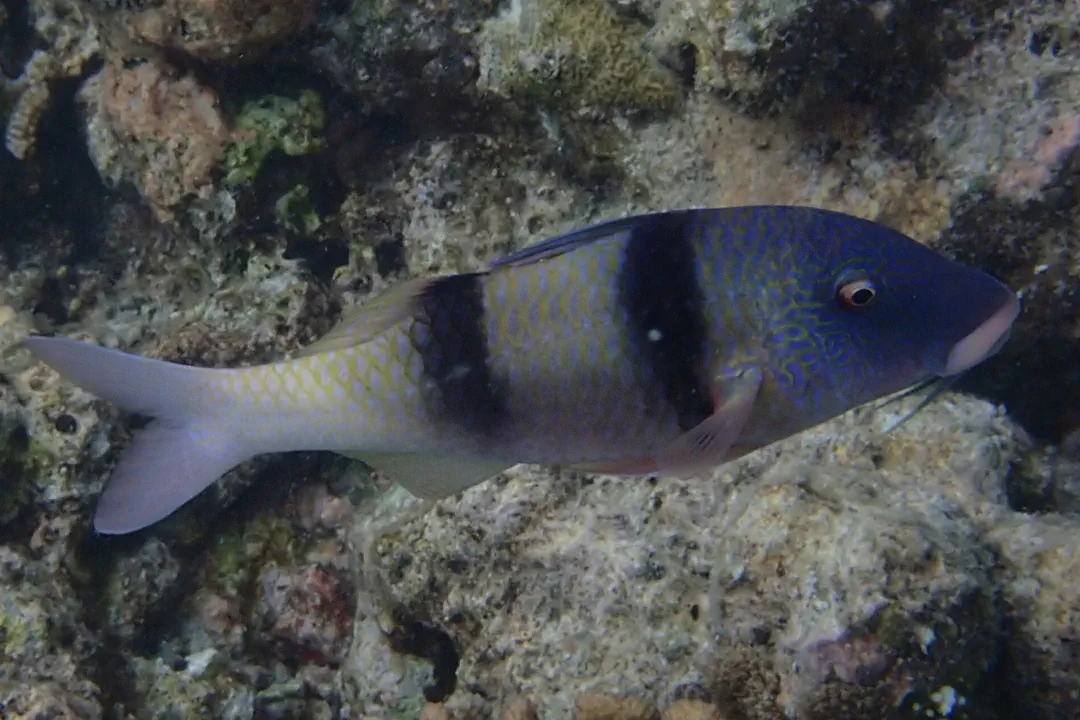
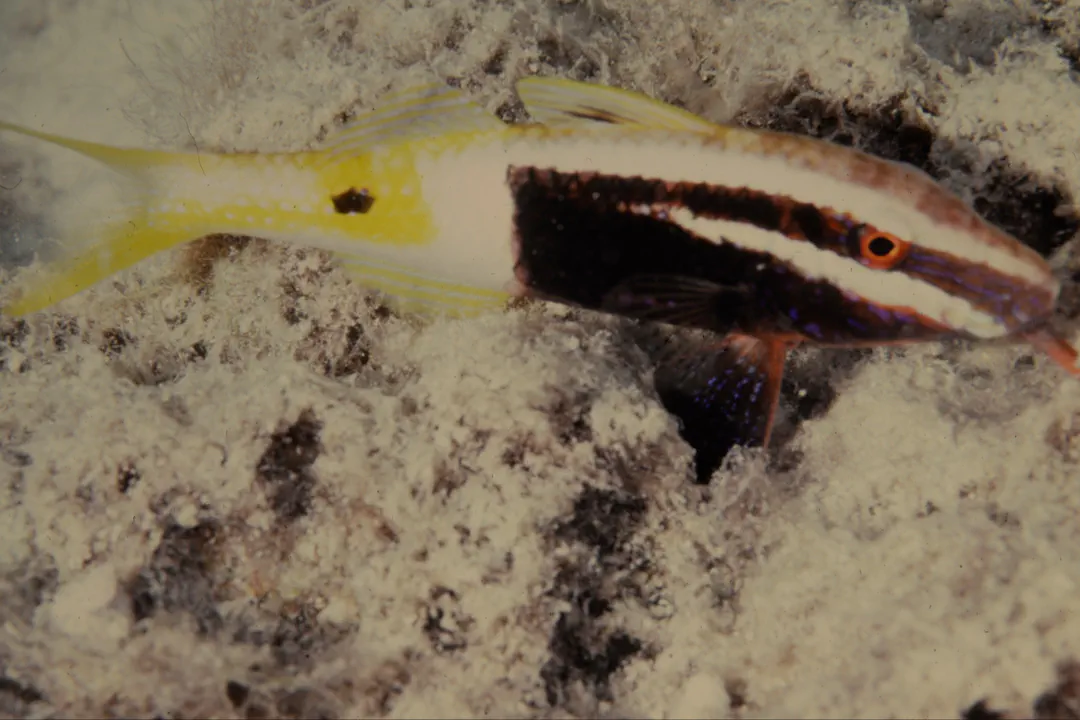
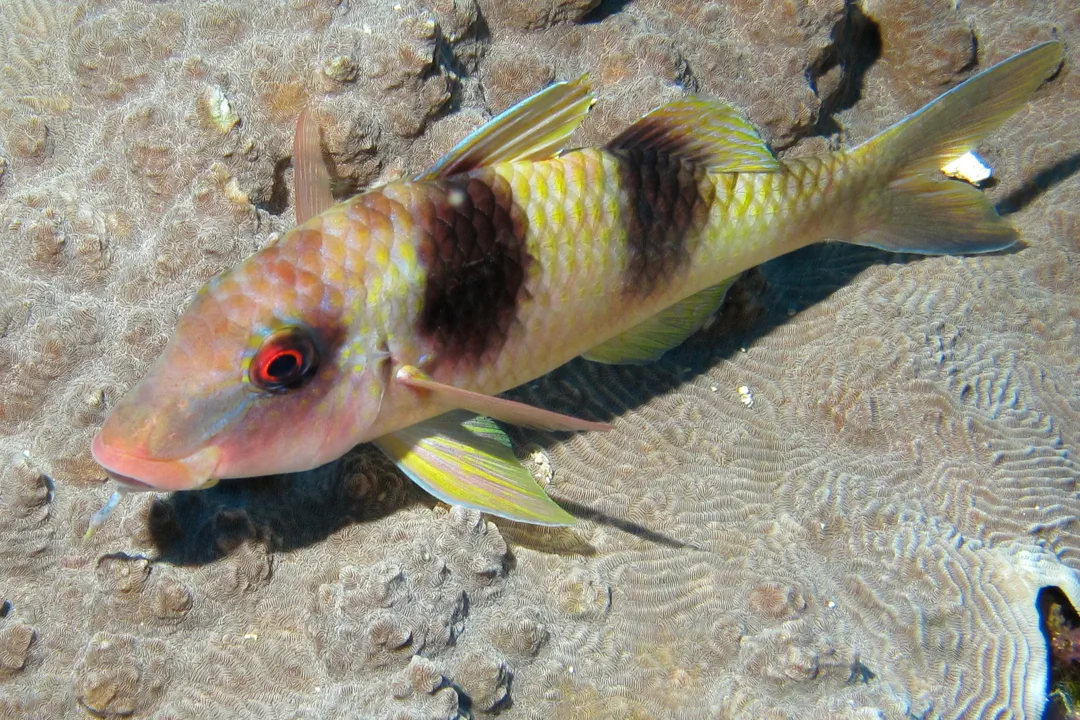
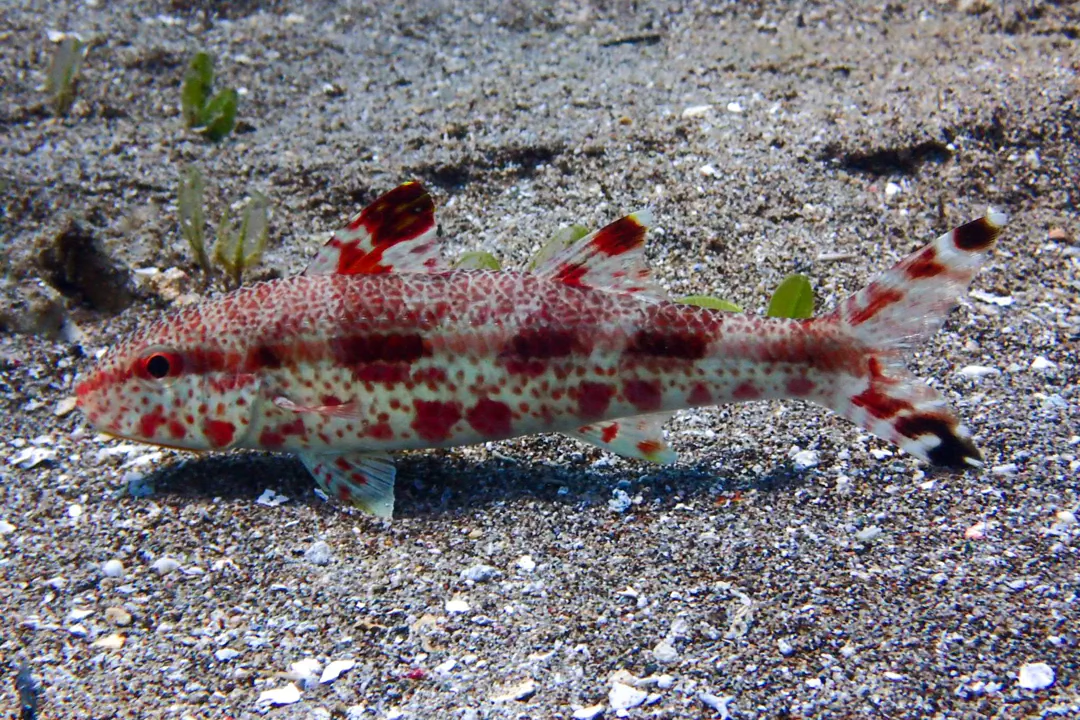
Body is from white to to light red with black bars on the side that extend almost to the underside, a pinkish grey head with a broad indistinct dusky band from upper lip to eye, and a whitish body with yellow scale margins. Cheek and opercle are with irregular yellow-edged blue spots. Fins are whitish to pale red. Max size: at least reaching to 35 cm, common length is 27 cm. There occurs in 3 color forms that might represent different species. The Indian Ocean form has 2 sharply defined wedge-shaped bars become narrower and sometimes end on the belly. The Indo-Australian form has 3 very distinct dark patches and rows of yellow spots on the sides. The Pacific Plate form has 2 wide bars that extend to the belly. Head length 2.9-3.3 in SL, length of snout 1.7.-2.1 and barbel 1.5-1.9 in HL; body depth 2.8-3.4 in SL.
Indian Ocean: Oman and East Africa south to South Africa and east to Christmas Island and Java, Indonesia.
This occasionally schooling species inhabits lagoon and seaward reefs: juveniles on reef flats, adults tend to occur around rocky or coralline areas of high vertical relief. Feeds on crustaceans at daytime and on fishes and crab larvae at night. Also feeds on worms.
© Roger RittmasterCC BY 4.0 · iNaturalist  © Storm MartinCC BY 4.0 · iNaturalist
  © seabook.appAll rights reserved
  © Bernard DUPONTCC BY 4.0 · iNaturalist
  © Dan SchofieldCC BY 4.0 · iNaturalist
  © Lesley ClementsAll rights reserved
 Indian Doublebar Goatfish has no known danger to humans. However, always observe marine life responsibly.
Indian Doublebar Goatfish can be found at depths of up to 80 meters.
Download Seabook free for iOS and Android.