 © Roger RittmasterCC BY 4.0 · iNaturalist
Bicolour Goatfish
Parupeneus barberinoides
Parupeneus crassilabris
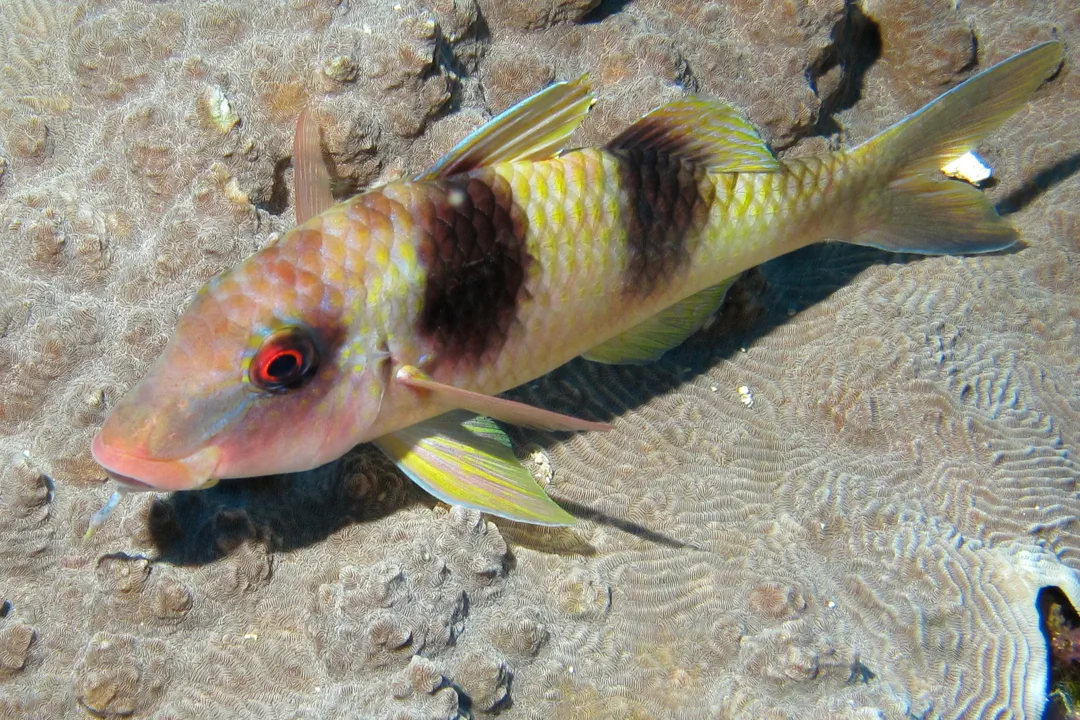
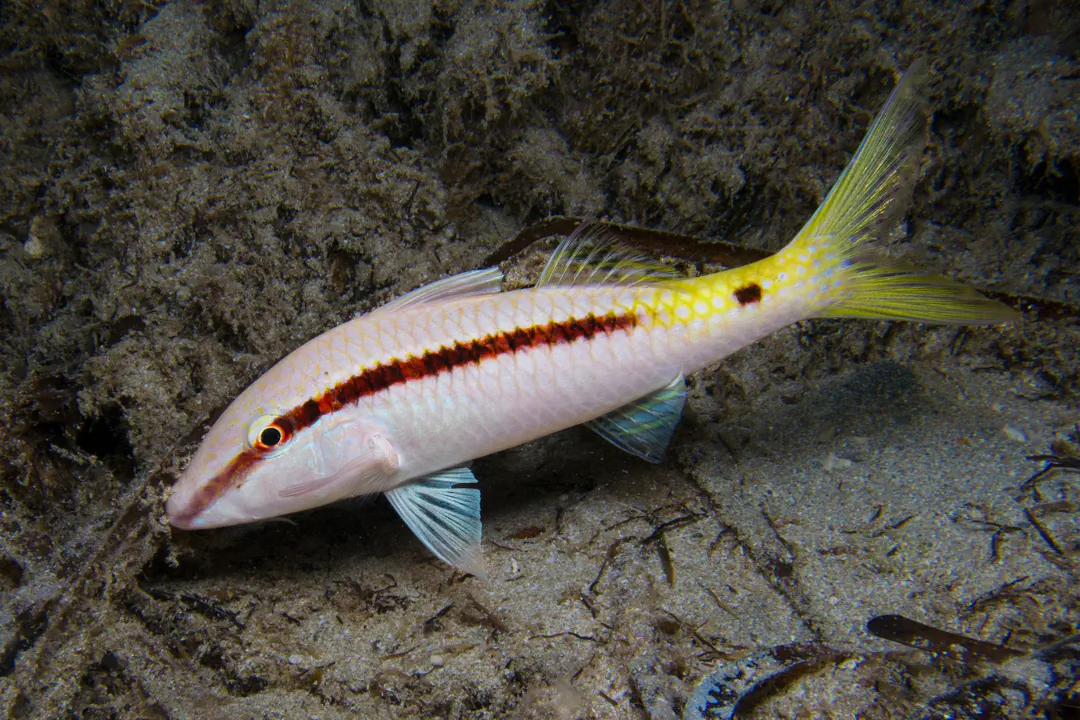
Parupeneus crassilabris is a species of goatfishes native to the Indian and Pacific oceans.
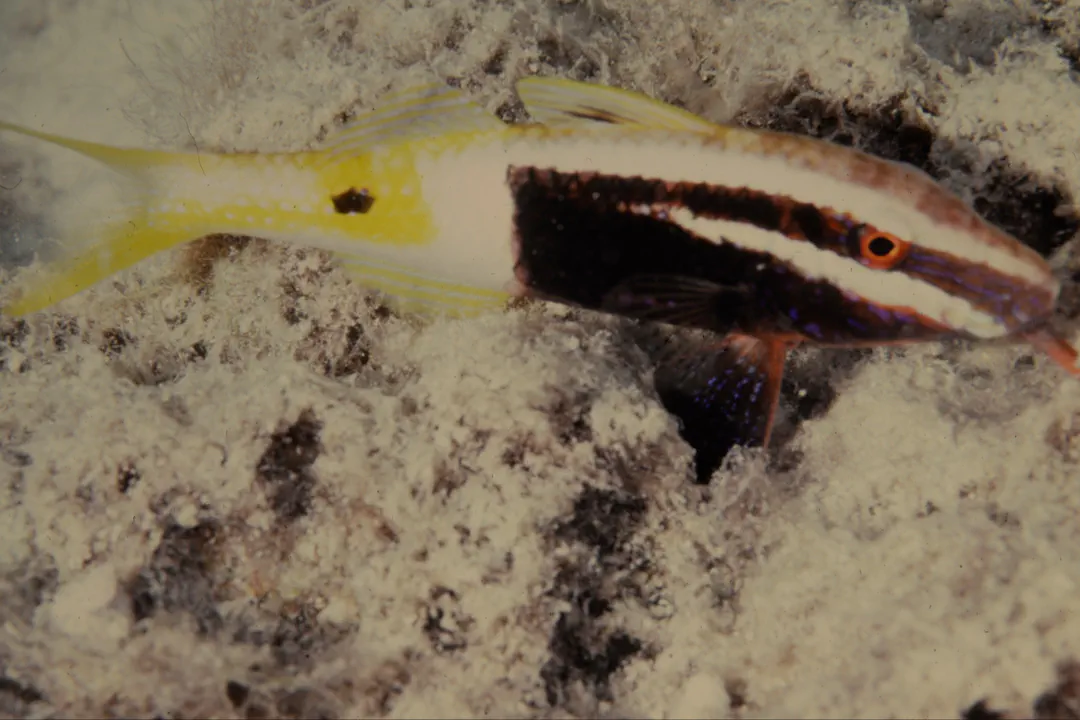
Body is whitish to yellow or purplish with yellow scale margins or a yellow spot on scales, a black patch around the eye, two broad dark bars on the side, and a bright red inner iris rim. The upper two-thirds of body are with two very large oval black spots, the first centered below anterior spines of first dorsal fin and the second below anterior half or more of second dorsal fin and extending into basal part of fin. A large black spot is on head behind and enclosing part of eye, extending diffusely toward comer of mouth. Broad outer part of second dorsal and anal fins is blue with narrow oblique dark-edged yellow bands. Caudal fin is streaked with dull blue and yellow. Dorsal spines (total): 8; Dorsal soft rays (total): 9; Anal spines: 1; Anal soft rays: 7. Diagnosis: Pectoral rays 15-16 (rarely 15). Gill rakers 7-10 + 27-31 (total 35-40). Body depth 2.653.1 in SL (deeper body with growth); head length (HL) 2.8-3.15 in SL; snout length 1.75-1.95 in HL; barbels short, 1.45-1.75 in HL; longest dorsal spine 1.4-1.6 in HL; penultimate dorsal ray 1.2-1.5 in length of last dorsal ray; pectoral-fin length 1.25-1.45 in HL; pelvic-fin length 1.2-1.4 in HL.
Indo-West Pacific: eastern Indian Ocean and the western Pacific east to Fiji, Tonga, and the Caroline Islands. This species is included in the Parupeneus trifasciatus complex where Parupeneus trifasciatus is restricted to the Indian Ocean and Parupeneus insularis from the Hawaiian Islands, French Polynesia, and Pitcairn Islands to the Marshalls, Mariana, Phoenix, and Samoa Islands.
It is usually seen on inshore coral reefs and in deep lagoons. Juveniles are more commonly found in surge channels near the intertidal zone. Adults and juveniles are often seen resting on coral or rubble. They occur in small groups or singularly. The species can be found at depths between 1 m and 80 m.
© Roger RittmasterCC BY 4.0 · iNaturalist 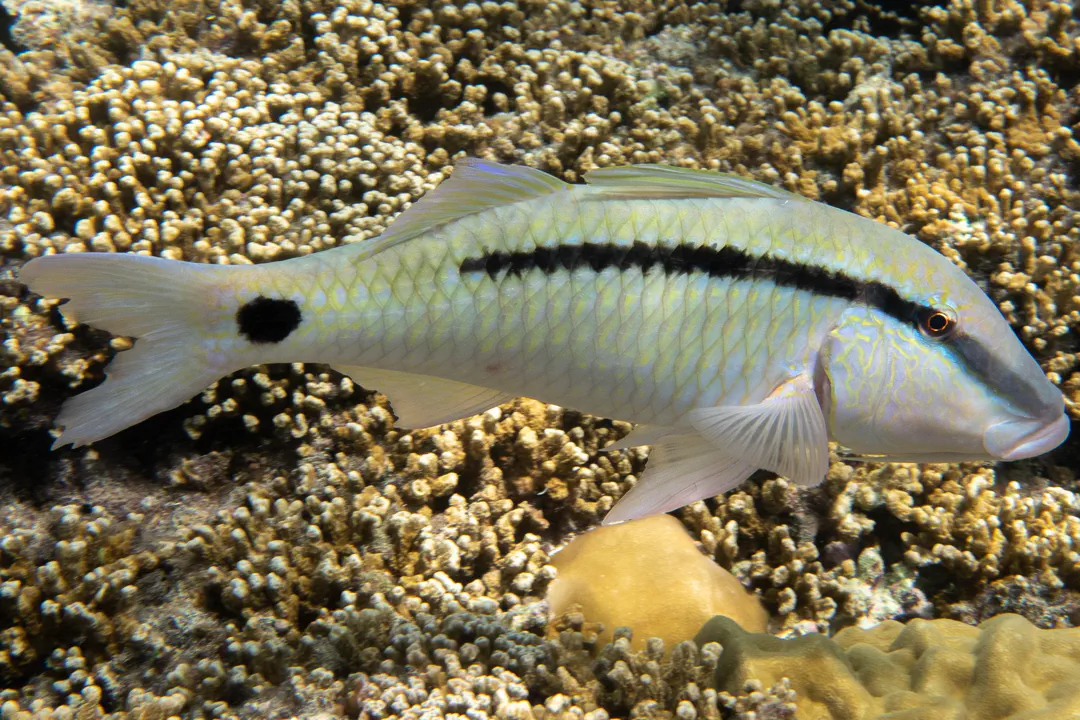 © Storm MartinCC BY 4.0 · iNaturalist
  © seabook.appAll rights reserved
 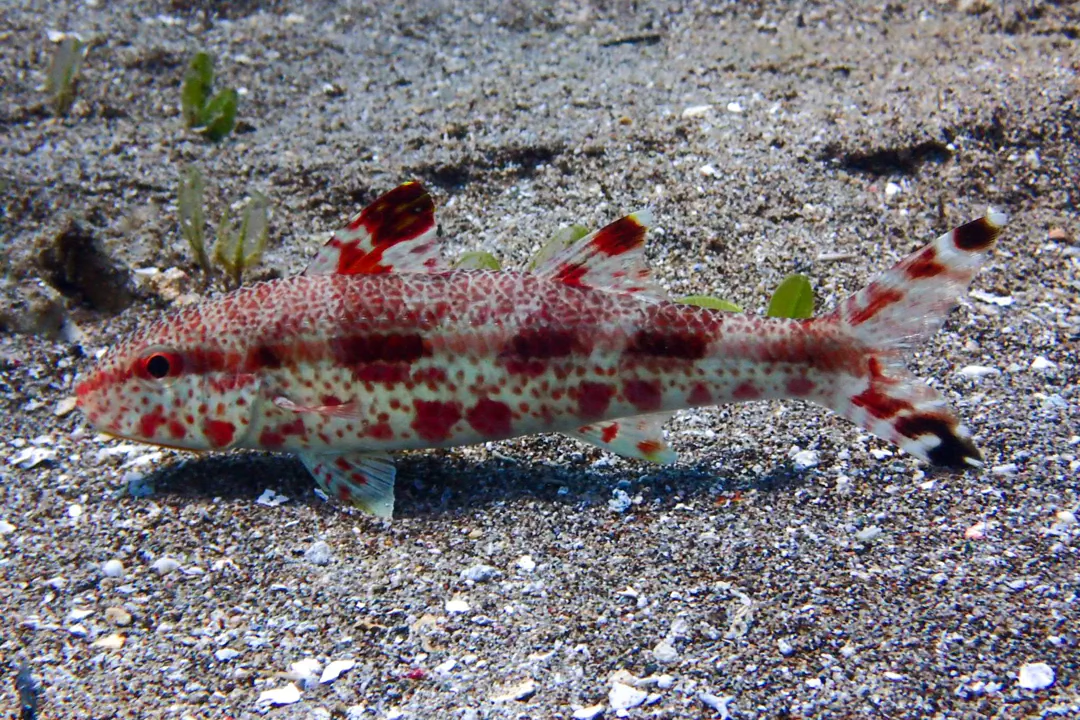 © Dan SchofieldCC BY 4.0 · iNaturalist
 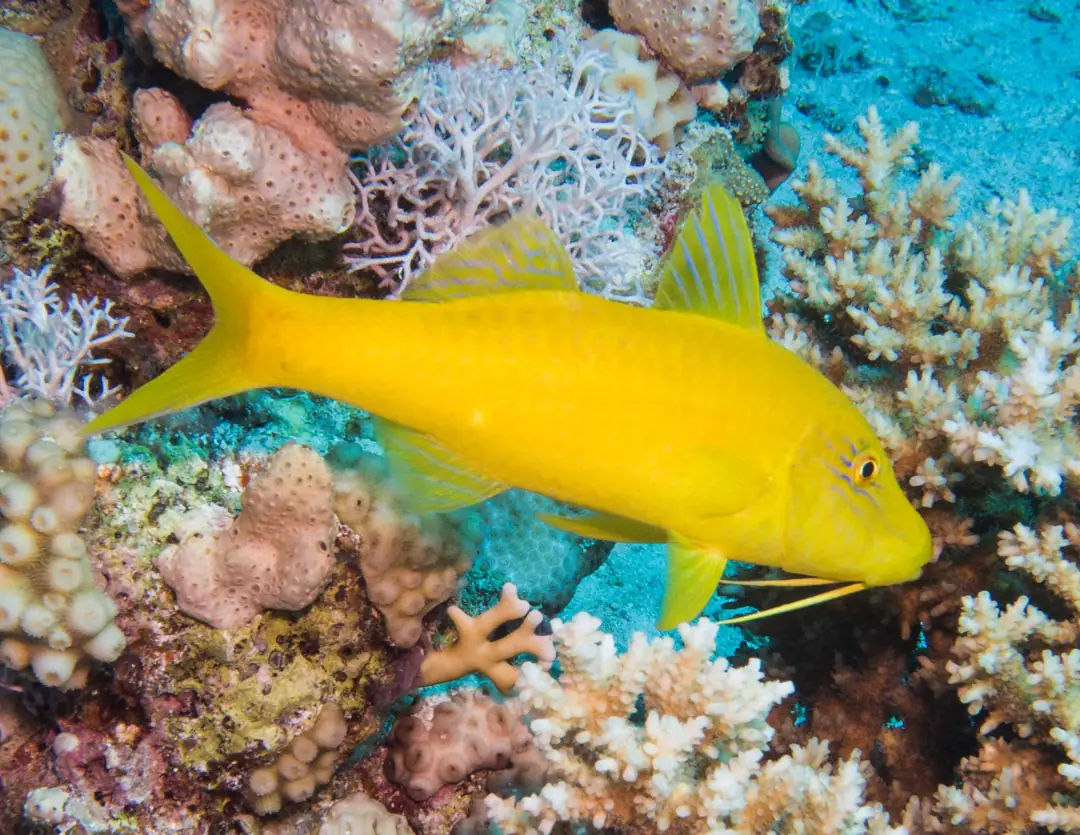 © Lesley ClementsAll rights reserved
 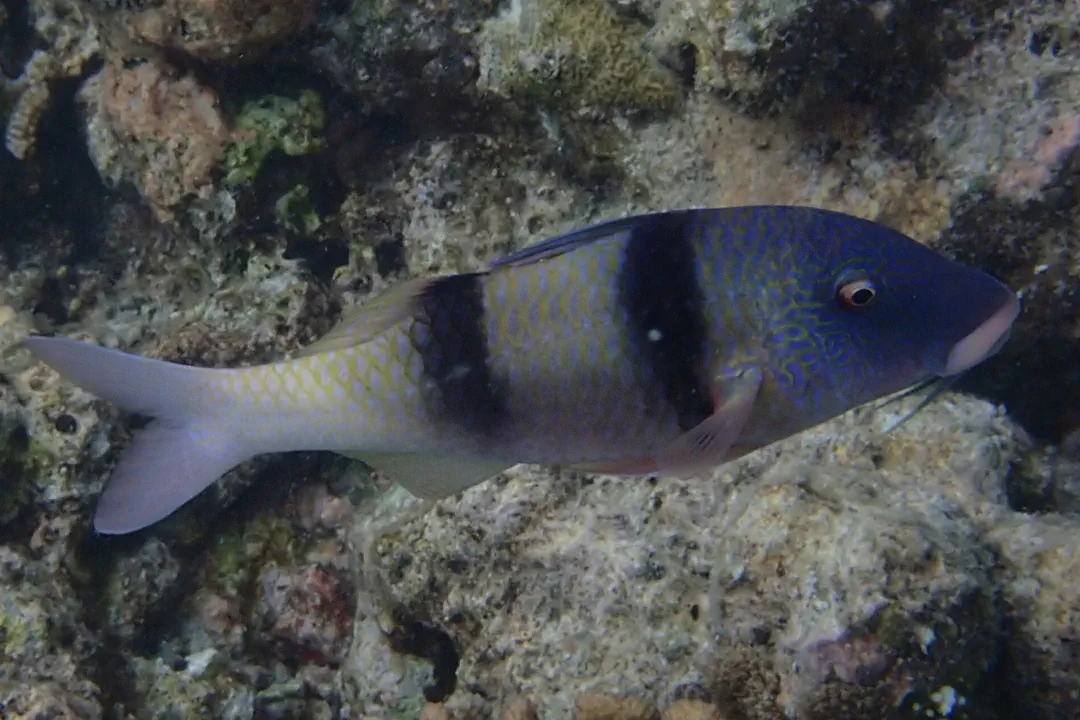 © Jan Ebr & Ivana EbrováCC BY 4.0 · iNaturalist
 Doublebar Goatfish has no known danger to humans. However, always observe marine life responsibly.
Doublebar Goatfish can be found at depths of up to 80 meters.
Download Seabook free for iOS and Android.