 © Jim GreenfieldAll rights reserved
Blackblotch Emperor
Lethrinus semicinctus
Lethrinus erythropterus
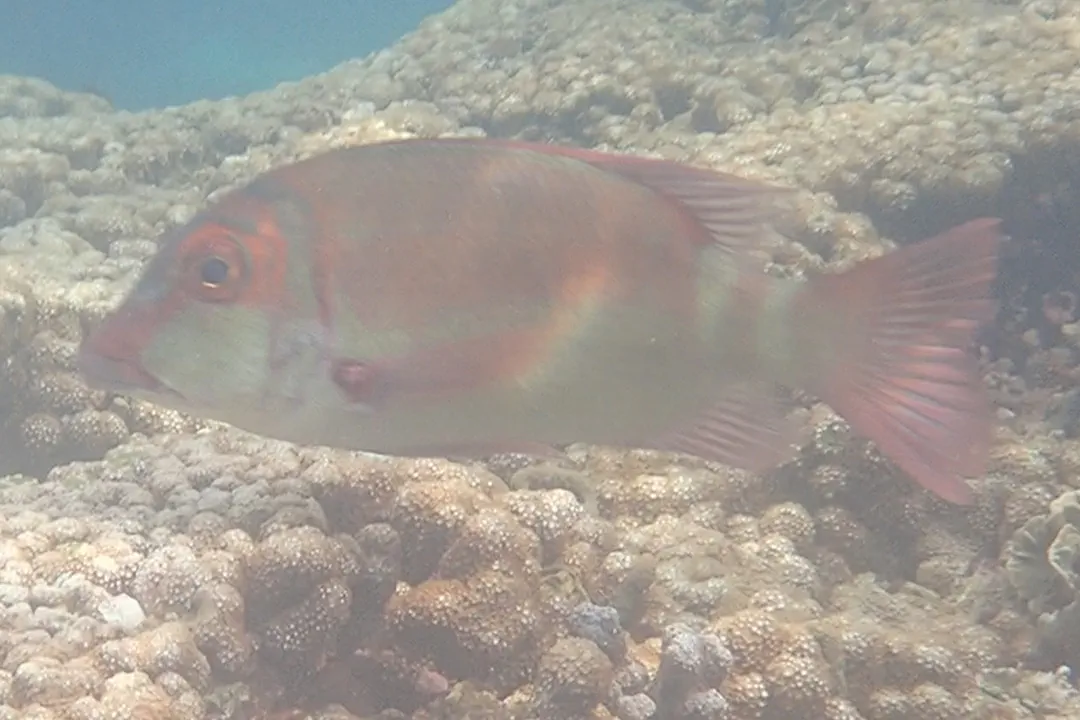
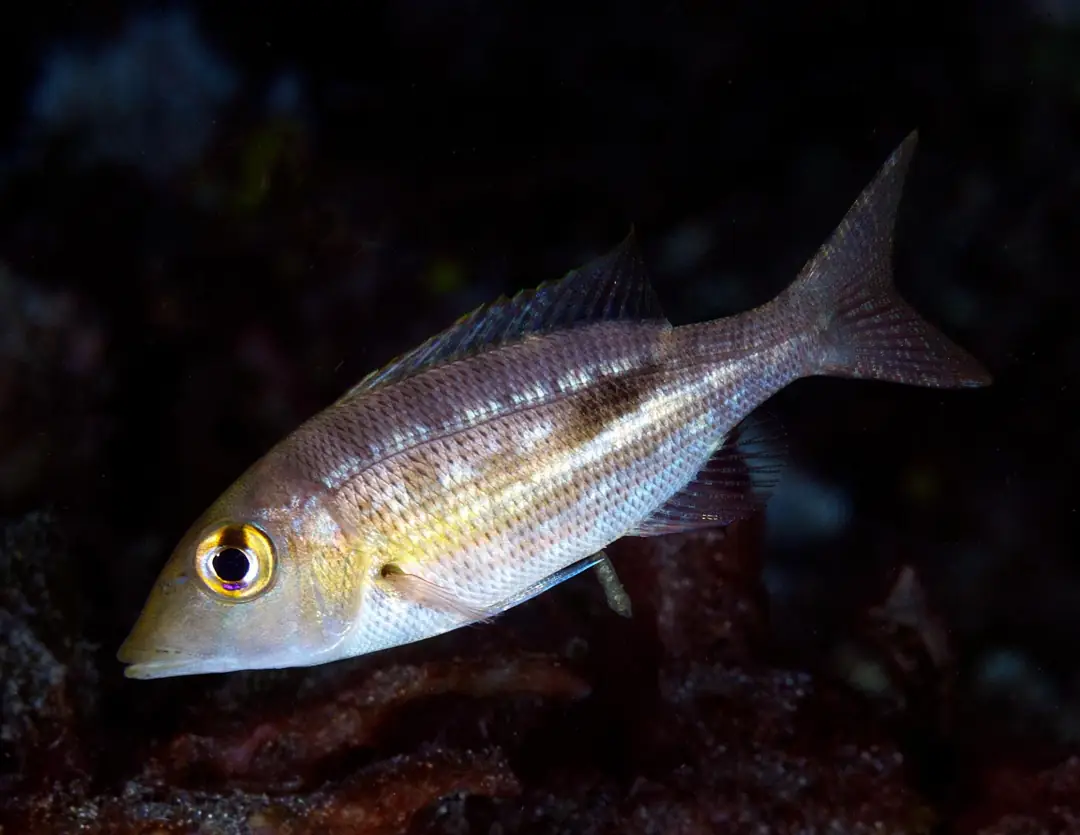
Lethrinus erythropterus is a species of emperors (Lethrinidae family) found from the eastern Atlantic Ocean through the Indian Ocean to the western Pacific Ocean.
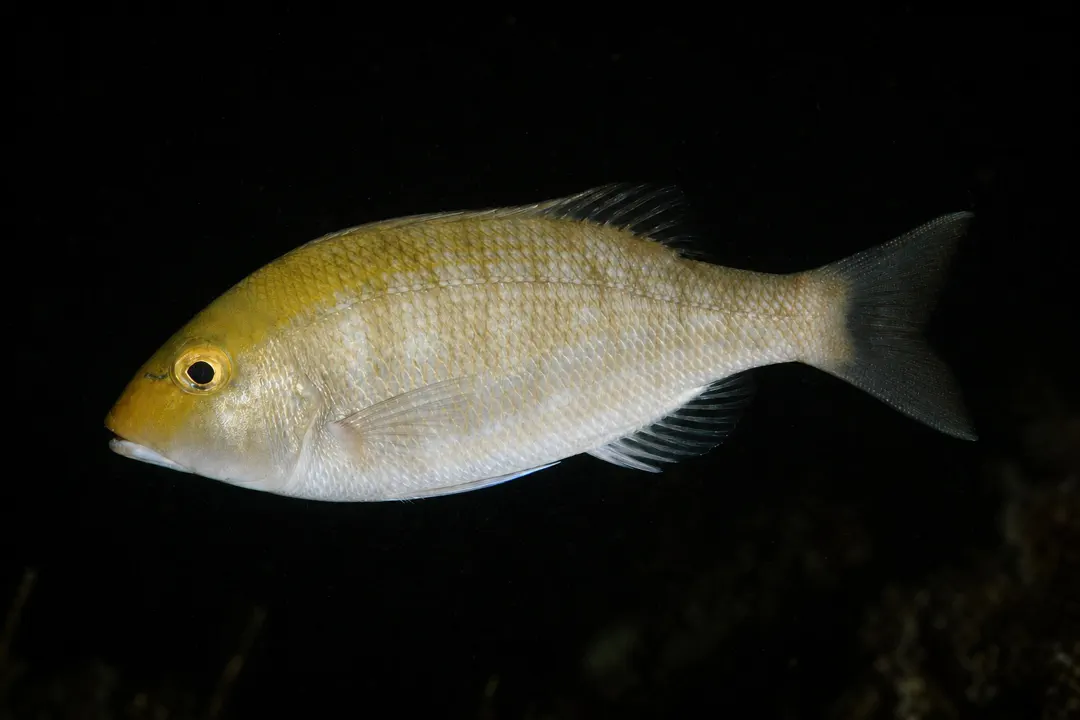
A brownish to rusty red emperor becoming paler below, with a broad streak from the eye to the snout tip, and sometimes two pale bars on the tail base. The lips and pectoral-fin base are bright red, the fins are reddish to reddish-orange, and the tail is only slightly forked with rounded tips. Max size is 50 cm, common size is 30 cm.
Dorsal spines (total): 10; Dorsal soft rays (total): 9; Anal spines: 3; Anal soft rays: 8. This species is distinguished by the following characters: body moderately deep, its depth 2.3-2.5 times in standard length; head length 0.8-1.0 times in body depth, 2.5-2.8 times in SL, dorsal profile near eye nearly straight or slightly convex; snout moderately short, its length about 1.9-2.2 times in head length, measured without the lip the snout is 0.9-1.0 times in cheek height, its dorsal profile concave, snout angle relative to upper jaw between 53° and 64°; interorbital space convex or almost flat; posterior nostril an oblong longitudinal opening, closer to orbit than anterior nostril; eye situated close to or slightly removed from dorsal profile, its length 3.3-4.6 times in HL; cheek moderately high, its height 2.1-2.7 times in HL; lateral teeth in jaws of adults molars or rounded; outer surface of maxilla usually smooth; D X,9, the 4th or 5th dorsal-fin spine the longest, its length 2.7-3.3 times in body depth; A III,8 with the 3rd, 4th or 5th soft ray usually the longest, its length much longer than length of base of soft-rayed portion of anal fin and 0.7-1 times in length of entire anal-fin base; pectoral-fin rays 13; pelvic-fin membranes between rays closest to body without dense melanophores; cheek without scales; 44-46 lateral-line scales; 4 ½ scale rows between lateral line and base of middle dorsal-fin spines; 15-17 scale rows in transverse series between origin of anal fin and lateral line; usually 15 rows in lower series of scales around caudal peduncle; 5-9 scales in supratemporal patch; inner surface of pectoral-fin base densely covered with scales; posterior angle of operculum fully scaly.
Indo-West Pacific: Tanzania and Mozambique to Papua New Guinea, Palau, and Caroline Islands. Recently reported from the Penghu Islands.
It occurs over coral reefs and adjacent sandy areas. May be solitary or in small groups. It feeds on small fishes and invertebrates such as molluscs, echinoderms and crustaceans.
© Jim GreenfieldAll rights reserved 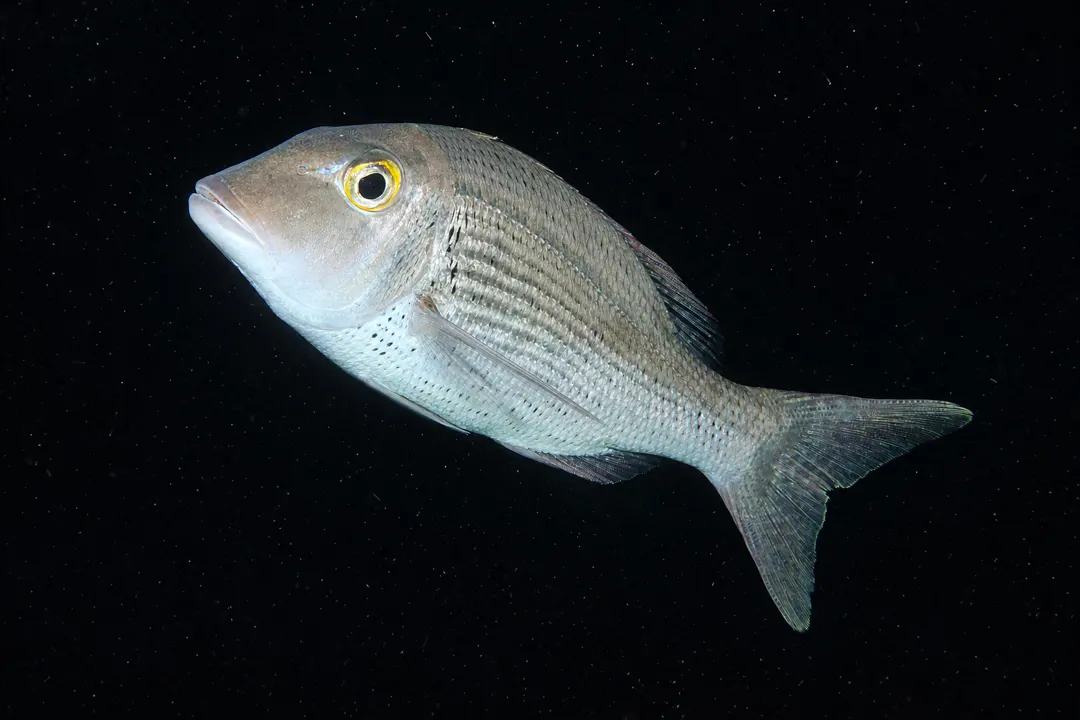 © seabook.appAll rights reserved
  © seabook.appAll rights reserved
 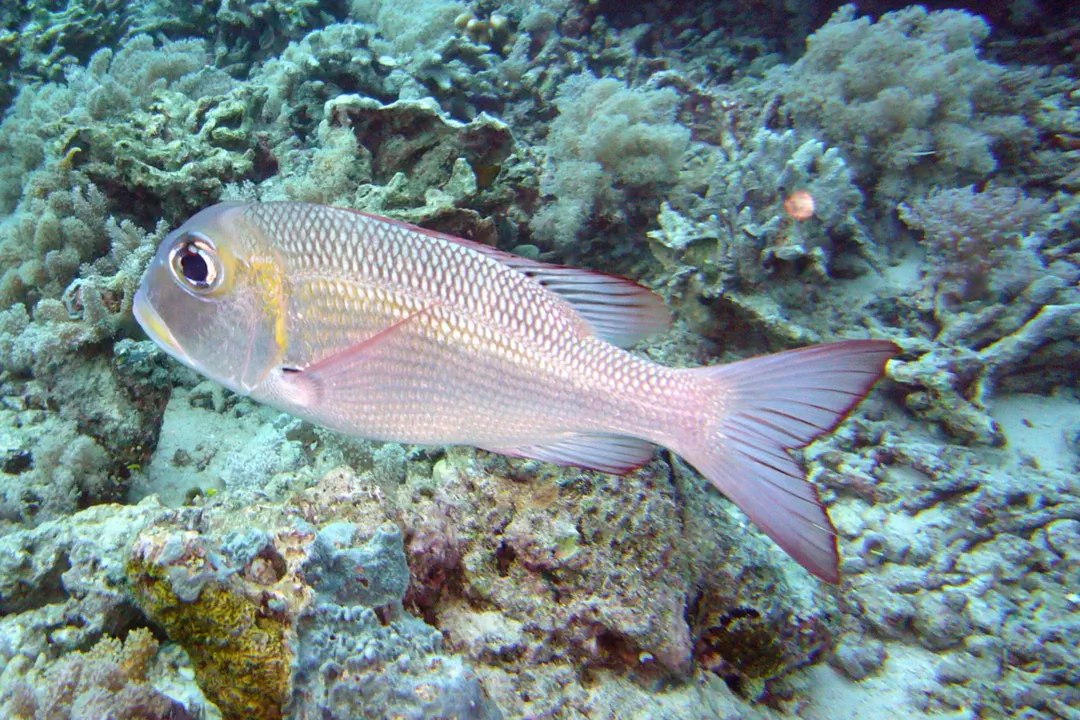 © Kai SquiresCC BY 4.0 · iNaturalist
 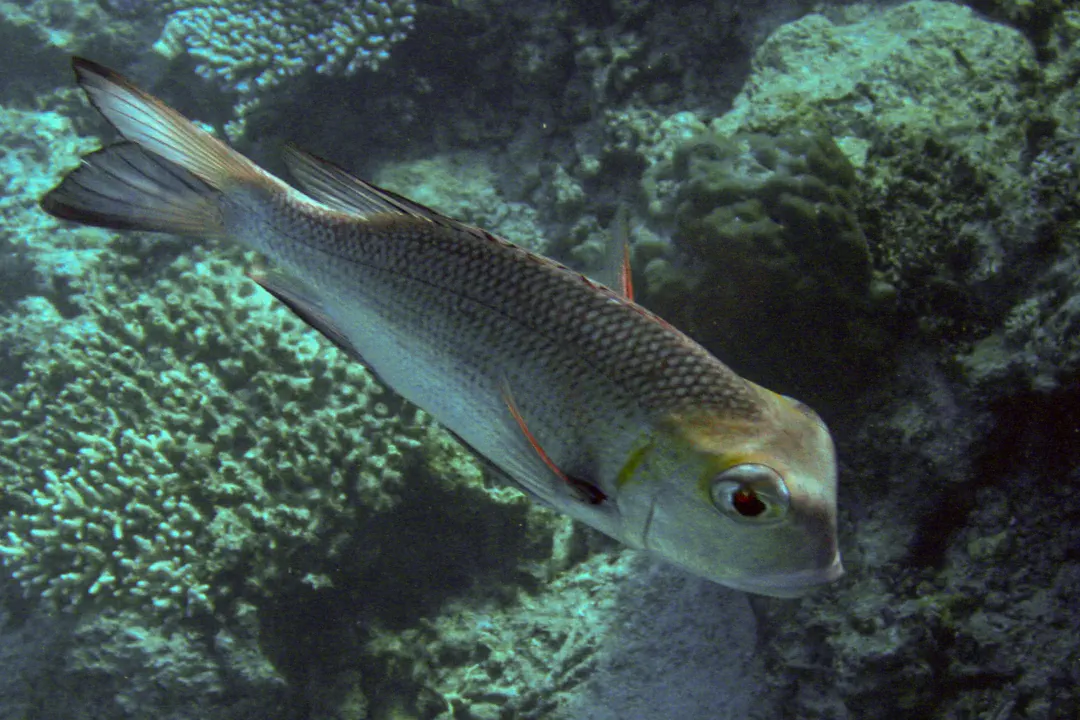 © Mario BassiniCC BY 4.0 · iNaturalist
 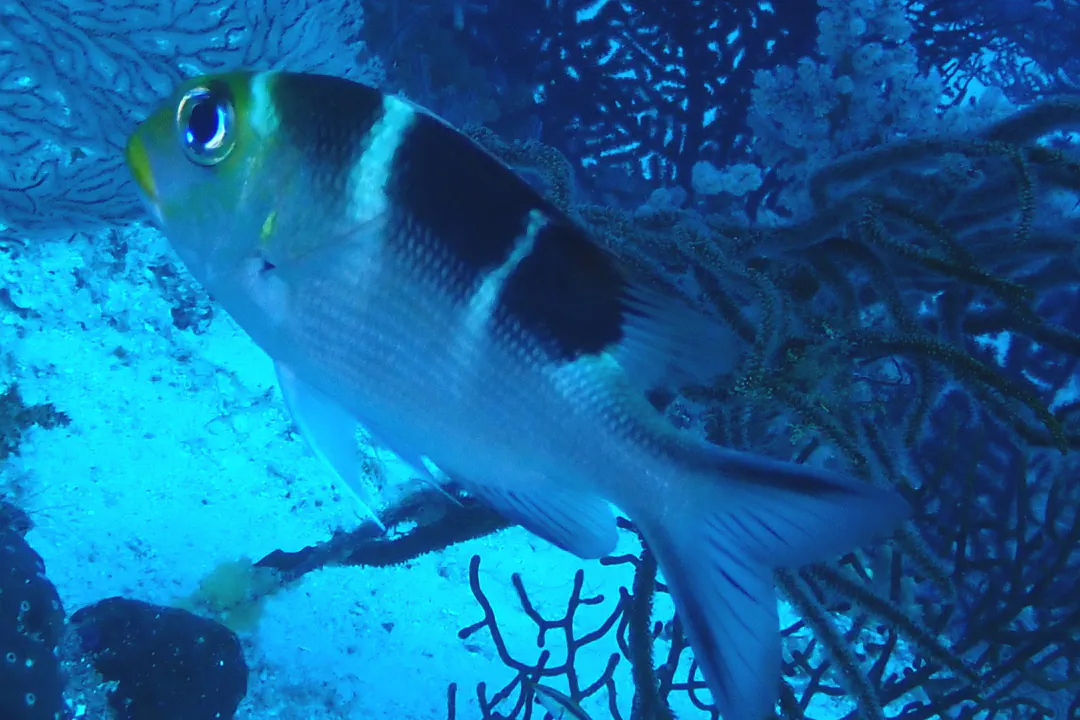 © desertnaturalistCC BY 4.0 · iNaturalist
 Longfin Emperor has no known danger to humans. However, always observe marine life responsibly.
Longfin Emperor can be found at depths of up to 25 meters.
Download Seabook free for iOS and Android.