 © Jim GreenfieldAll rights reserved
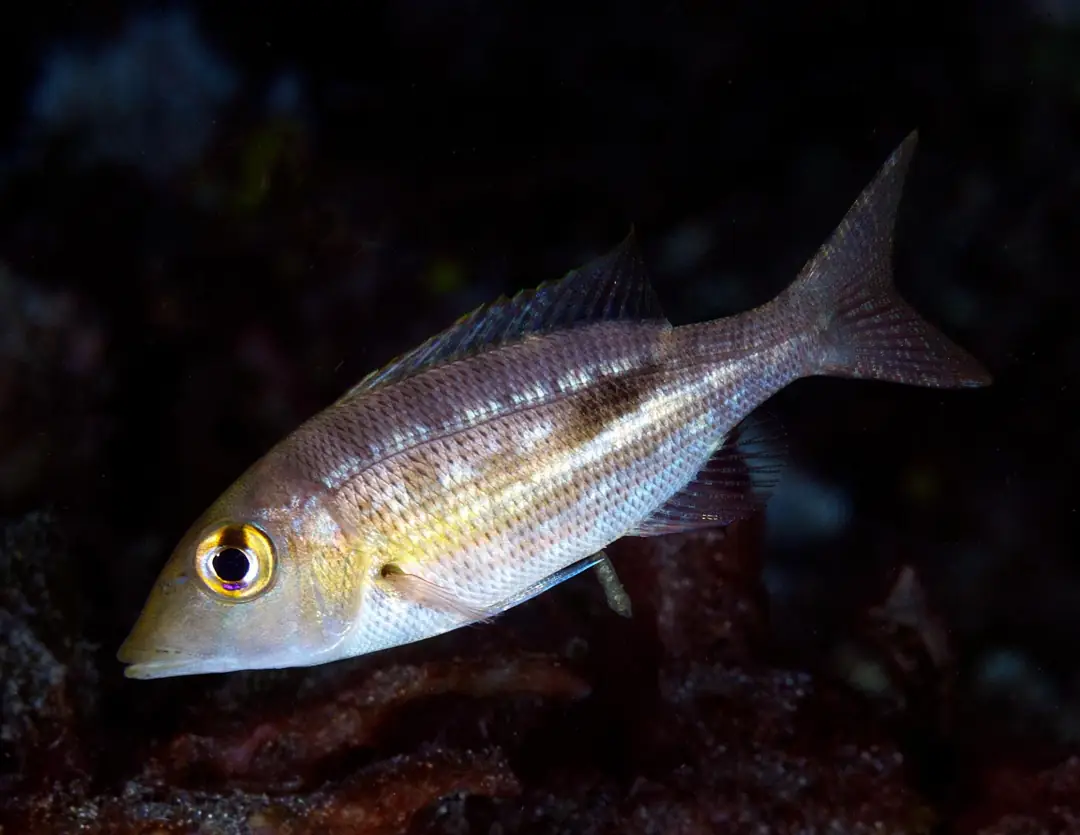
Blackblotch Emperor
Lethrinus semicinctus
Monotaxis grandoculis
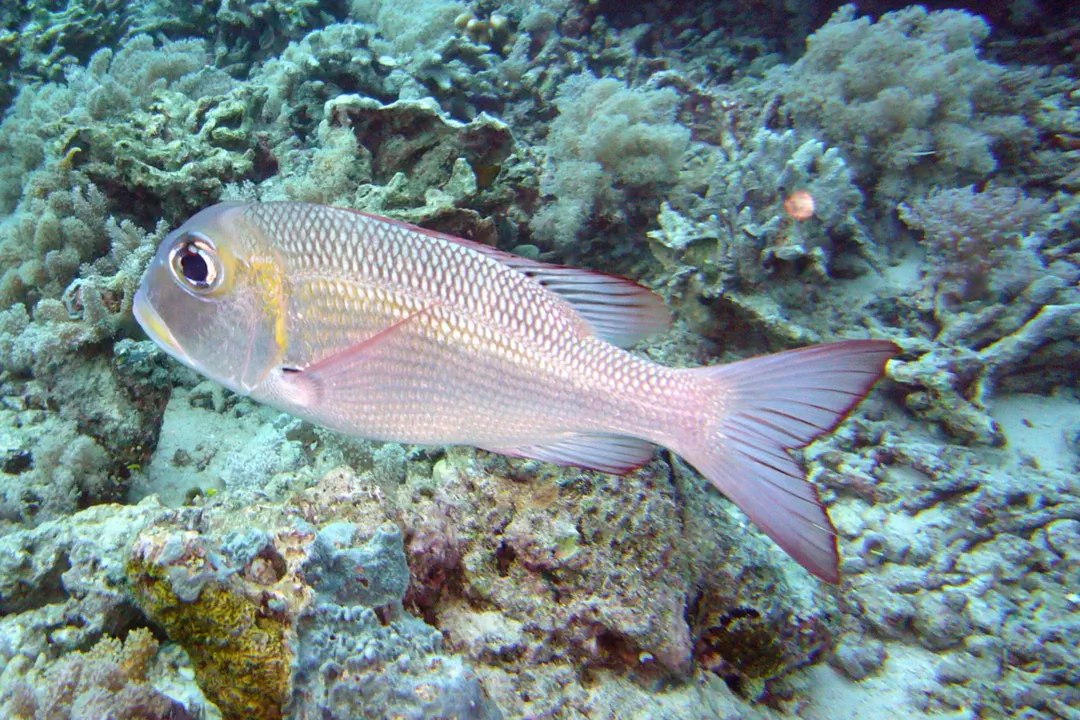
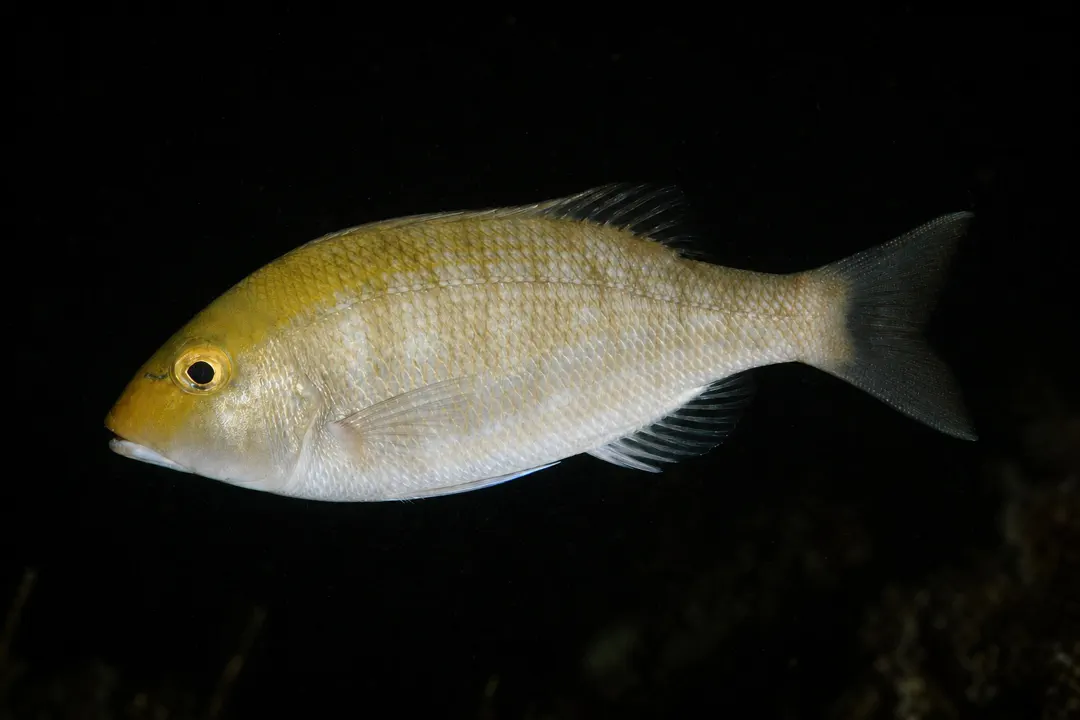
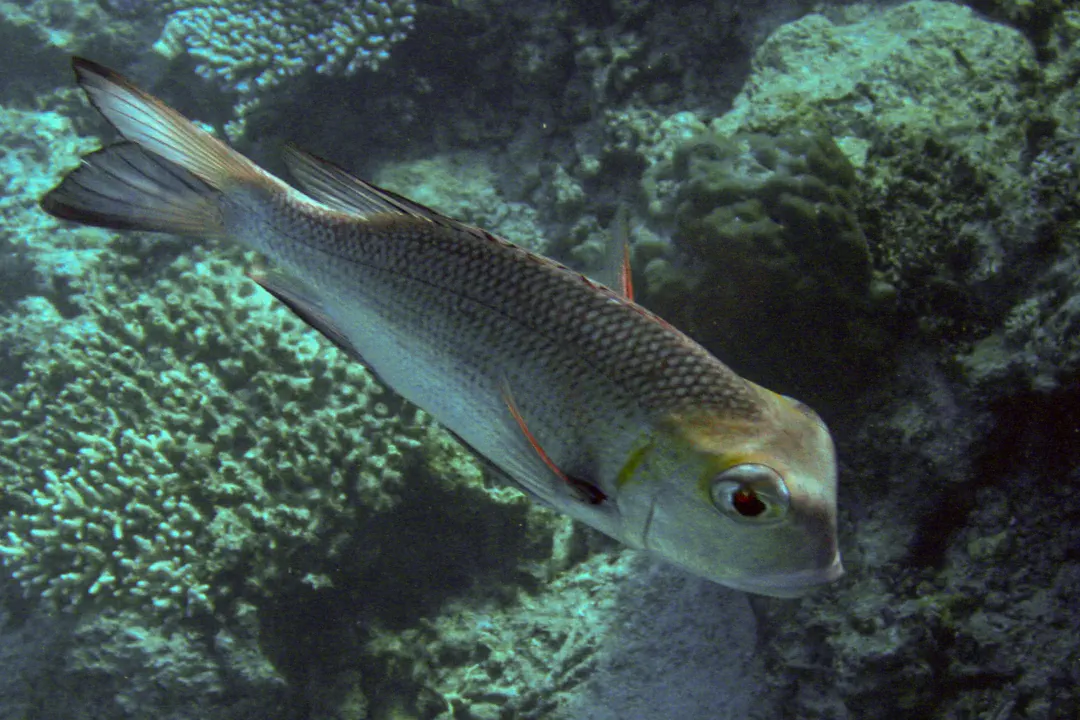
Monotaxis grandoculis is a species of emperor native to the Indian Ocean and the Pacific Ocean to the Hawaiian Islands.
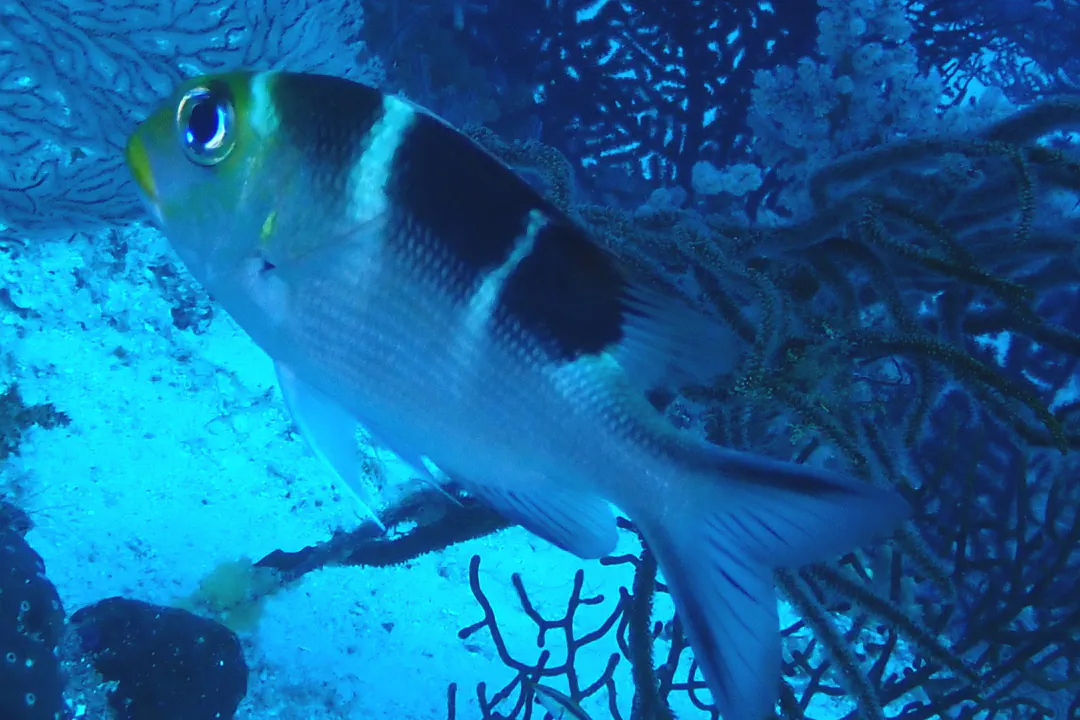
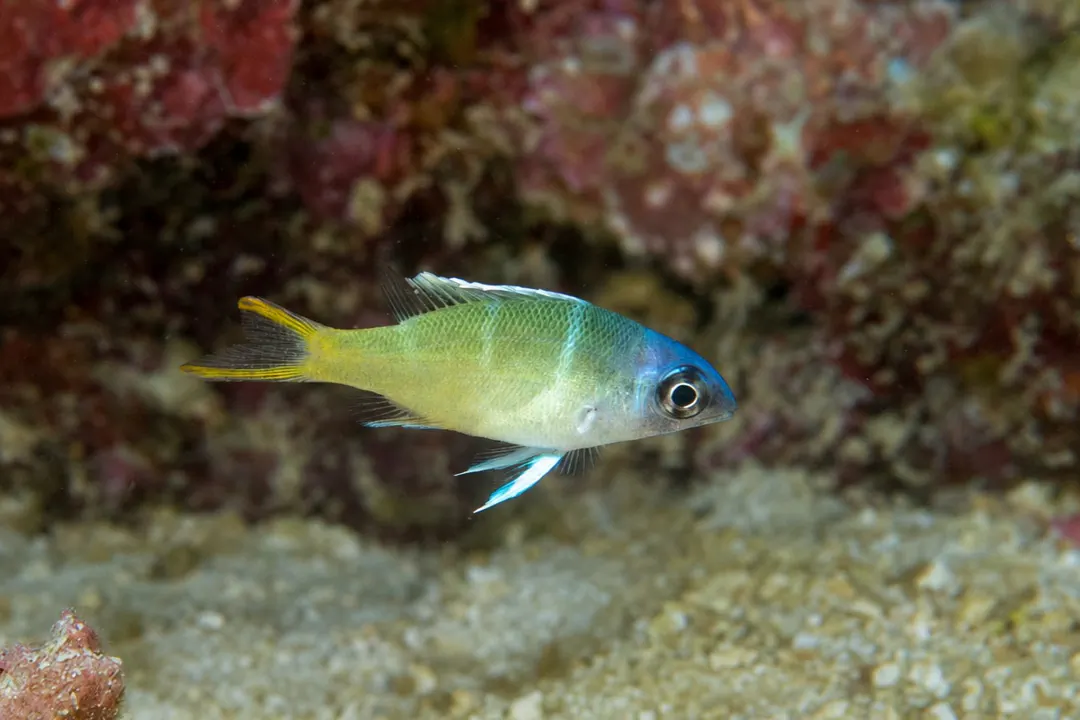
Large adults are silvery-grey to bluish-grey becoming paler below, with dark scale margins, yellow to pinkish lips, a yellowish area around the eye, and a narrow pinkish to red margin on the fins. Juveniles are dark above becoming paler below with 3-4 white bars on the side and a yellow tail with dark upper body that fades and contracts upward with age, crossed by three or four white bars that are wider than on Monotaxis heterodon (Redfin Emperor) and a yellow tail. Large adults rarely seen, usually observed as an intermediate stage with some black on back and visible white bars. This species can reach a length of 60 centimetres (24 in) TL though most do not exceed 40 centimetres (16 in). It has been recorded to reach a weight of 5.9 kilograms (13 lb).
Dorsal fin X, 10; Anal fin III, 9; Pectoral fin 13-14; Lateral line scales 44-47; scale rows between lateral line and anal-fin origin 13.5. Large adults have a rounded head with thickened lips.
Indo-Pacific: Red Sea and East Africa to the Hawaiian Islands and southeastern Oceania, north to Japan, south to Australia.
It inhabits areas with sand or rubble substrates adjacent to coral reefs at depths of from 1 to 100 metres (3.3 to 328.1 ft), mostly between 5 to 30 metres (16 to 98 ft). Usually feeds at night on a range of invertebrates, including gastropod molluscs, brittlestars and sea urchins - also consumes crabs, polychaete worms, tunicates, and holothurians.
This species is commercially important as a food fish and is also popular as a game fish. It can also be found in the aquarium trade. It is currently the only known member of its genus.
© Jim GreenfieldAll rights reserved 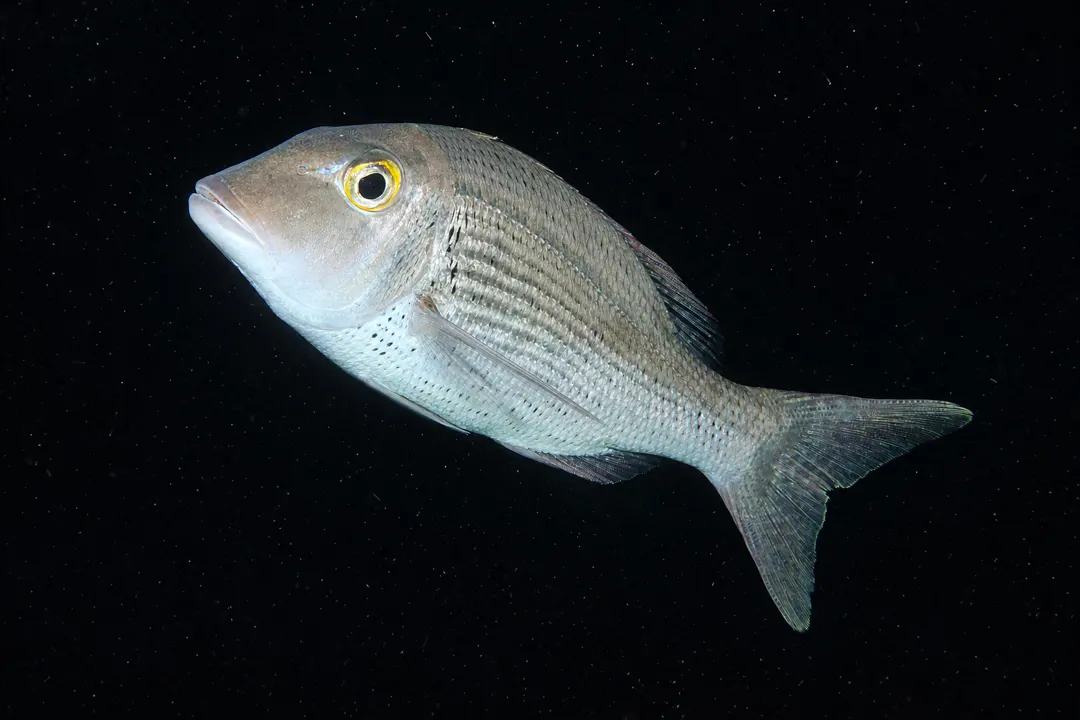 © seabook.appAll rights reserved
  © seabook.appAll rights reserved
  © Mario BassiniCC BY 4.0 · iNaturalist
  © desertnaturalistCC BY 4.0 · iNaturalist
  © seabook.appAll rights reserved
 Humpnose Bigeye Bream is classified as poisonous. Always exercise caution and keep a safe distance.
Humpnose Bigeye Bream can be found at depths of up to 100 meters.
Download Seabook free for iOS and Android.