 © Dan SchofieldCC BY 4.0 · iNaturalist
Forsskal's Pleurobranch
Pleurobranchus forskalii
Pleurobranchus peronii
Pleurobranchus peronii, commonly known as Peron's Pleurobranch, is a marine side-gilled sea slug in the family Pleurobranchidae, found in the Indo-West Pacific region.
Pleurobranchus peronii was first described by Georges Cuvier in 1804 in Annales du Muséum d’Histoire Naturelle, in an article describing the new genus Pleurobranchus. The original name of the species is Pleurobranchus peronii Cuvier, 1804, and it was established as the type species of Pleurobranchus by monotypy. The name Pleurobranchus is formed from Greek pleura meaning 'side' and branchos meaning 'gill', referring to the lateral position of the animal’s respiratory organ. The specific epithet peronii honors the French naturalist François Péron, with the Latinized genitive meaning 'of Péron'. The species has also appeared in combinations involving the subgenera or genera Oscanius, Oscaniella, Pseudolibania, and Susania, which are treated as historical generic synonyms or combinations associated with Pleurobranchus. The currently accepted name is Pleurobranchus peronii Cuvier, 1804.
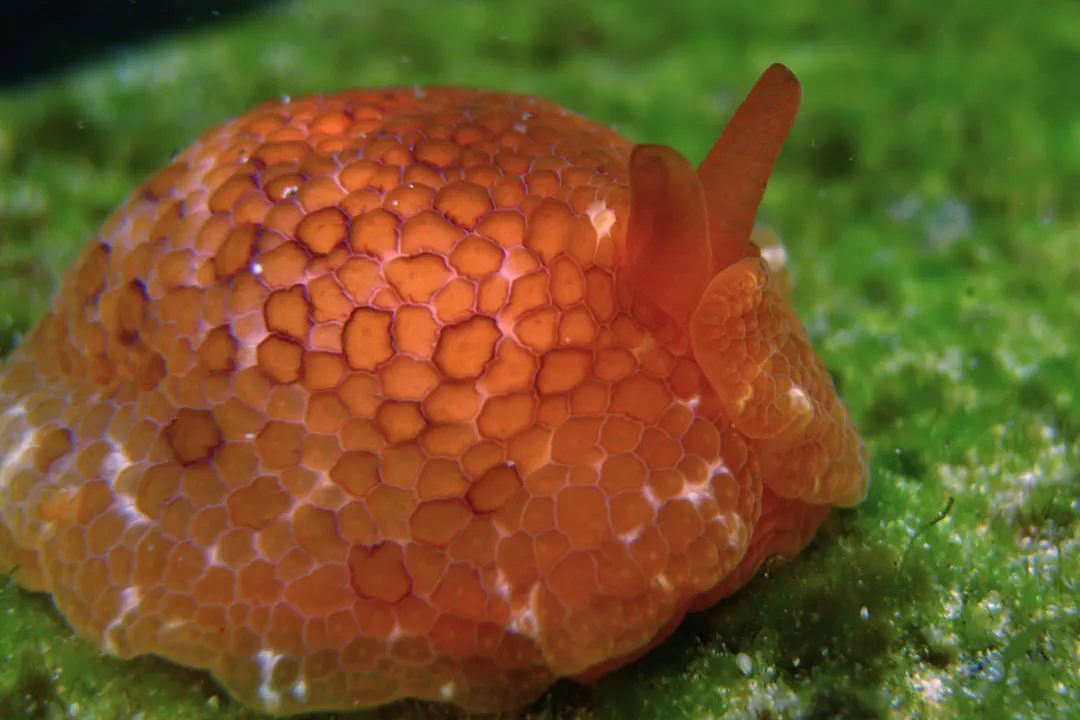
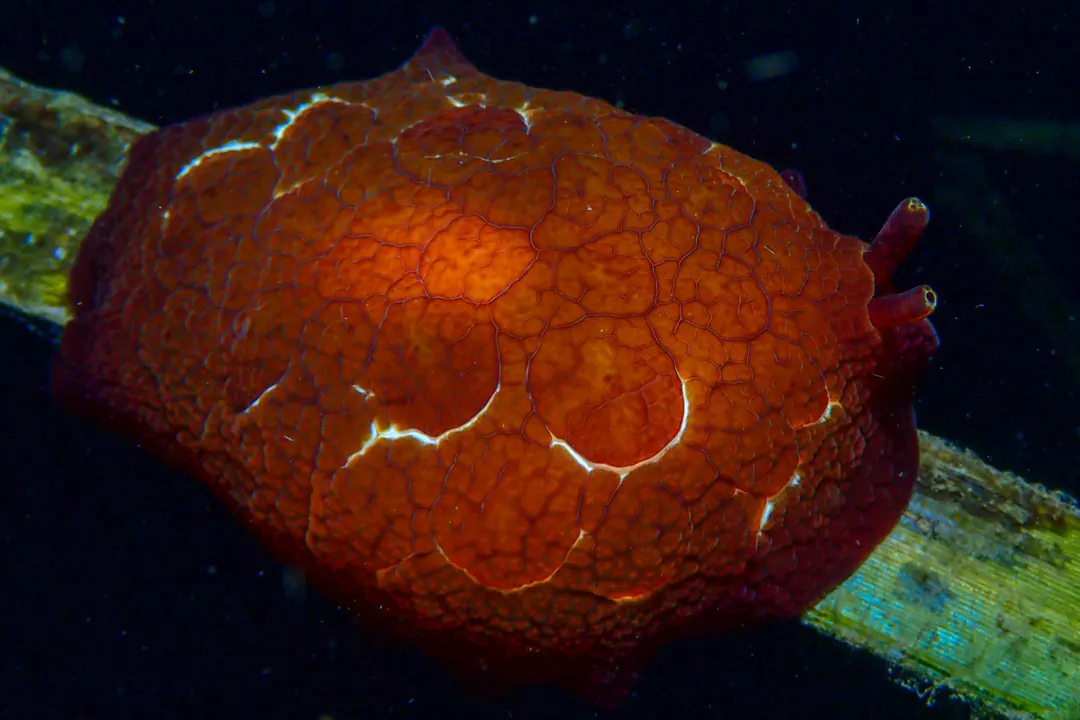
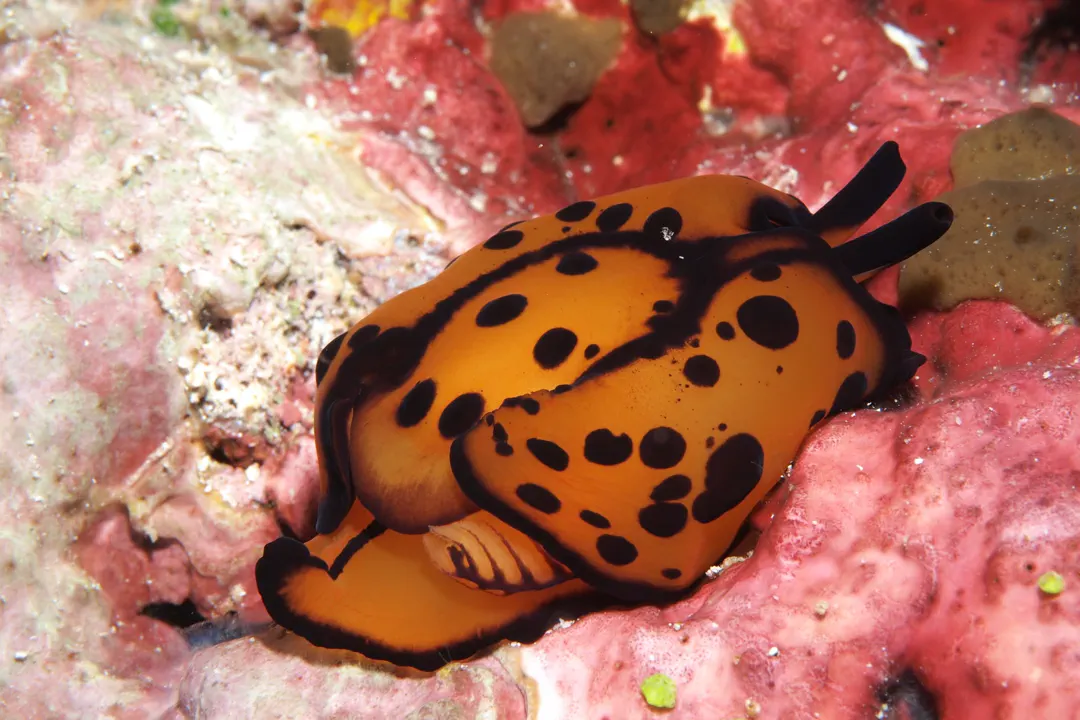
The species has a broad body shape with a low, rounded mantle covered by conspicuous rounded tubercles. Background colour is variable, including translucent white, yellow, brown, red, purple, or dark wine-red, making colour alone an unreliable identification feature. Tubercles on the mantle are commonly ringed or outlined by darker pigment, creating a polygonal or reticulated appearance. Juveniles are usually translucent white with scattered reddish-purple or violet tubercle tips and an orange-to-red mantle edge, which fade as the animal matures. The notum is broad and covered with rounded, papillate tubercles, and the species possesses a typical pleurobranchid side gill beneath the right side of the mantle. Pleurobranchus peronii can be distinguished from Pleurobranchus grandis by the absence of opaque white, semicircular or clearly white reticulate markings. The presence of scattered, relatively large darker papillae or tubercles supports identification of Pleurobranchus peronii over Pleurobranchus forskalii, although colour can overlap. Compared to Pleurobranchus varians, P. peronii has larger, more rounded tubercles and a stronger contrast between dark tubercles and the background. Pleurobranchus albiguttatus has orange or brown spots on the foot, while the foot of P. peronii is described as lighter and unspotted.
Peron's Pleurobranch primarily inhabits shallow coastal habitats, including intertidal pools, reef flats or crests, rocky reefs, and the outer reef slope. The species often shelters beneath rocks, coral rubble, or in crevices, and is typically nocturnal. It is found on rocky shores and reefs, coral rubble, and sandy or muddy sediments near reefs, with records also indicating its presence among Halimeda beds. The depth range of Peron's Pleurobranch is documented from the intertidal zone to approximately 18 m, with one ecological source reporting occurrences in soft sediment habitats to 25 m, although the species’ deepest limit is not firmly established. Geographically, Peron's Pleurobranch is distributed broadly across the Indo-West Pacific, including the eastern Indian Ocean and western Pacific, from southern/eastern Africa, Madagascar, Réunion, Mauritius, and Mayotte through Southeast Asia, Australia, Japan, the Great Barrier Reef, New Caledonia, the Cook Islands, and Hawaiʻi.
Peron's Pleurobranch is primarily nocturnal, emerging at night to feed while sheltering under rocks or coral fragments during the day. The species is characterized as solitary, with no evidence of coordinated social behavior or stable groups. Peron's Pleurobranch produces a white or cream, spiral egg ribbon that is attached along one edge to the substrate, featuring a wavy or frilled free edge. As a simultaneous hermaphrodite, Peron's Pleurobranch exhibits typical reproductive characteristics of pleurobranch sea slugs, although specific mating descriptions or breeding seasons are not documented. The species has been observed to avoid illumination, indicating sensitivity to light. When dislodged, Peron's Pleurobranch may extend its mantle, but this behavior is not specifically a response to divers.
Peron's Pleurobranch feeds primarily on colonial ascidians (sea squirts), with Ritterella reported as a food source. It feeds by extending a protrusible oral tube from beneath the head and consuming tissue from the ascidian colony.
No documented commercial fishery for Peron's Pleurobranch was identified. A 2025 study documented traditional harvesting and consumption of large air-breathing sea slugs in Japan’s Ryukyu Islands, reporting that the harvested animals were likely from a different genus, Peronia, rather than Pleurobranchus peronii. Peron's Pleurobranch is listed as unsuitable for aquarium keeping, with no captive-breeding information reported. No authoritative source documents Peron's Pleurobranch as an established food species, and the evidence concerning edible sea slugs pertains to Peronia, not Pleurobranchus. No verified human toxicity, venom, poisoning, or medically significant injury associated specifically with Peron's Pleurobranch was found. The species is listed as IUCN Not Evaluated, and no IUCN Red List assessment was identified. Peron's Pleurobranch is reported as not evaluated under CITES in the aquarium-trade database.
© Dan SchofieldCC BY 4.0 · iNaturalist 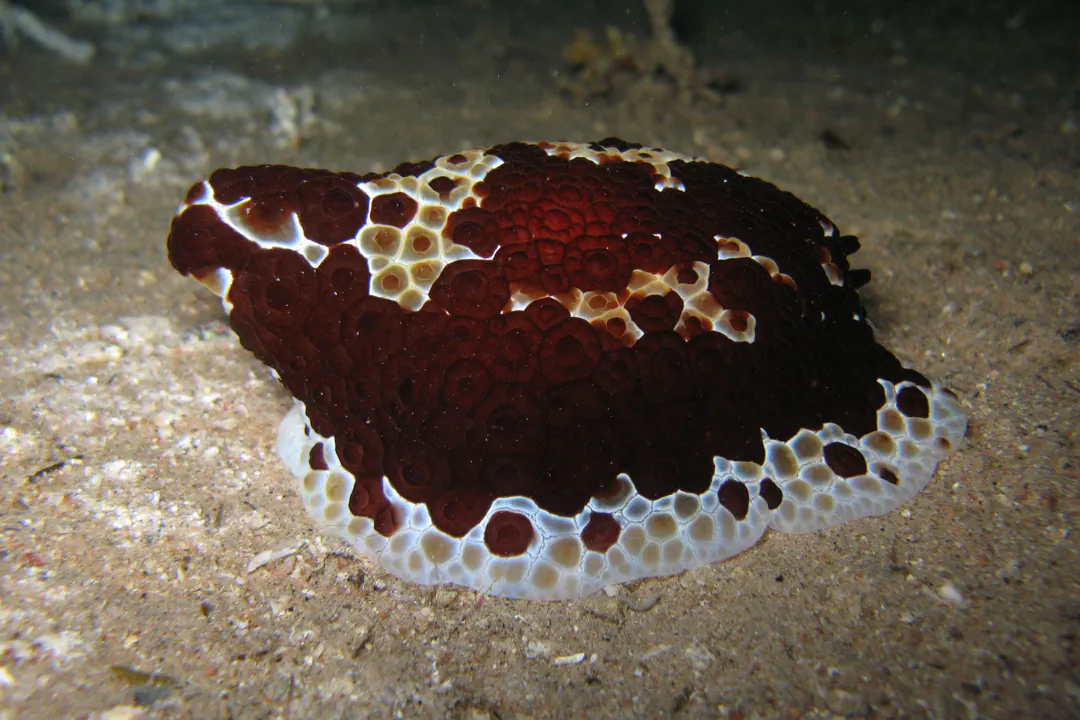 © prilfishCC BY 4.0 · iNaturalist
 © Steve ChildsCC BY 4.0 · iNaturalist
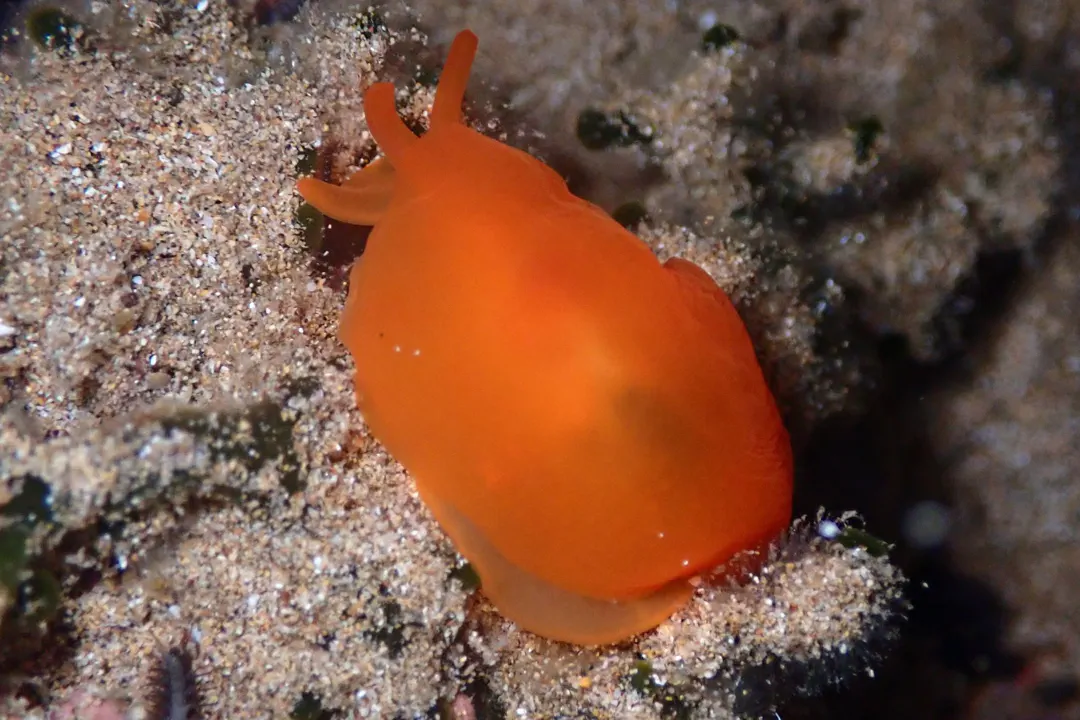 © Cricket RaspetCC BY 4.0 · iNaturalist
Peron's Pleurobranch has no known danger to humans. However, always observe marine life responsibly.
Peron's Pleurobranch can be found at depths of up to 25 meters.
Download Seabook free for iOS and Android.