 © Roger RittmasterCC BY 4.0 · iNaturalist
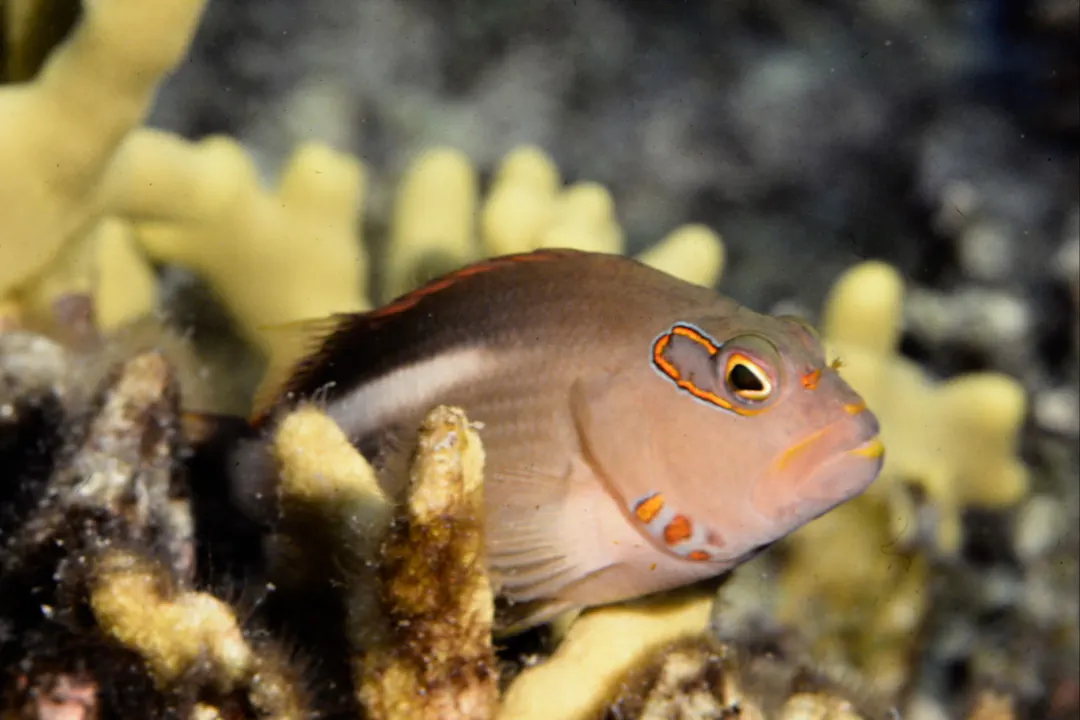
Arc-eye Hawkfish
Paracirrhites arcatus
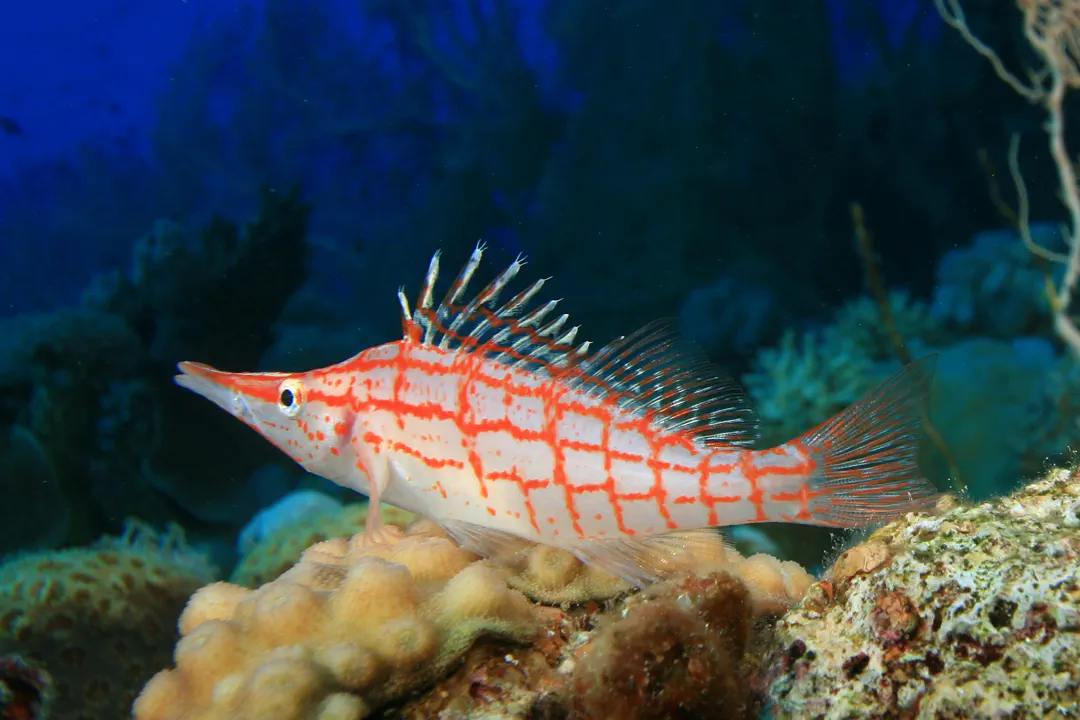
Oxycirrhites typus
Oxycirrhites typus is a species of hawkfish found on tropical reefs of the Indian Ocean and the Pacific Ocean, where it can be found at depths around 10 to 100 m (33 to 328 ft). It can also be found in the aquarium trade. It is currently the only known member in its genus.
This species can reach 13 cm (5.1 in) in total length. Color of body is whitish with horizontal and vertical red bands forming a cross-hatch pattern. Body is slender, moderately compressed. Snout is very long (~ ½ head length). Upper head profile is slightly concave. A fringe of cirri is on rear edge of front nostril. Mouth is moderately large. A row of small canines is on jaws with a band of simple teeth inside those. Teeth are on center but not sides of roof of mouth. Operculum with 2 flat spines; preopercle strongly serrated; dorsal fin X, 13, continuous, slightly notched between spines and rays, membranes between spines deeply indented, each spine with 2-4 cirri at the tip; anal fin III, 7; tail fin bluntly straight edged; lower 5-6 rays of the pectoral stout, with membranes deeply notched, distinctly longer than other rays, used for perching on the bottom; pelvic I, 5, its origin behind pectoral base; scales smooth, 51-53 on lateral line; no scales between eyes; 3 rows of large scales on cheek.
Indo-Pacific: Red Sea and South Africa to the Hawaiian Islands, north to southern Japan, south to New Caledonia. Eastern Pacific: Gulf of California to northern Colombia and the Galapagos Islands.
It prefers the steep outer slopes of the reefs amongst gorgonians and black corals.
© Roger RittmasterCC BY 4.0 · iNaturalist 
 © Debra BakerCC BY 4.0 · iNaturalist
 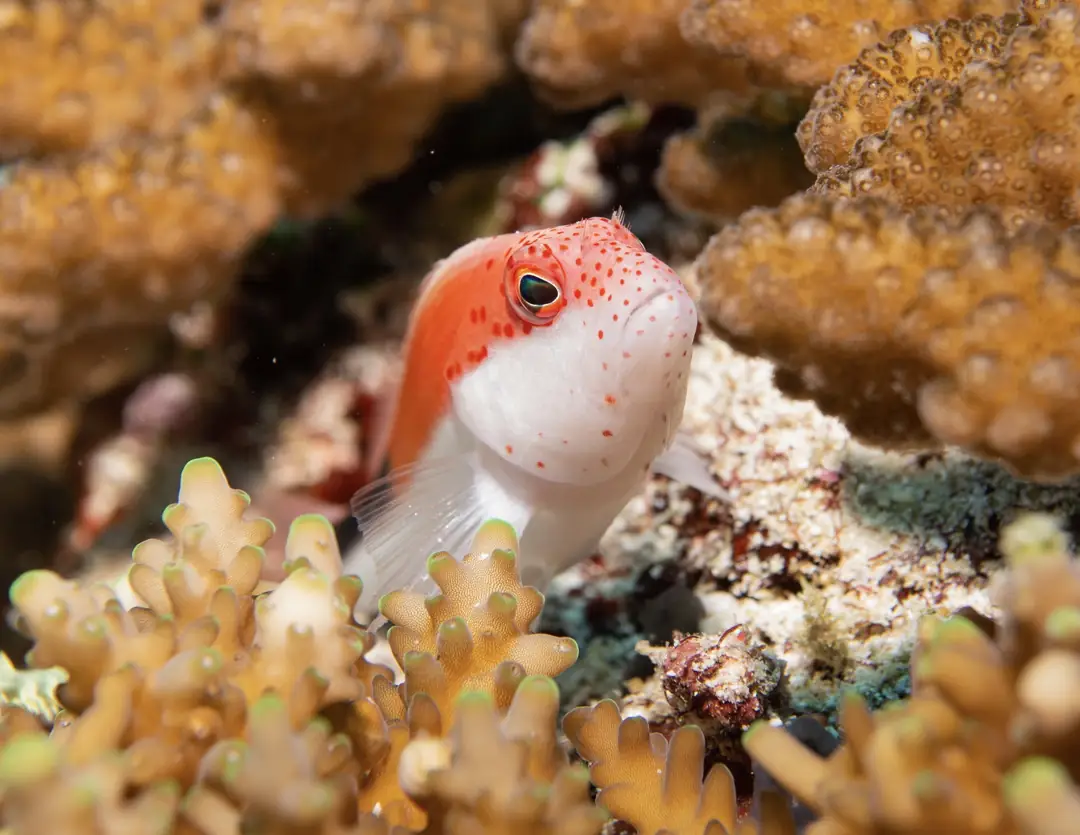 © Stas KuryanAll rights reserved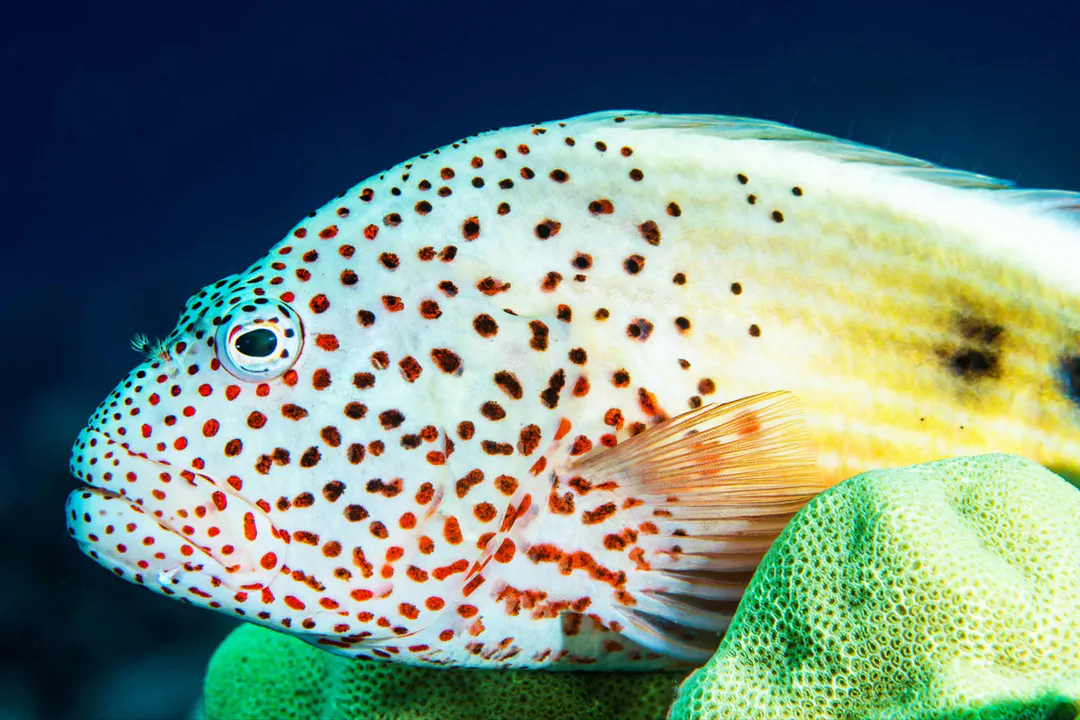
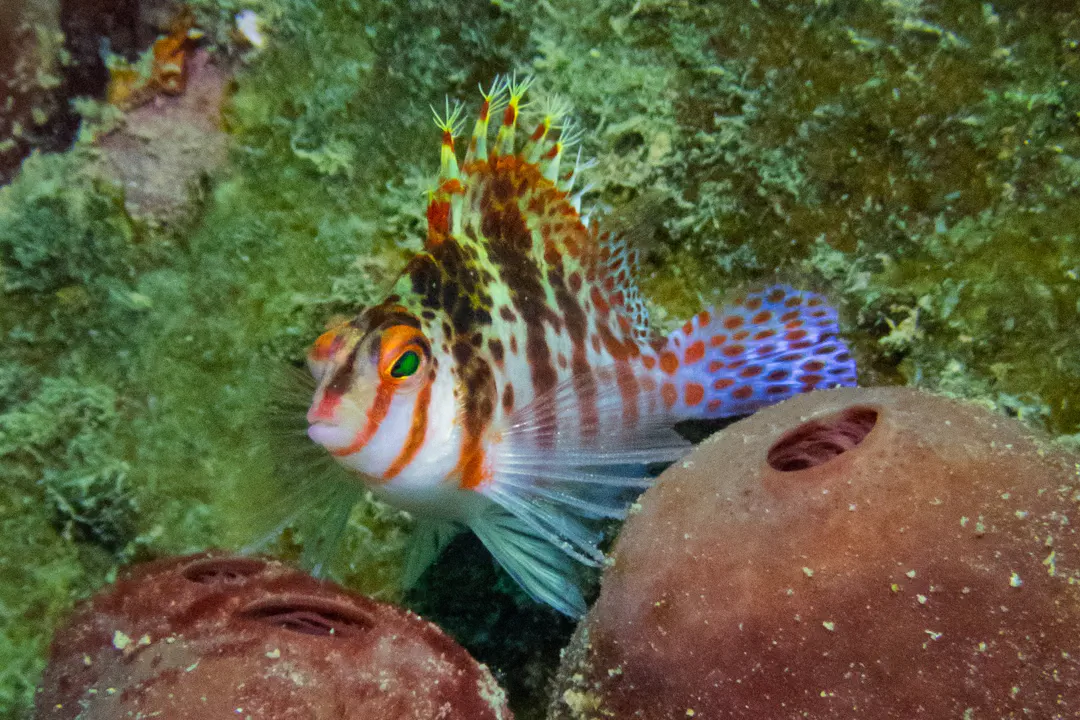 © Pierre PericardCC BY 4.0 · iNaturalist
 Longnose Hawkfish has no known danger to humans. However, always observe marine life responsibly.
Longnose Hawkfish can be found at depths of up to 100 meters.
Download Seabook free for iOS and Android.