 © seabook.appAll rights reserved
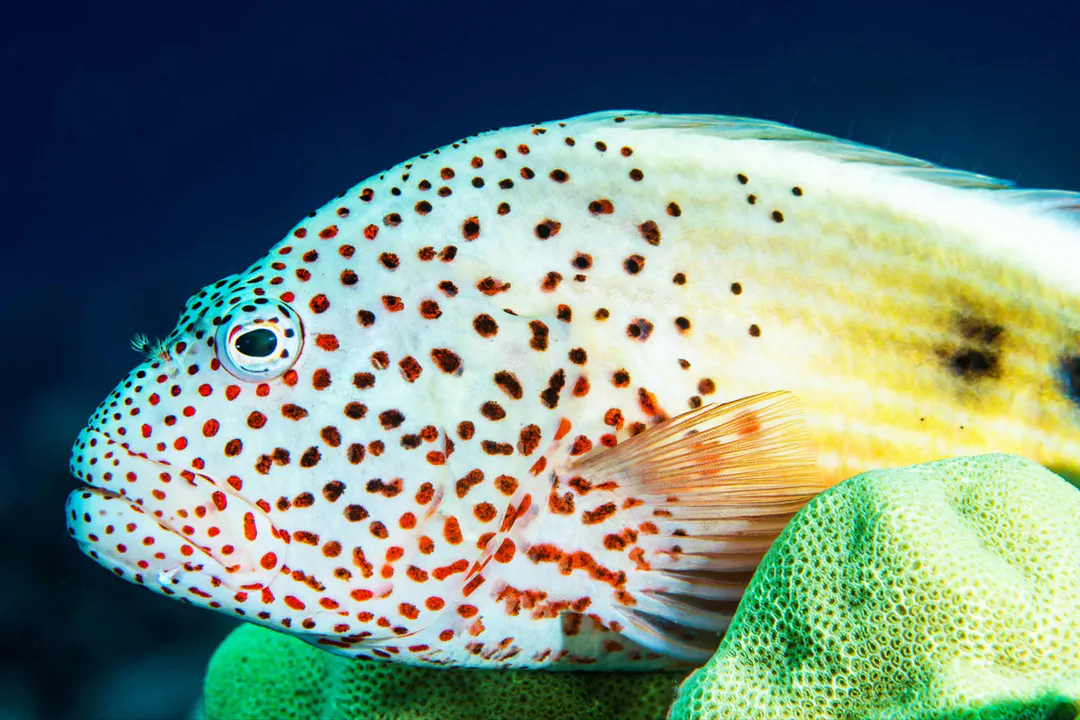
Blackside Hawkfish
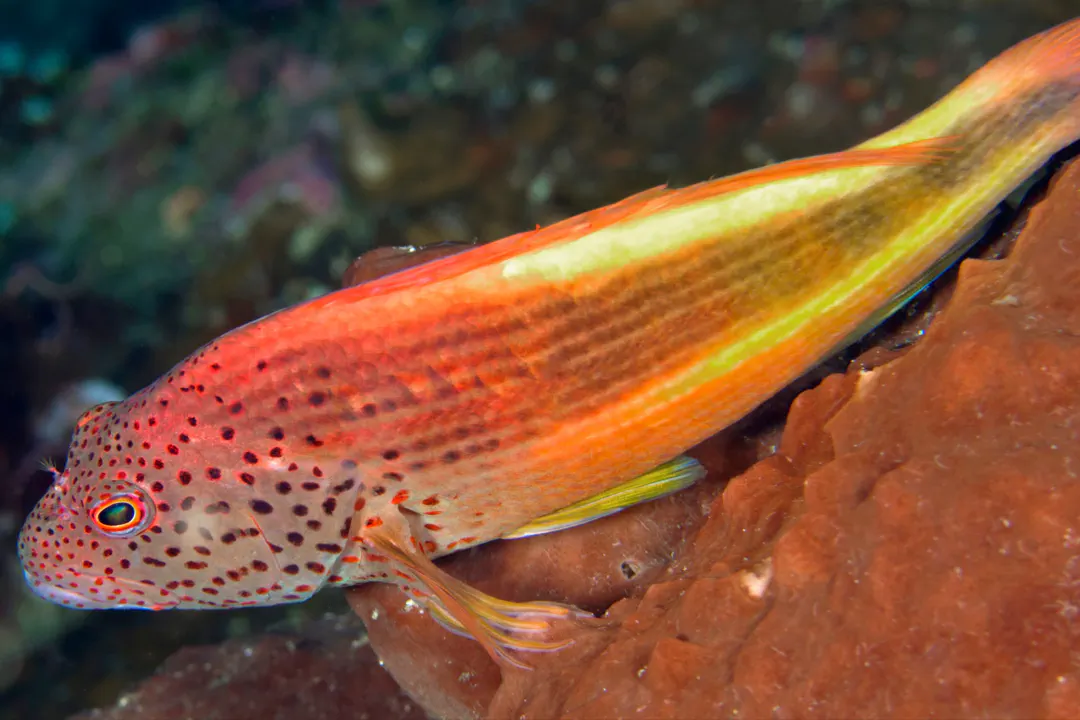
Paracirrhites forsteri
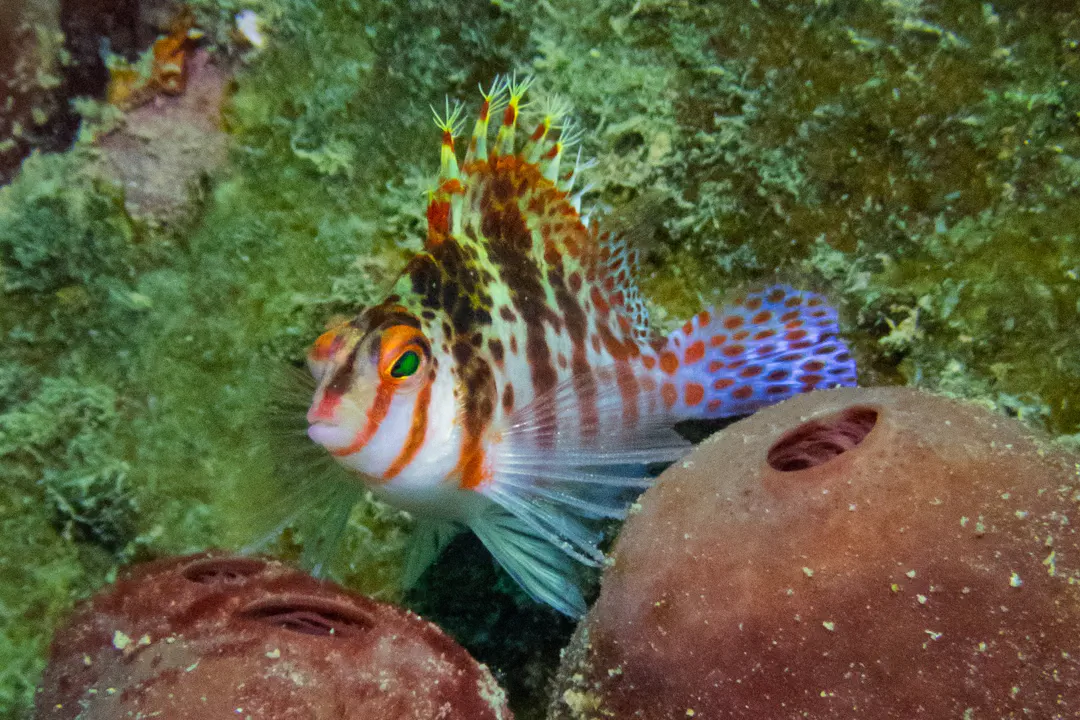
Paracirrhites arcatus
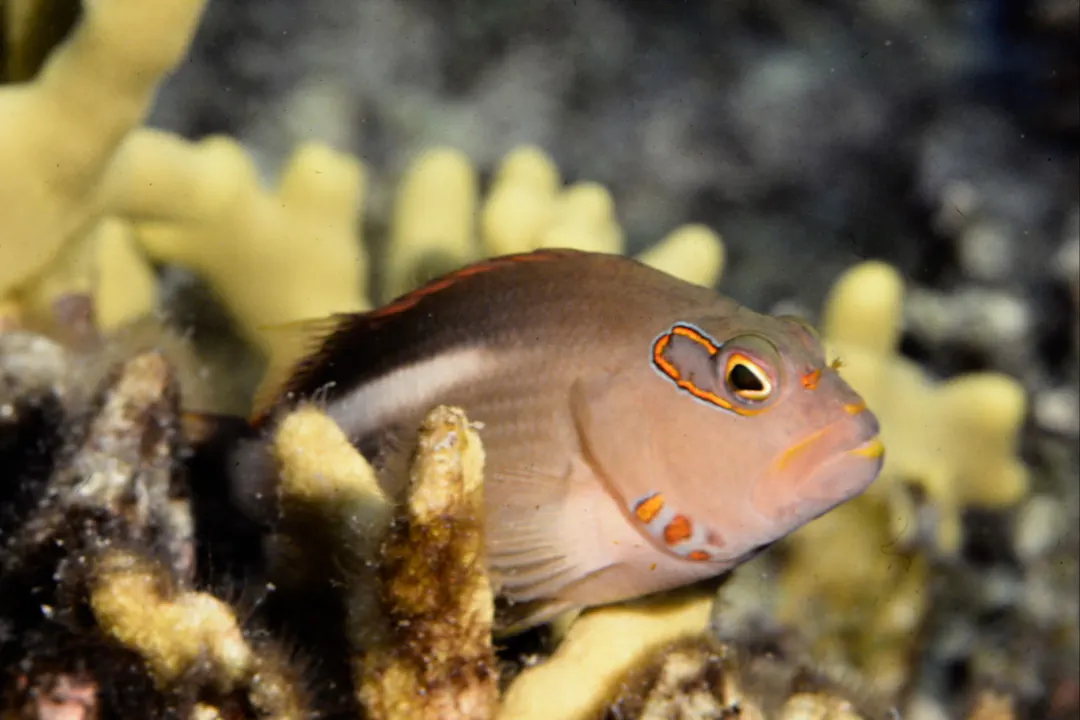
Paracirrhites arcatus is a species of hawkfish belonging to the genus Paracirrhites. It is found in shallow waters in the tropical IndoPacific on reefs, resting on coral heads much of the time.
The genus name Paracirrhites derives from the Greek word para, meaning "the side of" plus the Latin word cirrus, meaning "curl". The species name arcatus, meaning "arched", refers to the U-shaped marking around the eyes.
Paracirrhites arcatus grows to a maximum size of 20 cm in length, and occurs in a variety of colors. The body may be greenish-brown, dark brown or reddish-orange, while the tail usually is bluish. A broad, longitudinal white band runs along the distal half of the body. A characteristic ring-shaped or U-shaped tricolor marking (red, blue and yellow) occurs around and behind the eyes. The dorsal fin has ten spines and eleven soft rays, and the anal fin has three spines and six soft rays. These voracious predators are very territorial. They spend most of their time perched on corals, especially Acropora, Stylophora, and Pocillopora genera, waiting for prey to approach too close. They mostly feed on small fishes, shrimps, and crabs but also eat isopods, fish eggs and larvae. These fish occasionally find their way into the aquarium trade.
The arc-eye hawkfish is widespread in the tropical Indo-Pacific. Its range extends from East Africa, Madagascar and the Maldives to Hawaii, southern Japan and western, northern and eastern Australia.
The arc-eye hawkfish is a benthic species associated with coral reefs. It usually can be found in lagoon and seaward reefs, at a depth of 1–30 m (3 ft 3 in–98 ft 5 in), with a maximum of 91 m (299 ft).
© seabook.appAll rights reserved 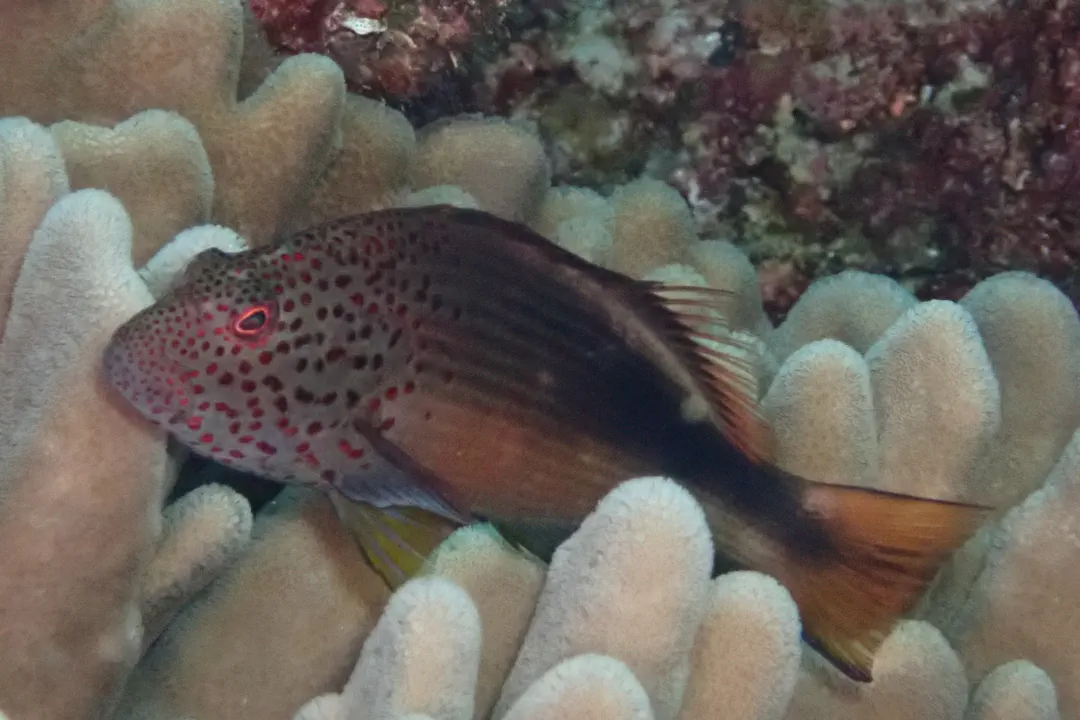 © Debra BakerCC BY 4.0 · iNaturalist
  © Stas KuryanAll rights reserved
  © seabook.appAll rights reserved
  © Pierre PericardCC BY 4.0 · iNaturalist
  © Georgina JonesCC BY-SA 4.0 · iNaturalist
 Arc-eye Hawkfish has no known danger to humans. However, always observe marine life responsibly.
Arc-eye Hawkfish can be found at depths of up to 91 meters.
Download Seabook free for iOS and Android.