 © Roger RittmasterCC BY 4.0 · iNaturalist
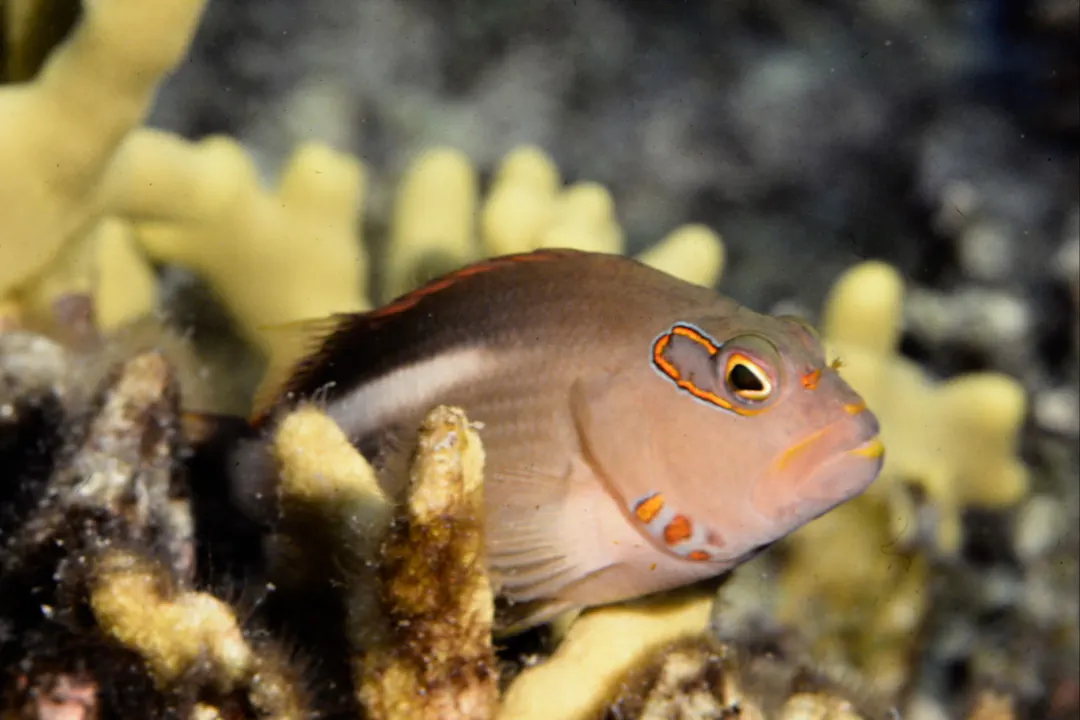
Arc-eye Hawkfish
Paracirrhites arcatus
Cirrhitus rivulatus
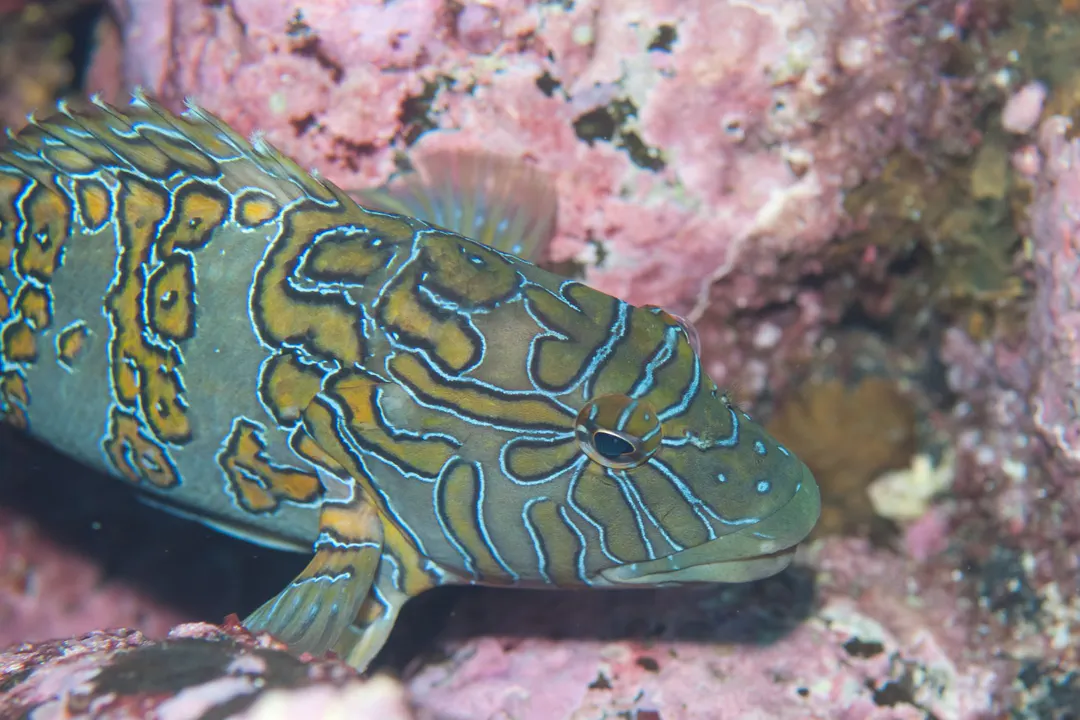
Cirrhitus rivulatus is a species of hawkfish. It is a marine fish and the largest of the hawkfish family with maximum size of 60 cm (24 in) in total length. It is known for its social behavior towards scuba divers and its uncanny ability to perch on its pectoral fins. This particular species can be found mainly along the Gulf of California, reaching as far as northern Colombia and the Galapagos Islands. It is a predator, mostly feeding on other small fish and crustaceans.
Body coloration is olive green to red, with 4 dark oblique bars with cobalt blue borders. Head is with similar dark bars. Body is moderately deep and compressed; dorsal fin with 10 thick spines and 11 to 12 soft rays (X,11-12); interspinal membranes with terminal cirri; pectoral fins wide, with 14 rays, the lower 7 thickened and unbranched, with notched membranes.
It is a favorite fish to observe amongst scuba diving enthusiasts diving along the Pacific coasts of Mexico. Usually remaining motionless, it inhabits large boulders and rocky outcroppings at offshore islands, including Isla San Pedro Nolasco near San Carlos, and Isla Tiburón near Bahía Kino. Mainly occupying shallow waters not unfamiliar to high wave activity, like other hawkfishes, it has a reputation for being able to perch on one of its pectoral fins, and sometimes both, perhaps obtaining its name from this. It has displayed the ability to stand up completely on its tail fin in aquaria. In the ocean, its pectoral fins serve a more a valuable purpose other than for swimming, being strong enough to lock it between rocks subject to wave surge. It is not uncommon to anglers around their native region and is known to be a game fish.
© Roger RittmasterCC BY 4.0 · iNaturalist  © seabook.appAll rights reserved
  © Debra BakerCC BY 4.0 · iNaturalist
 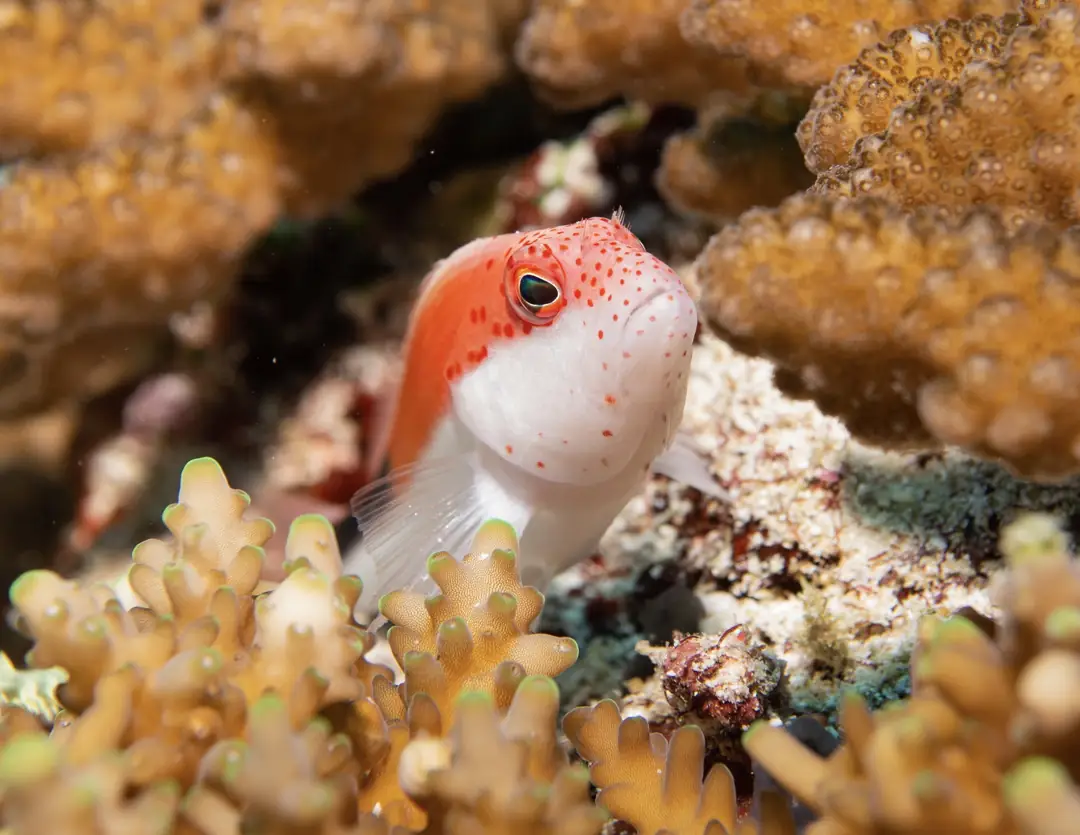 © Stas KuryanAll rights reserved
 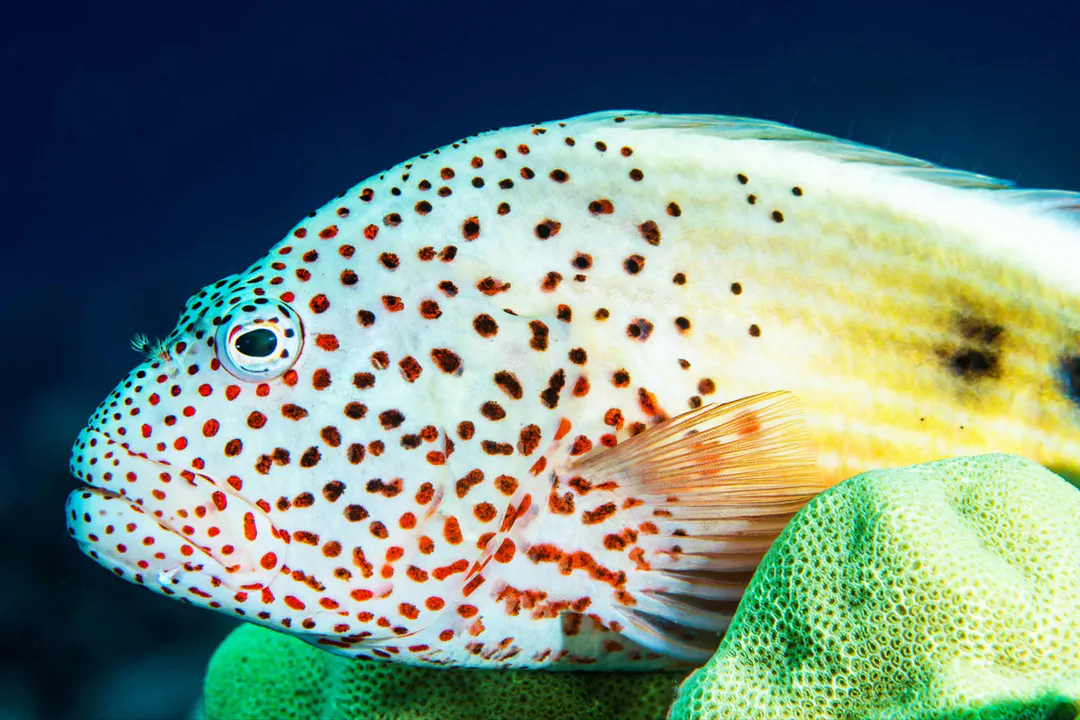 © seabook.appAll rights reserved
 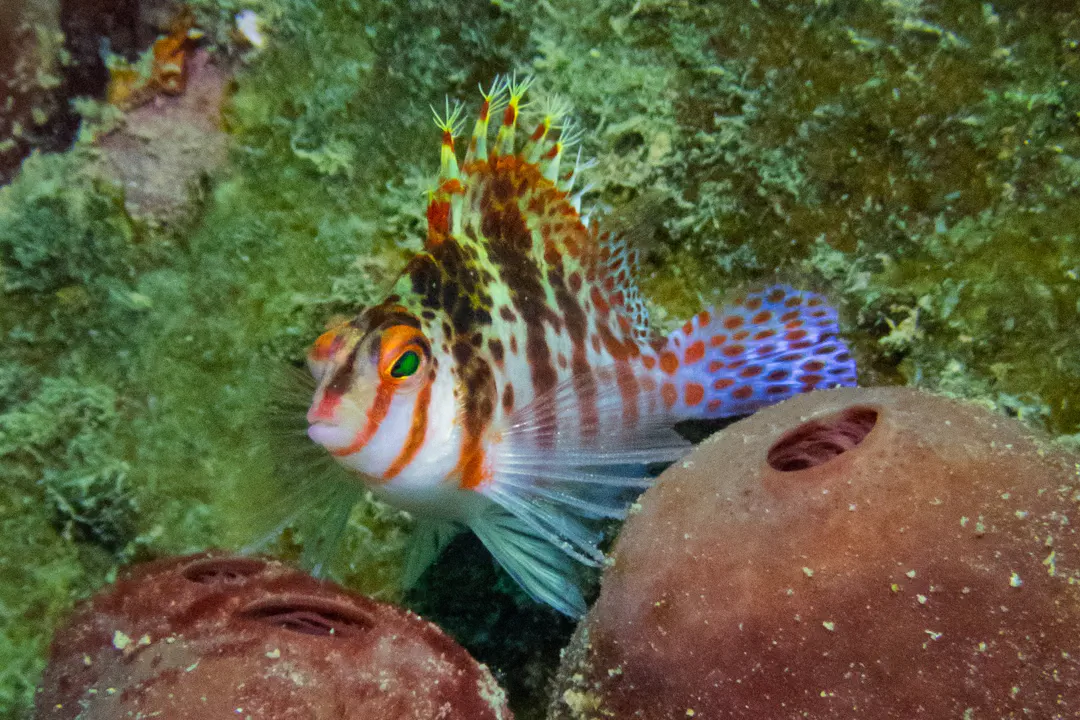 © Pierre PericardCC BY 4.0 · iNaturalist
 Giant Hawkfish has no known danger to humans. However, always observe marine life responsibly.
Giant Hawkfish can be found at depths of up to 23 meters.
Download Seabook free for iOS and Android.