 © seabook.appAll rights reserved
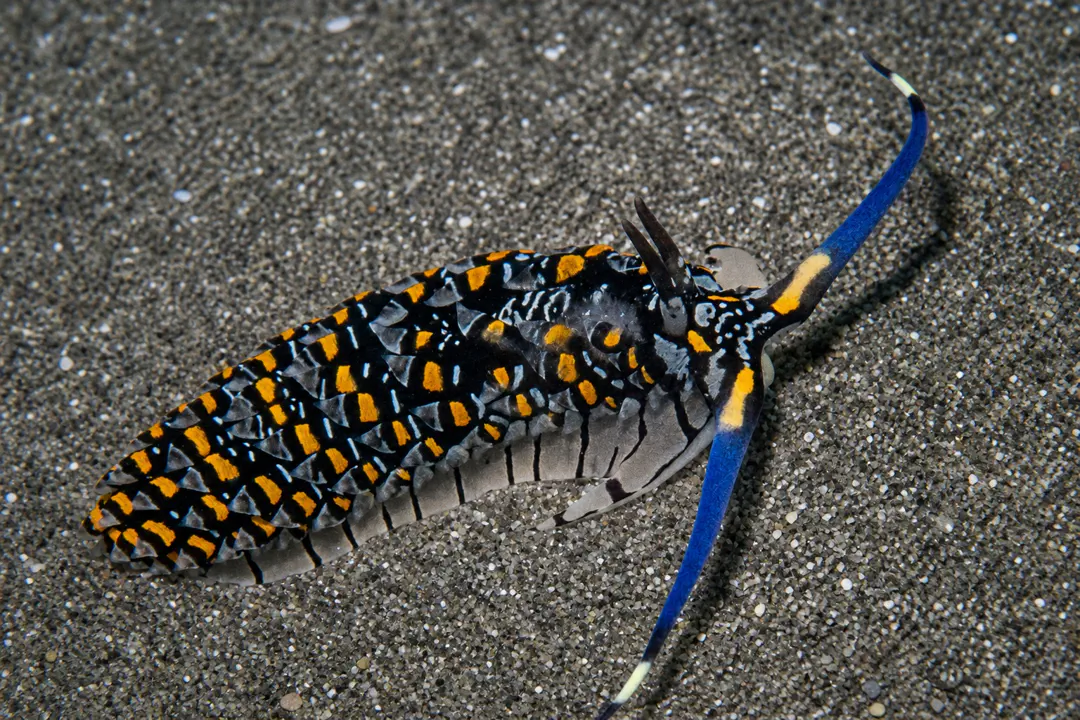
Ambon Cerberilla
Cerberilla ambonensis
 © seabook.appAll rights reserved
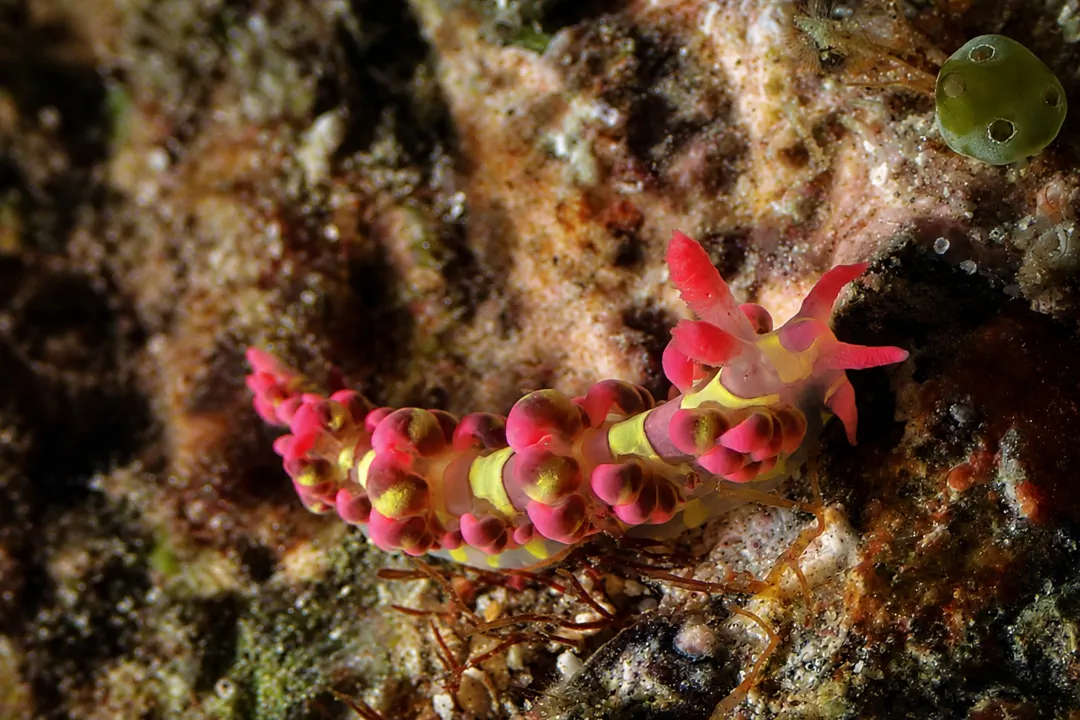
Limenandra barnosii is a species of sea slug, a nudibranch, a marine gastropod mollusc in the family Aeolidiidae.
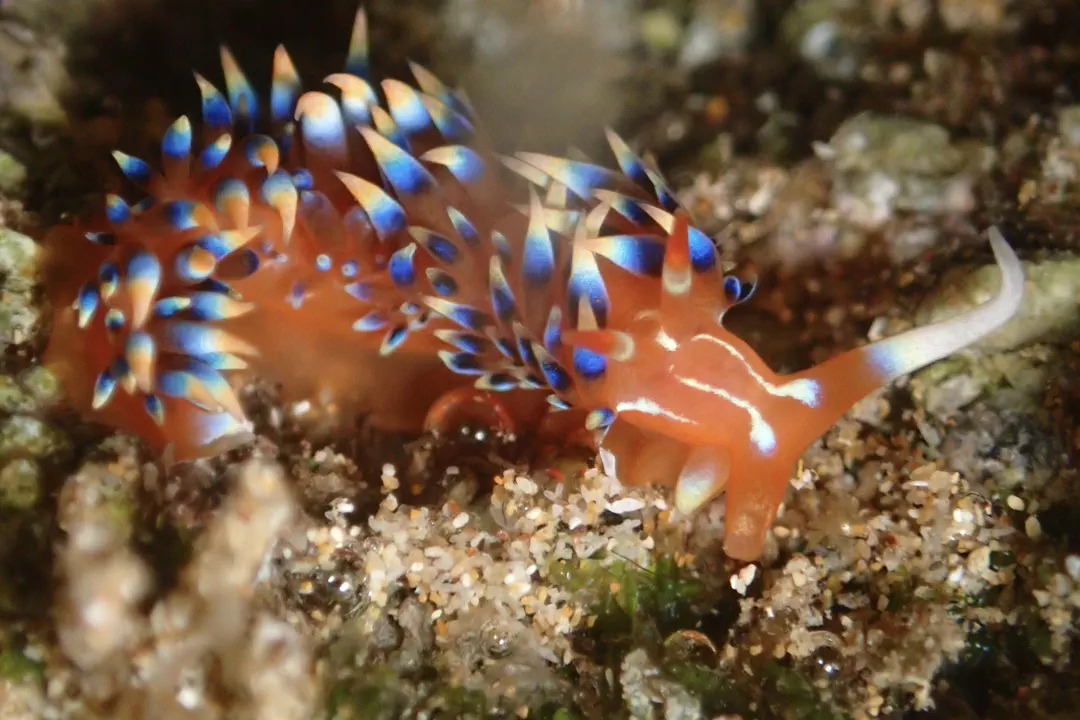
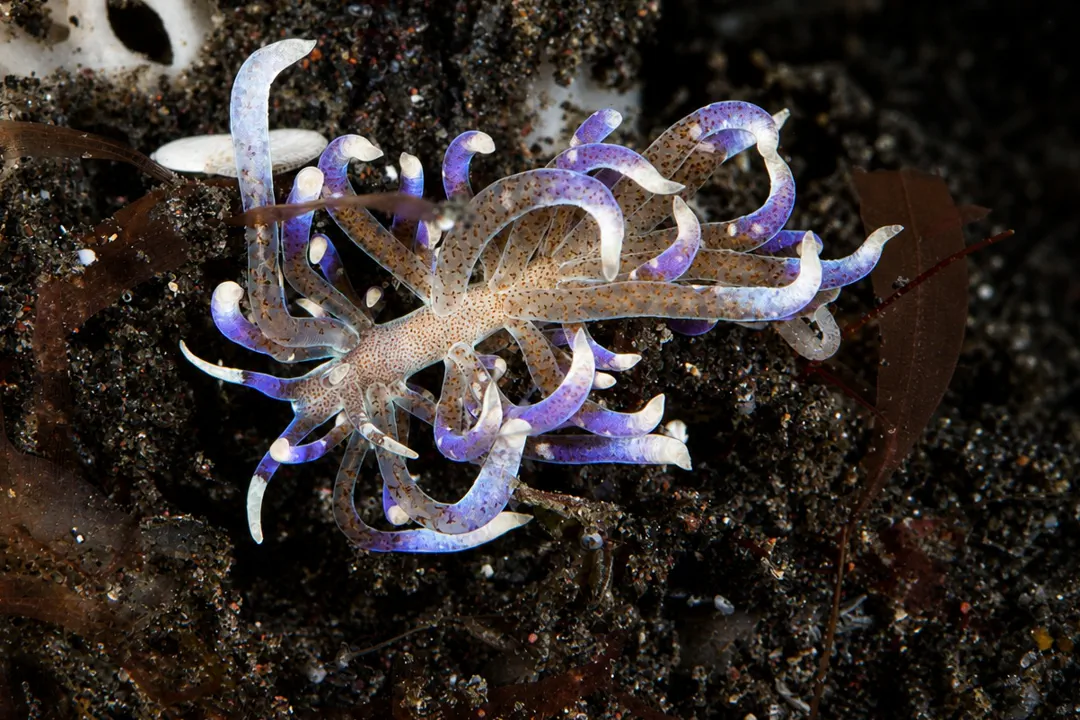
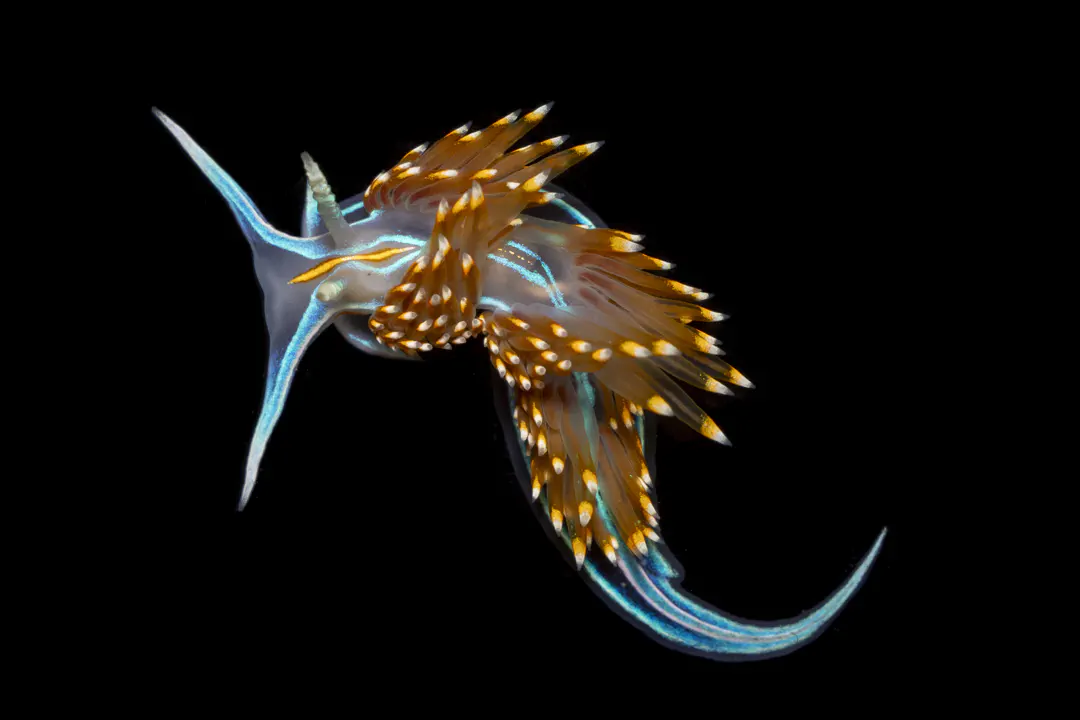
The body colour is pale pink with lime green pigment all over the dorsum. The dorsal surface of the body from head to tail has series of concentric circles that are bright lemon yellow and pinkish purple inside. Rhinophores covered with numerous papillae especially on the backside. The front face is pink and posterior is orange. The edge of the foot alternates transverse translucent and lime green bands, which go from head to tail. The cerata are moderately long, fusiform and rounded. Their tips are slightly recurved inwards. The cerata are dark olive green with lime green pigments scattered all over their surface. Their distal part is pink and they have translucent tips. The bases of the pink rhinophores are very close. They are densely papillate on posterior side, presenting orange colouration on the papillae. These papillae are elongate, not uniform in size and occasionally bifurcated. The oral tentacles are pinkish, elongate and longer than the rhinophores. The tentaculiform foot corners have a deep groove across width. They have same colour as the body and two lime green rings, the first one just below the pink tip and the second one at the midpoint.
Indo-West Pacific from the Philippines, Marshall Islands, Indonesia to New Caledonia.
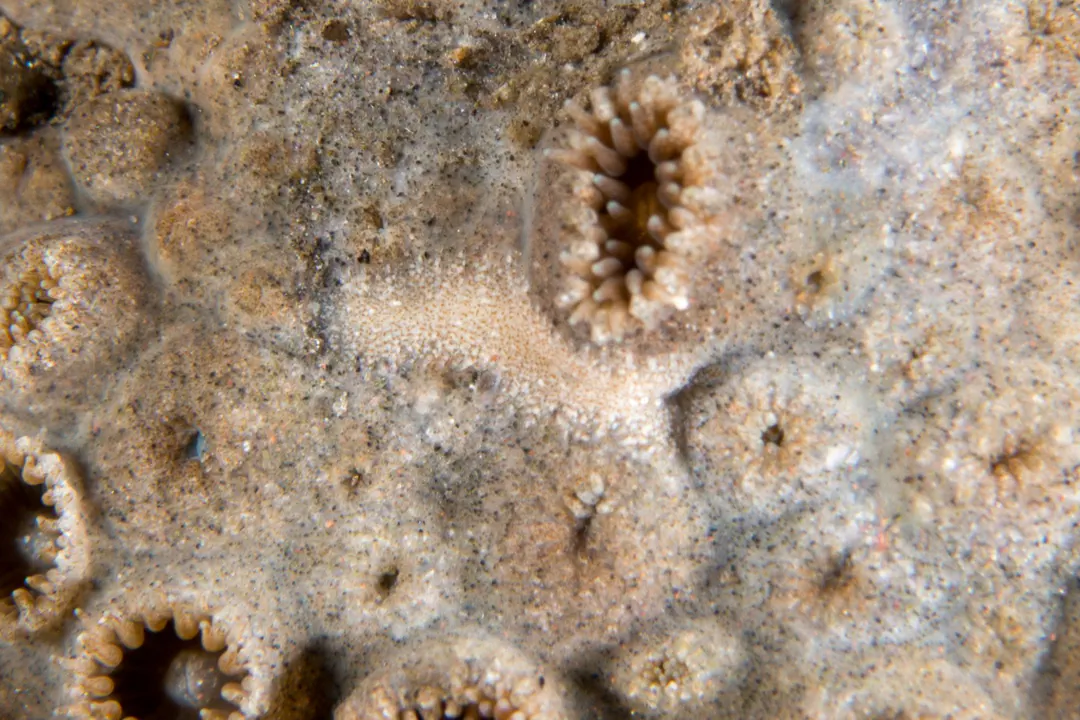
It feeds on the nocturnal anemone Alicia sansibarensis.
© seabook.appAll rights reserved  © Lawrence HyltonAll rights reserved
  © Bernard PictonCC BY 4.0 · iNaturalist
  © Cricket RaspetCC BY 4.0 · iNaturalist
  © seabook.appAll rights reserved
  © NathanCC BY 4.0 · iNaturalist
 Limenandra barnosii has no known danger to humans. However, always observe marine life responsibly.
Download Seabook free for iOS and Android.