 © 呂一起(Lyu yi-chi)CC BY 4.0 · iNaturalist
Asian Butterflyfish
Chaetodon argentatus
Chaetodon melannotus
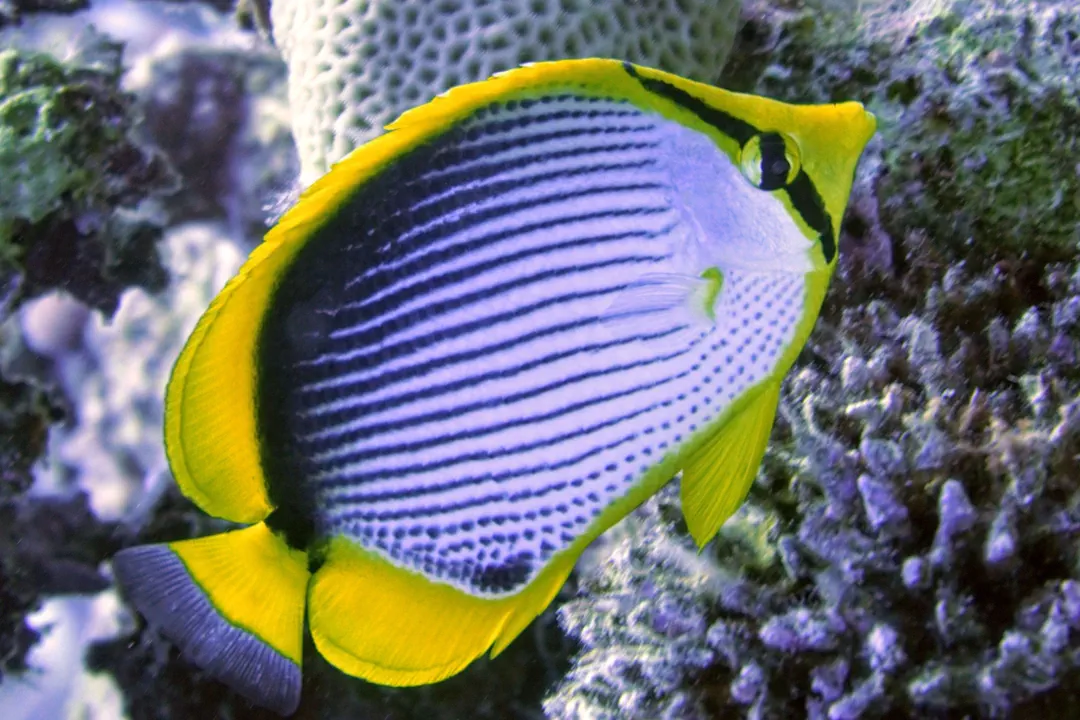
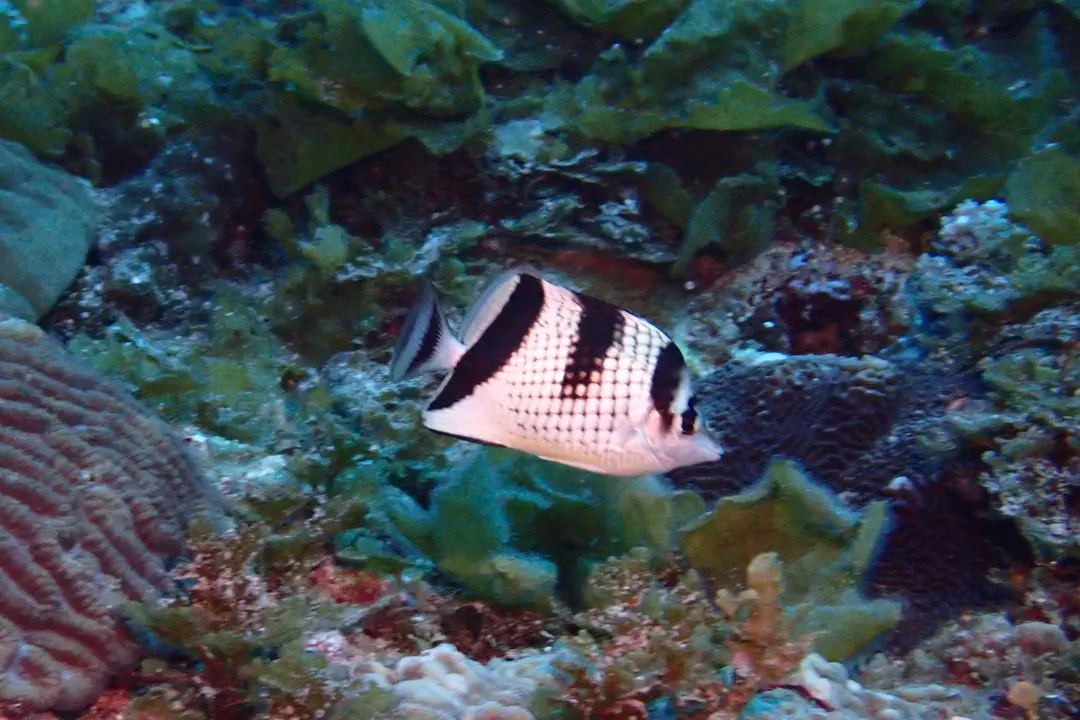
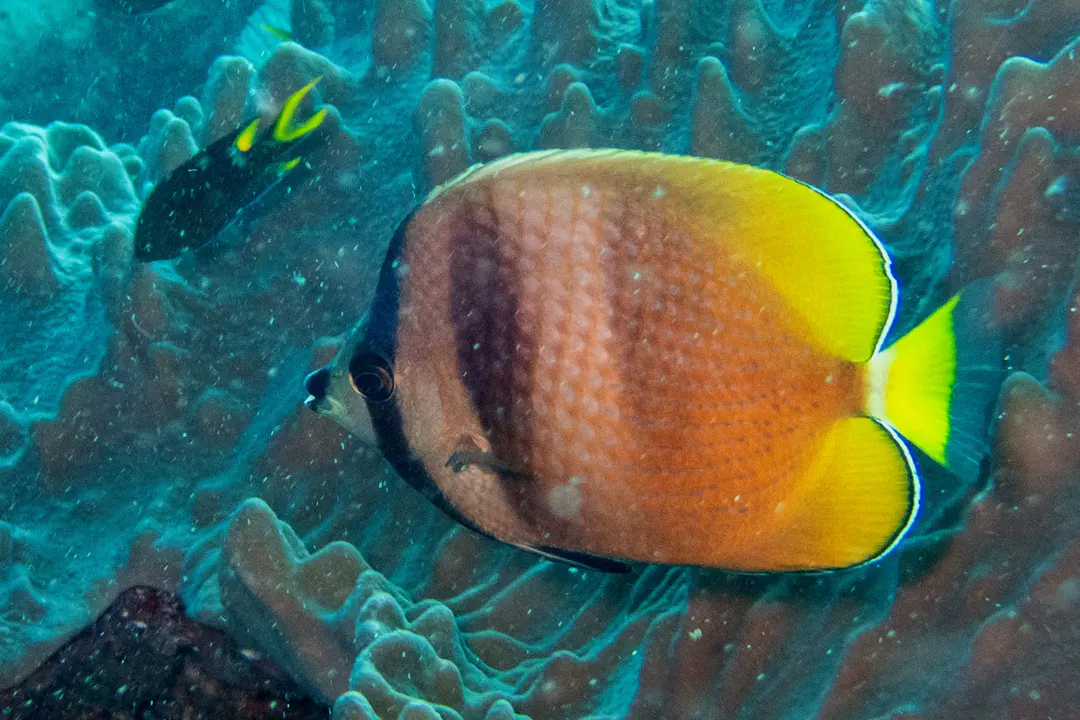
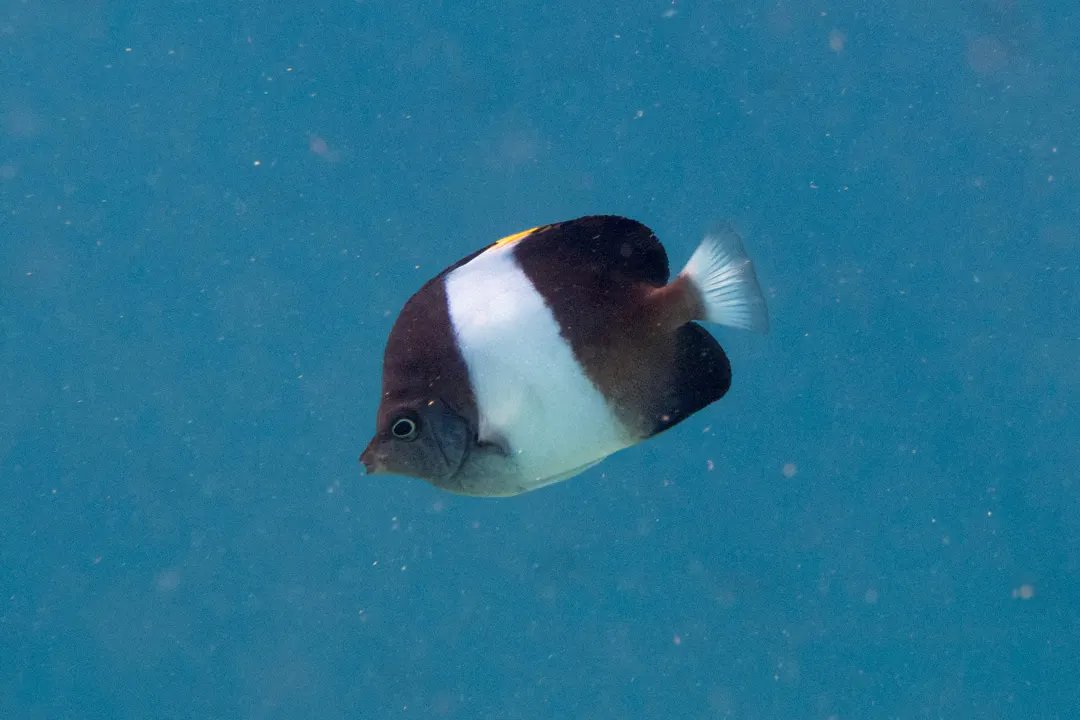
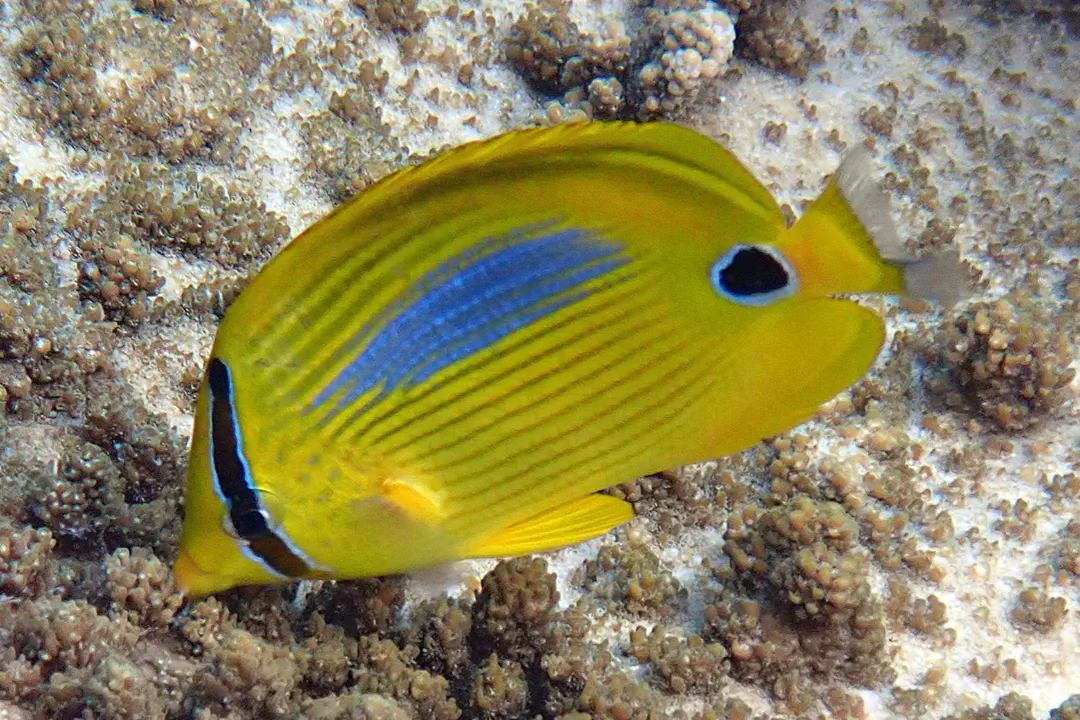
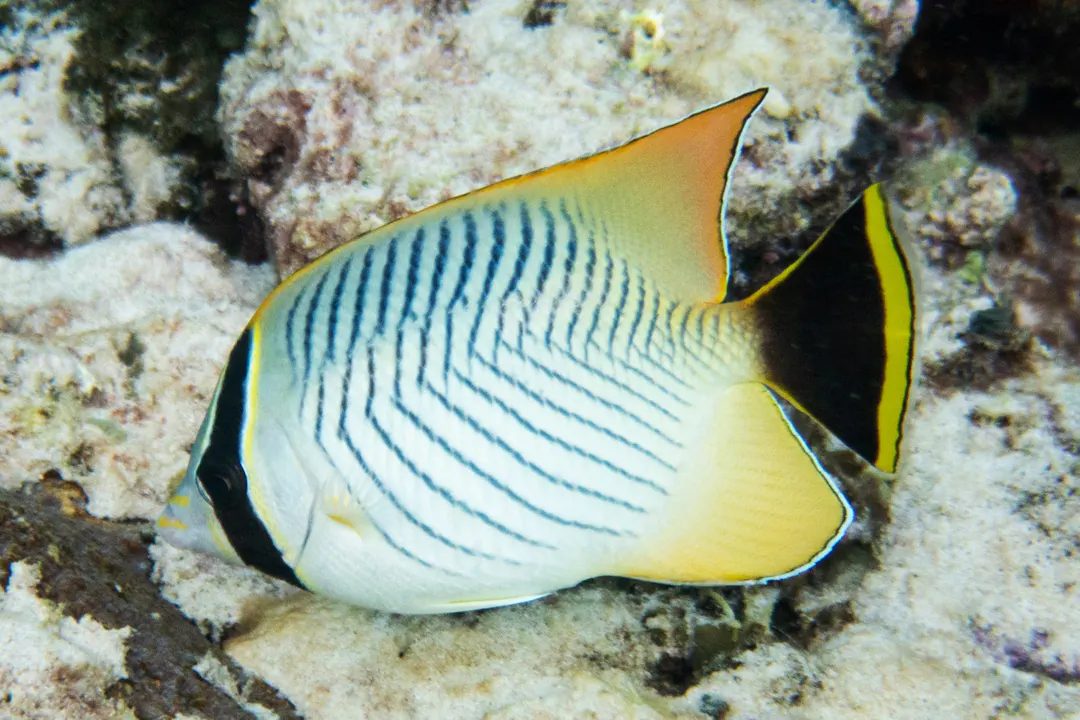
Chaetodon melannotus is a species of butterflyfish (family Chaetodontidae).
This fish grows up to 18 cm (c. 7 in) long, and may live for up to 20 years. When observed at night or when frightened, this species changes color; the dorsal portion of the body turns black except for two white patches. The body is colored silvery, while the entire body has a yellowish edging around the perimeter. The head, back and fins of the fish are painted in bright yellow. The sides of the butterfly are decorated with a pattern and diagonal lines thin at the bottom of the abdomen and expanding as they approach the back. At the very top of the back, these lines merge into a solid black color, due to which this fish got its name from the black-backed butterfly. A wide transverse stripe of black color passes through the eye. Young fish have a faded color, their tail is completely transparent and has a dark spot at the base.
It belongs to the large subgenus Rabdophorus which might warrant recognition as a distinct genus. In this group, it appears a close relative of the Spot-tailed Butterflyfish (C. ocellicaudus) and somewhat less close to the Yellow-dotted Butterflyfish (C. selene). These are all of oval shape, silvery with yellow fins and snout, ascending diagonal stripes, and black markings around the eyes, on the caudal peduncle, and sometimes on the back. Next closest seem the Saddle Butterflyfish (C. ephippium) and the Dotted Butterflyfish (C. semeion), but these are already so distant that their ancestors must have diverged from those soon after the Rabdophorus lineage started to diversify.
It is widespread through the Indo-Pacific area from the Red Sea and East Africa to Samoa, to southern Japan and throughout Micronesia.
These oviparous fish are common on staghorn coral thickets, they are less seen on exposed parts of reefs. Black-backed butterflyfish are generally found between 4 and 20 m deep, usually solitary, in pairs during the breeding season. Juveniles are more commonly found inshore, in pairs or traveling in small groups.It feeds primarily on the polyps of soft and hard corals. The Black-backed Butterflyfish is easy to maintain in the aquarium by the standards of its genus.
© 呂一起(Lyu yi-chi)CC BY 4.0 · iNaturalist 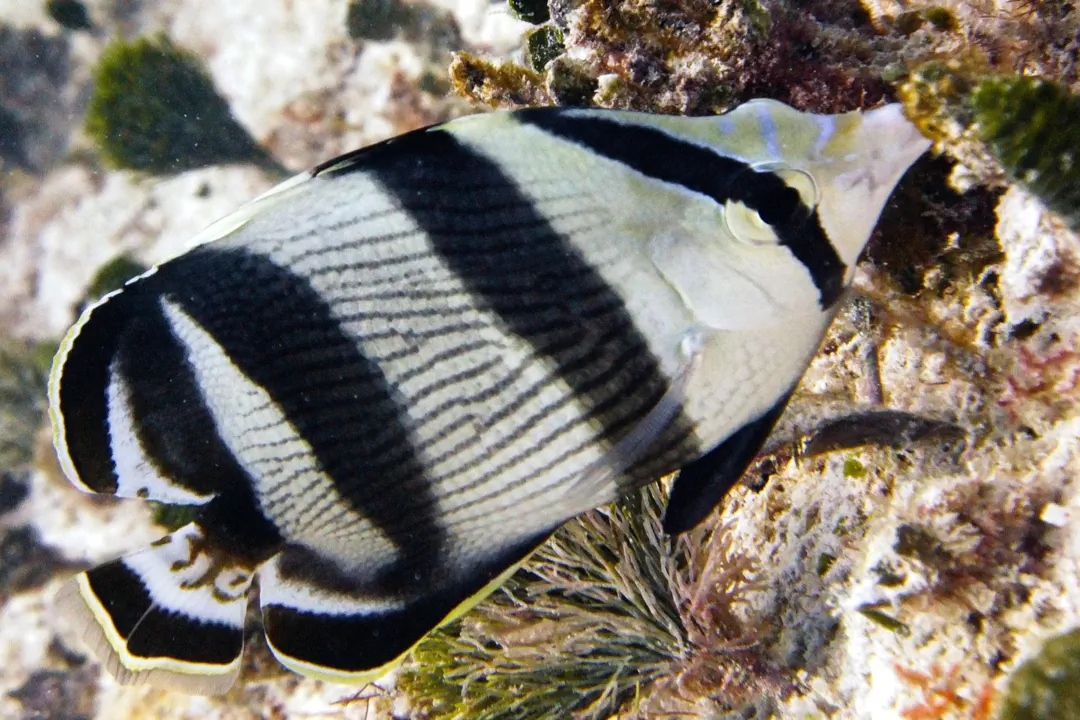 © Matteo CassellaAll rights reserved
  © Piotr LukasikCC BY 4.0 · iNaturalist
  © Emanuele SantarelliCC BY-SA 4.0 · iNaturalist
  © Susan PriorCC BY 4.0 · iNaturalist
  © seabook.appAll rights reserved
 Blackback Butterflyfish has no known danger to humans. However, always observe marine life responsibly.
Blackback Butterflyfish can be found at depths of up to 20 meters.
Download Seabook free for iOS and Android.