 © Cricket RaspetCC BY 4.0 · iNaturalist
California Golden Gorgonian
Muricea californica
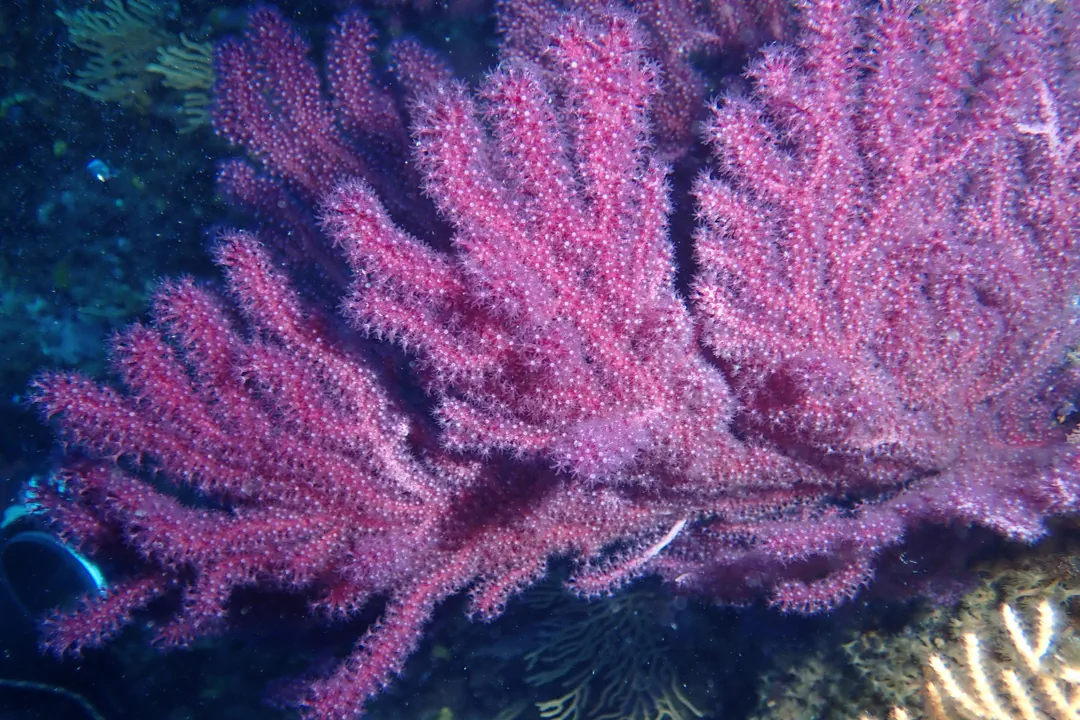
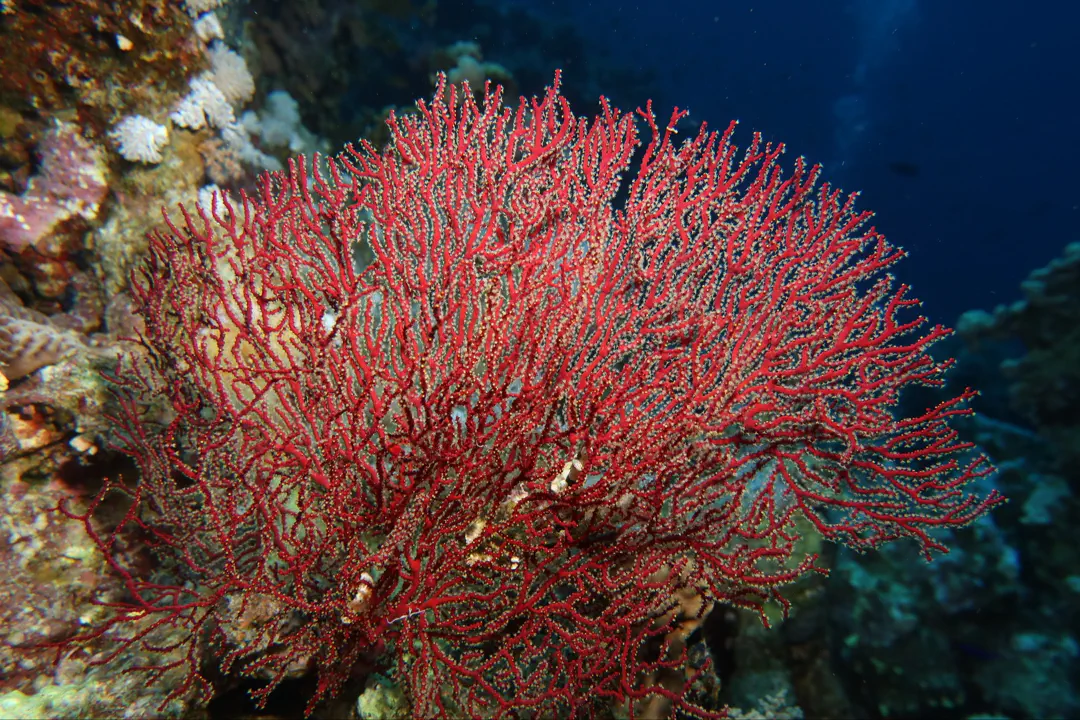
Paramuricea clavata
Paramuricea clavata is a species of colonial soft coral in the family Plexauridae. It is found in shallow seas in the northeastern Atlantic Ocean and the northwestern Mediterranean Sea. This species was first described by the French naturalist Antoine Risso in 1826.
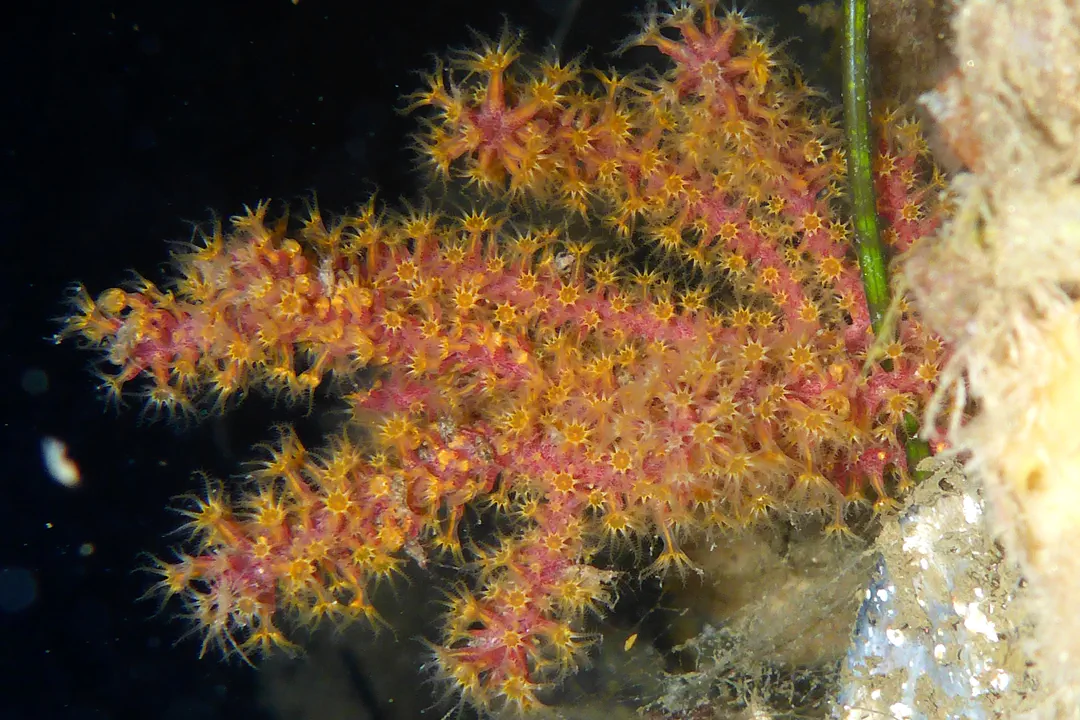
Paramuricea clavata has a branching structure forming a fan-shaped colony in a single plane. The stem and branches are stiffened by gorgonin, a complex protein that produces a horny skeleton. The coenenchyme, a thin living layer of cells, covers the skeleton and the polyps protrude from this, each with eight feeding tentacles surrounding a central mouth. The polyps are up to 10 mm (0.4 in) high and the whole colony up to one metre (yard) high and one metre across. The colour is usually red but may be partly yellow.
Paramuricea clavata is native to the coasts of Spain and Portugal in the eastern Atlantic Ocean, and to the western Mediterranean Sea. It grows on reefs with its base buried in the sediment at depths between 10 and 100 m (33 and 328 ft), but usually between 15 and 40 m (49 and 131 ft). It is considered to be an ecosystem engineer as its presence alters the flow of water, changes sedimentation rates and alters the distribution of nutrients, thus affecting many organisms in its vicinity.
Paramuricea clavata is a filter feeder, the polyps extending their tentacles to catch food particles floating past. The diet includes copepods, diatoms, dinoflagellates, ciliates and organic carbon particles in suspension.
Each colony is either male or female. Sperm is liberated into the sea by the male colonies and fertilisation occurs on the surface of the female colonies. The embryos are brooded there before being released as planula larvae into the water column. The larvae are photophobic and soon settle on the seabed. Once there, they develop into polyps and start secreting gorgonin to form the skeleton. Further growth of the colony is by budding of new polyps. Some new colonies may be formed from fragments that become detached from existing colonies.Paramuricea clavata is a slow-growing species and colonies probably live for well over fifty years.
© Cricket RaspetCC BY 4.0 · iNaturalist 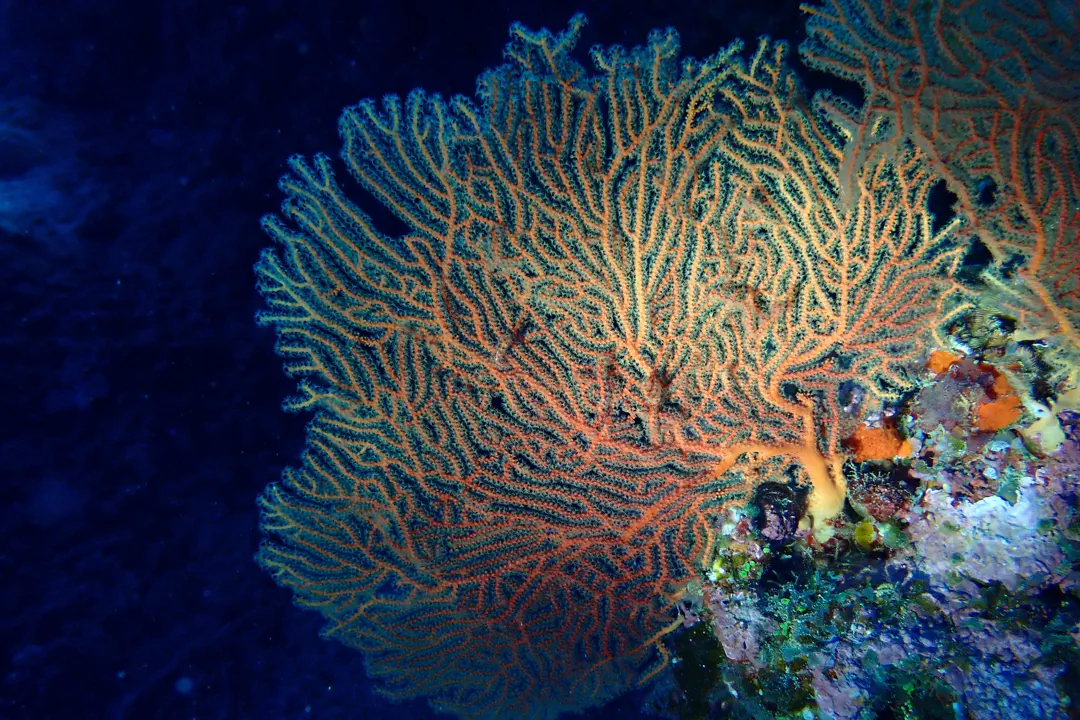 © Debra BakerCC BY 4.0 · iNaturalist
  © Steven BodzinCC BY 4.0 · iNaturalist
  © Julien RenoultCC BY 4.0 · iNaturalist
 Violescent Sea-Whip has no known danger to humans. However, always observe marine life responsibly.
Violescent Sea-Whip can be found at depths of up to 100 meters.
Download Seabook free for iOS and Android.