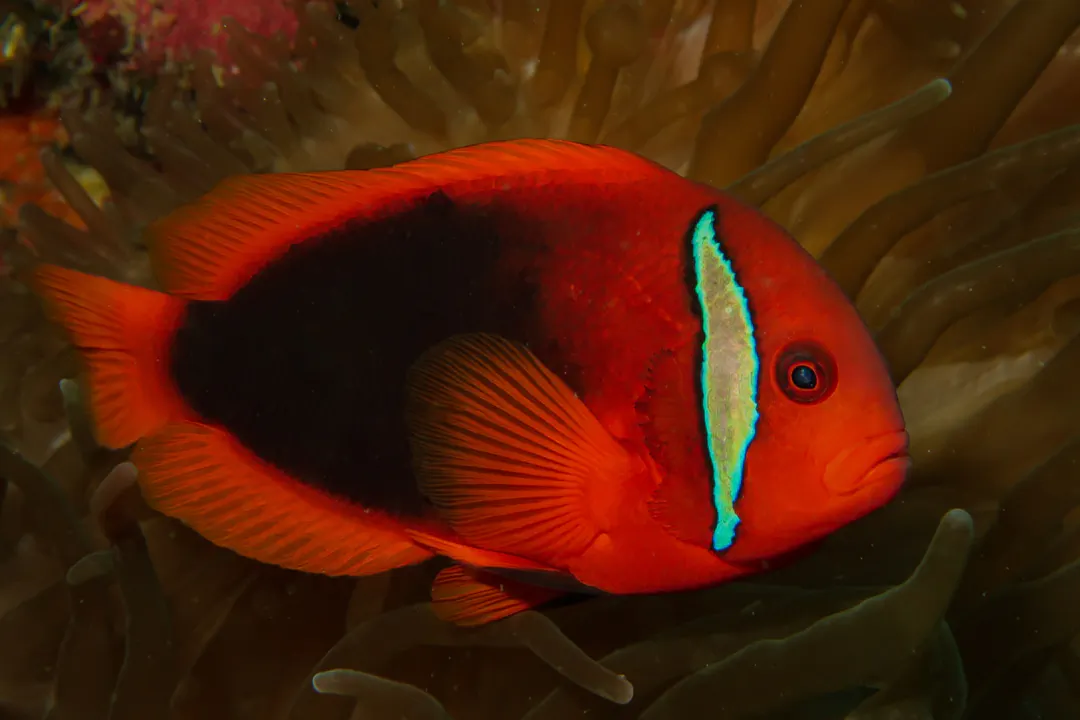
 © Ioannis MagourasCC BY 4.0 · iNaturalist
Bridled Clownfish (female)
Amphiprion frenatus
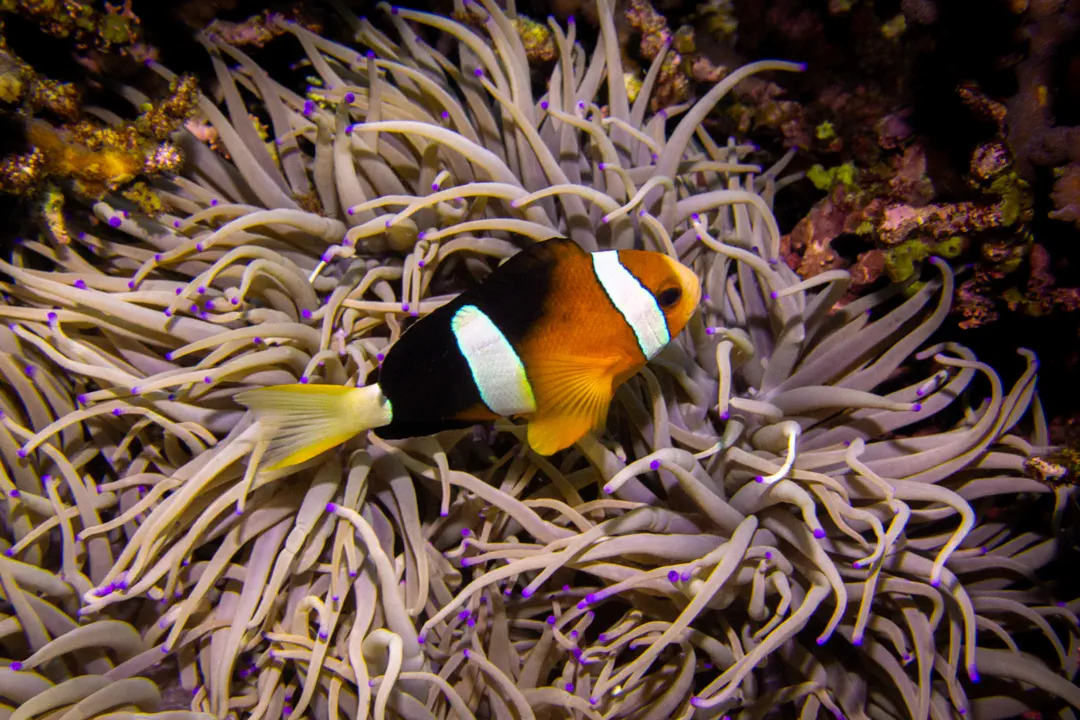 © Stas KuryanAll rights reserved
Amphiprion clarkii
Amphiprion clarkii is a marine fish belonging to the family Pomacentridae, the clownfishes and damselfishes.
Clark's anemonefish is a small-sized fish which grows up to 10 cm as a male and 15 cm as a female. It is stocky, laterally compressed, and oval to rounded.
It is colorful, with vivid black, white, and yellow stripes, though the exact pattern shows considerable geographical variation. Usually it is black dorsally and orange-yellow ventrally, the black areas becoming wider with age. There are two vertical white bands, one behind the eye and one above the anus, and the caudal peduncle is white. The snout is orange or pinkish. The dorsal and caudal fins are orange-yellow, and the caudal fin is generally lighter in tone than the rest of the body, sometimes becoming whitish.
Clark's anemonefish shows the greatest color variations of any anemonefish, with variations based on location, sex, age and host anemone. Adults in Vanuatu and New Caledonia are orange-yellow with two vertical white bands. Sex related color differences may be present, such as the female having a white caudal fin and the male having a yellow caudal fin. Juveniles are orange-yellow with vertical white bands. Fish living with the host anemone Stichodactyla mertensii, Mertens' carpet sea anemone are frequently black except for the snout bars and tail.
The caudal fin is forked and the base lacks a white bar on Amphiprion latifasciatus. The caudal fin lacks the sharp demarcation between white and dark and the mid-body bar is narrower on Amphiprion allardi and Amphiprion akindynos. The caudal fin is dark on Amphiprion chrysogaster, Amphiprion fuscocaudatus and Amphiprion tricinctus.
Clark's anemonefish is the most widely distributed anemonefish, being found in tropical waters from the Indian Ocean to the Western Pacific.
Clownfish or anemonefish are fishes that, in the wild, form symbiotic mutualisms with sea anemones and are unaffected by the stinging tentacles of the host anemone, see Amphiprioninae § Symbiosis and mutualism. The sea anemone protects the clownfish from predators, as well as providing food through the scraps left from the anemone's meals and occasional dead anemone tentacles. In return, the clownfish defends the anemone from its predators, and parasites. Clownfish are small-sized, 10–18 centimetres (3.9–7.1 in), and depending on species, they are overall yellow, orange, or a reddish or blackish color, and many show white bars or patches. Within species there may be color variations, most commonly according to distribution, but also based on sex, age and host anemone. Clownfish are found in warmer waters of the Indian and Pacific oceans and the Red Sea in sheltered reefs or in shallow lagoons.
In a group of clownfish, there is a strict dominance hierarchy. The largest and most aggressive fish is female and is found at the top. Only two clownfish, a male and a female, in a group reproduce through external fertilization. Clownfish are sequential hermaphrodites, meaning that they develop into males first, and when they mature, they become females.Distribution and Habitat
Clark's anemonefish is the most widely distributed anemonefish, being found in tropical waters from the Indian ocean to the Western Pacific.
Clark's anemonefish is the least host specific anemonefish, living in association with all ten species of sea anemones that host anemonefish:
© Ioannis MagourasCC BY 4.0 · iNaturalist 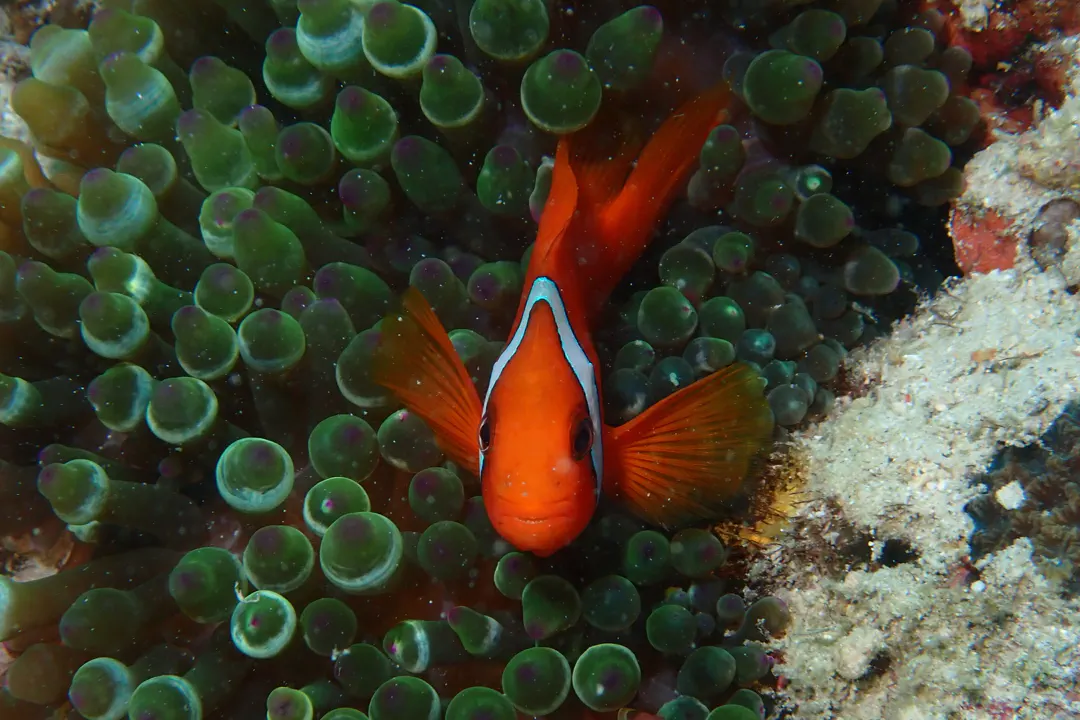 © Gregor BailarCC BY 4.0 · iNaturalist
 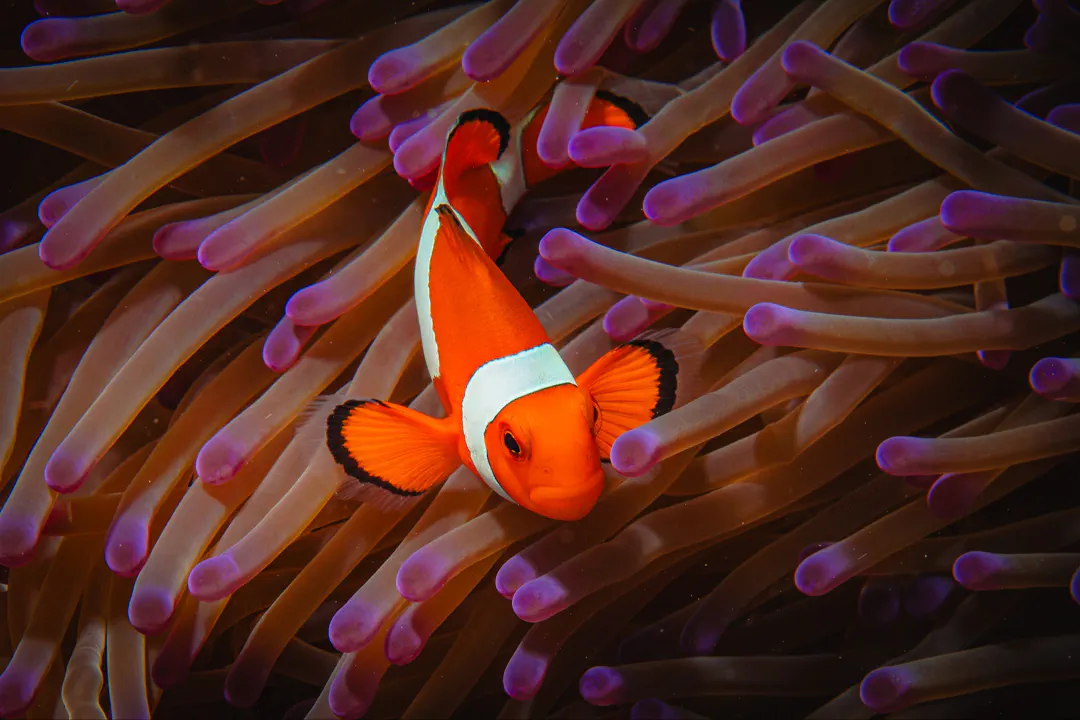 © Olka KuryanAll rights reserved
 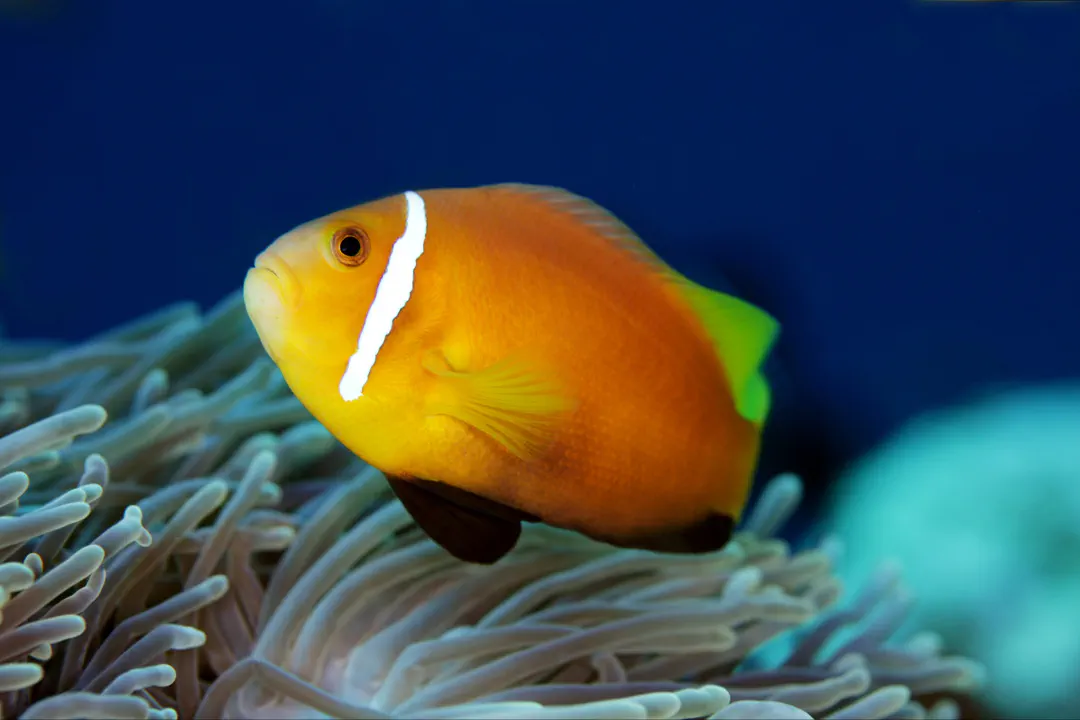 © Thomas Badstuebner for MDC SeaMarc MaldivesCC BY-SA 4.0 · iNaturalist
 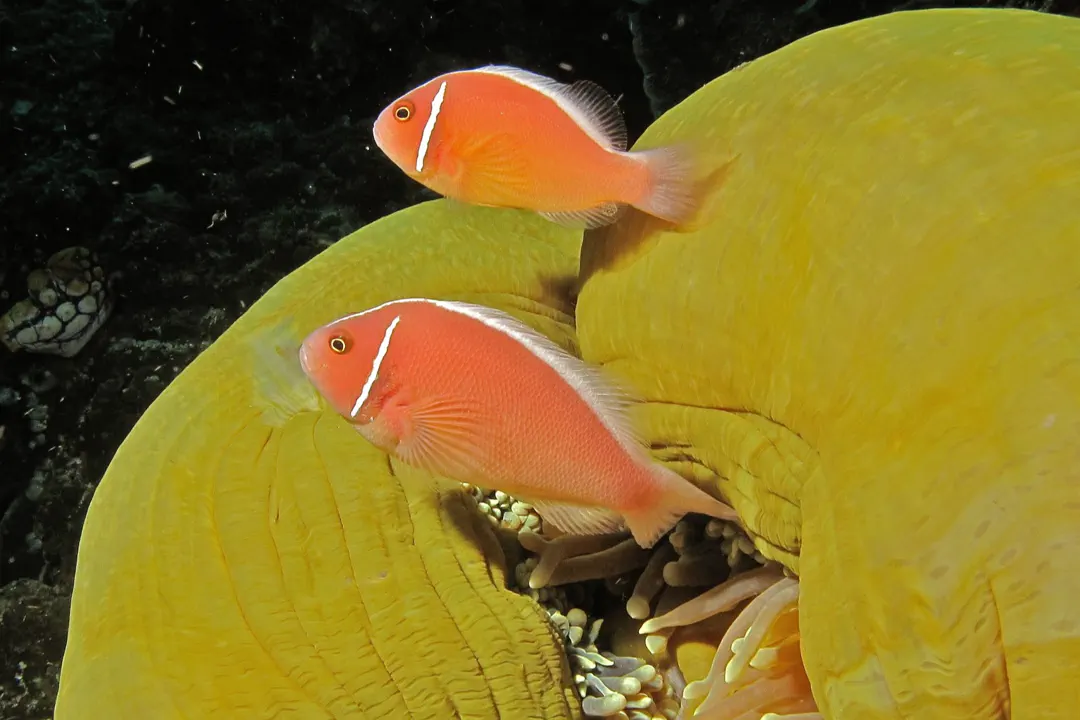 © Bernard DUPONTCC BY 4.0 · iNaturalist
 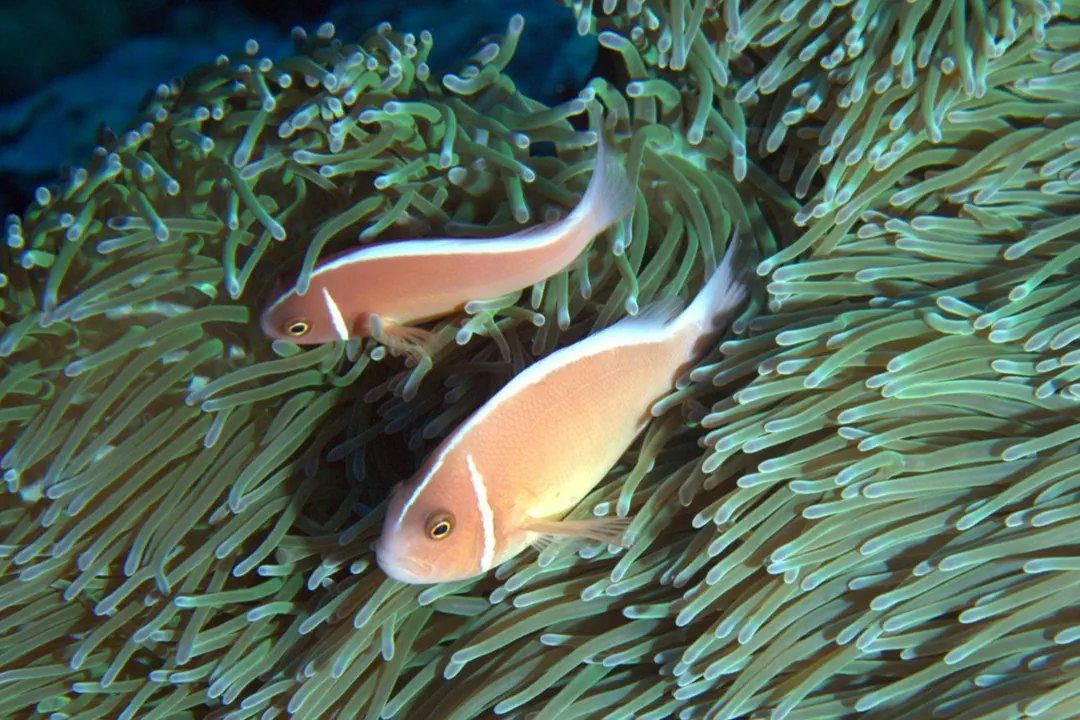 © craigjhoweCC BY 4.0 · iNaturalist
 Yellowtail Clownfish has no known danger to humans. However, always observe marine life responsibly.
Yellowtail Clownfish can be found at depths of up to 70 meters.
Download Seabook free for iOS and Android.