 © Julien RenoultCC BY 4.0 · iNaturalist
Barrel Jelly
Rhizostoma pulmo
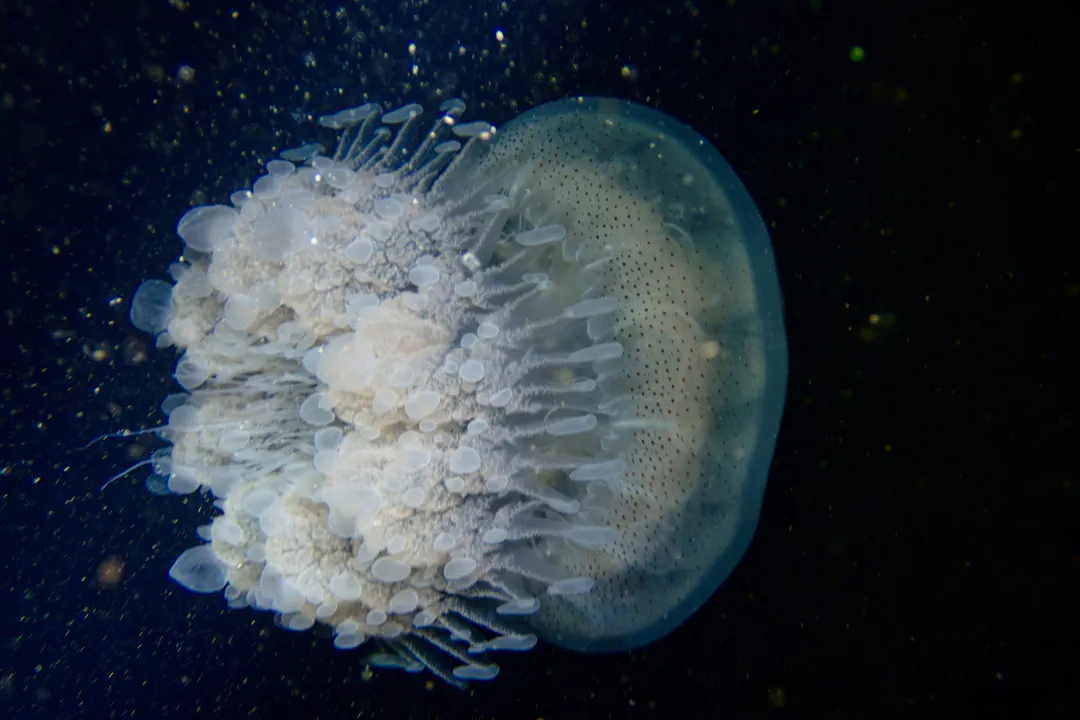
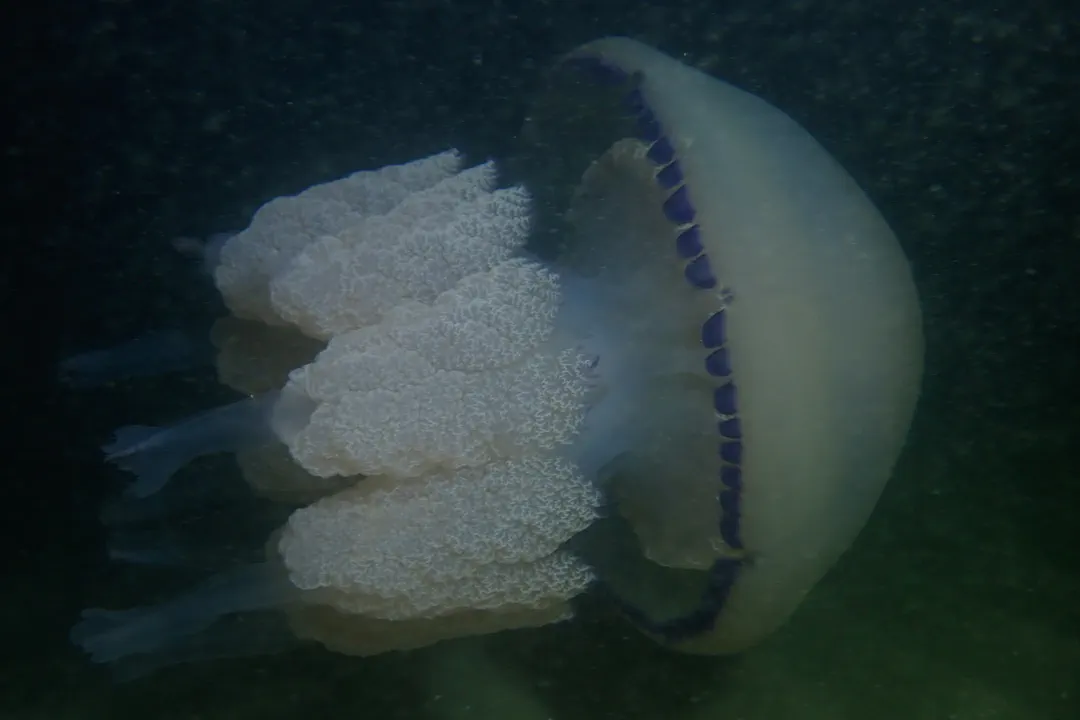
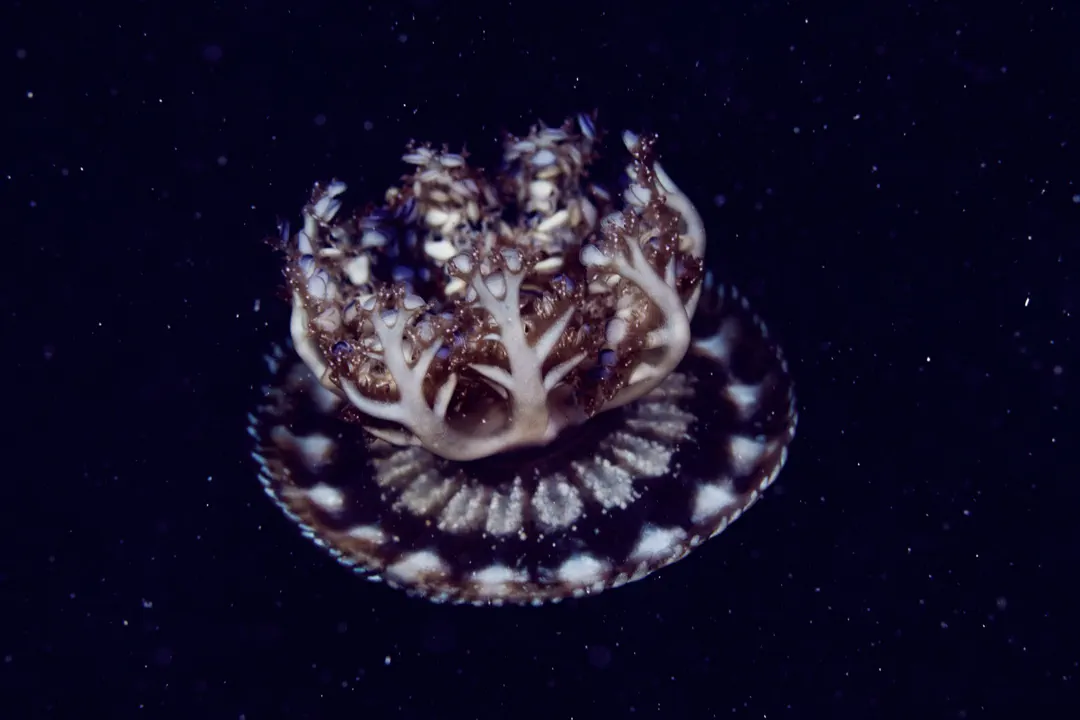
Rhopilema hispidum, known as the sand jellyfish or sandpaper jellyfish, belongs to the family Rhizostomatidae and is found in the Indo-West Pacific region, ranging from the Gulf of Aden and Red Sea eastward through the Indian Ocean and Southeast Asia to Japan and the western Pacific.
Rhopilema hispidum was first described by Ernst Vanhöffen in 1888 under the original name Rhizostoma hispidum. The original description was based on material from Hong Kong, which is therefore the reported type locality. The specific epithet hispidum is Latin for 'rough,' 'bristly,' or 'hairy,' referring to the species’ rough, wart-covered exumbrella. The genus name Rhopilema is formed from Greek roots generally interpreted as referring to a club-shaped structure or appendage. Rhopilema verrucosa Kishinouye, 1899, and Rhopilema visayana Light, 1914, are currently treated as synonyms of R. hispidum. The species has also appeared in literature under the combination Rhopilema hispidum after transfer from Rhizostoma. Rhopilema nomadica was misidentified or described under the name R. hispidum in earlier literature, but it is now recognized as a separate species.
The species has a firm, broad, flattened-to-hemispherical bell that is typically thicker in the center and thinner toward the margin. It usually appears translucent or pale, with yellowish, brownish-orange, reddish-brown, or purplish tones, often darker toward the margin. The exumbrella features numerous small, sharply pointed, conical projections or warts, giving it a rough, sandpaper-like appearance. These warts may be colourless, with larger reddish-brown circular warts that are generally denser or larger toward the bell center and on the lappets. Each of the eight octants of the bell margin has about eight oblong, rounded-to-slightly pointed velar lappets, and the species lacks tentacles. The oral arms end in conspicuous swollen, club-shaped terminal appendages with faceted or bulbous ends, which is a key field character for identification. Rhopilema hispidum can be distinguished from Rhopilema nomadica by its sharply conical warts and swollen club-shaped appendages, as opposed to the blunt exumbrella tubercles and thread-like filaments of R. nomadica. It differs from Acromitus flagellatus, which has a smoother exumbrella and whip-like terminal appendages, while Rhopilema hispidum has numerous pointed warts and lacks a ring canal. The species can be told apart from cannonball jellyfish (Stomolophus spp.) by its pointed surface warts, eight groups of marginal lappets, and swollen terminal clubs, rather than relying on bell shape or colour alone. A clear view of the exumbrella warts, lappet arrangement, and oral-arm tips is more diagnostic than overall colour, making identification underwater challenging.
The species is described broadly as pelagic–neritic, rather than as a reef-associated species. It inhabits coastal waters, bays, and estuaries, and is free-swimming with no fixed substrate. During the benthic polyp stage, larvae settle on hard surfaces or other available substrates, but a species-specific natural substrate preference is not established. The geographic distribution of Rhopilema hispidum extends from the Gulf of Aden northward to Japan and eastward into the Pacific, covering approximately 45°N–20°S and 44°E–146°E. Documented localities include India, Malaysia, and other tropical Indo-West Pacific coastal waters.
The species is not considered social, as there is no verified evidence of cooperative or structured social behavior, despite records of aggregations. Rhopilema hispidum is dioecious, with a life cycle that includes sexually produced planulae, a scyphistoma polyp, strobilation, and the release of young medusae. The polyp stage of the species can reproduce asexually through podocysts. No published behavioral accounts exist that describe how Rhopilema hispidum reacts to scuba divers or other human observers, making it unclear whether the species exhibits attraction, avoidance, or aggression. Due to the potential for stinging, physical contact with any scyphozoan, including Rhopilema hispidum, should be avoided by divers.
Rhopilema hispidum is a plankton-feeding jellyfish, with reported food including zooplankton, fish eggs, and larvae. The species feeds using its oral arms, which bear stinging cells that immobilize prey and move it toward the mouth. In laboratory studies, polyps of Rhopilema hispidum have been fed rotifers and newly hatched Artemia, although these are not necessarily representative of its complete wild diet.
Rhopilema hispidum is a commercially exploited rhizostome jellyfish, particularly in tropical and subtropical Asian fisheries. It is harvested in countries including Thailand, Vietnam, Malaysia, Myanmar, Indonesia, the Philippines, India, and China. Properly processed specimens of Rhopilema hispidum are eaten, especially in Southeast and East Asian cuisine. The species has venomous stinging cells and can cause painful stings, dermatitis, erythema, edema, and burn-like skin injuries. Serious local reactions to stings are possible, especially for fishers and swimmers, although fatal stings are not reported in the cited Thai literature. The species is Not Evaluated on the IUCN Red List, indicating that there is no published global conservation status. Fisheries data indicate substantial exploitation of Rhopilema hispidum, while population-wide conservation trends remain insufficiently assessed.
© Julien RenoultCC BY 4.0 · iNaturalist 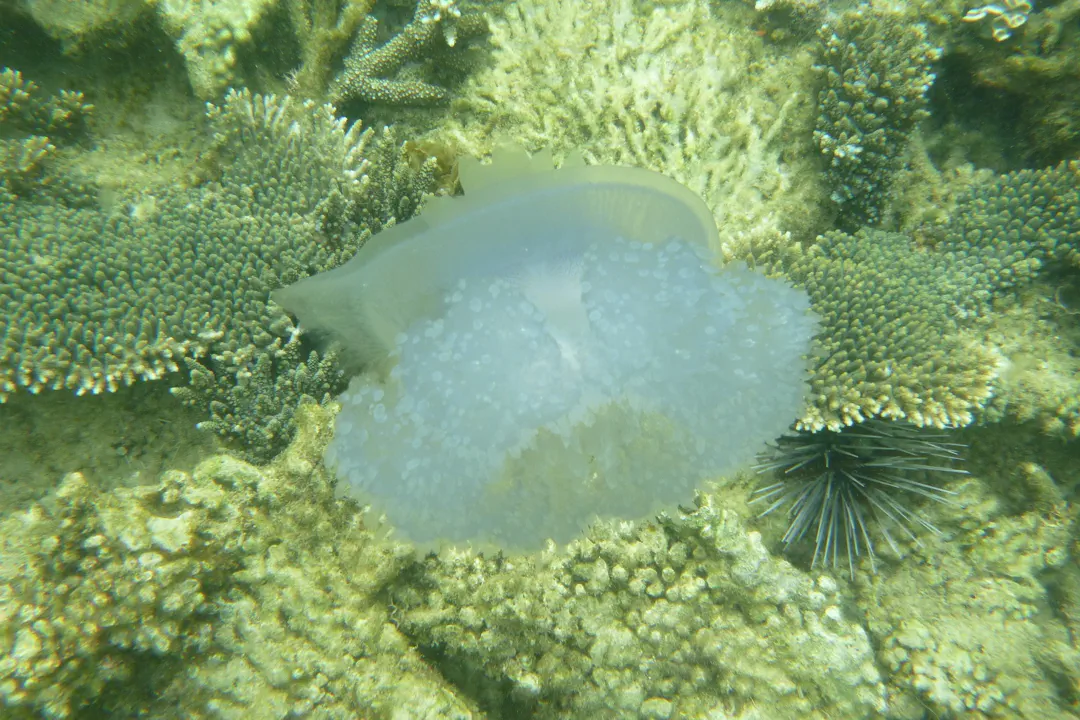 Светлана ЦараховаCC0 · iNaturalist
  © prilfishCC BY 4.0 · iNaturalist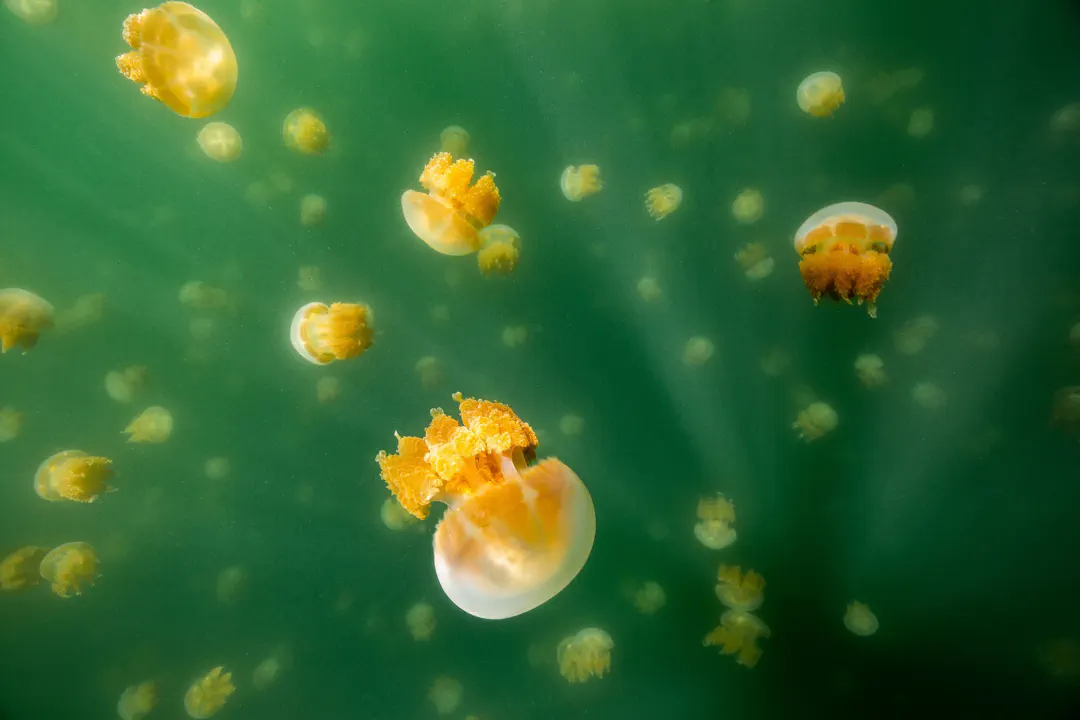
Rhopilema hispidum has no known danger to humans. However, always observe marine life responsibly.
Download Seabook free for iOS and Android.